
REVIEW · WALKING TOURS
Amsterdam Highlights and History Walking Tour (MUST DO)
Two hours in Amsterdam and suddenly you get it. This walking tour stitches together the city’s politics, faith, and canals into a clear first look. You cover major landmarks and the stories behind them without getting lost in the weeds.
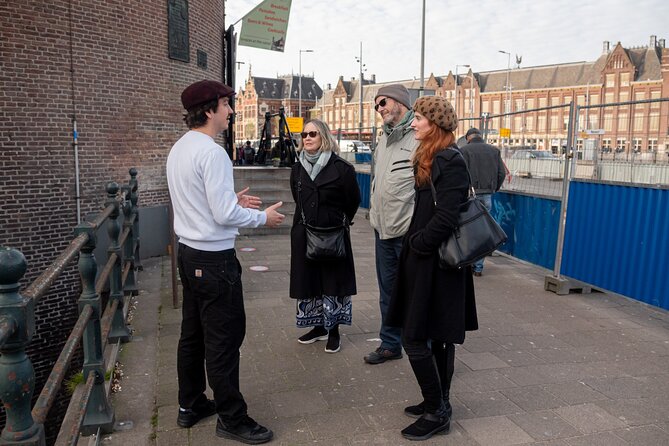
I love the small group size (max 15), because it keeps the pace friendly and the guide’s attention close. Guides like Andrea, Gio, Aaron, and David pop up in past groups, and the common thread is lots of direct answers and story-driven context.
One thing to plan for: you’ll be on your feet for about two hours, and you have to stay alert around bikes and busy streets. If weather is rough, show up early and be ready for the day to feel less flexible.
Key things I’d prioritize before you go

- Dam Square orientation: a practical starting point for understanding modern Amsterdam
- UNESCO canal ring views: see the city’s engineering and planning where it still lives
- Begijnhof and the 14th-century courtyard: a quiet pocket with a big backstory
- Old Church stop: a 13th-century building that shifted roles across Protestant and Catholic time
- Royal Palace and Nieuwmarkt contrast: power and everyday street life in one route
- 2-hour small-group pace: comfortable for most, but expect steady walking and standing
Amsterdam at street level, a few more routes
Where Dam Square sets your Amsterdam mindset
Dam Square is the obvious anchor. It has been a stage for power and public life for centuries, and your guide uses it to explain how Amsterdam became what it is today. Even if you’ve seen photos, it helps to connect the dots between politics, commerce, and the streets around you.
You’ll also feel the square’s pace right away. It tends to be crowded, and you’ll likely be sharing space with people moving in every direction. For first-timers, that is exactly the point, because once you understand how the city uses its central spaces, the rest of the walk clicks faster.
The canal ring, UNESCO, and why you should look up
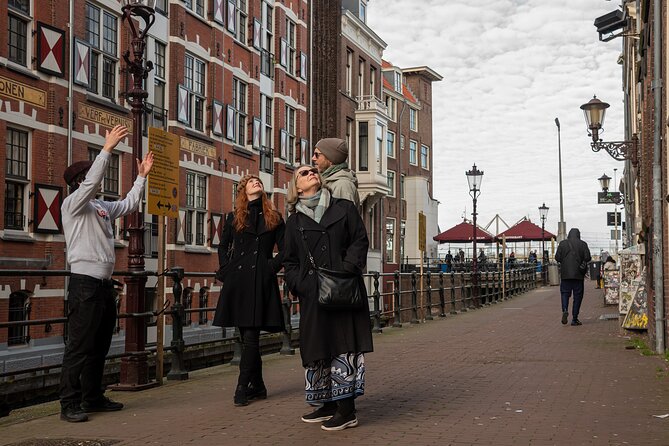
The canal ring is why Amsterdam reads like a planned city, not just a picturesque one. At this stop, you’ll get to view the UNESCO World Heritage area where the canal system shaped both movement and wealth. It’s one thing to spot canals on a map, and another to stand near them and grasp how the city was built to function.
Look for the details your guide points out. Even without special access, you can understand why the canal belt became so central to Amsterdam’s identity. Think of it as the city’s infrastructure and its cultural symbol at the same time.
Practical note: canal-area streets can be tight and busy, and photo moments can slow the group. I like that the guide keeps your stops purposeful, so you’re not spending the whole walk trying to find the perfect angle.
Begijnhof courtyard: quiet religion in the middle of everything
Next comes a contrast that makes the city feel layered. The begijnhof is a historic courtyard dating to the 14th century, and it’s one of the oldest and best-preserved parts of Amsterdam. You’ll also learn that it was originally home to the Beguines, religious women who lived in a semi-monastic setup.
This stop matters because it shows Amsterdam isn’t only canals and buildings. It’s also small-scale community life, faith structures, and spaces designed for women’s religious and social worlds. You often hear the big stories of the Netherlands, but places like this remind you that history also lives in quiet courtyards and daily rhythms.
If you like atmosphere, this is where the tour often feels most memorable. Just remember it is a respectful environment, so keep your voice down and move carefully. Courtyards also tend to have uneven spots, so watch your footing like you would anywhere old.
More chapters of old Amsterdam, told on foot
- Amsterdam Food and Cultural Tour with Tastings★ 5.0 · 2,442 reviews
- Amsterdam High-End Dutch Food & History Tour – Up to 8 guests★ 5.0 · 482 reviews
- Amsterdam: Historic City Sightseeing Canal Cruise★ 4.5 · 444 reviews
- Anne Frank and the Jewish History of Amsterdam Private Tour★ 5.0 · 307 reviews
Old Church stop: when one building serves changing eras
Your walk continues to Amsterdam’s Old Church, dating to the 13th century. It originally was a Catholic church, later used by Protestant congregations, and today it functions as a cultural center. The point here is not just the age, it’s the story of how a single site can keep adapting.
This is a strong stop for history buffs, because the building becomes a timeline you can stand next to. It helps you understand the religious shifts in the region without turning the tour into a lecture you can’t carry.
One practical consideration: churches and older buildings can mean stairs, uneven ground, or areas where you need to pause while others look. The tour pace is described as moderate, but you’ll still want comfortable shoes and a steady stance.
Royal Palace and Nieuwmarkt: power meets daily life
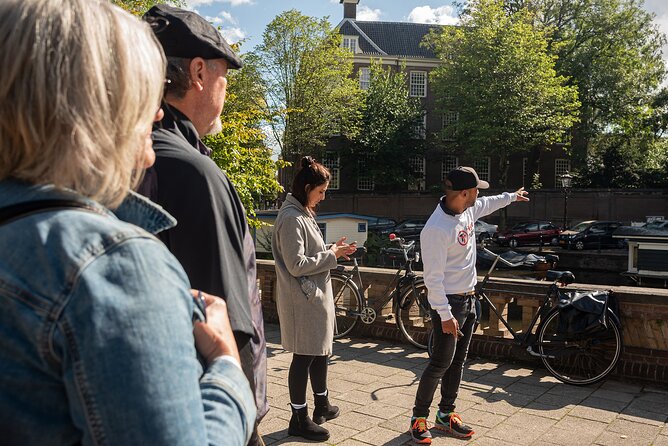
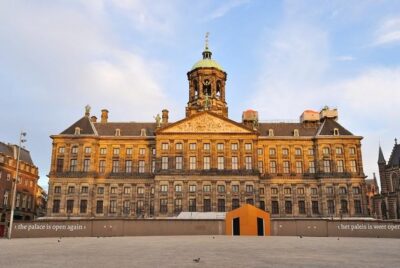
The Royal Palace is the kind of landmark that makes you slow down, even if you’re not a palace person. It was built as a town hall in the 17th century and is now one of the palaces used by the Dutch royal family. The architecture is classic Dutch in tone, and the guide’s job is to explain why that style matters in the bigger story of the city.
Then the route shifts to Nieuwmarkt. It used to be the site of Amsterdam’s city walls, and now it’s a lively square with a daily market plus cafes and restaurants. This contrast is smart for your understanding of Amsterdam: you see how defensive infrastructure becomes civic gathering space, and how the city keeps reinventing its core spaces.
Nieuwmarkt is also a great reality check. You learn the difference between Amsterdam as a museum city and Amsterdam as a place where people eat lunch, buy items, and meet friends. That balance makes your later self-guided wandering more confident.
How the guide shapes the whole experience
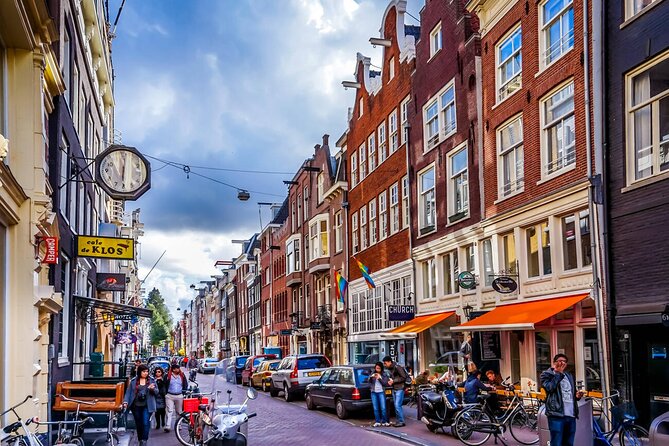
The biggest difference between a good city tour and a helpful one is the guide. This one is built around a local guide, and the results show in the range of guide names people have shared, including Andrea, Aarre, Aaron, David, Gio, and James. The consistent theme is storytelling that connects buildings to the way Amsterdam developed.
What I like about this format is that it keeps your attention moving. You aren’t just reading plaques, you’re hearing why a square, courtyard, church, or palace matters. When guides answer questions well, the tour becomes interactive without turning chaotic.
Also, small groups help a lot here. When you’re with fewer people, the guide can adjust pacing, explain concepts in plain language, and deal with curiosity on the spot.
Pace, walking comfort, and the bicycle reality
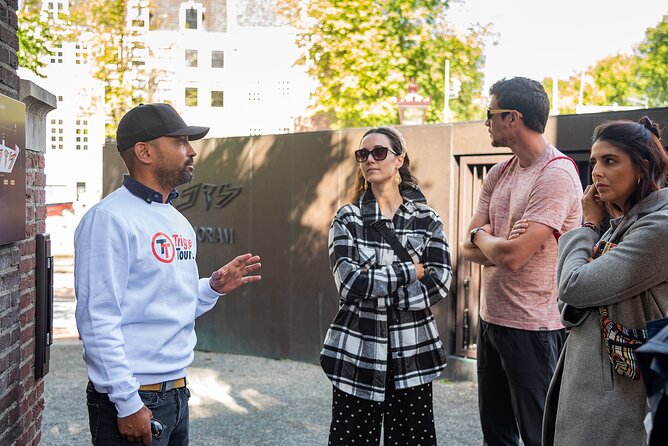
The tour runs about two hours, and the pacing is described as moderate. Still, you need to be able to stand and walk the full time. The streets around central Amsterdam are not pedestrian-only, so you must stay alert to bicycle traffic.
If you’re used to walking tours, this is likely manageable. If you don’t walk much day to day, you should plan for breaks by leaning into the natural pauses at each stop. Wear shoes with good grip and bring a light layer, because wind off canals can change how you feel faster than you expect.
This tour also ends back at the meeting point, which is handy. It makes it easier to keep exploring after, because you can re-orient yourself quickly.
Price and value: what $26.91 actually buys you
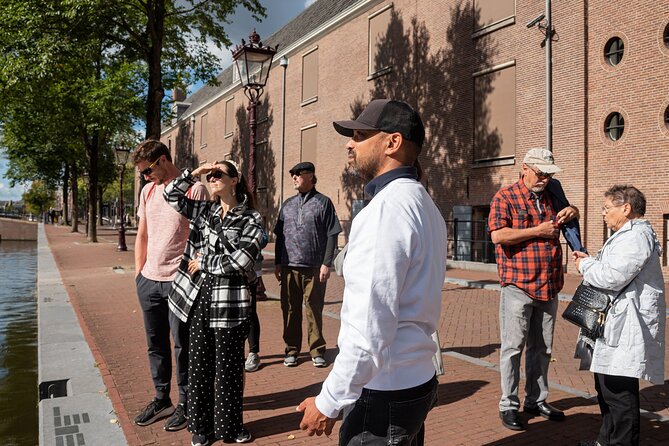
At $26.91 per person for roughly two hours, the cost is reasonable for a highlights and history format, especially with a local guide and a small group cap of 15. You’re paying for expert interpretation, not just movement through the city.
The value gets better when you compare what you receive per stop. You cover a central square (Dam Square), a major UNESCO site (canal ring), a rare calm courtyard (begijnhof), a 13th-century church with a role-shift history (Old Church), a royal landmark (Royal Palace), and a market square with civic history (Nieuwmarkt). That is a lot of narrative density for one short outing.
It also helps that the tour uses a mobile ticket and runs in English. Group discounts are noted too, which can make it a smart option if you’re traveling with friends or with a small group.
Who this tour fits best
This is a great choice if you want your first Amsterdam experience to feel organized. If you’re the type who likes to understand why places look the way they do, this route gives you a framework fast.
It’s also a strong pick for history buffs who still want an active day. Instead of switching between museums, you walk through key locations and let the guide connect the threads: urban planning, religion and community, and how public power shows up in architecture.
If you’re traveling with people who need a simple plan, the small group size and steady pacing can make it easier to keep everyone together. If you need long museum breaks or sitting time for most of the day, you might find two hours of walking more demanding.
Before you book, consider one weather-and-timing reality
There’s no way around it, Amsterdam can throw weather at you. One past experience mentioned that bad weather led to missing the tour at the meeting point, and there was no refund in that case. I can’t predict what will happen for your date, but I can say this: arrive early enough to settle in, and confirm you’re in the right spot if conditions are messy.
If your schedule is tight, book sooner rather than later. On average, this tour is booked about 57 days in advance, and that usually signals good demand.
Should you book the Amsterdam Highlights and History Walking Tour?
Yes, if you want a short, efficient way to learn Amsterdam’s big themes without spending your whole day in transit. I’d book it when your goal is orientation, because the route moves from Dam Square to canals, then into courtyards and churches, and finally into palace and market life.
I would think twice if you have low mobility or you struggle with two hours standing and walking, since the route requires staying active and alert. If you go, plan for comfortable shoes, mind bike traffic, and bring your curiosity, because this tour works best when you enjoy asking questions and listening closely at each stop.
FAQ
How long is the Amsterdam Highlights and History Walking Tour?
It runs for about 2 hours.
Where does the tour start?
It starts at Damrak 1-5, 1012 TM Amsterdam, Netherlands.
Does the tour end back at the meeting point?
Yes, it ends back at the meeting point.
What is included in the price?
The tour includes a local guide and a tour of Amsterdam.
Are food and drinks included?
No, food and drinks are not included.
Is the tour offered in English?
Yes, it is offered in English.
How big is the group?
The tour has a maximum of 15 travelers.
Do I need to print a ticket?
No, it uses a mobile ticket.
Is service animal access allowed?
Yes, service animals are allowed.
What is the cancellation policy?
You can cancel for a full refund up to 24 hours in advance. If you cancel less than 24 hours before the start time, the amount you paid will not be refunded. If the tour is canceled due to the minimum number of travelers not being met, you’ll be offered a different date or a full refund.
Amsterdam on Foot






More Tours in Amsterdam




More Tour Reviews in Amsterdam





Newly reviewed around Amsterdam





Walking Tours, side by side.
 ★ 5.0Anne Frank’s Story – Guided Walking Tour through AmsterdamFrom $3911,619 reviews
 ★ 4.8Life of Anne Frank and World War II Walking TourFrom $3710,467 reviews
 ★ 5.0Absolutely Amsterdam – the Essential Introductory Walking TourFrom $53,629 reviews
 ★ 4.8Anne Frank Guided Small Group Walking TourFrom $282,722 reviews
 ★ 4.9Anne Frank Walking Tour – Guided in EN/DE/IT/ESFrom $282,676 reviews
 ★ 4.9Guided Cultural Walking TourFrom $292,384 reviews
 ★ 4.2Guided Ganja Walking Tour of Coffee ShopsFrom $272,092 reviews
 ★ 5.0Anne Frank Walking Tour Amsterdam Including Jewish Cultural QuarterFrom $751,879 reviews
More ways to plan this visit