

REVIEW · ANNE FRANK & JEWISH QUARTER TOURS
Amsterdam: Anne Frank Walking Tour – Guided in EN/DE/IT/ES
A single walk can carry centuries. This Anne Frank Jewish Quarter tour links the Jodenbuurt’s origins to WWII terror, with diary passages used to explain what happened and why it still matters. You follow a set route past synagogues, homes, and memorials, with a guide speaking English, German, Italian, or Spanish.
What I like most is the way the story moves street by street, not just site by site, and how guides keep the tone respectful while staying engaging. I also like that you cover major points in a tight 2-hour window, including places that make you notice the city’s layers, even the quiet reminders like Stolpersteine.
One consideration: it is heavy material, so it is not a casual afternoon stroll. Also, you must pick the correct language (it is not bilingual), and the tour does not include entry to the Anne Frank House.
Key things to know before you go

- WWII focus with Anne Frank diary excerpts read during the walk, so the timeline stays human.
- Jodenbuurt context, from Sephardic Jewish roots tied to the Spanish Inquisition to daily life in today’s Amsterdam.
- Memorial and street-level reminders including Stolpersteine and multiple Holocaust memorial stops.
- A guided, time-boxed route with about 2 to 3 kilometers of walking over roughly two hours.
- Most sights are free during the tour, so your money mainly goes to a live guide.
- Meet at De Waag in Nieuwmarkt, and watch for the Google Maps side-trap near the wrong entrance.
More careful routes through Amsterdam’s Jewish history

A walk that changes how you see Amsterdam’s streets

Amsterdam has lots of history on the surface, but this route teaches you how to read it. You start in the Nieuwmarkt area and move through the Jewish Quarter with a narrative that connects the city’s growth to persecution, occupation, and survival. It is a guided story told in real locations, which makes the facts feel less like school content and more like something you can picture.
The emotional weight is real. Anne Frank’s diary passages are used as a guide through the events, especially the period when people were hidden to avoid deportation. The tour also covers the resistance by Jews and non-Jews, which is important because it adds agency, not just tragedy.
You also get a broader frame. This is not only about what happened in the 1940s. The walk circles back to what Jewish life looks like in multicultural Amsterdam today, so you end with context, not just grief.
Picking your language: choose carefully because it affects everything
This tour is offered in German, English, Italian, or Spanish, and it is not bilingual. That sounds obvious, but it matters a lot on a history tour where details build sentence by sentence. If you pick the wrong language, you will miss the nuance when the guide connects sites, dates, and names.
A practical tip: if you are between language levels, pick the one you can fully follow at speaking speed. The guide will be explaining discrimination, WWII occupation, and resistance stories in a way that depends on you catching the middle of each explanation, not just the headline terms.
De Waag meeting point: how to avoid the common entrance mix-up
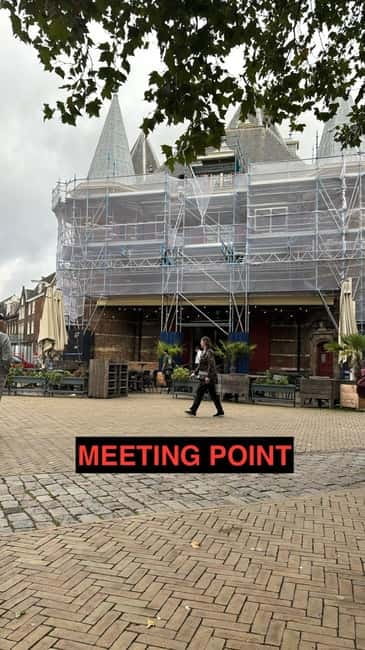
You meet your guide at the entrance to the restaurant De Waag, a historical building in the middle of Nieuwmarkt. Your guide wears a red name tag, which makes them easier to spot than a generic “tour guide in a lanyard” situation.
Here is the small gotcha worth knowing: Google Maps can send you to the wrong side of the building. If you end up by the coffeeshop Jolly Joker, you are on the wrong side. Walk around the “castle-like” building to the correct entrance and you will be fine.
This is the kind of detail that saves time and saves the awkward moment of calling out while people are already meeting up.
Amsterdam at street level, a few more routes
- Anne Frank’s Story – Guided Walking Tour through Amsterdam★ 5.0 · 11,619 reviews
- Amsterdam: Life of Anne Frank and World War II Walking Tour★ 4.8 · 10,467 reviews
- Absolutely Amsterdam – the Essential Introductory Walking Tour★ 5.0 · 3,629 reviews
- Amsterdam: Anne Frank Guided Small Group Walking Tour★ 4.8 · 2,722 reviews
The 2-hour route: what each stop adds to the story
The tour runs about 2 hours and covers roughly 2 to 3 kilometers on foot. Stops include short guided segments and a few photo breaks. The pacing is designed to fit a lot of meaning into a compact walk, so you will want comfortable shoes.
Below is what the route feels like in order, and what each place helps you understand.
Waag, where the walk starts in the heart of Nieuwmarkt
You begin at De Waag and get your bearings in the Nieuwmarkt area. This matters because it sets the geography early. Instead of starting in a museum, you start in a real city space where people have walked, traded, and lived for a long time.
Your guide also frames how the Jodenbuurt developed and why it became such a significant part of Amsterdam’s story.
Nieuwmarkt Square: the overview moment
At Nieuwmarkt Square, you get a short guided introduction. This is where the tour usually lays out the big themes: the Jewish community’s role in the city’s commercial growth, the shifting mix of Jewish and non-Jewish residents, and how WWII changed everything.
If you are new to Amsterdam’s neighborhoods, this stop is the “how to think about what you are about to see” checkpoint.
Zuiderkerk: connecting architecture to the timeline
Next is Zuiderkerk, with a brief guided stop. Even without reading every detail, you start to notice how landmarks help you anchor the story in space. The guide’s explanation links this part of the city to the broader narrative rather than treating it like a standalone photo moment.
You get history that feels built into the streets, not stapled onto a brochure.
Huis de Pinto: a quick stop with a specific feel
At Huis de Pinto, you get a short guided segment. This is the kind of stop that can be easy to rush past when you are sightseeing on your own, but in a guided walk it becomes useful context. It helps you understand how prominent homes and the built environment shaped everyday life and community presence.
At this stage, you are learning to read the neighborhood as a living place, not only a site of loss.
Rembrandt House: where the city’s mix shows up in real life
The walk then reaches Rembrandt House for a longer guided segment. The key idea here is the neighborhood’s mix: you are told that non-Jews like Rembrandt van Rijn also had a domicile in the Jewish Quarter area. That detail matters because it prevents the story from becoming one-note and separated from wider Amsterdam life.
You see how different communities could live near each other, and then you see how occupation and Nazi discrimination broke that normal pattern.
Sint Antoniesluis: the street-level bridge between people and events
At Sint Antoniesluis, the guide connects the neighborhood’s physical routes to the historical events. This stop often feels like a transition point in the tour, where the story shifts from background and prosperity into the era of restriction, deportation, and violence.
Even if the location is quiet compared to main squares, the narrative makes it feel charged.
Portuguese Synagogue: photo stop plus guided context
The Portuguese Synagogue is next. You have a photo stop and a guided segment, which usually gives you the meaning behind the site within Amsterdam’s Jewish history. The Portuguese community is tied to broader European storylines, and in this tour that larger frame helps you understand why Amsterdam became such an influential place for Jewish life.
This is also a good moment to slow down and notice what you are seeing, since the tour will move toward memorials soon.
Jewish Historical Museum: a short stop that acts like a checkpoint
At the Jewish Historical Museum, you have a short guided segment. The goal here is not to replace a museum visit. It is to give you a structured understanding of what you are seeing and what to remember when you move into the WWII memorial portion of the walk.
So even though it is brief, it works like a mental pause.
Auschwitz Monument, Amsterdam: where the story becomes unignorable
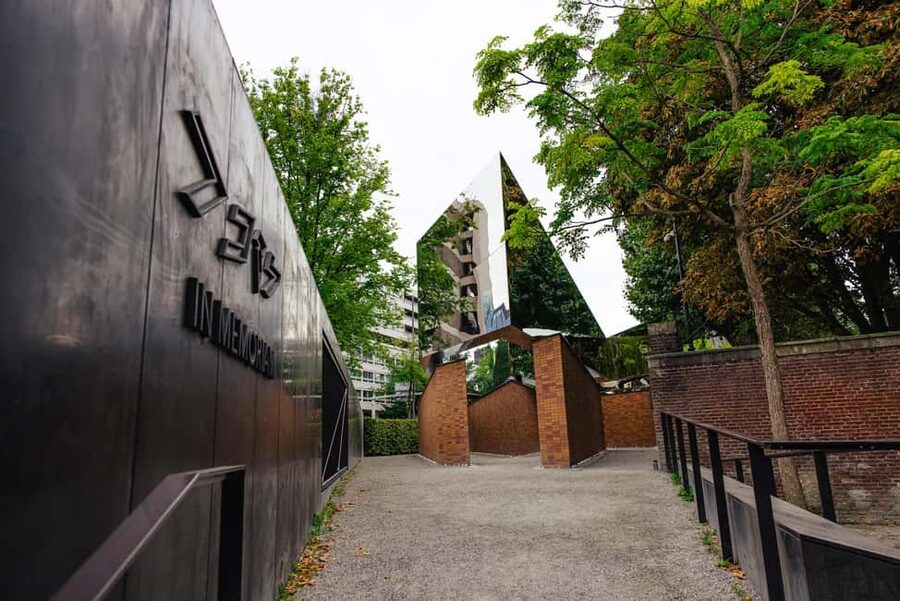
Then comes Auschwitz Monument, Amsterdam, with a guided stop. This is where the tone turns from explanatory to confrontational in the most necessary way. The guide uses this space to ground the Holocaust story with a clear point of remembrance.
You will likely feel the weight quickly here. That is normal. Take a second before the guide moves on.
The Dokwerker: a short stop with a big purpose
At The Dokwerker, you get another guided segment. This stop reinforces the WWII reality that persecution was not only about camps far away. It involved transport, forced systems, and the cruel machinery of occupation.
Even when the stop is short, it usually lands because the route has been building toward this moment.
National Holocaust Names Monument: the final reflective arc
The final stop is the National Holocaust Names Monument. You have a photo stop plus a guided segment, and the tour ends at this location.
The whole route leads you here. By the time you reach this point, you have already heard about discrimination, deportation, hiding, and resistance. The monument ties those themes together with names and remembrance, turning the story into something you do not just learn. You carry it for the rest of your day.
The Anne Frank diary passages: how the guide keeps it human

One reason this tour earns such strong ratings is how the diary material is used. Guides read excerpts in a way that clarifies what the words mean in the moment, not just what Anne Frank wrote in general.
In the best versions of this tour, the diary reading feels like a storyline tool. It helps you connect the Jewish Quarter timeline to what was happening to Anne and others hiding to avoid deportation.
You may even notice the pattern in guide styles from past groups. Names that repeatedly show up in the guide feedback include Sarah, Amelia, Emilia, Valentina, Bianca, Josh, Lili, Deborah, Charlotte, David, Kaya, and Julia. The common theme across them is clear storytelling and respectful pacing.
Stolpersteine and memorials: the reminders you do not rush past
A street-level Holocaust story can easily become “point, read, move on.” This tour tries not to do that. It includes stops tied to reminders like Stolpersteine, the Portuguese synagogue area, and monuments commemorating resistance and WWII events.
There is also mention of the gate of the old plague cemetery as part of the stop logic. Even if you do not catch every detail on first pass, the guide uses these locations to show how Amsterdam keeps layers of memory in public space.
That is a big value for you if you plan to visit other sites afterward. It trains your eyes.
Resistance stories: why this tour includes more than suffering
This walk does not stop at victimhood. It includes the February Strike in 1941 and explains resistance by Jews and non-Jews, emphasizing how people tried to save lives while risking their own.
That matters for two reasons. First, it prevents the story from becoming one long emotional loop. Second, it gives you something to think about after the tour ends: how ordinary people can act under impossible pressure.
Current Jewish Amsterdam today: ending with real-life continuity
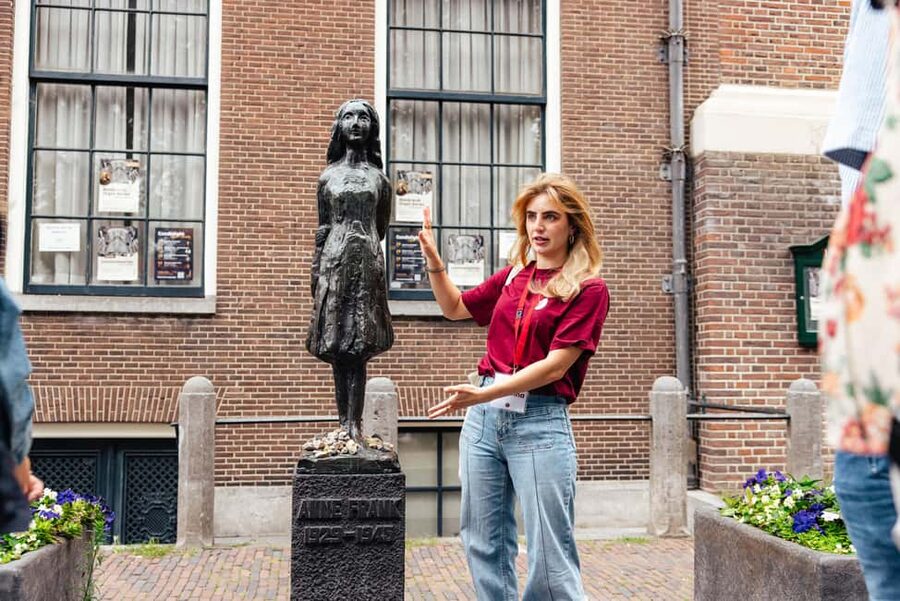
The tour does not treat Jewish history as only something that happened in the past. It points out how the Jewish community lives today in multicultural Amsterdam, so your final moments feel grounded in the present, not only in 1940s trauma.
That ending helps. It keeps you from leaving Amsterdam with a single emotion and no context.
Price and practical value: is $28 worth it?
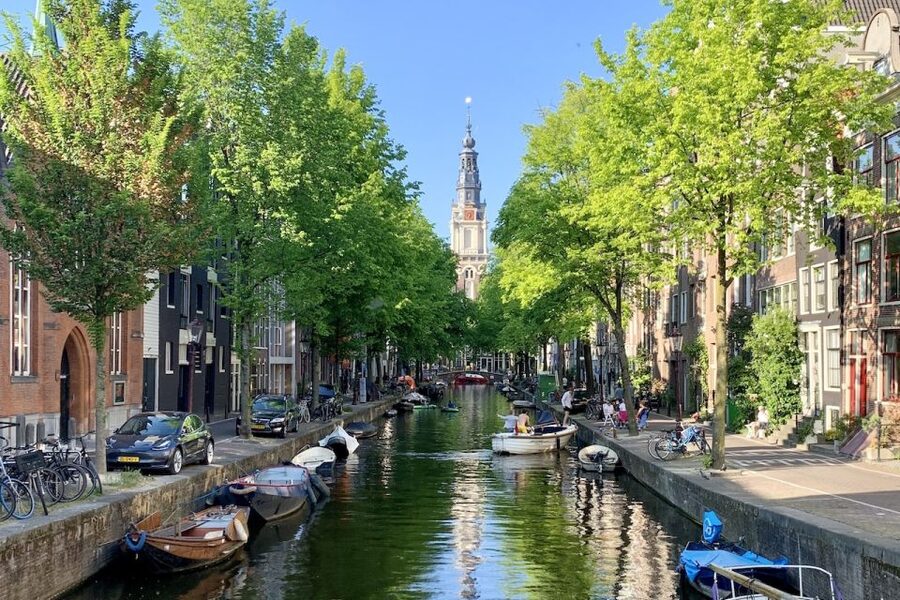
At $28 per person for a roughly 2-hour guided walk, this is strong value if you care about meaning, not only sightseeing. The guide is the main cost, and the tour includes a structured route of sights that can be visited for free during the walk.
It is also a good deal because you are not paying separate admission fees for each stop as part of the tour. You are paying for interpretation, pacing, and a coherent story that links locations.
One more value point: you are walking a compact distance, about 2 to 3 kilometers, so you get a lot of “how it connects” without spending your whole day in transit.
Logistics that matter on a walking tour like this
Bring comfortable shoes and water. You will want both because the walk is steady, not a bunch of hop-on hop-off pauses.
Weather is not optional here. This tour happens in all conditions, so bring an umbrella if rain is likely. Dutch weather loves to change its mind.
Also, note that this walk does not visit the Anne Frank House. If that is your must-do, you will need a separate timed visit.
Who should book this tour, and who might skip it
Book it if you want:
- A guided way to understand the Jewish Quarter and WWII in context
- Anne Frank diary excerpts used as a teaching tool
- A route that ends at major remembrance sites, not just a synagogue exterior
Consider another option if:
- You need a lighter, more casual tour experience
- You are sensitive to Holocaust themes and want to avoid concentrated memorial storytelling
- You specifically want Anne Frank House entry as part of one ticket
This is best suited for first-time Amsterdam visitors who want one focused, structured history experience, or for anyone returning who wants to see the neighborhood differently.
FAQ
How long is the Amsterdam: Anne Frank Walking Tour?
The tour lasts about 2 hours.
Which languages are available?
The tour is available in German, English, Italian, or Spanish.
Is the tour bilingual?
No. It is only in one language option per tour, so you should select the language you want.
Does this tour include entry to the Anne Frank House?
No. The tour does not visit or include entry to the Anne Frank House.
Where do I meet the guide?
Meet your guide at the entrance to the restaurant De Waag, in the middle of Nieuwmarkt.
How much does it cost?
The price listed is $28 per person.
Is it wheelchair accessible?
Yes, the tour is wheelchair accessible.
Do I need to pay admission fees at the stops?
No admission fees are included during the tour, since all sights can be visited for free.
Should you book this Anne Frank walking tour?
If you want a clear, guided way to connect the Jewish Quarter to WWII history, this is an easy yes. For $28, you get a concentrated 2-hour route with a live guide, diary excerpts, and multiple meaningful stops that help you understand why Amsterdam’s Jodenbuurt matters.
Just be honest about your mood. This tour covers deportation and the Holocaust, so go when you are ready to feel it. If you pick the right language and show up with good shoes and a rain plan, you will leave with a much stronger grasp of Amsterdam than you would from wandering the streets alone.
More Tours in Amsterdam






More Tour Reviews in Amsterdam




Continue through the Jewish Quarter




Newly reviewed around Amsterdam


Anne Frank & Jewish Quarter Tours, side by side.
 ★ 5.0Anne Frank’s Story – Guided Walking Tour through AmsterdamFrom $3911,619 reviews
 ★ 4.8Life of Anne Frank and World War II Walking TourFrom $3710,467 reviews
 ★ 4.8Anne Frank Guided Small Group Walking TourFrom $282,722 reviews
 ★ 5.0Anne Frank Walking Tour Amsterdam Including Jewish Cultural QuarterFrom $751,879 reviews
 ★ 5.0Anne Frank’s Last Walk & See Anne Frank House in Virtual RealityFrom $42957 reviews
 ★ 4.7Dutch WWII Resistance Museum Entry TicketFrom $21951 reviews
 ★ 5.0Anne Frank and Jewish Quarter Amsterdam Private Walking TourFrom $157684 reviews
 ★ 4.3Canal Cruise from Anne Frank MuseumFrom $18563 reviews
More ways to plan this visit