
REVIEW · AMSTERDAM CANAL CRUISES
Amsterdam: Historic City Sightseeing Canal Cruise
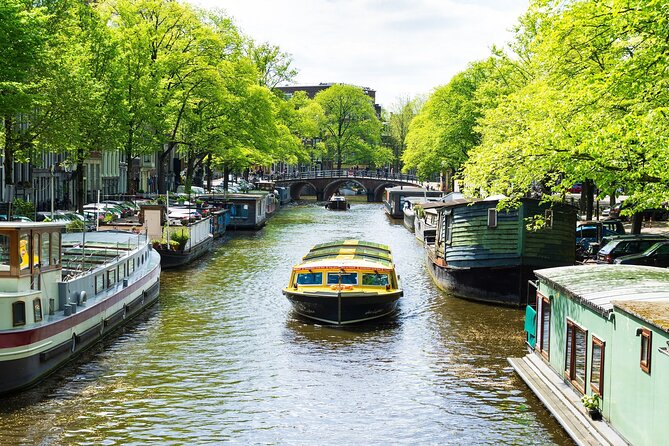
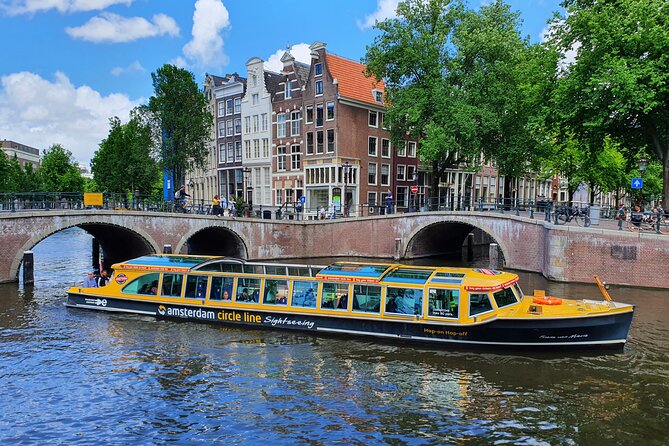
Amsterdam can feel like a maze at first, but this cruise helps. You start right by the Anne Frank House and float through canals tied to centuries of Dutch life, with English commentary plus big views from the boat’s windows and (on many departures) a glass ceiling.
What I love most is the timing. At about 1 hour, you get a lot of “aha” moments without burning your whole morning or afternoon. Second, I like how the route links iconic landmarks with real canal details, so you see the Canal Ring from a practical, postcard-proof angle. The main thing to watch is sound. Some boats lean on recorded narration, and people have reported it can be hard to hear, especially depending on where you sit.
Key things to know before you board
- Pickup right by Anne Frank House so you can combine this with a museum day
- UNESCO Canal Ring viewpoints without walking between scattered streets
- Short, efficient 1-hour loop that fits even tight itineraries
- A route built from details like bridges, houseboats, and canal-house names
- Audio is a mix of narration types (and sound clarity can vary)
Other seats on the water, from open boats to covered salon cruises
A One-Hour Canal Cruise That Actually Fits Your Day
This is the kind of Amsterdam activity that works when you do not want to plan every minute. You get out on the water quickly, you glide past major sights, and you are back with enough time left for a museum, a meal, or just wandering.
At around $18.71 per person, the value comes from compression. Amsterdam’s highlights are spread out, and walking can eat your day. A one-hour cruise is not trying to replace a deeper tour. It is meant to give you the big picture fast, plus enough landmark context to make your later exploring more meaningful.
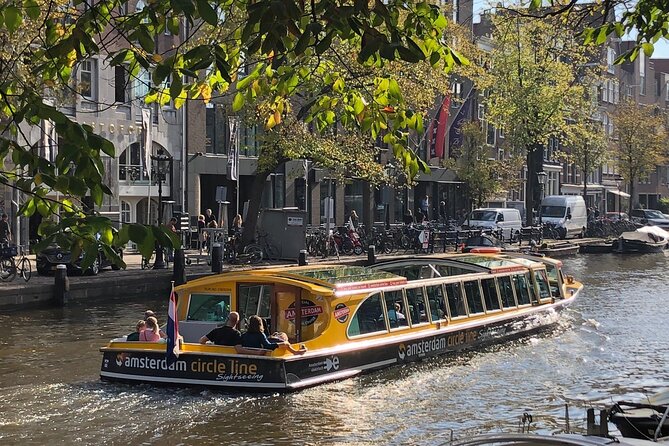
The boat ride is also flexible. You can usually choose to stay inside for warmth or step out for crisp air and sky views, which matters in Amsterdam weather. You can also aim for the day-night look if you book an afternoon or early evening departure, when buildings start lighting up along the canals.
Where to Start: Anne Frank House to the Canal-Belt Views
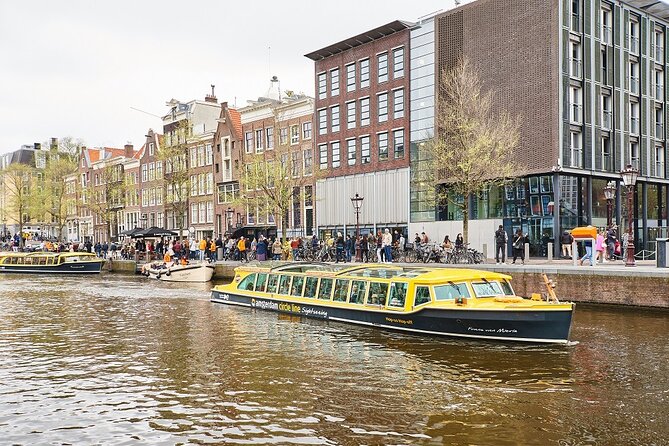
The meeting point is easy to find, right in front of the Anne Frank House. That is a big deal. It means you can schedule this right after your Anne Frank visit (or before), and you will not waste time figuring out a different part of town.
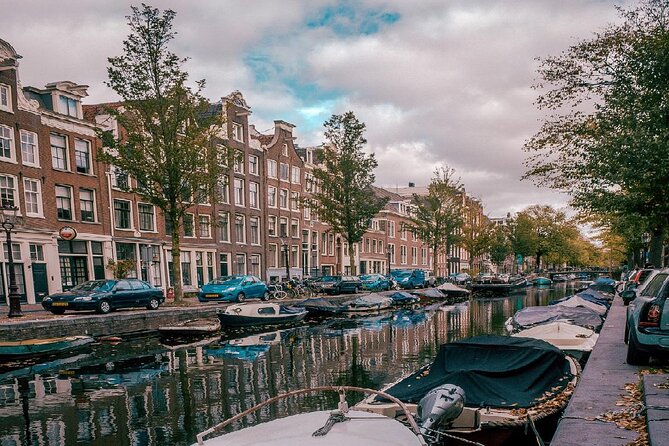
From there, the cruise begins with canal setting and history cues, then moves through central Amsterdam’s canal belt. You will pass recognizable church silhouettes, grand canal houses, and bridges you have probably seen on maps, just in a way that feels clearer and closer to real life.
One caution, based on what I have heard about different departures: arrive on time and double-check you are boarding the right boat for your time. A couple of reports described major delays or confusing changes, and Amsterdam can have canal disruptions depending on the day. If you are traveling with a baby stroller, or you just hate uncertainty, plan to be early rather than “right on the dot.”
The Early Stops That Set the Scene: Canals, Westerkerk, and a Houseboat Museum
The route starts by grounding you in how Amsterdam thinks about water. You begin with context near the Museum of the Canals, which is a good lead-in because it frames what you are seeing: the canal system is not just scenery. It is how neighborhoods formed, how people traded, and how the city’s power showed up in architecture.
Next up, you pass the Anne Frank House itself. Even if you do not go inside that day, seeing the house from the canal side helps you understand why this location mattered. During World War II, Anne Frank hid in the rear hidden rooms of the canal house, known as the Secret Annex (Achterhuis). The building today is protected through the Anne Frank Foundation, created after later development threats.
Then comes the Westerkerk, a Reformed church in central Amsterdam. On the cruise, what you get is perspective. Up close on land, churches can feel like landmarks you simply “walk past.” From water, you see how the building holds space against the canal belt.
You also get details that help the building stick in your mind:
- It was designed by Adriaan Dortsman and opened in 1671
- In the 1800s it was nearly destroyed and then rebuilt
- It later shifted uses, including becoming a concert space
- Today it is still part of the city’s cultural map
Right after church scenery, the cruise shifts tone with the Houseboat Museum. This is one of those stops that makes Amsterdam feel less like a theme park and more like a place people actually live. The museum is in the former cargo ship Hendrika Maria, built in 1914, and the cargo hold is now a cozy living space. The surprise is space and comfort, which you might not expect until you see how the layout works.
If you like practical city details, this is the portion that usually lands best. It reframes the canals as homes, not just views.
Worth comparing with this Amsterdam choice:
- Amsterdam: Evening Cruise with Optional Wine and Snacks★ 4.4 · 19,696 reviews
- Amsterdam All-Inclusive 90-Minutes Heated Cruise by Captain Jack★ 5.0 · 16,101 reviews
- Amsterdam: Open Boat Cruise option Unlimited Drinks & Bite★ 4.6 · 15,046 reviews
- Amsterdam: City Centre Canal Cruise★ 4.2 · 12,827 reviews
Bridges and Canal-Lane Gems You’ll Notice More From the Water
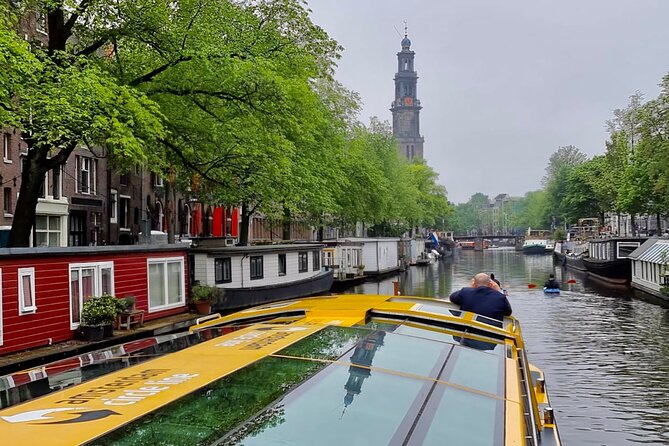
Amsterdam’s bridges are not afterthoughts. They are built-in navigation, history, and neighborhood markers. The cruise gives you a smooth way to spot what makes each one distinct.
Leidsegracht and De Beulingsloot
You will pass along Leidsegracht, a cross-canal that connects Herengracht, Keizersgracht, Prinsengracht, and Lijnbaansgracht, then flows toward the Singelgracht at Marnixstraat. This part is good for understanding how the canal belt connects inside itself, rather than acting like separate “pretty” waterways.
You will also slide past De Beulingsloot, described as one of the oldest and shortest canals in the center. Even when the canal is small, the cruise view makes it easier to see how dense Amsterdam’s waterways are.
The Bartolotti House, a Wealthy-Era Canal House
The Bartolotti House (on Herengracht 170-172) is the kind of building detail that you will miss if you only rush from museum to museum. It was built around 1617 for Willem van den Heuvel tot Beichlingen, one of the richest Amsterdammers at the time, and it has a connection to Giovanni Battista Bartolotti of Bologna.
From the canal side, canal houses become more than “pretty facades.” You can start noticing height, symmetry, and how the street level and water level relate. That helps when you later wander and try to spot the older patterns yourself.
Melkmeisjesbrug: A Bridge With a Milk-Market Past
The Melkmeisjesbrug is a standout because it has a long paper-trail of history. There has been a bridge here for centuries, and it was signed onto maps by Balthasar Florisz. van Berckenrode (1625), Joan Blaeu (1649), and Daniël Stalpaert (1662). In 1883, a pedestrian drawbridge was replaced by a permanent bridge, and later modifications included a 1903 steel-with-iron-girder style update and another steel version from 1966.
It is also named after the milk market that once took place nearby. Later, a milkmaid image was used as a sign for a catering spot near the bridge. This is one of those canal stories that turns a simple crossing into a little history lesson you can keep repeating while you walk.
Brouwersgracht: Canal Belt Boundary and Even a Beauty Award
You will also pass Brouwersgracht, which is part of how Amsterdam marks neighborhood edges. It forms the northwestern border of the Grachtengordel (canal belt), and between Prinsengracht and Singelgracht it lines up with the Jordaan boundary.
Fun extra context: in 2007, Brouwersgracht was voted the most beautiful street in Amsterdam by readers of Het Parool. Even if you do not care about awards, this is a useful way to remember that some canals are “famous” for a reason beyond old maps.
The Cruise Shifts Gear: Amsterdam Centraal, the IJ, and EYE
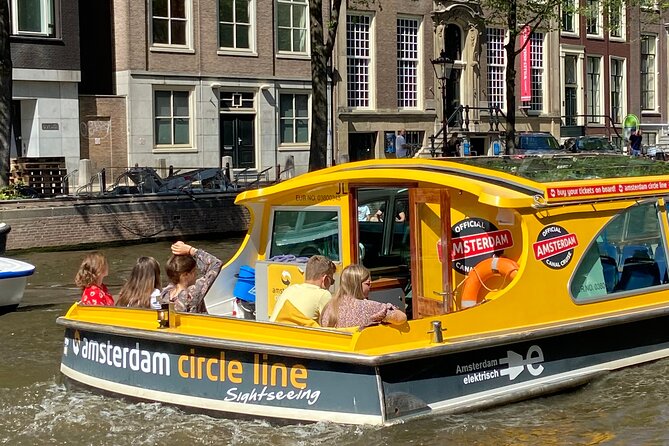
Once you reach the broader city-water edges, the atmosphere changes. You move from the tight, classic canal-belt feel to a more waterfront view.
You pass Amsterdam Centraal, designed by Pierre Cuypers. He is also known for the Rijksmuseum. A subtle detail here is that Cuypers is believed to have focused more on the building decoration, with structural design handled by railway engineers. If you like architecture, this is a moment to look at ornamentation versus engineering.
Then you reach the IJ, described as Amsterdam’s waterfront area. This is where the canal experience expands. Views open up and you get more sky and city skyline in frame.
You also cruise past the EYE Filmmuseum building, designed by Delugan Meissl Associated Architects (also connected to the Porsche Museum in Stuttgart). The building includes multiple cinema spaces, including one large 300-seat cinema and several smaller ones. Even from the water, it feels like a modern counterpoint to the older canal houses.
If you want Amsterdam to cover both past and present in a single ride, this is where the cruise starts delivering.
Posthoornkerk and the Waterway “Switch” Toward the Amstel
The cruise includes Posthoornkerk, designed by P.J.H. Cuypers and opened in phases between 1860 and 1889. It replaced a hidden church called De Posthoorn on the Prinsengracht, which explains how the name carries forward.
This church is worth remembering because of the practical reasons behind its design. The building could not be built as a free-standing church, so it was made extra high and fitted with galleries inside to use limited space effectively. Even the interior has a model influence, the late Romanesque Munsterkerk in Roermond.
From a boat, places like this can feel like a stage set. You see how the “height problem” gets solved, and it clicks why Amsterdam often builds upward.
Then you transition to the Amstel. The Amstel is not just a river. It is tied to major city traditions like Liberation Day concerts, rowing events, and Pride boat parades. The cruise route gives you a different water feel, less like the narrow canal maze and more like a broader urban river corridor.
Hermitage Amsterdam on the Amstel and Stopera’s City-Opera Mashup
A highlight for many people is the view of Hermitage Amsterdam on the Amstel. The museum is a branch of the Hermitage Museum in Saint Petersburg. It sits in the former Amstelhof, a classical style building from 1681. The point for you is not the parent museum connection. It is the setting. A museum on a riverfront canal belt edge makes it feel woven into daily city movement.
Next comes the Stopera complex. This is the kind of Amsterdam building you either love instantly or you just keep staring at it from different angles. It houses both Amsterdam’s city hall and the Dutch National Opera and Ballet. It was designed by Wilhelm Holzbauer and Cees Dam.
And here is the name fact that makes it more fun: Stopera is an abbreviation of the protest slogan Stop the Opera, not a portmanteau of stadhuis and opera. The theater never used the name in its own communications, because it started as protest branding. On a canal cruise, that kind of behind-the-scenes detail makes the building feel less random.
Audio and Seating: How to Get More From the Commentary
The biggest practical variable on this cruise is the narration setup. Several people reported that the experience includes recorded information and that in some cases sound was difficult to hear. Others said the recorded content was clear and easy to follow across languages.
So here’s how to set yourself up:
- If you care about commentary, aim for a spot where you can hear without straining
- If you notice a voice switch between languages, stay patient during transitions, and watch for the moment the audio catches up
- If you plan to sit near the back for views, remember that sound can be weaker in some positions, based on reports
On the positive side, many guides and captains have been described as funny and engaging, with specific names like Robert and Captain Rolif showing up in accounts. When you get that kind of delivery, the cruise feels more like a guided tour and less like a playlist with views.
Who This Cruise Fits Best (and Who Might Want Something Else)
This cruise is ideal if you are:
- On a tight schedule and need a fast overview
- Stacking highlights like Anne Frank House, churches, and canal belt architecture
- Traveling solo and want something relaxed, not a long walking day
- Planning a short first day in Amsterdam and want a “map in motion” feeling
It can be less ideal if you:
- Want a deep, live, stop-by-stop lecture
- Are very sensitive to audio clarity and rely on narration details
- Are the kind of traveler who wants every building decoded with a long history lesson
The trade-off is built-in. A one-hour cruise trades depth for breadth. If you treat it like a smart first pass, it delivers.
Price, Value, and What You Actually Get for About $19
For roughly $18.71, you are buying convenience, not just transport. The cruise gives you:
- Landmark coverage without walking routes between them
- Scenic views from the water that you do not easily replicate on foot
- A guided-style experience even when narration is recorded
- A short duration that protects your schedule
If you are doing only a couple of paid activities in Amsterdam, this one helps you stretch the rest of your time. You’ll recognize buildings later when you pass them, and that makes your free wandering feel more confident.
Should You Book This Amsterdam Canal Cruise?
Yes, if you want a quick, efficient canal-belt overview that starts right by the Anne Frank House. It is especially worth it when the weather cooperates and you can enjoy views from both inside and outside.
Hold off or choose a different option if narration quality is your top priority. Sound clarity can vary depending on seating and the narration setup, and a few reports complained about poor audibility or a lack of historical commentary on certain departures.
If you are flexible and ready to use the cruise as a fast “get your bearings” tool, this one-hour ride is a solid booking. It gives you a lot of Amsterdam in a small block of time, with the canals doing the heavy lifting.
FAQ
How long is the Amsterdam canal cruise?
It lasts about 1 hour.
Where is the meeting point?
The meeting point is in front of the Anne Frank House.
Is the tour offered in English?
Yes, it is offered in English.
What ticket format do I receive?
You get a mobile ticket.
How many people are on board?
The experience has a maximum of 68 travelers.
Is it okay if I travel with a service animal?
Service animals are allowed.
What is the cancellation rule for a full refund?
You can cancel up to 24 hours in advance for a full refund.
More Cruises & Boat Tours in Amsterdam

More Tour Reviews in Amsterdam
Canal Cruises, Three More Ways

Newly reviewed around Amsterdam



Amsterdam Canal Cruises, side by side.
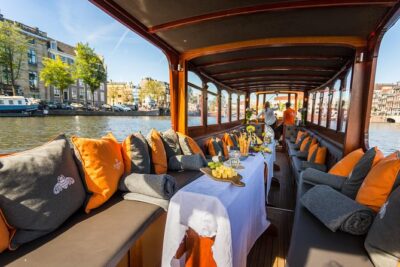 ★ 5.0Amsterdam Classic Saloon Boat Cruise with Drinks and CheeseFrom $2131,825 reviews
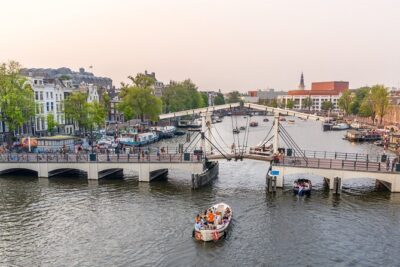 ★ 5.0Amsterdam Luxury Canal Cruise + Unlimited Drinks & Bites optionFrom $1830,518 reviews
 ★ 4.6Classic Boat Cruise with Optional Cheese & WineFrom $1822,925 reviews
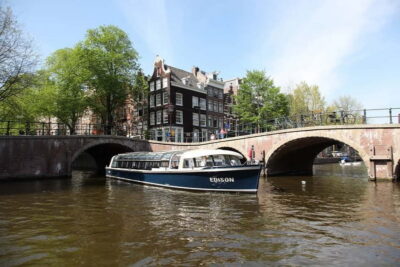 ★ 4.475 Minute City Canal Cruise with Audio GuideFrom $1717,501 reviews
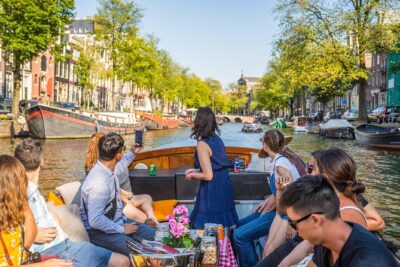 ★ 5.0Amsterdam All-Inclusive 90-Minutes Heated Cruise by Captain JackFrom $2716,101 reviews
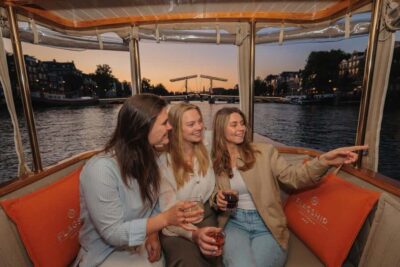 ★ 4.6Open Boat Cruise option Unlimited Drinks & BiteFrom $2215,046 reviews
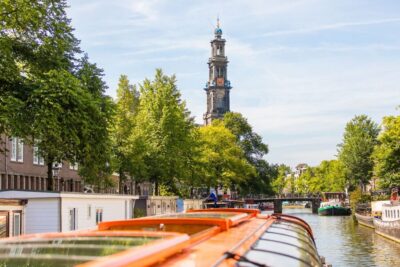 ★ 4.2City Centre Canal CruiseFrom $1812,827 reviews
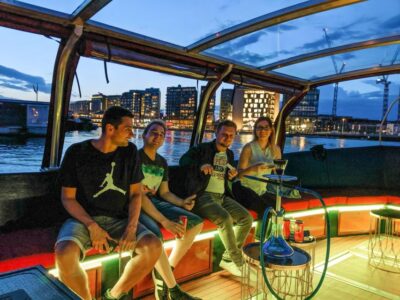 ★ 4.7Smoke and Lounge City Boat CruiseFrom $278,572 reviews
More ways to plan this visit