
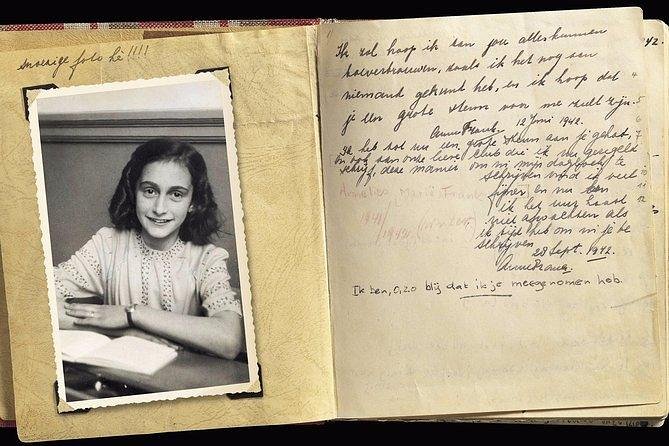
REVIEW · ANNE FRANK & JEWISH QUARTER TOURS
Anne Frank and the Jewish History of Amsterdam Private Tour
Amsterdam turns sobering fast. This private Jewish history walk connects synagogue life, Nazi-occupied Amsterdam, and the Anne Frank House area with smart city context all the way through Dam Square.
I love the way the guide threads the story together, so you see more than just Anne Frank. You also get a very human reset with a stop for apple pie and coffee or tea, which matters when the memorial stops hit hard.
One thing to plan for: Anne Frank House entry depends on ticket availability. If tickets are sold out, you still get an included virtual reality alternative instead of going inside.
Key moments worth circling
- Start outside the Portuguese Synagogue, a stunning building still tied to Amsterdam’s Jewish community
- Synagogue-focused museum area, with multiple synagogues inside the Jewish Historical Museum complex (admission not included)
- WWII stops that explain the why, including the February strike story at Dokwerker (ticket free)
- Memorials that put faces and names to history, including the Holocaust Namenmonument with over 100,000 names
- A practical city circuit, passing Hortus Botanicus, Plantage, Artis, Dam Square, and Westerkerk
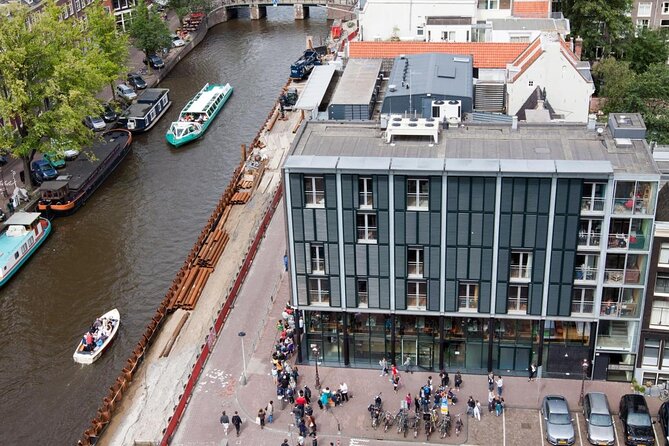
- Anne Frank House tickets handled for you, plus a VR option if needed
More careful routes through Amsterdam’s Jewish history
Where the tour begins: the Portuguese Synagogue and the feeling of place

You meet near the Portuguese Synagogue of Amsterdam, at Mr. Visserplein 3. Even before you start walking, the building sets the tone. This is one of those landmarks that instantly makes Amsterdam feel layered, not random.
From the start, the tour leans into a simple idea: history is not only in museums. It is also in the streets, in the neighborhood edges, and in the way communities kept going even when life got dangerous. You’ll learn how the site connects to Jewish museum life that is still relevant to the community today.
One practical upside: starting here means you get good orientation fast. It helps you understand why later stops feel connected instead of like a list of sad monuments.
Jewish museum area: synagogues, names, and the everyday architecture of faith
After the synagogue start, you move into the area around the Jewish Historical Museum. You’ll see the four Jewish synagogues that are part of the museum setting, plus the JHM Children’s Museum area nearby.
Here’s the benefit for your trip: even if you do not go inside paid exhibits, you still get the visual geography. Seeing synagogues in context helps you grasp that Jewish life in Amsterdam was not one single story. It had different spaces, traditions, and community rhythms.
The tradeoff is straightforward: the museum admissions are not included. So if you want to go in fully, you may need to pay extra on your own. The tour still covers the important story beats outside, though, and it makes the paid options feel more meaningful if you choose to add them.
Dokwerker and the February strike story from the street level
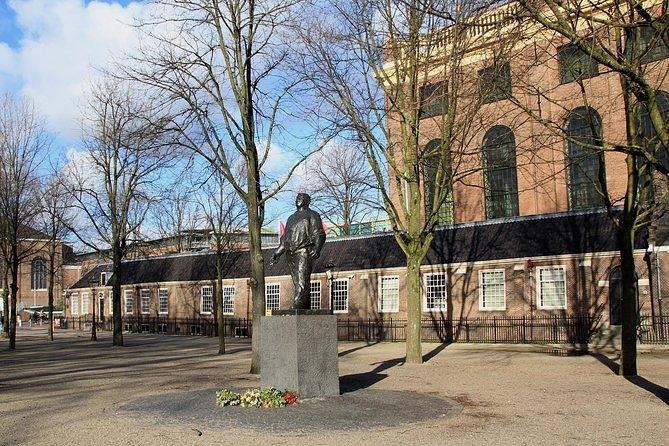
You then reach Dokwerker, where the guide shares the story of the February strike against the Nazi occupation in 1941. This is a stop that I think many people underestimate. Not every history tour gives you labor resistance as part of the narrative, not just the well-known hiding and deportation story lines.
Why it works: the tour shows you that resistance was not one dramatic moment. It was also people pushing back in the middle of occupation, using networks, work routines, and solidarity.
This is a good moment to slow down mentally. You can hold the strike story in your head while you move toward the memorial sites, so the later scenes do not feel like separate chapters.
Other private routes shaped around your group
- Rijksmuseum Amsterdam Small-Group Tour with Private Upgrade★ 4.5 · 1,547 reviews
- Van Gogh Museum Tour Reserved Entry Semi Private★ 5.0 · 1,437 reviews
- Private Amsterdam Red Light District and Coffee Shop Tour★ 5.0 · 763 reviews
- Anne Frank and Jewish Quarter Amsterdam Private Walking Tour★ 5.0 · 684 reviews
Wertheimpark memorials: Auschwitz-linked remembrance and the names wall
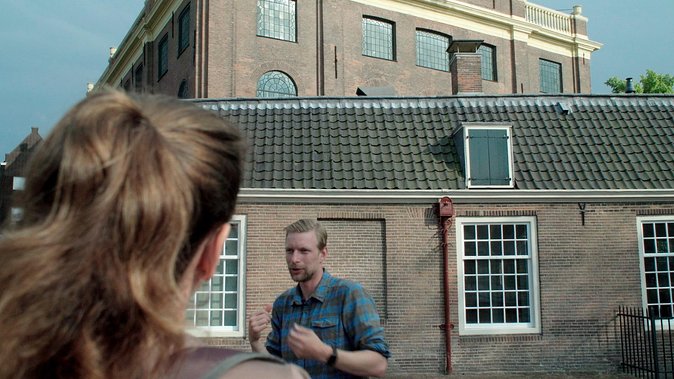
One of the most powerful segments comes next, around memorials in Wertheimpark and the Holocaust Namenmonument.
At Wertheimpark, you learn about the Memorial of Auschwitz in the park setting. It is not just a photo stop. The guide explains why this kind of remembrance exists in a city like Amsterdam, which helps you understand the emotional weight behind the quiet design.
Then you move to the Holocaust Namenmonument, where you can enter to see over 100,000 names of Jews who did not survive the Holocaust written on the walls. If you come in with any idea that the Holocaust was only numbers, this stop resets that. Names do that. They humanize, and they also force you to read slowly.
A practical note: this kind of place can be emotionally intense. The tour gives you time to be there, but you should still pace yourself. If you need a breath, take it. No one is rushing you out.
Hortus Botanicus and Plantage: where Amsterdam’s beauty meets hard history
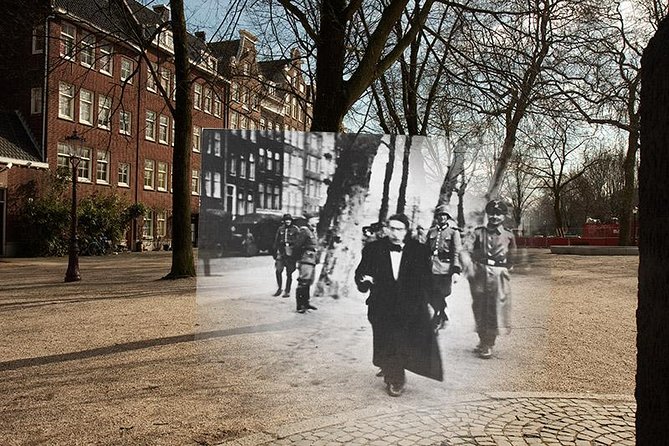
Between the memorial sites and the later Anne Frank House area, the tour passes Hortus Botanicus, one of the oldest botanical gardens in Amsterdam. It is a rare shift in mood, and it is useful.
Why I like this break: gardens and canals can make the city feel alive again. When you are walking from solemn sites, you need a small mental reset so you can keep absorbing information without burning out.
Then you walk through Plantage and the East, described as the most beautiful part of the canal district. This part matters because it gives you a sense of what the Jewish community environment looked like day to day. You are not only seeing where persecution happened. You are also learning how people lived in a neighborhood shaped by canals, streets, and local life.
A drawback to consider: you will still be outside a lot. On cold or rainy days, plan accordingly, even though the tour keeps moving at a manageable pace.
Artis Amsterdam Royal Zoo: hiding stories in a surprising place
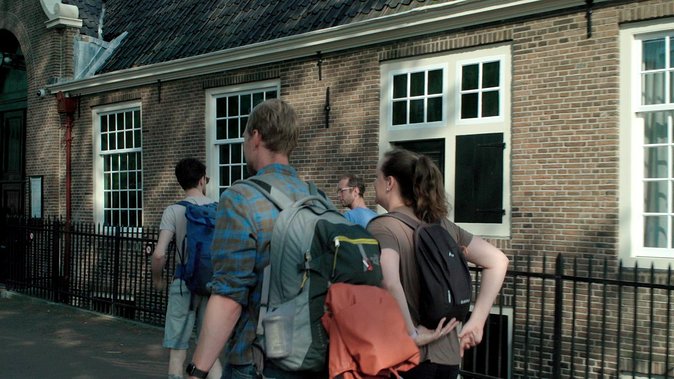
One of the more unusual and memorable stops is ARTIS Amsterdam Royal Zoo. You learn about people who were hiding in the zoo.
This is a smart inclusion. It pushes you past the usual “only hiding in one famous place” frame. Amsterdam had different hiding possibilities across different types of buildings and institutions, and the guide connects that idea to the city’s layout and wartime constraints.
The zoo admission is not included, so you are not doing a full zoo visit on this tour. You are using the location as a storytelling anchor, and that keeps the pace focused.
Dam Square and Westerkerk: the city center backdrop to the Anne Frank area
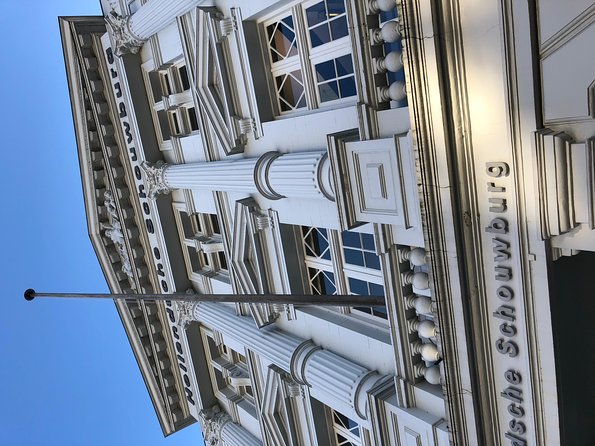
As you move toward the center, the tour passes Dam Square, with quick time to walk around the heart of the city. You’ll see the Royal Palace and the Nieuwe Kerk from the area.
This section works because you are moving between scales. After memorial stops, it is helpful to see the broader city. You learn how the Holocaust history sits alongside the everyday Amsterdam you came to see.
Then you reach Westerkerk, the inspiring church and tower that Anne could see from her hiding place. The guide also mentions the carillon bells playing every 15 minutes. Even if the bells are not playing at that exact moment, the idea lands. It gives you the sense of time passing, and time mattered in the Secret Annex story.
One nice touch: you are not only getting facts. You are also getting a mental picture of the view lines between Westerkerk, the neighborhood streets, and the Anne Frank House surroundings.
Anne Frank House time: tickets, entry, and the VR alternative
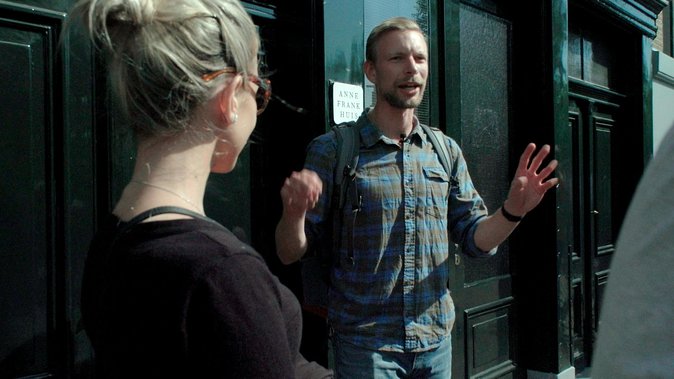
The tour ends at the Anne Frank House area on Westermarkt 20, with an important final segment. You hear about the relationship between the secret annex, the local neighborhood, and Westerkerk. Then you get the Anne Frank House experience in a way that the tour helps you access.
Here’s the key detail for planning: if you book 7 weeks or more in advance, the tour aims to provide tickets to visit the Anne Frank House. If tickets are sold out by the time you book, the tour includes a virtual reality simulation option instead.
Which one is better? Obviously, the real entry is the one you want. But the VR backup is still valuable because it helps you avoid the worst-case scenario of leaving the Anne Frank topic incomplete. You still get a guided structure that makes the story easier to place in the physical setting.
Also, the tour only shows the Anne Frank House from the outside until the final segment. That pacing helps. You are not immediately thrown into the most intense part. You get context first, so the final museum visit lands harder in a good way, not as a disconnected stop.
Optional tram ride and the included pie: small perks with real value
This is not only about memorials and museums. It includes practical small upgrades that make the tour feel smooth.
You’ll get a stop for one of the great Dutch favorites: apple pie with coffee or tea. It is included in the tour, and it is genuinely smart. When you are walking and standing a lot, that warm pause helps you keep your focus for the next half hour.
There is also an optional tram ride. If weather is rough or your legs need a break, that can make the route feel less like a forced march.
The tour is private, so it is just your group. That matters because you can ask questions in real time, and the guide can adjust the pace. People with kids from 10 years and older can join too, as long as everyone is comfortable with emotional subject matter.
Price and value: what you’re paying for at $95.58 per person
At $95.58 per person for about 3 hours, this is not the cheapest walk in Amsterdam. But it is priced like a premium experience for a reason.
You are paying for:
- A private guide who connects Jewish Amsterdam and WWII events into a coherent route
- Help with Anne Frank House tickets, subject to availability
- The virtual reality alternative if tickets are sold out
- Included food, plus an optional tram ride
- A route that covers multiple high-impact locations without making you plan every detail
Also, the tour is only about 2 kilometers (1.5 miles) of walking. That is a manageable distance for a history-heavy day. The stops are spaced so you can process, not just rush from one sign to another.
If you were to do this on your own, you might save money on the guide. You would still face the real-world problem of Anne Frank House ticket scarcity and the risk of arriving without a plan. This tour turns that uncertainty into a built-in option.
Who this tour fits best
This is a great choice if you want:
- More than an Anne Frank House visit, meaning you want the surrounding Jewish history and Amsterdam context
- A guided explanation that helps you understand why specific places matter
- A structured route that includes multiple memorial stops without feeling chaotic
It is also a good match for people who care about story clarity. Guides on this tour are often described as excellent teachers and strong question-answerers. Names you may encounter include Chris, Kayleigh, Inbal, Guido, Martina, Ester, Manoek, and John, and the common thread is how they connect place to meaning.
If you prefer casual sightseeing with little emotional heaviness, this might feel like too much. But if you want honest, place-based understanding, it is a strong fit.
Should you book this Anne Frank and Jewish History tour?
If your goal is to understand Amsterdam’s Jewish story and WWII impact in a way that feels grounded in real streets, I think it is worth booking.
Book it especially if:
- You want Anne Frank House access handled for you
- You like the idea of a route that includes synagogues, memorials, and neighborhoods, not only one attraction
- You can book 7 weeks or more in advance to improve your chances of real entry
Do it with a simple plan:
- Wear comfortable shoes, because you will do standing and walking outdoors
- Carry a layer for weather, because the tour keeps moving
- Go in with patience for heavy moments, especially the names memorial
FAQ
How long is the tour, and how much do we walk?
The tour is about 3 hours and you will walk about 2 kilometers (1.5 miles).
Where do we meet and where does the tour end?
You start at the Portuguese Synagogue of Amsterdam, Mr. Visserplein 3, 1011 RD Amsterdam. The tour ends at the Anne Frank House area, Westermarkt 20, 1016 GV Amsterdam.
Is this tour private?
Yes. It is a private walking tour, and only your group participates.
Are tickets to the Anne Frank House included?
Yes, tickets to visit the Anne Frank House are included as part of the tour package, with assistance for ticket purchase subject to availability.
What if Anne Frank House tickets are sold out?
If tickets are not available, the tour includes a virtual reality simulation as an alternative option.
Is the Jewish Historical Museum included in the price?
No. Entry/admission for the Joods Historisch Museum is not included.
What is included besides the guide and walking?
In addition to the private guide, the tour includes one of Amsterdam’s apple pies with coffee or tea, and there may be an optional tram ride.
More Tours in Amsterdam






More Tour Reviews in Amsterdam




Continue through the Jewish Quarter




Newly reviewed around Amsterdam


Anne Frank & Jewish Quarter Tours, side by side.
 ★ 5.0Anne Frank’s Story – Guided Walking Tour through AmsterdamFrom $3911,619 reviews
 ★ 4.8Life of Anne Frank and World War II Walking TourFrom $3710,467 reviews
 ★ 4.8Anne Frank Guided Small Group Walking TourFrom $282,722 reviews
 ★ 4.9Anne Frank Walking Tour – Guided in EN/DE/IT/ESFrom $282,676 reviews
 ★ 5.0Anne Frank Walking Tour Amsterdam Including Jewish Cultural QuarterFrom $751,879 reviews
 ★ 5.0Anne Frank’s Last Walk & See Anne Frank House in Virtual RealityFrom $42957 reviews
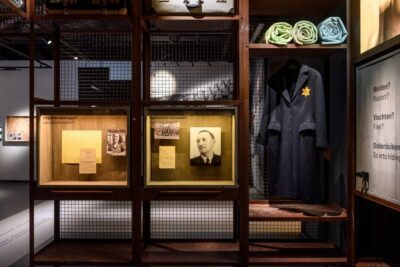 ★ 4.7Dutch WWII Resistance Museum Entry TicketFrom $21951 reviews
 ★ 5.0Anne Frank and Jewish Quarter Amsterdam Private Walking TourFrom $157684 reviews
More ways to plan this visit