
REVIEW · HISTORICAL TOURS
Small Group LGBTQ+ History Tour in Amsterdam
Amsterdam has secret LGBTQ stories worth hearing. This is a compact, small-group walk (max 8 people) that brings LGBTQIA+ Amsterdam into focus, using the city’s streets and monuments as your timeline. I especially like how the guide’s storytelling approach makes names and events feel immediate, not textbook.
One drawback to plan for is that the tour runs in good weather. Since you’re outside for each stop, heavy rain can disrupt the schedule. Also, some moments are about persecution and state violence, so it is not a light, fluffy stroll.
Key Takeaways Before You Walk

- Max 8 people keeps the pace human and the stories easy to follow
- Every stop is free to access, so your money goes to the guide, not ticket lines
- You cover multiple eras with concrete landmarks tied to real LGBTQIA+ events
- The route threads nightlife, canals, and monuments so the city feels linked, not random
- You end at Torensluis by the Multatuli sculpture, with a final story that hits hard
- English-language tour with a guide who is both local and a history fanatic
More chapters of old Amsterdam, told on foot
Why This 2-Hour LGBTQ+ Amsterdam Walk Feels Personal
Amsterdam can overwhelm you fast. This tour avoids that. In about two hours, you get a tight route and a clear through-line: how LGBTQIA+ life, love, and rights have been lived, hidden, fought for, and remembered here.
The first thing you notice is the group size. With no more than eight travelers, you are not shouting over each other or trying to hear past a crowd. It feels like a conversation that happens on the move, not a lecture.
Second, the guide style matters. The best versions of this tour are led by a local, storyteller type, with real enthusiasm for the details. In past runs, guides such as Guus and Elyzabeth have stood out for keeping people engaged even when the weather was cold and wet. That matters because this topic is heavy at times, and you still want it to feel human, not grim.
Before You Go: Meeting Point, Timing, and What the Route Is Really Like
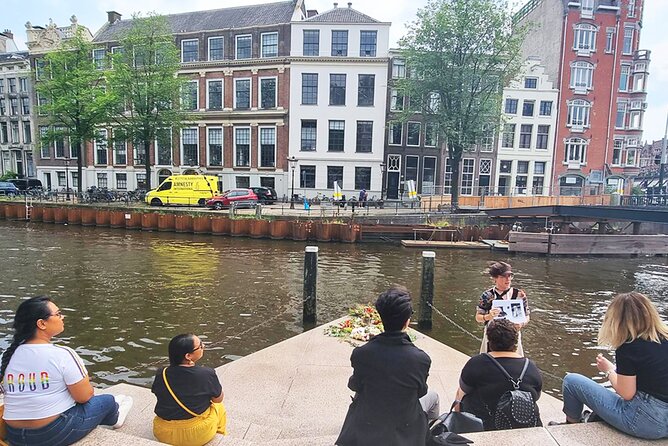
You start at Utrechtsestraat 4, 1017 VN Amsterdam. The tour ends on Torensluis bridge, by the Multatuli sculpture. That end point is handy because it drops you near a classic canal area where you can keep wandering on foot.
Expect an outdoor walking tour with multiple stops, each one designed to last roughly 15 to 20 minutes. There’s an overview at the start, then the route slows down as the stories get more specific. Most stops are ticket-free to enter, so you are not pausing for museum logistics.
A practical note: the tour needs good weather. If you are visiting in a season with unpredictable rain, dress for it. A light rain layer and grippy shoes are smart.
Language is English, and confirmation is handled after booking, unless you book very close to departure, in which case you get confirmation within 48 hours if space is available.
And yes, service animals are allowed, and the meeting area is near public transportation.
Stop-by-Stop: Rembrandtplein to Torensluis
This route is built like a story arc. It starts where Amsterdam’s energy is loud and public, then it moves into places where history hides in plain sight. By the time you reach the Gay Monument and the canal houses, you are seeing the city the way locals might, not the way postcards do it.
Here’s how the itinerary plays out, stop by stop.
Worth comparing with this Amsterdam choice:
- Amsterdam: Rainbow Rural Bike Tour With Local Gay Guide★ 5.0 · 4 reviews
Rembrandtplein: Nightlife, Affairs, and a Landmark Gay Marriage Story
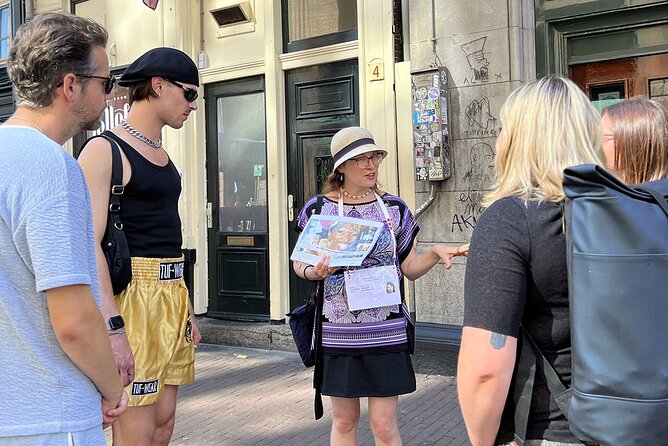
Your first stop is Rembrandtplein, Amsterdam’s nightlife center. Even if you’ve been here before, the tour asks you to look past the bars and crowds.
You get a flying overview of Amsterdam, then the guide threads in LGBTQ clubgoers and surprising power stories. One of the highlights is the tale of a married king who had affairs with men. That twist matters because it shows how sexuality and power intersected in ways that the public narrative often smooths over.
You also hear about the world’s first legal gay marriage, tied to Amsterdam nightlife rather than some distant, sealed archive. The point is simple: this community history was not all whispers and back rooms. It was right here, in the places people gathered.
What to watch for: Rembrandtplein can feel chaotic. Listen closely in the first minutes. The guide sets the framework that makes later stops click.
Munttoren (Munt Tower): When a Shopkeeper Tried to Protect Friends

Next up is Munttoren, also known as the Munt Tower. This stop shifts the mood. The stories move from nightlife and public life into the reality of state pressure.
The key tale here is of a shopkeeper who tried to protect his friends in the face of state violence. This is one of those stories that reminds you rights do not appear out of nowhere. People did something, often at real personal risk.
Why this stop is valuable: it gives you a lens beyond famous names. It shows ordinary people becoming protectors, which is often the part of LGBTQIA+ history that gets skipped when cities tell their “official” story.
Potential drawback: the subject matter is serious. If you want only celebration and art, you might feel the heaviness more strongly here than you expect.
Koningsplein: The Name the Church Tried to Keep Quiet
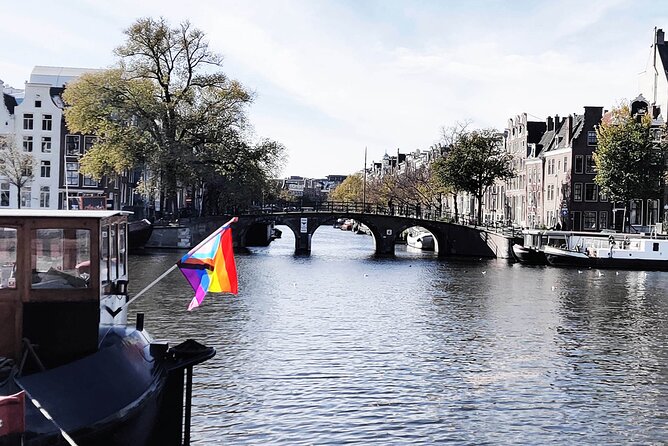
At Koningsplein, the tour turns toward religious power and public image. You learn how a familiar name ties into LGBTQIA+ history in a way the Catholic church tried to keep hidden.
I like how this stop teaches you a practical way to read cities: the same street signs and monuments can hold multiple layers, and not all of them are meant to be obvious. This is the kind of story that makes you look at a “normal” square and think, what else is being managed, edited, or suppressed?
The “hidden in plain sight” theme is the whole point of the walk. Tourists rush through squares like this. The guide slows you down.
Keizersgracht (Emperor’s Canal): The Pope of the Gays and a Literary Love Triangle
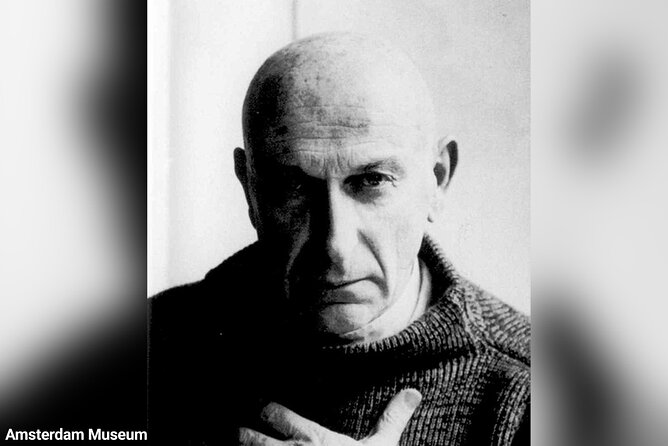
Then you step onto Emperor’s Canal, Keizersgracht, and the stories get wonderfully strange. Expect wild claims in a good way, because the guide uses them to explain how queer culture showed up through literature, rumors, and social life.
You’ll hear about the Pope of the Gays. You’ll also hear a 17th-century literary lesbian love triangle. And there’s a story about a pompous doctor who may have accidentally given lesbians legal cover.
That last part is a great example of how history can turn on tiny, human errors. It also shows why legal rights are often tangled with daily life, public opinion, and the people who happened to be in charge at the time.
How to get more out of this stop: watch the canal architecture. When the guide connects the story to the geography, the city starts to feel like a character in the plot.
Gay Monument: Celebration, Mourning, and a Badass Lesbian Hero
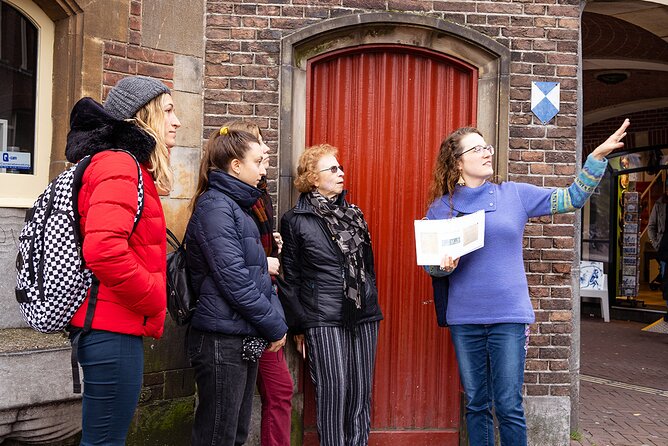
The tour’s next anchor is the Gay Monument. It’s a place of both celebration and mourning for Amsterdam’s LGBTQIA+ community. That dual role matters. This is not just a photo stop. It is a public marker of memory and survival.
You use the monument to celebrate a badass lesbian hero, which is a nice tonal balance after the heavier stories. The monument helps you shift from past struggles to the act of remembering them out loud.
Why it works: monuments freeze a moment, but the best guides explain what happens before and after. Here, the story is about both joy and grief, and how a city decides to acknowledge both.
Herengracht: Queer Resistance in an Inconspicuous Canal House
Herengracht brings a different kind of courage into focus. Here you get inspired by queer Resistance fighters who worked in an inconspicuous canal house.
That detail, inconspicuous, is doing a lot of work. It signals how resistance often happened where nobody expected it. Not in the spotlight, but inside ordinary spaces.
What you’ll take away: by the time you leave Herengracht, you should feel a clearer connection between queer life and political action. This isn’t just identity as culture. It is identity as a reason people chose risk.
If you like history that links individuals to broader movements, this is one of the stops that makes the tour feel more than a list of facts.
Torensluis: A Trans Soldier’s Message from the Militia Era
The tour ends at Torensluis, with a story tied to a trans soldier who served in 18th-century Amsterdam’s militia. The most striking part is the surprising message in the story, which gives the end of the tour a sense of momentum and meaning.
Ending here on the bridge is also smart. The location lets the guide land the final idea: LGBTQIA+ history is not one isolated theme. It belongs in the normal flow of Amsterdam life, including institutions you might assume were closed to queer people.
Practical payoff: after you finish, you’re in a good zone for continuing by foot. You already have a new way to read the canals and street layout.
Price and Value at About $47.34 for a Local Storyteller
At about $47.34 per person for roughly two hours, this tour is priced like a serious small-group experience. The value comes from a few concrete factors.
First, the group size is capped at eight. That usually means you get more attention from the guide, and you spend less time trying to make out details in a crowd.
Second, the guide is included, and the guide is the product here. This is a history-and-story experience, and it works because the pacing is designed around speaking, not just walking.
Third, the stops listed are free to access, with admission marked as free at each stop. That matters because you avoid “pay again” tourism math. Your budget goes toward the guide and the time, not extra gate fees.
If you love Amsterdam but want more than art and bikes, this price feels fair. It is also a good deal for history buffs who want a guided route instead of piecing everything together from multiple sources.
What You’ll Like Most, and What Might Not Fit
You will probably love this tour if:
- you enjoy LGBTQIA+ history and want it tied to real Amsterdam streets
- you like small groups and hate being packed into a crowd
- you want stories that mix romance, power, legal change, and resistance
- you want a route that shows you parts of the city most people ignore
You might want to think twice if:
- you need a very light tone all the way through, because some stories involve state violence and suppression
- you dislike outdoor walking when the weather turns (good weather is required)
In other words, this is not only for LGBTQIA+ visitors. It is for anyone who loves the way real places hold real stories.
Who Should Book This Tour, and Who Might Skip It
Book it if you want a focused, high-impact introduction to LGBTQIA+ Amsterdam. It is ideal for first-timers who already know the basics and want a deeper read, and it is also great for repeat visitors who feel like they’ve seen the usual highlights.
Skip it if you only want modern culture and entertainment, with minimal talk of persecution and legal battles. Also skip if your travel dates are extremely weather-dependent. Amsterdam can be unpredictable, and this tour expects good outdoor conditions.
The sweet spot is a traveler who likes stories that connect places, people, and social change.
FAQ
How long is the Small Group LGBTQ+ History Tour in Amsterdam?
It runs for approximately 2 hours.
What is the group size limit?
The tour has a maximum of 8 travelers.
Is the tour offered in English?
Yes, it is offered in English.
Do I need tickets for the individual stops?
Admission is listed as free for each stop included in the itinerary.
Where do I meet the guide?
The meeting point is Utrechtsestraat 4, 1017 VN Amsterdam, Netherlands.
Where does the tour end?
The tour ends on Torensluis bridge, by the Multatuli sculpture.
Is a mobile ticket provided?
Yes, the tour includes a mobile ticket.
Is the tour suitable for most travelers?
It states that most travelers can participate.
Are service animals allowed?
Yes, service animals are allowed.
What if the weather is bad?
The experience requires good weather. If it is canceled due to poor weather, you will be offered a different date or a full refund.
If you tell me your travel dates and what kind of history you like most, I can help you decide whether this is your best match for Amsterdam.
The Older City, Told Properly






More Tours in Amsterdam






More Tour Reviews in Amsterdam






Newly reviewed around Amsterdam




Historical Tours, side by side.
 ★ 5.0Amsterdam Food and Cultural Tour with TastingsFrom $912,442 reviews
 ★ 4.5Haunted History and Ghost Walking TourFrom $30488 reviews
 ★ 5.0Amsterdam High-End Dutch Food & History Tour – Up to 8 guestsFrom $157482 reviews
 ★ 4.5Historic City Sightseeing Canal CruiseFrom $18444 reviews
 ★ 4.6Historical Highlights Walking Tour with TastingFrom $34381 reviews
 ★ 5.0Anne Frank and the Jewish History of Amsterdam Private TourFrom $95307 reviews
 ★ 4.53-Course Meal in Historic 1st Class Waiting RoomsFrom $61292 reviews
 ★ 4.8Highlights & History Walking TourFrom $32266 reviews
More ways to plan this visit