
REVIEW · HISTORICAL TOURS
Historical tour of Amsterdam with Italian guide
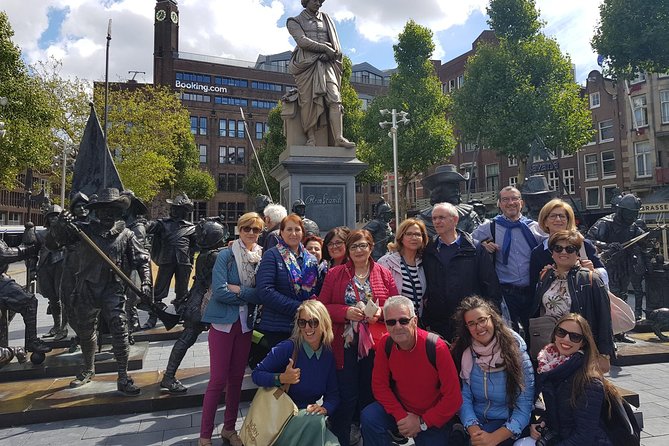
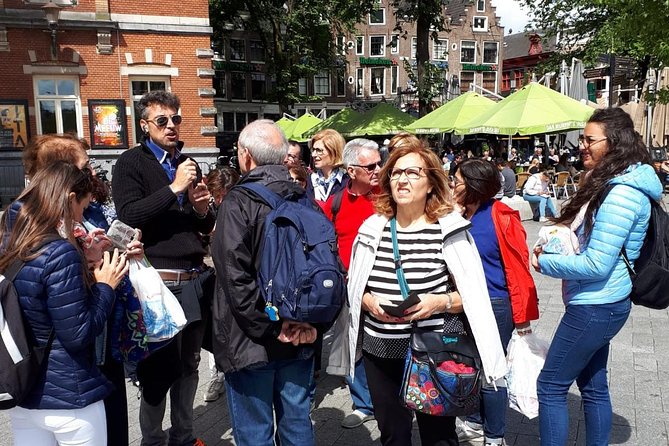
First-time Amsterdam? This tour helps you settle in fast. I like how an Italian mother-tongue guide brings the city alive with professional storytelling and little curiosities along the way, turning big landmarks and quiet corners into a single, easy narrative. You’ll also get that fun goal of living like an Amsterdammer for a few hours, not just ticking boxes.
The one thing to consider: museum entrances are excluded, so if you want to go inside the Van Gogh Museum or other stops, you’ll need your own ticket and a plan for after the walk.
Key highlights you will actually feel on the street
- Italian mother-tongue guidance that keeps history clear and conversational
- A smart 3.5-hour route that links canals, squares, and neighborhoods into one story
- Real Amsterdam mood stops like the Flower Market area and Vondelpark timing
- Anne Frank and WWII context from outside the house, with history put in place for you
- Guided context around the Red Light District, focused on understanding more than spectacle
- End point at Museumplein, convenient for jumping into major museums next
Worth comparing with this Amsterdam choice:



A 3.5-hour Amsterdam intro with an Italian voice
Amsterdam can feel like a postcard that never ends. This tour is designed to fix that feeling fast by giving you an orderly walk through the city’s key eras and places, with an Italian guide setting the pace. You start in the Damrak area, then move through Central Amsterdam, Singel, and the inner-ring canals and squares, with a steady rhythm of stories that connect what you see to why it matters.
What I find most useful here is the guide’s focus on “how the city became this.” The tour isn’t just dates and names. It’s about customs, daily life, and the conflicts that shaped the city, from wars of religion to the people whose ideas traveled across Europe. The guide also weaves in famous references like Erasmus and Martin Luther, then lands on the famous memoirs tied to Anne Frank. Even if you know some of this already, the walk style helps it click.
You’ll be walking for about 3 hours and 30 minutes, and the group size stays reasonable, with a maximum of 50 travelers. That’s big enough to be efficient, but small enough that you still get a guided experience rather than a wandering crowd. You also receive a mobile ticket, which is handy in a city where you’ll be out and about all day anyway.
The most practical part: the tour ends on Museumplein around 1:30 pm, right when many people are deciding what museum to do next. That timing can save you hours of guessing.
Why the route makes sense, not just where you go
The stops are chosen to tell a story you can follow with your feet. You’ll move from the busy core toward neighborhoods and parks, and the route includes both famous sites and the kind of street geography that helps you later when you explore on your own.
Here’s how the flow typically works in plain terms:
- Start in the center where Amsterdam’s history is layered and everything is close.
- Cross through canal streets and older trade areas, where you can picture how commerce shaped the city.
- Hit the “you are really in Amsterdam” zones, like the De Jordaan area and the flower-market energy.
- Finish where museum choices are easy, so your afternoon doesn’t depend on guesswork.
Along the way, the guide covers a lot of ground themes, including the rise of merchants and craft, the way religion and politics affected daily life, and how Amsterdam’s tolerance and contradictions have been debated for centuries. The point is not to make you an expert by the end. It’s to give you a usable map of ideas you can carry into the museums and neighborhoods afterward.
The tour also includes sights tied to trade and wealth, such as the spice customs house and the king’s warehouses. Those sound like “background” stops, but they help you understand why Amsterdam looked the way it did during the eras people talk about in textbooks.
Flower Market energy at the Residence stop
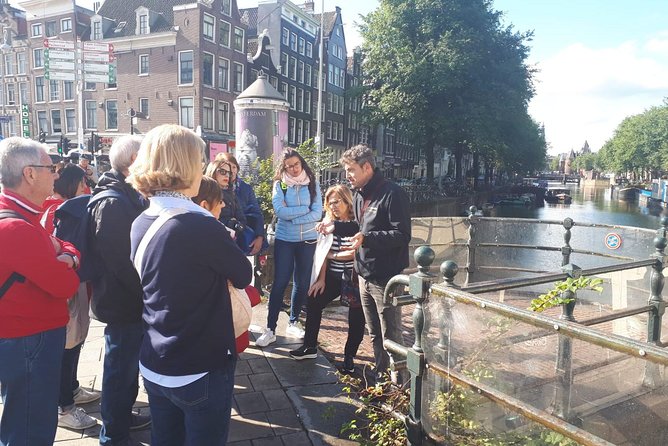
One of the short, high-value moments is the Residence Flower Market stop, which lasts about 20 minutes. It’s timed so you can see the area without burning half your tour on photos. You get a quick hit of color and local rhythm, and the guide usually uses it as a gateway to talk about the city’s markets and what makes Amsterdam’s street culture different from many other European capitals.
What I like about putting this early in the walk is that it gives you momentum. Even if the weather is typical Amsterdam gray, the flower stalls bring instant color and a sense of daily life rather than only monuments and memorials. If you’re traveling in a pair and one person loves pictures, this is a good moment to split attention while the other listens.
Tip for your timing: use the 20 minutes for a quick loop, photos, and maybe one small purchase if you want a souvenir. Then move on with the group. This tour is built around pacing, so don’t treat each stop like a standalone half-day.
More chapters of old Amsterdam, told on foot
- Amsterdam Food and Cultural Tour with Tastings★ 5.0 · 2,442 reviews
- Amsterdam High-End Dutch Food & History Tour – Up to 8 guests★ 5.0 · 482 reviews
- Amsterdam: Historic City Sightseeing Canal Cruise★ 4.5 · 444 reviews
- Anne Frank and the Jewish History of Amsterdam Private Tour★ 5.0 · 307 reviews
Seeing Anne Frank’s area from outside, with context you can use
You’ll pass by Anne Frank’s House area and learn about its history and importance, with the visit kept to a short walk-by passage. The entrance ticket is not included, and the stop is about 5 minutes.
This approach is practical. If you try to fold the full house visit into a 3.5-hour walking tour, it usually becomes rushed and stressful. Here, you get enough time to understand what you’re looking at and why it’s meaningful, without the line chaos taking over the day.
What you should expect is a focused explanation tied to the Second World War and the famous memoirs. The guide frames the outside location so the story makes sense before you decide whether to book the interior later. If you plan to go in, you’ll be better prepared and more likely to pay attention to the details that matter.
Possible drawback to consider: if your main goal is a deep visit inside Anne Frank’s House, this walking portion will feel too short. You’ll need a separate ticket and time slot. The benefit is that the tour gives you emotional and historical context for wherever you decide to go next.
Singel, canals, and the De Jordaan shift in mood
After the quick center stops, the walk starts to feel more like “Amsterdam as neighborhood,” especially as you move toward the Joordan (De Jordaan) area. This is where the city stops feeling like a single strip of tourist sights and starts feeling like real city fabric.
The route also includes well-known connectors such as Rembrandtplein and Leidseplein, plus the Hard Rock Cafe area and nearby university zone. Those are not “historic only” spots, and that’s the point. Amsterdam has a way of layering old and new in the same view. This tour uses that contrast to keep you from thinking history means quiet and museum walls only.
One theme the guide tends to bring up is how ideas and conflict shape daily life. You may hear about the broader European religious tensions that fed into Dutch history, then watch how the city’s layout reflects trade, power, and community life. You also get the sense that Amsterdam’s famous cultural identity didn’t appear overnight. It formed through disputes and negotiations.
How you can use this later: when you wander on your own after the tour, you’ll recognize the neighborhoods faster because you’ve already stitched the main squares together into one mental model.
First Red Light District and the “understand, don’t stare” approach
The route includes the first Red Light area, with additional context described around the way Amsterdam is known for this part of the city. It’s handled as historical and social context, not as a spectacle stop.
You might feel a bit of visual tension in this zone if you’re not comfortable with it. That’s normal. The value is that the guide can explain the background and cultural reasons the topic is discussed the way it is, helping you make sense of what you’re seeing instead of just reacting to it.
This is especially helpful if you’re visiting for the first time and you’re trying to understand the city’s reputation beyond headlines. Amsterdam’s identity can be talked about in extreme ways, but on the ground it’s a mix of history, economy, and modern rules. The guided framing gives you a grounded lens.
If this topic makes you uncomfortable: it might be worth mentally preparing that you’ll pass through the area as part of the walking route, then focus on the surrounding streets and canals as you move through.
Vondelpark and Museumplein, where your afternoon can start easily
Two segments stand out for practical planning.
First is Vondelpark. You’ll visit it briefly, about 5 minutes along the way, as the walk transitions from the lively squares toward a calmer feel. Even a short park break helps. It’s a visual reset after dense streets, and it also gives you a clue about how locals use the city’s outdoor spaces.
Second is the tour ending at Museumplein. The end point matters because you’re not stranded in the middle of nowhere, or stuck trying to connect to a museum by guessing routes. Museumplein is right there with major options.
You’ll also pass by or near the Van Gogh Museum area, but entry is not included. The best move is to use the tour’s finish time to decide which museum fits your energy. Some people will go straight in. Others will take a break first, then return later.
Quick strategy that works: if you want the most out of your museum day, decide your first museum right after the tour, while you still have the area in your head from the walk. The guide’s “where you are and why it’s here” framing makes the museum visit feel more connected instead of like a separate experience.
Price and value: what $28.81 actually buys you
At $28.81 per person, this is positioned as a low-cost way to get a guided historical orientation without committing to expensive museum tickets inside the 3.5 hours. That’s a real value if you’re trying to balance your budget across a multi-day Amsterdam trip.
Here’s what you’re paying for, based on the experience structure:
- A live guide (included) who explains history, customs, and traditions as you walk.
- A guided route that connects multiple areas you’d otherwise have to research on your own.
- A start and finish that reduce friction, ending on Museumplein at about 1:30 pm so you can keep going.
What you are not paying for is the museum entry. That’s important, but it also lets you control your own pace. If you don’t want to spend extra money on museum tickets the day of the tour, you still get a strong city orientation.
If you’re the type who likes to feel oriented quickly, it’s a smart spend. If you already know Amsterdam deeply and only care about one specific museum interior, it might feel less targeted. Most first-timers, though, will get their money’s worth because they leave with a clearer sense of where things are and how they connect.
Meeting point, ending point, and how to plan your day
You start at Park Plaza Victoria Amsterdam, Damrak 1-5, 1012 TM Amsterdam, and the tour runs Monday through Sunday from 10:00 am to about 1:30 pm.
Ending on Museumplein is the practical win. It means you can do Van Gogh or the Rijksmuseum next without hauling bags across town or hopping on multiple transit lines right away. It also gives you flexibility for lunch afterward.
Also, this tour requires good weather. If the weather is poor, you’ll be offered a different date or a full refund. Plan with that in mind, especially if you’re traveling during a rainy stretch.
Finally, the tour says most travelers can participate, and service animals are allowed. So unless you have specific mobility needs, it’s generally set up for a typical walking experience.
Guides like Fabio and Lara: professionalism you can feel
The guide quality is the part that most strongly shows up in feedback. Names that come up include Fabio and Lara, both described as prepared, friendly, and very good at keeping people interested so the walk doesn’t drag.
That matters because history walks can go two ways. Either the guide gives you a list of facts, or the guide turns those facts into a story you can follow while you’re surrounded by the real thing. The strong reviews point to the second style, where you feel guided and not lectured.
If your Italian helps, you’ll likely enjoy the added comfort of working with a mother-tongue Italian guide. Even if you’re not fluent, the clarity and structure typically make a difference, especially when you’re juggling multiple stops and themes.
What I’d watch for on your end: listen for the guide’s little “curiosities” and “how Amsterdam works” comments. Those tend to be the tips that help the most once the tour ends, when you’re trying to decide where to go next.
Who this tour suits best, and who might want a different option
This is a good fit if:
- You’re in Amsterdam for the first time and want a fast orientation with historical context.
- You like walking tours that connect customs, religion-era conflicts, and later personal stories into one flow.
- You want a guide to help you understand the city instead of reading about it in advance.
You might choose something else if:
- Your top priority is a full, inside visit to the major museums or Anne Frank’s House during these exact hours.
- You prefer a lighter pace with fewer themed explanations and more free time at each stop.
Most people will fall somewhere in the middle. This tour does well as the “first chapter” of your Amsterdam trip.
Should you book this Amsterdam historical walk?
Yes, if you want a solid, first-day style intro that makes the city feel understandable. The Italian mother-tongue guide, the well-chosen route through canals, squares, and neighborhoods, and the smart ending at Museumplein all point to practical value, not just sightseeing.
Book it especially if you like stories you can connect to real locations, like trade sites such as the spice customs house and the king’s warehouses, plus the Anne Frank area framed in context. Just be clear in your planning: museum entrances are excluded, and the Anne Frank House portion is outside only.
If you’re flexible on which museum you’ll do next and you like getting oriented fast, this tour is the kind of start that pays off for the rest of your Amsterdam days.
FAQ
How long is the Amsterdam historical tour?
It runs for about 3 hours and 30 minutes.
What does the price include?
The tour includes the guides. Entrance fees to museums are not included.
Are tickets available on a mobile device?
Yes, the tour uses a mobile ticket.
What are the main stops along the way?
You pass through areas including Central Amsterdam, Singel, the spice customs house, the king’s warehouses, the first red light district, the Joordan, the Anne Frank area (entrance excluded), Dam Square, Flower market, Leidseplein and the university square, HardRockcafè, Vondelpark, Museumplein, and the Van Gogh museum area (entrance excluded).
Is Anne Frank’s House entrance included?
No. You only pass in front of the Anne Frank house, and entrance is not included.
Where does the tour start and end?
It starts at Park Plaza Victoria Amsterdam, Damrak 1-5, and ends at Museumplein, where the tour finishes around 1:30 pm.
What time does the tour run?
It runs daily from 10:00 am to about 1:30 pm.
How big is the group?
The maximum group size is 50 travelers.
What happens if the weather is bad?
The experience requires good weather. If it’s canceled due to poor weather, you are offered a different date or a full refund.
More Guided in Amsterdam




More Tours in Amsterdam



More Tour Reviews in Amsterdam





Newly reviewed around Amsterdam



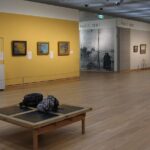

Historical Tours, side by side.
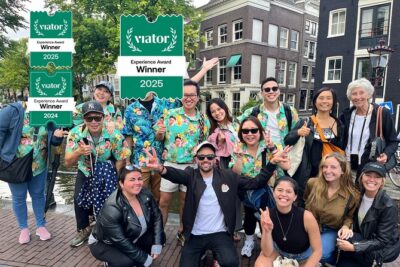 ★ 5.0Amsterdam Food and Cultural Tour with TastingsFrom $912,442 reviews
 ★ 4.5Haunted History and Ghost Walking TourFrom $30488 reviews
 ★ 5.0Amsterdam High-End Dutch Food & History Tour – Up to 8 guestsFrom $157482 reviews
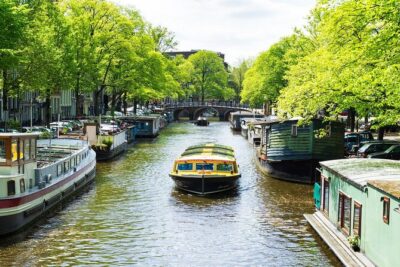 ★ 4.5Historic City Sightseeing Canal CruiseFrom $18444 reviews
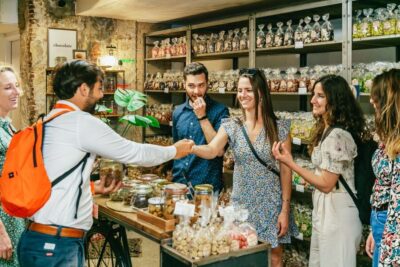 ★ 4.6Historical Highlights Walking Tour with TastingFrom $34381 reviews
 ★ 5.0Anne Frank and the Jewish History of Amsterdam Private TourFrom $95307 reviews
 ★ 4.53-Course Meal in Historic 1st Class Waiting RoomsFrom $61292 reviews
 ★ 4.8Highlights & History Walking TourFrom $32266 reviews
More ways to plan this visit