
REVIEW · HISTORICAL TOURS
Financial History Tour
Money and stories meet in Amsterdam. This 2.5-hour private Financial History Tour turns the city into a living classroom, from exchange architecture near the Dam to the ideas that shaped Dutch finance. I especially like the flexible private format, so the guide can pace things to your group and answer the questions that actually pop up.
Two other parts I really enjoyed: you start with Beurs van Berlage, a major exchange landmark, and then head to Stadsarchief Amsterdam, where the basement setting adds real texture to the money story. One thing to consider is that this tour is focused on finance and economics, so if you want pure scenery and canals only, you might find it a bit more brainy than breezy.
Key Highlights You Will Notice Fast
- Private and flexible: only your group, so you can ask questions and move at a comfortable pace
- Beurs van Berlage as your kickoff: a strong first stop tied directly to Amsterdam’s money era
- Stadsarchief Amsterdam basement visit: included time that brings archives into a striking bank-like setting
- Tulip Mania explained on a floating flower market theme: speculative bubbles, Amsterdam-style
- Photo-friendly route near the Dam and Rokin: lots of chances to get iconic images without sprinting
More chapters of old Amsterdam, told on foot
Why Amsterdam’s money story starts at Beurs van Berlage
Your tour begins at Bistro Berlage on Beursplein, right by the Dam area. The schedule keeps things efficient, with about 10 minutes at Stop 1: Beurs van Berlage. Even if you have seen photos of the building, standing outside it in context helps you understand why it matters. This was part of the city’s exchange world, built as a statement about commerce and credibility, and that theme sets the tone for everything that comes next.
What I like about starting here is the direction it gives you. Instead of jumping straight into dates and names, you begin with a building that looks like it belongs in a serious business story. From there, you can follow the thread of how Amsterdam worked, traded, and financed its ambitions. Your guide can also help you connect what you see on the street to the bigger idea of finance as infrastructure. In plain terms, money did not just move wealth around. It helped shape the city’s identity.
If you care about photos, this is one of your early anchors. You’ll be in the right zone for iconic angles, and you are not yet tired from walking. Wear comfortable shoes and keep your phone or camera ready, because the route is designed for short stops and frequent look-ups.
One practical note: this first stop has free admission, so you are not dealing with added ticket friction right away. That means you can stay focused on the explanation, rather than scrambling to figure out what you need to enter and when.
Stadsarchief Amsterdam: the 1920s bank basement and the city’s archives
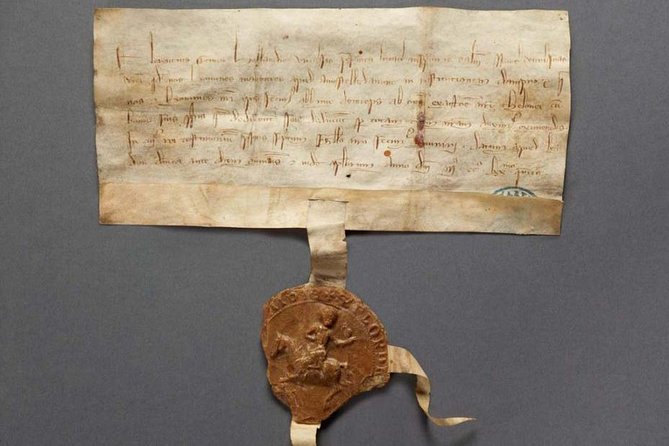
Stop 2 is Stadsarchief Amsterdam. The timing is again about 10 minutes, and the admission is included for this part. The standout detail here is the setting: the basement reveals the city’s archives, described as sitting in a 1920s bank building. That contrast is exactly what makes this stop work for a tour like this.
Finance stories can sound abstract, like equations without a face. But archives give the story a place to live. Even in a short visit, you get the feeling that Amsterdam did more than trade. It documented, stored records, and kept the paperwork that makes money systems run. When you see an archive setting tucked into a former bank environment, it becomes easier to understand why trust was so central. Records were the proof.
You do not need to be an economics major to appreciate this. The value is in the mood and the message: money has a paper trail, and cities preserve that paper trail in physical spaces. For some people, that turns the whole tour from interesting into memorable.
The tradeoff is time. Ten minutes is quick, so go in with a mindset of focused watching. If you want to read every label slowly, you might feel rushed. If you are happy to absorb the big picture and learn the key ideas from your guide, this stop lands nicely.
Rich merchants, bubbles, and tulip mania on a floating market theme
Between the main stops, the tour keeps moving through Amsterdam while building the theme. The focus stays on who made money and how the system shaped culture and heritage.
A major highlight is the story of the rich merchants in Amsterdam and how they made their money. This is where the tour goes beyond the buildings. You start linking street-level commerce to the larger economic behavior of the era. That includes understanding why Amsterdam attracted wealth and how merchants turned trade into power.
Then comes one of the most famous cautionary tales tied to the city: the first economic bubble, connected to Dutch Tulip Mania on the Amsterdam floating flower market. The way the tour frames it is useful. Instead of treating tulip mania like trivia, it places it in a bigger logic about speculation, expectations, and rapid price swings. You get the idea that people were not just buying flowers. They were buying a future they believed would keep growing.
Why this part is worth your time is simple. Amsterdam has a reputation for being stylish and artsy. This tour reminds you that it was also an economic engine. The tulip mania moment acts like a turning point in your mental map. You can leave with the feeling that the city is not only beautiful, it is also historically experimental, financially inventive, and occasionally reckless.
If you like stories that connect art and architecture to real-world incentives, you will probably enjoy how the guide ties it together. If you prefer purely chronological history, this section might feel more thematic than you expect. Either way, you should come out with a clearer understanding of how Amsterdam’s money culture evolved.
- Amsterdam Classic Saloon Boat Cruise with Drinks and Cheese★ 5.0 · 31,825 reviews
- Amsterdam Luxury Canal Cruise + Unlimited Drinks & Bites option★ 5.0 · 30,518 reviews
- Amsterdam: Heineken Experience Ticket★ 4.6 · 30,055 reviews
- Amsterdam: Rijksmuseum Entry Ticket★ 4.7 · 25,535 reviews
The route and the Dam to Rokin ending you can actually find
This is not a long marathon route, but you do walk through central Amsterdam. The tour is designed to keep momentum while still giving you short moments to stop, look, and take photos.
You start at Bistro Berlage, Beursplein 1, 1012 JW Amsterdam. The tour ends at Rokin 24HS, 1012 KS Amsterdam. The important practical detail is that it finishes on the other side of the Dam, about 500 meters from the start. That means you are not stuck far away from where you began. For many people, that is a quality-of-life detail. You can keep exploring nearby right after.
The tour is also described as near public transportation, which matters in a city where getting across town can eat time. You will likely find it easy to plug this into a day with other plans, especially if you are already around the Dam area.
Timing-wise, the full experience is about 2 hours 30 minutes. With multiple stops and walking time, that duration is enough to learn the ideas and get photos without turning your day into a schedule war.
I also like that this is a private tour. When a tour is private, the ending location feels less like a drop-and-run. Your guide can keep things coherent up to the final walk-away point, rather than abruptly cutting you loose.
Private tour value: how a real guide changes the facts
The price is listed as $390.50 per group, up to 10 people. That is the kind of structure that can be good value if you are traveling with family or friends. A group of six, for example, can make the per-person cost feel much more reasonable than paying per traveler on a standard walking tour.
In reviews, the guide name Tijs de Boer shows up with praise for being full of insights and local hints on any and everything. That matters. When someone knows the city, the money story stops being a lecture. It becomes a way to read Amsterdam like a map. You notice details, you understand why they exist, and you can ask follow-ups that match your interests.
Because this is private, you get flexibility. In a format like this, flexibility is not just comfort. It changes learning. If you want more explanation on tulip mania or want the guide to point out specific money-related architectural cues as you walk, a private setup gives you that room.
Also, the tour uses a mobile ticket. That is a small modern convenience, but it helps when you are juggling multiple tickets and entry times.
Price and booking timing: what $390.50 per group really means
Let’s talk value in a grounded way. This tour costs $390.50 per group for up to 10 people. The duration is about 2 hours 30 minutes. Stadsarchief Amsterdam’s stop includes admission, while the Beurs van Berlage stop is free for the tour time.
So you are paying for more than just movement around the city. You are paying for a guided narrative that links three things most people do not connect on their own: exchange architecture, archival proof, and the speculative bubble story tied to Amsterdam’s flower market. That is exactly the type of experience that can save you time. Instead of researching on your own, you walk the city with someone who knows what matters and how to explain it clearly.
Booking timing can also affect your plans. This experience is on average booked 28 days in advance. That suggests it is not a last-minute impulse item. If Amsterdam travel is already booked solid for your dates, I would treat it like a must-do and reserve ahead, especially if you want a specific time slot.
English is the offered language, and the tour is designed for travelers with moderate physical fitness. It is not described as strenuous, but you should expect some walking and standing at stops.
If you are a solo traveler, the cost can feel steep. But if you are two to ten people who want a shared experience with a single guide, it can be a very efficient way to learn and enjoy Amsterdam without turning the day into a museum queue.
Practical tips to make your Financial History Tour smoother
First, think about footwear. Even though the stops are short, you are on your feet for about 2 hours 30 minutes. Comfortable shoes help you enjoy the walk, not count the minutes.
Second, bring a camera plan. Some stops are described as good for photo opportunities at iconic locations, and the tour moves through central Amsterdam. If you arrive with your camera ready and charged, you are more likely to get good shots instead of spending time sorting gear.
Third, go in with one question. For example, ask how merchant wealth translated into cultural influence, or ask why a bubble could happen in a system people trusted. A private guide format makes it much easier to get answers that match your curiosity.
Fourth, use public transport wisely. The meeting point and the ending point are both in central areas near transit. Plan your arrival with a little buffer so you are not stressed at the start time.
Finally, keep the tour theme in mind. This is finance and money culture, not a general overview of Amsterdam’s entire history. If you remember that, you will enjoy it more. It is like choosing the right book for the mood you want.
Should you book this Amsterdam Financial History Tour?
I think you should book it if you like your history tied to real-world systems. If you enjoy how buildings reflect business, and you want the story behind Amsterdam’s financial innovation, this is a strong fit. The private setup, the guide insights, and the specific focus on exchange culture and tulip mania make it more than a casual walk.
I would pass or at least rethink if your ideal Amsterdam day is mainly canal views, shopping streets, and art stops with no finance talk. This tour is not pretending to be that. It is built to explain how money shaped the city’s culture and heritage.
If you are traveling with friends or family, it is also one of the better ways to get value, since the price is per group up to 10 people. For group travel around the Dam, it is a smart use of a couple of hours.
FAQ
How long is the Financial History Tour?
It runs for about 2 hours 30 minutes.
What is the tour price?
The price is $390.50 per group, up to 10 people.
Is the tour private?
Yes. It is a private tour, and only your group participates.
What language is the tour offered in?
The tour is offered in English.
Where does the tour start and end?
It starts at Bistro Berlage, Beursplein 1, 1012 JW Amsterdam, and ends at Rokin 24HS, 1012 KS Amsterdam, about 500 meters from the starting point.
What is the cancellation policy?
Free cancellation is available up to 24 hours in advance for a full refund. If you cancel less than 24 hours before the start time, the amount paid is not refunded.
The Older City, Told Properly





More Tours in Amsterdam






More Tour Reviews in Amsterdam



Newly reviewed around Amsterdam




Historical Tours, side by side.
 ★ 5.0Amsterdam Food and Cultural Tour with TastingsFrom $912,442 reviews
 ★ 4.5Haunted History and Ghost Walking TourFrom $30488 reviews
 ★ 5.0Amsterdam High-End Dutch Food & History Tour – Up to 8 guestsFrom $157482 reviews
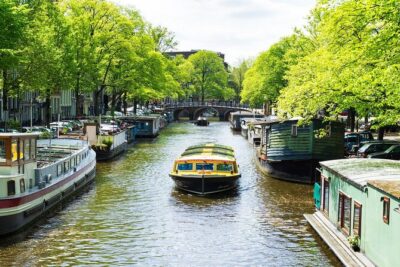 ★ 4.5Historic City Sightseeing Canal CruiseFrom $18444 reviews
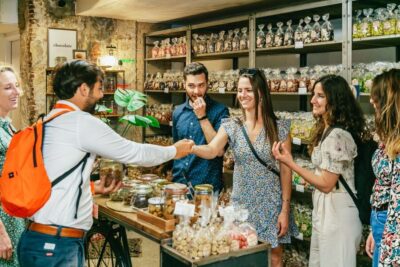 ★ 4.6Historical Highlights Walking Tour with TastingFrom $34381 reviews
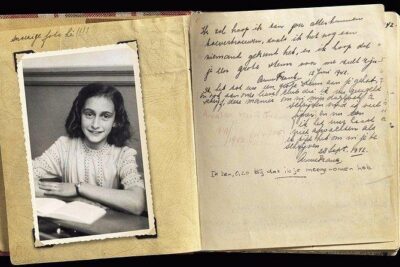 ★ 5.0Anne Frank and the Jewish History of Amsterdam Private TourFrom $95307 reviews
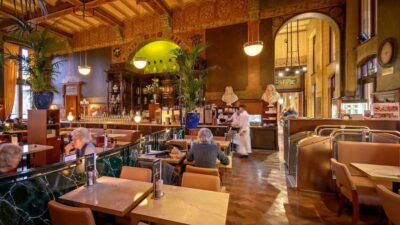 ★ 4.53-Course Meal in Historic 1st Class Waiting RoomsFrom $61292 reviews
 ★ 4.8Highlights & History Walking TourFrom $32266 reviews
More ways to plan this visit