
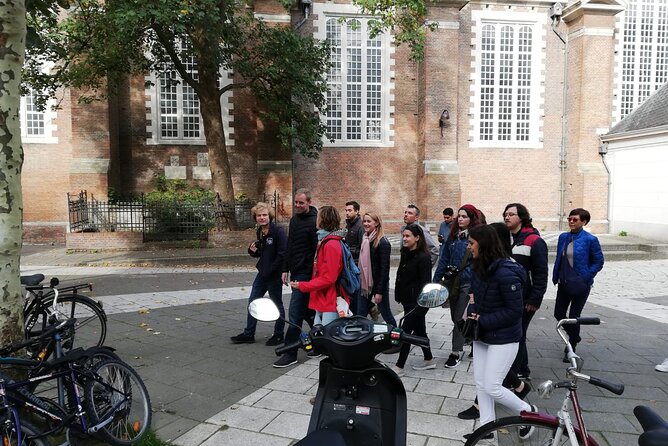
REVIEW · ANNE FRANK & JEWISH QUARTER TOURS
The Anne Frank Tour (Jewish Neighborhood & Amsterdam during WWII)
Anne Frank’s story lands on real streets. This 2-hour small-group walk ties the diary to the city you see today, including a stop outside the Anne Frank House and viewpoints around the neighborhood where her family hid.
I especially like the guided context you get, not just a list of landmarks, plus the calm pacing of short stops where your guide helps you connect sounds, sights, and fear to the time period. One drawback to plan around: the tour stays outside, so you do not get Anne Frank House admission.
Key Highlights at a Glance
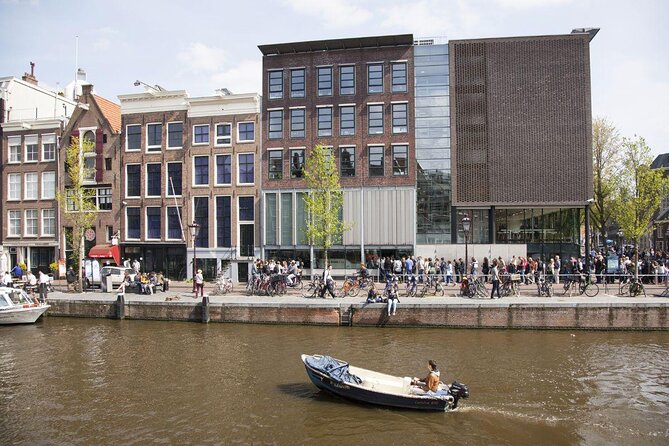
- Outside Anne Frank House, with the story attached so you understand what you are looking at without needing timed entry.
- Dam Square stop focused on what happened in Amsterdam right after liberation.
- Westertoren churchbells viewpoint to help you imagine what Anne could hear from the Secret Annex.
- A max group size of 10 that makes questions feel welcome.
- English-speaking storytelling that keeps the walk human, not just historical facts.
More careful routes through Amsterdam’s Jewish history
What You Really Get: a WWII Walk You Can Do Even Without House Tickets
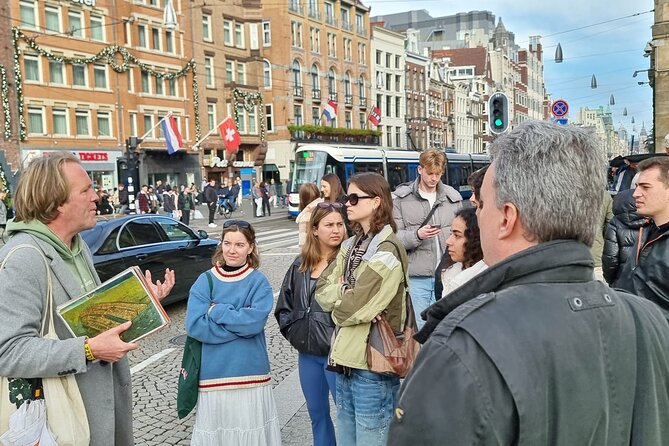
This is a guided walking tour built around one simple idea: understanding Anne Frank and the Jewish neighborhood during the Nazi occupation, using the streets as your “textbook.” You do stop near the Anne Frank House, but the big thing to know is that you stay outside. Your ticket covers the walk and the guide, while Anne Frank House access is not included and must be booked separately if you want to go inside.
That actually makes the tour practical. In Amsterdam, the Anne Frank House is one of the most in-demand reservations on the planet. If tickets are sold out, this tour still gives you the emotional and historical backbone. And even if you do manage house tickets later, this walk helps you set the scene first, so the exhibits make more sense when you finally step in.
The format also helps. You will do a handful of focused stops rather than wandering in circles for two hours. The walking is spread across key points, so you get multiple “anchor moments,” like Dam Square and Westertoren, instead of only spending time around the Anne Frank House area.
If you expect a museum-style entry ticket experience, you will be disappointed. If you want a clear, guided way to read the neighborhood and the diary through the city around it, this fits well.
Starting at National Monument Dam: your launch point for WWII Amsterdam
Your tour starts at the National Monument Dam, 1012 JS Amsterdam, and ends back at the same meeting point. That matters because it keeps the experience simple: you can arrive via public transport, find the monument area, and begin right away without a complicated route switch.
Dam Square is not only a convenient hub, it is also a powerful historical setting. Your guide uses it to frame what Amsterdam went through during and right after liberation. The stop is short, but it is purposeful, focused on the violence and chaos that followed liberation events in the city. Even though the stop itself lasts about 20 minutes, it functions like a hinge in the story. It helps you understand that liberation was not a clean, happy finale. People faced danger, trauma, and sudden change as the city recalibrated.
Practical note: your start time is 11:00 am. If you are cutting it close, do yourself a favor and arrive early enough to find the meeting spot and get oriented. The tour notes that you will not be able to catch up if you are late, which usually means you will miss that segment and have to book a new time slot.
Stop 1: Anne Frank House from the outside and why that still hits hard
The centerpiece stop is an outside visit of the Anne Frank House area. You are not going in, but your guide uses the building and its surroundings as a storytelling stage. Expect the focus to be on the reality of hiding, the idea of staying quiet, and the way Anne’s writing reflected what she lived through.
This is where your guide’s job becomes more than logistics. Since you cannot read the Secret Annex through museum rooms on this tour, the guide has to help you “read” the place using context. You will hear how Anne’s diary connected to larger human themes: people pushing for dignity and respect even when the world turns cruel.
You will also keep moving through Amsterdam with additional wartime clues brought into the narrative. The walk includes references to places connected to resistance efforts, including nods to the Resistance Museum and the idea of secret bunkers and hiding spots around the city. You may not be entering those sites during this tour, but the guide helps you understand that the neighborhood was part of a wider system of survival and risk.
Stop length is about 20 minutes, with the guide’s storytelling driving the value. For many people, this is the moment that turns the tour from information into feeling. You are not just seeing a famous building, you are understanding why that building mattered to a family living in fear.
- Amsterdam Classic Saloon Boat Cruise with Drinks and Cheese★ 5.0 · 31,825 reviews
- Amsterdam Luxury Canal Cruise + Unlimited Drinks & Bites option★ 5.0 · 30,518 reviews
- Amsterdam: Heineken Experience Ticket★ 4.6 · 30,055 reviews
- Amsterdam: Rijksmuseum Entry Ticket★ 4.7 · 25,535 reviews
Stop 2 at Dam Square: liberation, consequences, and why you should not skip this
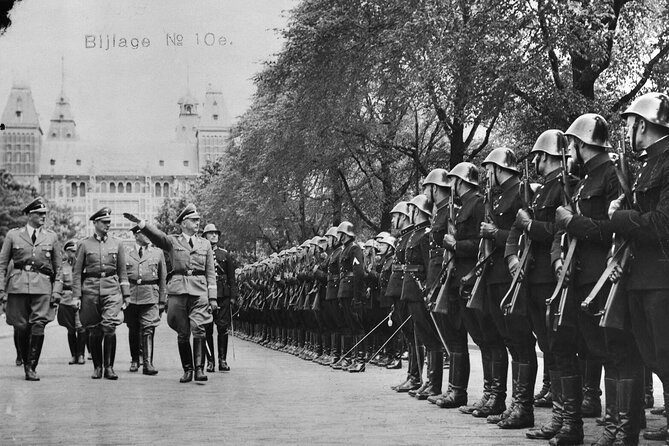
After the Anne Frank area, the tour shifts to Dam Square again as a key point in the timeline. This stop is about 20 minutes, and it focuses on shootings that took place in Amsterdam following liberation.
It is easy to walk past Dam Square in everyday life and treat it like just another landmark. During this tour, it is framed as a turning point with messy aftereffects. The value is not that you get an exhaustive lecture in one stop. It is that you get the right context for why the city’s mood could change so suddenly.
If you are the type who wants a clear narrative arc, this stop helps connect the occupation story to what came after. Anne Frank’s life is tied to the years of fear and confinement, but the neighborhood also lived through the aftermath of the Nazi system collapsing. That is part of the full picture.
Stop 3: Westertoren churchbells, and how you picture the sound of hiding
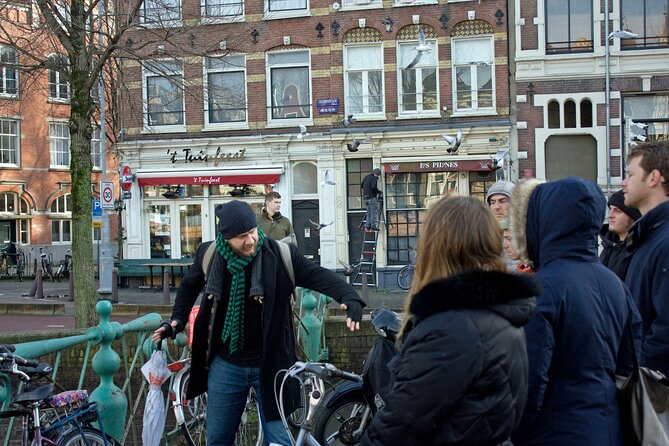
Next up is Westertoren. This is one of those stops that sounds small until your guide makes it vivid. The churchbells are the focus, and the reason is simple: you are imagining what Anne could hear while she was in hiding.
The tour stop is free in terms of admission (the tour itself does not require a paid ticket for this part), and the moment is short, about 20 minutes. But it lands because it shifts the story from only what Anne saw to what she heard. The city becomes more than scenery. It becomes a soundtrack.
This is also where a good guide earns their pay. Instead of only naming the tower, your guide ties the bells to the life of staying put, listening for normalcy, and measuring time through sound. It helps you understand how daily life could continue on the outside while fear tightened the world on the inside.
If you love details, you will probably find yourself looking at the streets differently when you leave this stop. Even if you never fully imagine the exact sounds, the guided prompt makes it easier to connect to Anne’s experience as a writer.
Stop 4: the Secret Annex neighborhood walk, where the diary becomes a map
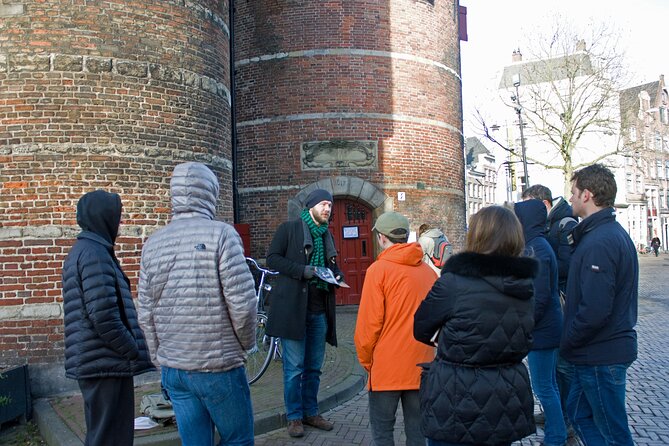
The final major segment is a one-hour walk through the area where Anne Frank lived before and during the Second World War while she was in hiding. This is the part of the tour that many people enjoy most, because it turns the city into a set of “answers.”
Your guide sets up key questions that shape how you experience the streets:
- What could Anne see from the outside world while writing her diary?
- What sounds might reach the Secret Annex?
- How did the neighborhood itself change during the occupation years?
This is not just a route through streets. It is a guided interpretation of the environment. The streets and buildings become cues for how the Frank family’s daily reality differed from life outside. That makes the tour useful even for people who already know the basic story, because you start connecting locations to the lived atmosphere of the period.
Also, the one-hour length gives breathing room. You are not rushed from “Anne Frank fact” to “next Anne Frank fact.” You can ask questions, and your guide can adjust the pace. The tour is capped at a maximum of 10 travelers, so the group stays small enough for this to feel personal rather than crowded.
Guide style and the small-group advantage (this matters more than you think)
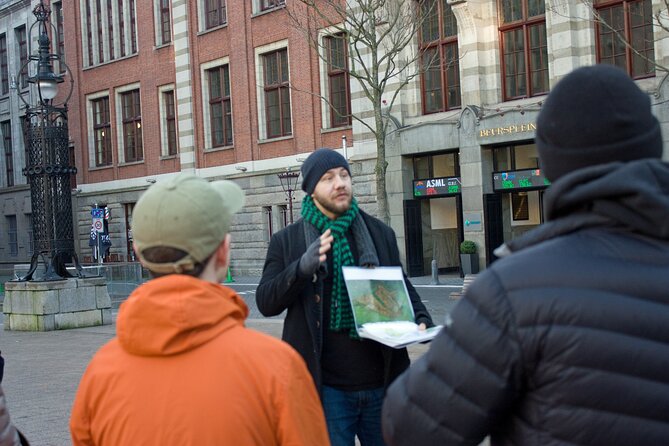
The tour is led by an English-speaking guide, and the experience is built for small groups, max 10 travelers. For a sensitive topic like WWII and the Jewish community, that small size is not a luxury. It affects the quality of the conversation.
In the past, guides have been praised for using historical visuals, documents, maps, and personal perspective to make the story feel immediate. Names that came up include Sebastian, Marius, Craig, Wendy, Luc, Iris, Max, Jasmine, and Miesch. That tells you something useful: this tour does not rely only on standard scripts. The guide approach can vary, but the best runs keep the story respectful and clear, while also making the city’s details click.
What you should do as a traveler: come with one or two curiosity questions, like how the neighborhood changed day to day or how hiding affected communication and movement. In a group of 10, your question is more likely to get time and a real answer.
One more practical note from how the tour is described: confirmation is received at booking, and service animals are allowed. If you want an experience that works for most travelers and keeps things straightforward, the small group format helps.
Price and value: the low booking fee versus what you might pay later
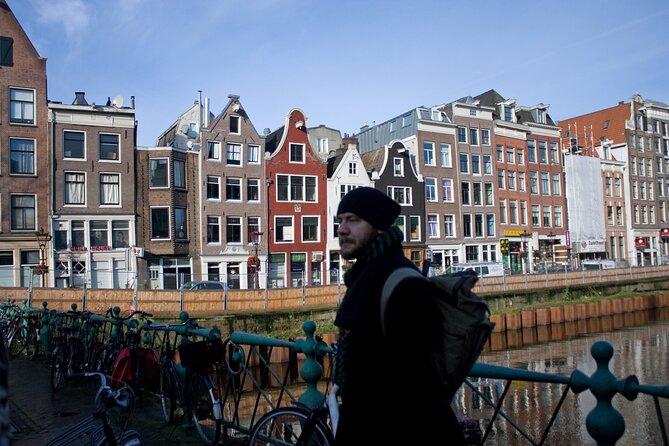
The price listed is $3.61 per person. That is strikingly low, so you should understand what you are paying for. This tour includes the English-speaking guide and the WWII storytelling and context. It does not include Anne Frank House admission, and that is the most likely add-on.
If you plan to go into the Anne Frank House, you will need to arrange that separately on the Anne Frank House website. Think of this walking tour as the context layer. Then, if you choose, you can add the museum visit as the details layer.
There is also a tipping culture element people mention, including that guests are free to tip the guide based on experience. To avoid any stress, it is smart to bring some cash for a tip, even if the exact amount is up to you. One common frustration people run into is confusion about whether this includes the house entry or whether the amount paid equals the full cost of everything. Your best move is to treat this as a guided street walk with a small booking fee, plus optional tipping for the guide, plus separate Anne Frank House admission if you want it.
For most visitors, the value comes from time saved. Two hours is a good sweet spot. It gives you a focused introduction to the neighborhood without requiring a reserved-entry museum slot for the whole experience.
Who This Tour Fits Best (and who might want a different plan)
This tour fits you if you want:
- a guided intro to Anne Frank and the Jewish WWII context in Amsterdam
- a walk that connects diary themes to specific places you can stand in
- a small group experience with time for questions
- an option that works even when Anne Frank House tickets are not available
It might not fit you if:
- you are expecting to go inside the Anne Frank House during this tour
- you want a full museum ticket experience only, without street-level interpretation
- you dislike walking in busy areas, even though the stops are short and the group is small
It is also a solid “first day” activity if you are trying to get your bearings. Amsterdam can be confusing for the first 24 hours. This route gives you a meaningful framework for the city, and it is not just sightseeing for sightseeing’s sake.
Should You Book This Anne Frank Tour?
Book it if you want a clear, human guided walk that helps you understand how the story fits into the streets of Amsterdam. The outside-focused format is not a downgrade. It is a smart way to see the neighborhood and hear the key interpretive prompts, especially if house tickets are sold out or too hard to coordinate.
Skip it only if your priority is strictly entering the Anne Frank House itself during the guided time. If that is your top goal, you will need the separate house admission. Otherwise, this tour is a practical, thoughtful way to turn the Anne Frank story into something you can actually visualize while you walk.
FAQ
Does this tour include entry to the Anne Frank House?
No. You stay outside the Anne Frank House. Admission to the house is not included, and you would need to book it separately.
How long is the Anne Frank Tour?
The tour is approximately 2 hours.
What stops are included on the route?
The tour includes stops at the Anne Frank House area (outside), Dam Square, and Westertoren, plus a longer walk through the neighborhood connected to Anne Frank’s hiding period.
Is the tour in English?
Yes, the guide speaks English.
Is there a group size limit?
Yes. The tour has a maximum of 10 travelers.
Where do I meet the guide?
The meeting point is the National Monument Dam, 1012 JS Amsterdam, Netherlands. The tour ends back at the same meeting point.
Is the tour near public transportation?
Yes. The meeting area is near public transportation.
What if I am late for the start time?
You cannot catch up with the group if you are late. The guidance is to book a new time slot if you miss the start.
Can I cancel for a refund?
Yes. Free cancellation is allowed up to 24 hours before the experience start time for a full refund.
More Tours in Amsterdam






More Tour Reviews in Amsterdam






Continue through the Jewish Quarter




Newly reviewed around Amsterdam




Anne Frank & Jewish Quarter Tours, side by side.
 ★ 5.0Anne Frank’s Story – Guided Walking Tour through AmsterdamFrom $3911,619 reviews
 ★ 4.8Life of Anne Frank and World War II Walking TourFrom $3710,467 reviews
 ★ 4.8Anne Frank Guided Small Group Walking TourFrom $282,722 reviews
 ★ 4.9Anne Frank Walking Tour – Guided in EN/DE/IT/ESFrom $282,676 reviews
 ★ 5.0Anne Frank Walking Tour Amsterdam Including Jewish Cultural QuarterFrom $751,879 reviews
 ★ 5.0Anne Frank’s Last Walk & See Anne Frank House in Virtual RealityFrom $42957 reviews
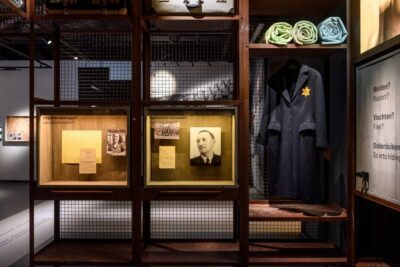 ★ 4.7Dutch WWII Resistance Museum Entry TicketFrom $21951 reviews
 ★ 5.0Anne Frank and Jewish Quarter Amsterdam Private Walking TourFrom $157684 reviews
More ways to plan this visit