
REVIEW · AUDIO TOURS
Self Guided Tours Amsterdam With 100 Captivating Audio Stories
Amsterdam has stories in every corner.
I love that this self-guided format turns your phone into a personal audio guide with 100-plus location-based scenes, so you can start, pause, and move when you want. I also like that it is set up for real-life wandering, not a strict group route, with a web app and map that help you connect what you are seeing with what you are hearing.
The one thing to think about is the setup depends on your phone and an internet connection, so no offline access means you should plan for data coverage while you wander.
Key points before you go
- Browser access, no downloads means you can start quickly once you have your link ready.
- 100-plus location-based audio stories let you build your own route, stop often, and listen on your schedule.
- Dam Square and Royal Palace give you instant context for one of Amsterdam’s most central spaces.
- De Wallen via red-lit-window stories adds a very local, street-level layer to what you see.
- Oude Kerk and De Negen Straatjes mix landmark history with walkable, slow-explore neighborhoods.
- Defence Line of Amsterdam is a fascinating add-on if you want something less typical, but you should expect more time for the wider site.
Worth comparing with this Amsterdam choice:


A phone-first way to experience Amsterdam, on your own schedule
Amsterdam is compact, but it is also easy to over-plan. This audio tour works because it is built around your pace. You are not waiting for anyone, and you do not need to keep up with a guide. You choose where you stop, and you choose how long you listen.
The experience is designed to run through a web app with a map. You activate the guide with a link, then you follow along with audio stories that correspond to specific locations. That means you can do a quick loop through the center and still get meaningful context, or you can spend extra time on the places that hook you.
Two practical benefits matter a lot in a city like Amsterdam. First, the “no download” setup keeps friction low. Second, the stories are location-based, so you are not stuck listening to something that has nothing to do with what is around you.
Price and value, what you are really paying for
At $3.46 per person, you are paying for a lot more than background entertainment. You are paying for a self-guided structure: the map, the story triggers, and the audio production (storytelling plus soundscapes). For this price, the big value is control.
If you normally spend money on printed maps, museum add-ons, and paid guided walking tours, this can feel like a smart “spend less, learn more” option. You can also keep your schedule flexible. If the weather changes, you can shorten the walk. If you find a café line or a market that pulls you in, you can pause and continue when it suits you.
There is also a hidden value in avoiding the usual tourist logistics. With this kind of audio guide, you are not paying for transportation between stops or for a group meeting point that forces you into someone else’s timing.
One caution on value: if your phone battery is weak or your data signal is spotty, you might feel like you lost part of what you paid for. The tour does not offer offline access, so bring a plan for staying connected.
How the web app and map keep your walk from feeling random
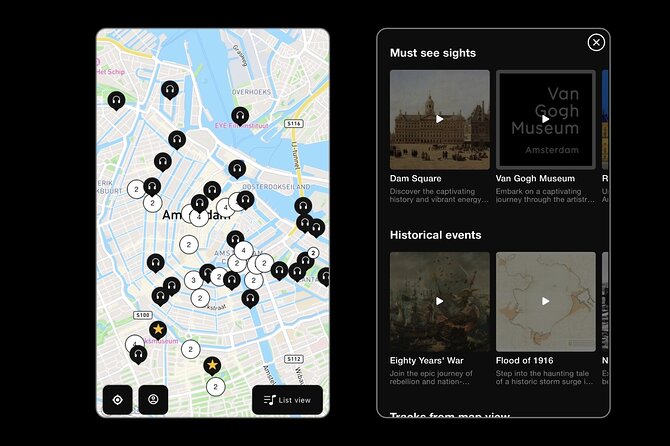
Self-guided tours live or die by navigation. Here, the web app with a map is doing the heavy lifting. Instead of guessing what to hear next, you get location-based guidance that helps you connect your route to the stories.
That is why this works well in Amsterdam. You can walk through Dam Square area, detour into side streets, and still come back to a story at another landmark. The “start and stop anytime” approach also makes it easier to match audio length to your energy level.
You will need:
- a smartphone with internet access
- your own headphones
- the ability to use the link to activate your guide in one step
Since this is a private activity, only your group participates. That means your phone and headphones are your “group of one,” and you can actually use the flexibility as intended.
Worth comparing with this Amsterdam choice:
- Amsterdam: 75 Minute City Canal Cruise with Audio Guide★ 4.4 · 17,501 reviews
- Amsterdam: Royal Palace Entry Ticket and Audio Guide★ 4.6 · 6,475 reviews
- Amsterdam: Canal Cruise with Live Commentary & Audio Guide★ 4.4 · 1,034 reviews
- Amsterdam Sightseeing Canal Cruise with Audio Guide★ 3.5 · 828 reviews
Stop by stop: what each audio story adds to what you see
Dam Square and the Royal Palace, context in one central sweep
You begin around one of the city’s biggest “look at me” areas, Dam Square, with a story about the Royal Palace. Even if you have walked past the palace before, the audio can help you see it as more than an impressive façade. It frames the location in terms of history, power, and the sense of ceremony that comes with it.
Why this stop is worth using early: Dam Square is a visual anchor. If you listen here first, you start your walk with a mental map of what this area meant, which makes later neighborhoods feel more connected.
A possible drawback: because this is a central, high-traffic area, it can be noisy. If your audio volume is low or your headphones are not comfortable, the square’s background sound can reduce how much of the story you catch. Keep your headphones snug and your volume steady.
Dam Square again, origin story for a modern hub
You also get an audio story focused on Dam Square itself, starting from the idea of a dam on the Amstel River and moving to how the space evolved into a cultural hub. This kind of origin narrative is useful because Amsterdam often feels like it grew organically out of canals and trade, but places like Dam Square have a more deliberate backstory.
Listen for how a physical structure became a social center. That shift helps explain why Amsterdam’s most prominent public spaces feel busy even when you are trying to slow down.
If you want value here: do not try to race through everything. Give yourself time for one short listening session, then pause to look up and around before moving on. The audio makes more sense when you can match it to what you are seeing.
De Wallen, red-lit windows with street-level storytelling
One of the most distinctive experiences is the audio story about De Wallen. Instead of treating it like a simple nightlife postcard, the guide frames it as a living part of Amsterdam’s history and cultural diversity, with stories tied to the red-lit windows.
This stop can be fascinating because it changes how you interpret what you see on the street. You may have ideas about the district already, but audio context helps you separate myth from the reality of how a neighborhood functions and why it has endured.
A consideration: De Wallen is active. If you prefer quieter walking, you may want to choose your time of day carefully and keep your listening sessions shorter. Also, remember the tour is not recommended for travelers with hearing impairment, so your headphone use is important here.
Jordaan, where old streets meet modern life
The Jordaan audio story is a great counterbalance after more central landmarks. Jordaan is known for its blend of older fabric and everyday neighborhood energy, and the audio helps you slow down and pay attention to street character.
This is the kind of stop that works especially well when you are ready to wander. After a couple of “big place” stories, Jordaan helps you see Amsterdam at human scale: corners, facades, and the feel of local streets.
Practical tip: if you are short on time, listen at the start of your Jordaan walk and then use the story as your lens. If you have longer, keep a second listening moment for another angle, since the self-guided format lets you stretch a neighborhood without committing to a rigid plan.
Oude Kerk, Amsterdam’s older building turned creative space
At the Oude Kerk, the audio focuses on a major theme: ancient allure with contemporary creativity. This is a good stop if you like architecture, because you are in a place where older layers of the city are physically present.
Why it works as an audio story: sound is less about replacing a visit and more about giving you something to look for. Even without going deep into exhibits (not part of the audio plan), you can use the narration to notice details and understand the building’s role over time.
A consideration: if you are the type who gets impatient with indoor pauses, plan your time so you do not feel rushed. The best way to make Oude Kerk satisfying is to match your listening length to how much you want to pause and look.
Defence Line of Amsterdam, history outside the usual center
Then there is the Defence Line of Amsterdam, described as a strategic warfare system and a hidden kind of fortifications story. You also get a scale detail: 84 miles of fortifications.
This is a great option if you want your Amsterdam experience to include something less typical than the main canal circuit and famous photo stops. It also changes the mood of your day. Instead of thinking “pretty streets,” you start thinking “how a city protected itself.”
What to watch: because the fortifications cover a wide area, you should expect it to take more planning time than a single square or church. The audio story can guide you, but you might still need extra walking or transit time to cover what you want.
De Negen Straatjes, canals and story-friendly streets
The De Negen Straatjes audio story is all about mixing charming streets with canal beauty and history. This area is ideal for an audio guide because it is made for wandering. You can listen for a while, then stop at a shop window, a canal view, or a quiet block where the street rhythm slows down.
This is also a smart place to pair audio with snacks. If you find a café or pastry stop during your route, you can pause your listening without messing up the “tour.” The format is built for that kind of natural break.
Practical drawback: because this neighborhood is popular, you may not get the same quiet focus you would elsewhere. That does not ruin the experience, but it does mean you may need to be more intentional about listening at specific moments.
Zeedijk and Chinatown, sea-adjacent flavors and a boundary story
Next up is Zeedijk, with an audio story tied to the feel of Chinatown and the idea that this area once defined part of the city’s pulse. The audio leans into the cultural boundary and the flavors that came to be associated with the street.
This stop is useful because it widens Amsterdam beyond only canals and museums. You start to see it as a place where communities connect through food, daily street life, and trade routes.
One practical note: food streets make for great walking, but also tempting stops. Keep your audio headphones on while you walk, then take off for actual eating. That way you do not mix audio with a menu moment and miss the best parts of the story.
What I’d do with 1 to 2 hours
With 1 to 2 hours available, you will want a plan that matches your energy.
If you want a classic center feel:
- start with Dam Square and Royal Palace context
- add one more stop like Oude Kerk or De Wallen
- finish with De Negen Straatjes for slow wandering and canal views
If you want something more unusual:
- include the Defence Line story if you can manage extra movement time
- then choose one neighborhood stop like Jordaan or Zeedijk so you still end with a “street feel”
Either way, the self-guided approach lets you tailor. You can do short listening bursts, then walk. Or you can sit for a bit, let the story land, and then move again.
Small logistics that make or break the day
This experience is low hassle, but a few practical details matter:
- Internet matters. Since there is no offline access, weak signal can interrupt your listening.
- Bring your own headphones. The tour does not include them.
- Phone battery matters. Audio plus maps plus screen use can drain power, especially outdoors.
- It ends where you start. So you do not need to figure out a “final pickup” plan.
Access is straightforward: after confirmation, you submit the last 5 digits of your phone number into the promo code field at Trales.io to activate access to the audio guide.
Who this is best for, and who should skip it
This works best for you if:
- you like walking at your own pace
- you want a structured story for key places without paying for a full guided tour
- you are comfortable using your phone as your primary guide
It may not be ideal if:
- you depend on offline maps or offline audio, since there is no offline access
- you need an in-person guide or guaranteed narration support
- you have hearing impairment, since it is not recommended for that need
If you love Amsterdam for architecture and street character, the combination of landmark stories and neighborhood stories is a strong fit.
Should you book Self Guided Tours Amsterdam with 100 Captivating Audio Stories?
I think it is an easy yes if you want flexible sightseeing and you like learning in small doses while you walk. The biggest advantage is control: you pick the stops, and you stop listening when you want to focus on the street.
Book it if you value low-cost, high-structure travel, especially if you plan to spend time in and around Dam Square, Jordaan, and the canal neighborhoods. If you are willing to manage internet access and keep your phone powered, you will likely feel like you got more than you paid for.
Skip it if offline audio is essential for your comfort, or if you need consistent, staff-supported interpretation in a way an audio-only format cannot provide.
If you want a simple, budget-friendly way to make Amsterdam feel more than scenery, this audio tour is a solid choice. It turns your walk into a story route, without forcing your feet to keep time with anyone else.
More Guided in Amsterdam





More Tours in Amsterdam



More Tour Reviews in Amsterdam




Newly reviewed around Amsterdam




Audio Tours, side by side.
 ★ 4.475 Minute City Canal Cruise with Audio GuideFrom $1717,501 reviews
 ★ 4.6Royal Palace Entry Ticket and Audio GuideFrom $156,475 reviews
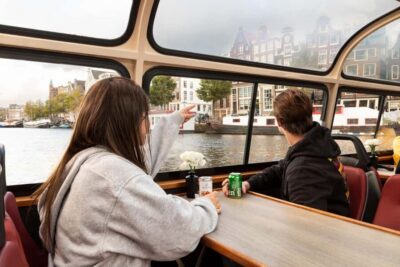 ★ 4.4Canal Cruise with Live Commentary & Audio GuideFrom $141,034 reviews
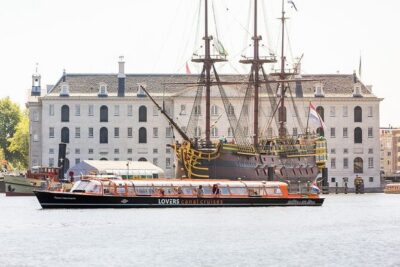 ★ 3.5Amsterdam Sightseeing Canal Cruise with Audio GuideFrom $16828 reviews
 ★ 4.0Amsterdam Van Gogh Museum with Audio or Guided TourFrom $72266 reviews
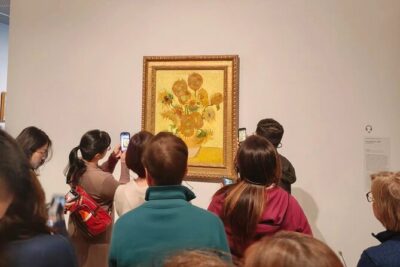 ★ 4.0Van Gogh Museum Skip the Queue with Audio GuideFrom $111261 reviews
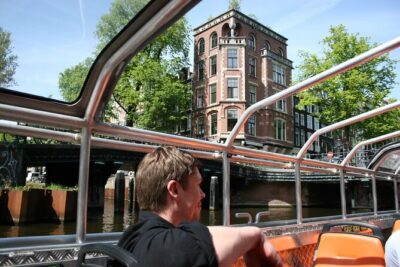 ★ 3.5Amsterdam 1h Canal Cruise by Semi-Open Boat with Audio GuideFrom $21197 reviews
 ★ 4.7Museum of the Canals Ticket with Audio GuideFrom $22150 reviews
More ways to plan this visit