
REVIEW · VAN GOGH MUSEUM TOURS & TICKETS
Van Gogh Museum Skip the Queue with Audio Guide
Van Gogh Museum can feel like a sprint, this makes it calmer. This skip-the-queue via timed entry setup plus the official audio guide helps you see Van Gogh’s evolution without wasting time. I like that you get to explore independently for about 1 to 2 hours, and I also like the museum’s chronological flow that makes his career feel logical. One drawback to plan for: you still go through the museum’s security check, which can slow things on busy days.
You meet at Museumplein and enter at your selected time slot. You pick up the audio guide inside the museum, then walk the galleries at your own pace. This is a great format if you do not want a live guide crowding your schedule, but it also means you will not get on-the-spot explanations if you have specific questions mid-visit.
Key takeaways before you go
- Timed-entry, not a free-for-all: you lock in a slot, but you still pass security.
- Audio guide runs the show: there is no live guide inside, so you are in control of what you linger on.
- Great for 1 to 2 hours: most visits land around 1.5–2 hours, which fits a busy Amsterdam day.
- Career story is easier to follow: the route moves from his Dutch period to the brighter French work.
- Family-friendly, with kid distractions nearby: art plus places to rest and activities help keep younger visitors engaged.
- Exact time and date matters: tickets are dated and not flexible, so double-check your slot.
Other Van Gogh visits with time and context made clear
Entering Van Gogh Museum with timed entry at Museumplein
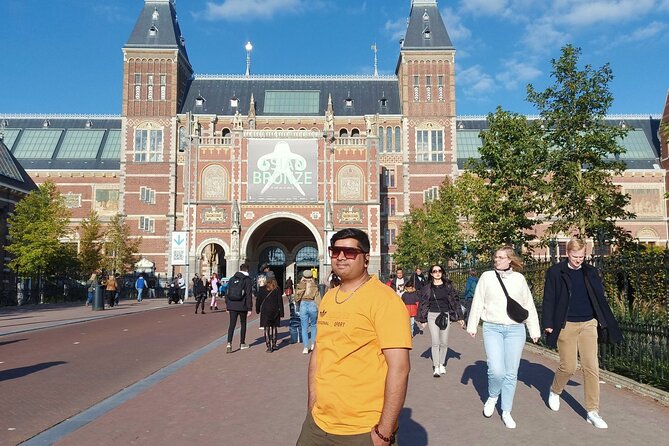
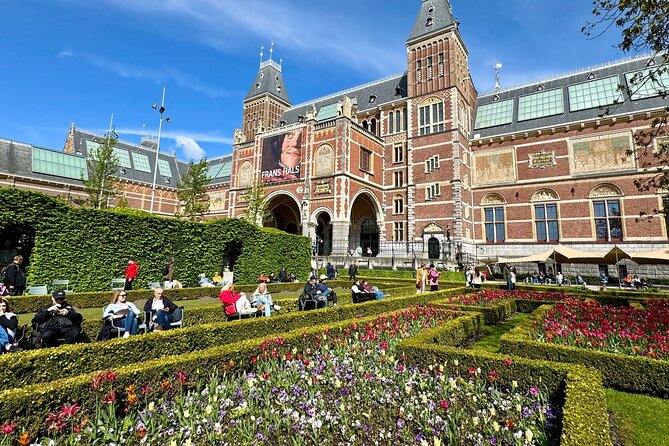
The Van Gogh Museum sits in Amsterdam’s Museumplein area, right where the city’s culture cluster starts to feel like a mini campus. Your experience begins with a timed entry at Museumplein 6, 1071 DJ Amsterdam, and that matters more than it sounds. On busy days, the main pain point is the line for tickets, not the art itself.
Here, the big win is that you do not have to stand in the on-site ticket purchase line. You still need to pass the museum’s mandatory security check, and that can be its own bottleneck when it is crowded. In other words, you are not escaping lines entirely, but you are usually cutting down the most annoying part of the arrival.
This is also a private experience for your group only. That does not mean the museum will suddenly be empty, but it does mean you keep your own pace and avoid the stop-and-go feel of a larger group tour.
What skip-the-line really means here, and what it does not
The term skip the line gets used loosely online, so I treat it like this: you skip the ticket purchase line because you already have timed entry. The museum still requires security screening, and security can still create a queue. So if you are the type who hates any waiting at all, set expectations accordingly.
Also, your ticket is tied to a specific date and time slot. The museum does not allow changes for dated tickets, and refunds are not offered. That makes this a “get it right the first time” purchase, not a flexible option you can casually reschedule once your Amsterdam plans shift.
A final practical note: you receive what you need ahead of time, and you can show your ticket on a mobile device or print it. Either way, plan to have it ready for the museum entrance scan so you do not lose time right when you arrive.
Your audio guide setup, pickup, and how to use it well

This is an audio guide experience, not a live narration with a guide following you. You go inside, then you begin your visit using the official museum audio guide in English (and the concept is that you can choose your language of choice for the audio).
The audio guide is collected inside the museum at the information desk. That is useful because it means you do not have to figure out a complicated pickup point outside the building, and it also keeps the process straightforward once you enter.
How to make it work for you: pick a pace and commit. If you listen to every stop end-to-end, you will likely land at the 1.5 to 2 hour range most visitors hit. If you want more speed, you can listen selectively and return to favorite rooms for extra time.
One tip that comes up often with audio in museums: keep moving between highlights instead of “parking” too long in one room unless that is your goal. The museum is large, and a little rhythm helps you avoid the tired feeling that can creep in halfway through.
Worth comparing with this Amsterdam choice:
- Amsterdam: 75 Minute City Canal Cruise with Audio Guide★ 4.4 · 17,501 reviews
- Anne Frank’s Story – Guided Walking Tour through Amsterdam★ 5.0 · 11,619 reviews
- Amsterdam: Johan Cruijff ArenA Tour with Optional Guide★ 4.6 · 8,954 reviews
- Amsterdam: Royal Palace Entry Ticket and Audio Guide★ 4.6 · 6,475 reviews
The Van Gogh route, early Dutch work to France in one flow
Inside the museum, the galleries are structured so you can feel the arc of Van Gogh’s development. The early section focuses on his Dutch period, where you will see darker-toned paintings tied to early influences and rural themes. This part is especially good if you tend to think of Van Gogh only as the painter of bright swirls and bold color.
As you move through, the story shifts. You start seeing the impact of his move to France, and the museum’s progression shows brighter colors and more expressive brushwork. That makes the visit feel like a creative biography instead of a random collection of famous canvases.
You also get a deeper human layer. The museum displays personal letters, including correspondence with his brother Theo, which helps explain why certain paintings feel emotional or urgent. If you like understanding the why behind the brushstrokes, these letter displays add real context without turning the visit into a lecture.
Temporary exhibitions may also be part of what you see, which is handy because it gives you a chance to broaden the lens beyond one artist’s life and legacy.
Sunflowers and the big masterpieces, what to prioritize first

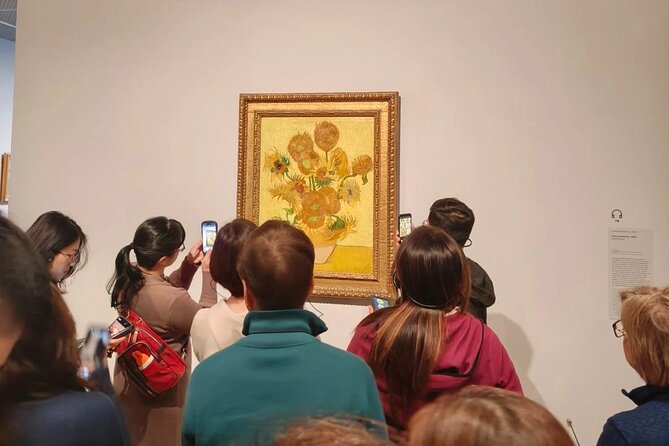
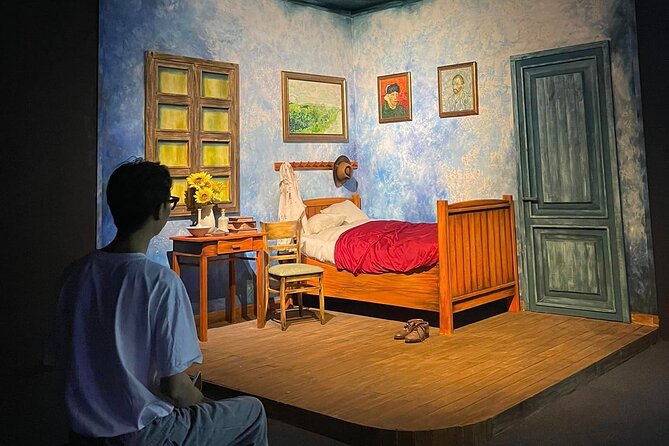
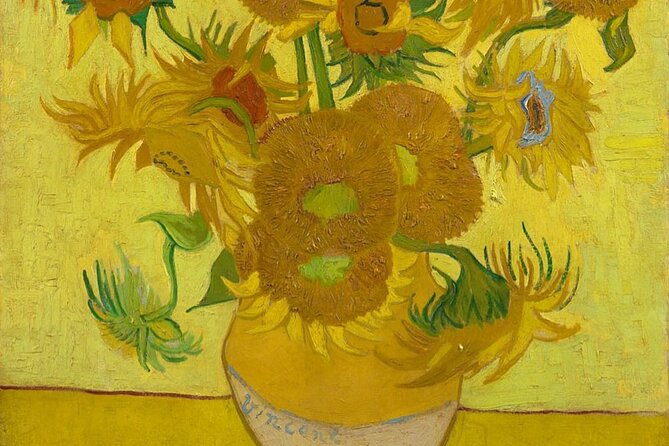
The museum’s star power shows up fast. You will come across iconic works such as Sunflowers, The Bedroom, and Almond Blossom while you work through the galleries in sequence. Even if you have seen images online, these paintings hit differently in person because of scale and texture.
My practical advice is to choose your first “target room,” then let the audio guide fill the gaps. If you begin by hunting every famous painting at once, you can end up rushing through the context that makes those paintings more meaningful. A better approach is to let the chronology guide you, then stop for extra time when something surprises you.
Sunflowers are the obvious draw, but the quieter paintings and early tone shift often create the biggest “aha” moments. Once you see how his palette evolves, the later bright work makes more sense, and you notice details you would otherwise miss.
Letters, technique, and why the audio guide changes the whole visit
The audio guide is the glue that turns a walk-through into an explanation of choices. It does more than identify artworks. It explains the stories and techniques behind each work, so you can follow what Van Gogh was trying to do rather than just admire the result.
The letters add a second layer. When you pair the audio descriptions with written correspondence, you get a more complete picture of how his thoughts traveled alongside his paintings. It also helps with the emotional side of his life, since understanding his hard moments makes the art feel less like a museum label and more like a personal signal.
If you care about art technique, this setup works well because you control the pace. You can replay a segment, linger on brushwork descriptions, or skip ahead if a particular work is not your thing.
If you do not care that much about technique, the audio guide still helps. It provides simple entry points, and those quick story hooks keep you engaged in rooms that might otherwise feel like walls of frames.
How long you should plan, and how to avoid museum fatigue
This experience is typically about 1 to 2 hours, and most people spend around 1.5 to 2 hours. That timeframe is realistic if you want a full sweep without turning the visit into an endurance test.
Because you explore independently, you can adjust on the fly. If you hit a room and it clicks immediately, you can stay longer. If another room feels slower, you can move through without feeling like someone is waiting for you.
Also, build in short breaks. Several family-style reviews highlight that there is space to sit and rest, which is genuinely important in a big museum. If you are traveling with kids, that sitting time can be the difference between a pleasant afternoon and a meltdown.
Staying flexible matters because the museum hours run until closing time, and the ticket format gives you time to keep going if you are enjoying the pace you picked.
Photo rules, what you can capture, and how to keep it easy

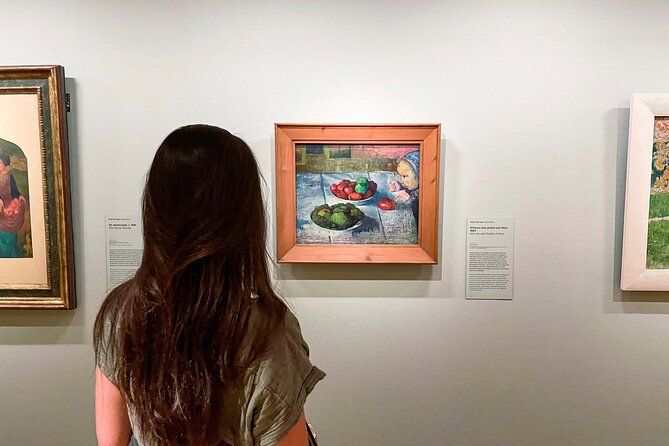
You are welcome to take photos of the paintings as long as you do not use flash, lamps, a tripod, or a selfie stick. That is a simple and standard set of limits, but it is worth knowing so you do not get stopped mid-moment.
If photography is your thing, use your time strategically. Take photos of works that you truly want to remember later, then spend your remaining energy looking. The best photos usually happen when you are not trying to “optimize” every shot and instead just enjoy the view in front of you.
Also, because you are using an audio guide, you can time your photos to the key explanation points. Snap a quick picture at the moment you understand what you are seeing, then move on while the audio keeps building the story.
Families and kids, where this visit tends to work
This experience can work well for families because it supports your pace, not a rigid group schedule. Reviews describe kids getting absorbed by the art and staying off screens for longer than expected, which is exactly what you want from a museum day.
There are also kid-friendly distractions associated with the museum visit experience, including play areas and scavenger hunt style activities. In at least one family account, the scavenger format involved finding hidden rabbits and earning a prize. Another review mentions the children’s studio idea of trying painting like Vincent.
One important rule for younger visitors: the audio guide is generally recommended from age 13. Younger children can still enter, but they might not receive an audio device. If you are bringing younger kids, plan to treat the visit as shared looking time, then let the kid activities do the rest.
Strollers are another practical factor. One family review specifically notes stroller assistance at the entrance and a layout that felt manageable. If you are traveling with a stroller, it is smart to plan for extra time to navigate crowds and queues created by security.
Price and value of $111.74 per person
At $111.74 per person, this is not a budget add-on. The value comes from what you are buying: timed entry plus the official audio guide, while avoiding the on-site ticket purchase line.
If you are the kind of traveler who hates wasting time standing in lines, this can be worth it quickly. Amsterdam’s most famous museums can be tough during peak periods, and a booked slot can protect your day from turning chaotic.
If you are traveling as a family, the math gets more sensitive. One review called it expensive, which is fair if you are paying for fewer “extras” you would not otherwise use. But if your goal is to guarantee a smooth entrance, reduce stress, and spend the time with the audio guide instead of searching for context, the price starts to make more sense.
The best value scenario: you already know you want to see the big works, you want a calm paced visit, and you will actually use the audio guide instead of treating it like a backup plan.
Logistics that can matter more than you think
The experience is near public transportation, and the entry process is designed to be efficient once you arrive. The main time variable is that security check line. On very busy days, you might still wait there, even with timed entry.
Tickets are dated and non-refundable, so you should double-check your time slot before you confirm. The “skip the line” benefit is about ticket purchase, not changing your plans after the fact.
Finally, this is an audio guide format. If you love deep Q and A, this setup might feel limiting because there is no live guide inside the museum. On the other hand, if you like walking freely, absorbing at your own speed, and using audio as your guide, this format fits well.
Should you book this Van Gogh Museum timed-entry audio visit?
Book it if you want a low-stress entrance, an audio-powered visit, and a route that helps you understand Van Gogh’s changes over time. It is especially good if you are traveling with kids and you want enough freedom to rest, roam, and slow down when a painting grabs attention.
I would skip it if you are extremely price-sensitive or if you plan to spend very little time in the museum. At this price, the visit needs to be a meaningful part of your Amsterdam day, not a quick pop-in.
The deciding move: ask yourself how much you value entering at a chosen time and using an official audio guide for about 1 to 2 hours. If those two things are priorities, this is a strong match.
FAQ
What is the meeting point for this Van Gogh Museum experience?
You meet at Van Gogh Museum, Museumplein 6, 1071 DJ Amsterdam, Netherlands.
Where does the tour end?
The activity ends back at the meeting point.
Is there a live guide inside the museum?
No. This is an audio guide experience, and you explore independently inside the museum.
How does the skip-the-line access work?
You skip the line to buy tickets on site by using timed entry. You still need to pass the museum’s mandatory security check.
How do I get the audio guide?
You collect the audio guide inside the museum at the information desk.
How long can I stay in the museum?
You can stay as long as you like until closing time. Most visitors spend about 1.5 to 2 hours.
Which Van Gogh works are highlighted during the visit?
The visit follows the museum’s route through the collection and includes major works such as Sunflowers, The Bedroom, and Almond Blossom.
Can I take photos of the paintings?
Yes, you can take photos, but you cannot use flash, lamps, a tripod, or a selfie stick.
Is this suitable for children?
Most travelers can participate. The audio guide is generally recommended from age 13, and younger children may not receive an audio device, though they can still enter the museum.
Are the tickets refundable or changeable?
No. Tickets are non-refundable and cannot be changed for any reason. Tickets are dated, so choose your time carefully.
More Guided in Amsterdam




More Tour Reviews in Amsterdam






More Time with Van Gogh





Newly reviewed around Amsterdam




Van Gogh Museum Tours & Tickets, side by side.
 ★ 4.7Van Gogh Museum TicketFrom $3252,054 reviews
 ★ 4.6Van Gogh Museum Ticket and City Canal CruiseFrom $473,899 reviews
 ★ 4.5Van Gogh Museum Ticket & Canal CruiseFrom $473,304 reviews
 ★ 5.0Van Gogh Museum Amsterdam Exclusive Tour w/ Reserved EntryFrom $1731,760 reviews
 ★ 5.0Van Gogh Museum Tour Reserved Entry Semi PrivateFrom $1731,437 reviews
 ★ 4.9Van Gogh Museum Entry Ticket and Guided TourFrom $175681 reviews
 ★ 4.0Combo Ticket: Van Gogh Museum Ticket and 1-Hour Canal CruiseFrom $45676 reviews
 ★ 4.7Van Gogh Museum Guided Tour with EntryFrom $69535 reviews
More ways to plan this visit