
REVIEW · ANNE FRANK & JEWISH QUARTER TOURS
Jewish Amsterdam Private Walking Tour
Jewish Amsterdam hits hard, in the best way. This private walk through the Jewish Quarter links everyday Jewish life to the darkest parts of 20th century history, using real places you can still stand in front of. I love the fact it stays crowd-free for a small group, and I love how the route keeps switching between memory and community rather than treating everything as one long lecture. One heads up, a few major sites are listed as under reconstruction, so you may not be able to go inside, and some museum tickets are not included.
Plan on around 3.5 hours of walking, and go in with comfy shoes. The pace can be adjusted, and you can request more short breaks if you need them, but it is still a walking tour, so limited mobility needs real consideration.
Key things to know before you go
- Private, up to 4 people means you can move at your pace and ask questions without feeling rushed.
- Holocaust memorials first sets context early, before you shift into synagogue and community landmarks.
- Exterior stops matter here, especially for buildings that are under construction, with guides using extra materials like photos.
- Museum entry is partly optional, so bring a plan if you want to add ticketed stops on the day.
- It ends near Anne Frank House, which makes your final decision simple, but not included automatically.
More careful routes through Amsterdam’s Jewish history
A private Jewish Quarter walk in a group of four
This is a private walking tour of Amsterdam’s Jewish Quarter for a maximum group of 4, with a set route and a guide handling the flow. That small group size is a big part of the value. You get the quiet of a neighborhood walk, but with context that you would usually miss if you just show up on your own.
The tour is about 3 hours 30 minutes, which is long enough to feel like you are traveling through neighborhoods rather than sprinting between photo stops. Also, pickup is offered, which can save time when you are coming from the train or cruise area. If you prefer to start stress-free, that convenience matters.
One more practical point I like: the meeting point is clearly defined at Passenger Terminal Amsterdam (Piet Heinkade 27), and the end point puts you at Westermarkt (near Anne Frank House). That makes it easier to plan the rest of your day without backtracking across town.
From Passenger Terminal to Westermarkt: how the route is built
The route is laid out like a story told in street order. It starts with remembrance, then moves into the places where Jewish communities lived, worshiped, worked, and protested, and it ends in the Anne Frank area.
That ending is especially useful. You walk out of the Jewish Quarter context and arrive where you can decide what you want next, inside Anne Frank House or simply explore the surrounding streets. The key thing is that the tour route does not automatically include Anne Frank House entry, so you need to plan that part intentionally.
If you are doing this during busy hours, build in extra time for ticketed stops you choose to add later. Even with a private guide, you are still working with museum schedules and openings.
Holocaust Namenmonument: the opening that sets the tone
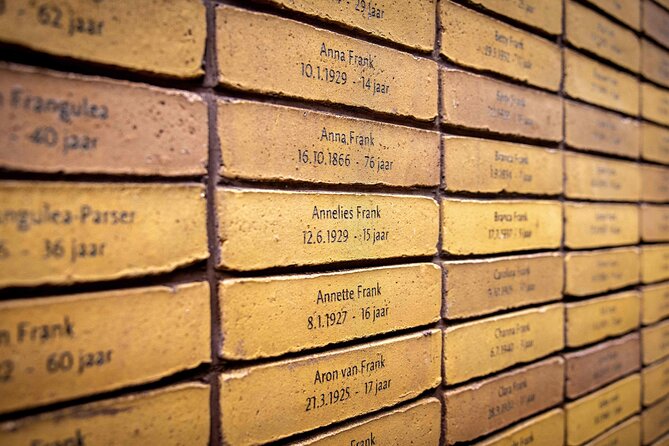
Your first stop is the Holocaust Namenmonument, the memorial listing 102,000 people who died in Nazi camps of death and were not given a proper burial. Admission is free, and it is scheduled as a short stop.
What this stop does well is simple: it gives you names, not just numbers. That matters early, because the day will include other memorials and museum-like settings where emotion runs high. Starting with names helps you keep your bearings as the route turns more intense.
Time is short here, so you are not meant to read every line for hours. Instead, use the moment to absorb what the memorial is trying to do, then let the guide’s explanation move you forward.
Amsterdam at street level, a few more routes
- Anne Frank’s Story – Guided Walking Tour through Amsterdam★ 5.0 · 11,619 reviews
- Amsterdam: Life of Anne Frank and World War II Walking Tour★ 4.8 · 10,467 reviews
- Absolutely Amsterdam – the Essential Introductory Walking Tour★ 5.0 · 3,629 reviews
- Amsterdam: Anne Frank Guided Small Group Walking Tour★ 4.8 · 2,722 reviews
Auschwitz Monument: broken glass, broken lives
Next comes the Auschwitz Monument, another free stop centered on broken glass honoring approximately one million victims of Auschwitz. It is only about 10 minutes on the schedule, so again, it is designed for a focused hit, not a long sit-down.
The symbol of broken glass is powerful because it points to destruction without needing extra words. By the time you reach this point, you have already been primed by the Namenmonument, so the guide can connect the meaning to what Amsterdam Jewish history experienced and how those events reached this neighborhood.
Hollandsche Schouwburg during reconstruction: why you still stop outside
This is one of the stops where the tour wording is important. Hollandsche Schouwburg and related Holocaust museum spaces are listed as under construction until 2024, so you cannot count on interior access.
Even so, it is still a key stop. The tour treats the buildings as part of the story, not just as a backdrop. The two buildings, two Holocaust museums, and two related monuments are described as telling an upsetting narrative about suffering, disaster, and genocide, but also about courage and selflessness. Since you cannot go inside, the guide’s job becomes even more important here.
A useful detail from the guide approach on this tour: your guide may share context using personal photo material to explain what you would have seen inside. That kind of compensation can be meaningful when construction blocks access. Just keep expectations realistic: you are learning from the exterior and the guide’s explanation, not touring museum galleries.
Jewish Historical Museum and the Portuguese Synagogue (Esnoga): worship spaces and living memory
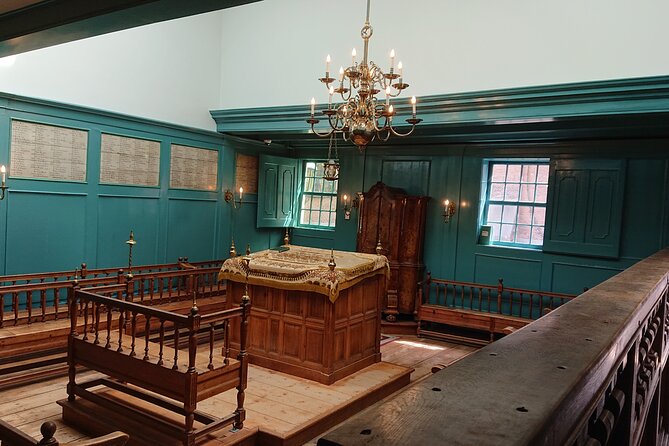
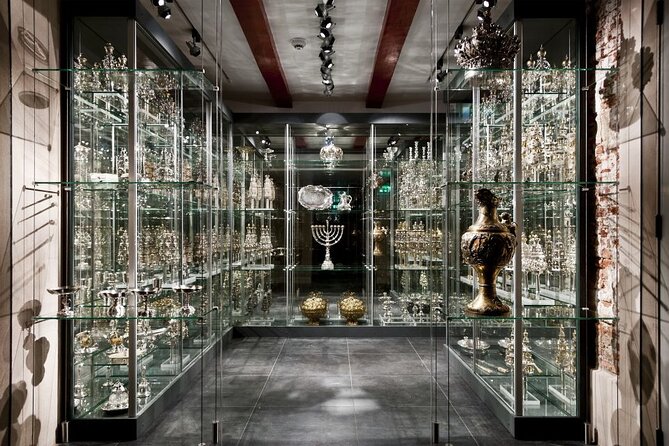
After the Holocaust-focused stops, the route shifts into Jewish community life. The next cluster includes the Jewish Historical Museum and the JHM Children’s Museum, housed in four historical Ashkenazi synagogues. The Portuguese Synagogue, also known as Snoge or Esnoga, is a Sephardic synagogue from 1675, and it is still in use.
Here is what you should plan for: museum ticketed entry is not included on the tour. The schedule assigns short time windows, which often means you are mostly looking at the exteriors unless you decide to add interior time and obtain tickets separately.
If you are not able to enter, this is where the private-guide advantage shows up. Some guides use photos to show what is inside, so you still get a sense of space, scale, and symbolism. If you care a lot about going in, I would treat ticket timing as part of your planning, not an afterthought.
Why this cluster is valuable is that it prevents the day from becoming only about tragedy. You are seeing places that carried everyday religious life across centuries, including communities that lived through changing Dutch history long before World War II.
Dokwerker statue: resistance in public space
One of the most interesting non-museum stops is the Dokwerker (Dockworker) statue. It honors dock workers’ protest against anti-Semitic policies of Nazi occupants and the first deportations of Jews to the concentration camp at Mauthausen on February 24, 1941.
This kind of stop matters because it adds agency to the story. The Holocaust chapter often gets told through loss alone, but this monument points to resistance and moral choice in a very specific place in time.
It is a free stop and scheduled for about 10 minutes. Use that time to listen for the guide’s explanation of how public labor, local power, and persecution collided here.
Spinoza’s orbit: a Catholic church site tied to a Jewish philosopher
The route also includes a 19th-century Catholic church connected to a past residence of Jewish philosopher Baruch Spinoza and his family.
This stop gives you a different texture for Jewish Amsterdam. You are not just looking at synagogues and memorials. You are walking through the wider Amsterdam city fabric, where Jewish thinkers and families are part of the broader cultural story.
It is scheduled as a quick stop in the itinerary. Still, it can be a great mental reset if the earlier memorials feel heavy.
GASSAN diamond stop: a practical break with a twist
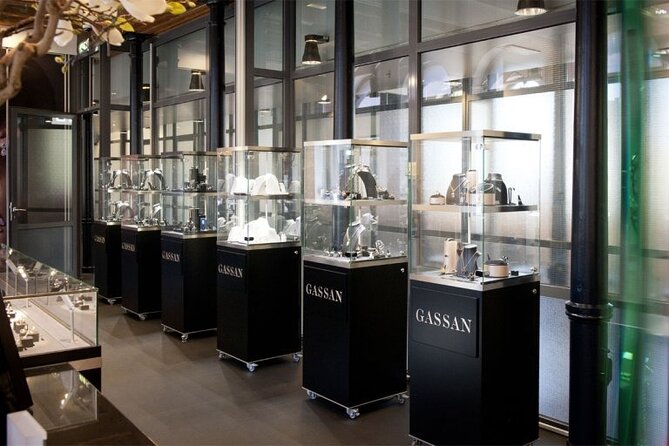
At the GASSAN museum, workshop, and store, you get a shorter 20-minute free stop. The day includes memorials and museums, so this break is not random. It is a chance to reset your head for a bit.
The tour notes that free visiting tours with a local company guide are available for about 20 minutes. That means you may see how diamonds connect to Amsterdam business and craft, rather than only history and religion.
One caution: since this is a private walking tour with specific scheduled stops, treat this as a chance to observe and ask questions, not a time to lose yourself in shopping. The route keeps going.
Uilenburgersjoel and Huis De Pinto: old Amsterdam Jewish streetscapes
Next up is Uilenburgersjoel, an historic Rococo-style synagogue erected in 1766 for Ashkenazi Jews. It is another free stop with a short time allocation.
Then you move to Huis De Pinto, the house built in 1603 once belonging to wealthy Jewish merchant Isaac de Pinto. This stop is also free.
These two are a nice pairing. Uilenburgersjoel anchors the spiritual life of the community, while De Pinto’s home points to wealth, trade, and social standing. Together, they help you avoid viewing Jewish history as only one era or one category.
If you like architecture details, keep an eye on how the neighborhood shapes what you see. Even a short exterior stop can give you a stronger mental map than a quick photo.
Rembrandt House Museum and the Jewish link
The tour includes Rembrandt House Museum, a 17th-century town house where Rembrandt lived from 1639 to 1658. It is scheduled as a stop, but admission is not included.
The key point here is not Rembrandt the celebrity. It is the stated connection between Rembrandt’s life and the Amsterdam Jewish community of the time. That link helps you understand how Jewish presence existed beyond synagogue doors, influencing the broader cultural ecosystem.
As with other ticketed sites on this route, you will want to decide ahead of time whether you plan to go inside. If you skip the interior, you still get value from the guide connecting the address to the broader story.
Waterlooplein Market: social life beyond the archives
The tour stops at Waterlooplein Market, described as Amsterdam’s oldest flea market until World War II and also a center of social life for over 150 years. Admission is free, and it is about 15 minutes.
This is where the day gets more “Amsterdam” and less “museum.” Market life gives you a different kind of history, one tied to everyday mixing, bargaining, and community rhythms. It also helps balance the heavy themes earlier in the day.
Take this moment to notice the city around you. It is easy to only think in straight lines when learning history, but the neighborhood still functions. That is part of what makes the tour feel real.
Deaf Memorial and the Jewish resistance monument: remembrance with specific focus
Two short remembrance stops round out the second half.
First is the Deaf Memorial, commemorating Jewish deaf victims of the Nazi regime during 1940 to 1945. It is free and scheduled for about 5 minutes. Second is the Monument vor Joods verzet, memorializing Jewish resistance fighters who died in World War II, also free and around 10 minutes.
I like these stops because they avoid treating victimhood as a single, generic category. They bring in different groups and different forms of courage, which gives the day more dimensional weight.
Spinoza Monument: a philosopher made visible
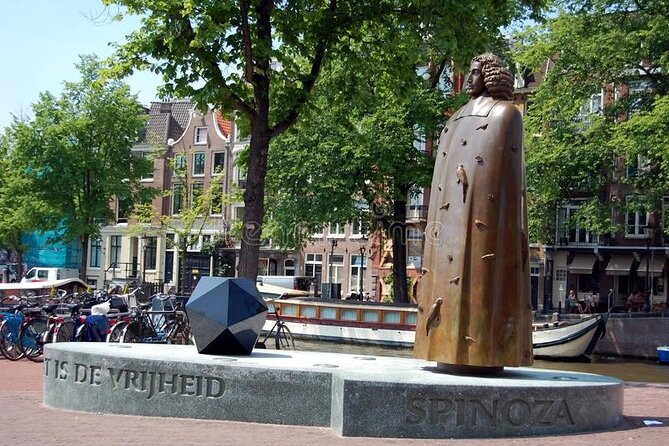
You end with the Spinoza Monument, commemorating Amsterdammer Baruch Spinoza, described as a descendant of a prominent Portuguese Jewish family and one of Europe’s greatest philosophers. The tour notes his relative obscurity in his own time and how he influenced modern philosophical ideas, including pantheism.
This is a free stop and scheduled for about 10 minutes. It is also a thoughtful way to end the intellectual thread of the day. You started with remembrance, moved through community spaces, then reached the idea of Jewish thought shaping Europe.
Ending near Anne Frank House: optional visit, clear expectations
The tour concludes near the Anne Frank House area, at Westermarkt 20. But this tour has a very important boundary: it does not include the visit of the Anne Frank House museum.
Your guide can assist regarding availability of admission fees and ticket providing, but the guide is not described as being able to obtain tickets personally. In practice, that means you should treat Anne Frank House as a separate plan you may or may not add, based on ticket availability and your timing.
This is also where a private guide can reduce stress. If you are trying to align a museum visit with the end of your walking tour, having someone help you coordinate matters, even if they cannot directly purchase or fetch tickets.
If you want Anne Frank House to be part of your trip, plan for it before you arrive on the day, and keep your schedule flexible enough to handle any timing mismatch.
Price and value for a group of up to four
The price is $540.69 per group, for up to 4 people, and the tour lasts about 3 hours 30 minutes. That price can look steep if you are thinking per person. But on a small group private format, it can work out closer to a premium guide experience rather than a premium tour bus.
To judge value, focus on what you are really buying:
- A private, crowd-free route through Jewish Quarter locations
- A guide who connects Holocaust remembrance with Jewish life landmarks
- Short stops at multiple memorials, synagogues, and historical buildings that would be hard to understand on your own
- Optional help coordinating Anne Frank House timing
What can reduce value is also clear from the tour details. Some museum tickets are not included, including the Jewish Historical Museum and Portuguese Synagogue, and also Rembrandt House Museum, plus Anne Frank House is not included at all. If you plan to enter every ticketed site, your final cost will rise.
Still, if your goal is context, orientation, and making the places mean something, the guide component is the main purchase here, and for a group of four it can feel reasonable.
Who should book this tour, and who should skip
This tour is a strong fit if you:
- Want a small-group private walk instead of a big group tour
- Care about Jewish Amsterdam beyond general sightseeing
- Like guided context that links buildings, monuments, and community stories
- Can handle emotional subject matter, including Holocaust remembrance
It may not be the best fit if you:
- Need fully accessible, low-walking sightseeing. The tour is at least 3.5 hours, and while the pace can be adjusted with breaks by agreement, it is still a walking route.
- Want a guaranteed inside tour of all major museums, since construction and ticketed interiors can limit access.
Also, if Anne Frank House is your top priority, build a plan around ticket availability. The tour ends near it, which helps, but it does not automatically include entry.
Should you book this Jewish Amsterdam private walk?
I would book it if you want one focused, guided day that connects Jewish community life and Holocaust memory through real Amsterdam addresses. The private format, small group size, and guide storytelling approach can turn a lineup of monuments into a coherent, understandable route.
Skip or reconsider if you are mainly hunting for museum entry times, because several interiors depend on tickets or reconstruction status, and Anne Frank House is optional rather than included. If you go in with that expectation, you will get the day this route is built to deliver: a street-level understanding of Jewish Amsterdam, with reminders that stay with you long after you leave the sidewalks.
FAQ
How long is the Jewish Amsterdam private walking tour?
The tour runs about 3 hours 30 minutes.
How many people can join in one group?
The tour has a maximum group size of 4 travelers.
Does the tour include tickets for Anne Frank House?
No. The tour does not include visiting the Anne Frank House museum. Your guide can assist with availability and ticket providing, but cannot obtain the tickets personally.
Are museum tickets included for the Jewish Historical Museum, Portuguese Synagogue, and Rembrandt House?
Admission tickets for the Jewish Historical Museum and Portuguese Synagogue are not included. Admission tickets for Rembrandt House Museum are also not included.
Which stops have free admission?
Several stops are listed as free, including the Holocaust Namenmonument, Auschwitz Monument, Dokwerker, GASSAN, Uilenburgersjoel, Huis De Pinto, Waterlooplein Market, Deaf Memorial, Spinoza Monument, and Monument vor Joods verzet.
Where do you meet and where does the tour end?
You start at Passenger Terminal Amsterdam Piet Heinkade 27, and the tour ends at Anne Frank House Westermarkt 20 (near the Western Church at Prinsengracht).
Is pickup offered, and can the pace be adjusted?
Pickup is offered. The walking speed could be adjusted and more frequent breaks (5 to 10 minutes) can be added up on agreement for guests who need it.
Can I cancel for a full refund?
Yes, free cancellation is available up to 24 hours in advance for a full refund.
More Tours in Amsterdam






More Tour Reviews in Amsterdam




Continue through the Jewish Quarter




Newly reviewed around Amsterdam



Anne Frank & Jewish Quarter Tours, side by side.
 ★ 5.0Anne Frank’s Story – Guided Walking Tour through AmsterdamFrom $3911,619 reviews
 ★ 4.8Life of Anne Frank and World War II Walking TourFrom $3710,467 reviews
 ★ 4.8Anne Frank Guided Small Group Walking TourFrom $282,722 reviews
 ★ 4.9Anne Frank Walking Tour – Guided in EN/DE/IT/ESFrom $282,676 reviews
 ★ 5.0Anne Frank Walking Tour Amsterdam Including Jewish Cultural QuarterFrom $751,879 reviews
 ★ 5.0Anne Frank’s Last Walk & See Anne Frank House in Virtual RealityFrom $42957 reviews
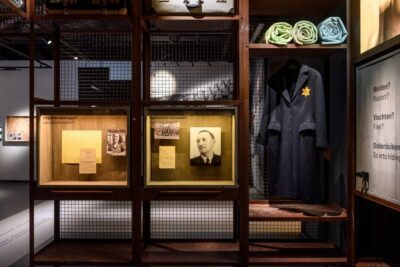 ★ 4.7Dutch WWII Resistance Museum Entry TicketFrom $21951 reviews
 ★ 5.0Anne Frank and Jewish Quarter Amsterdam Private Walking TourFrom $157684 reviews
More ways to plan this visit