
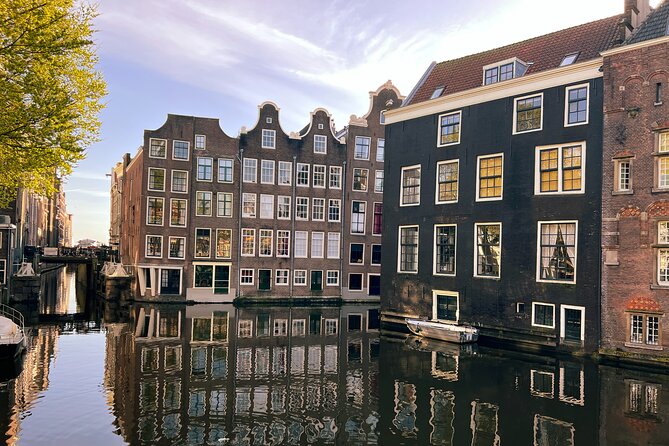
REVIEW · WALKING TOURS
Historical Walking Tour, private with local Dutch guide
Amsterdam has a lot of history. This tour gives you the map in your head fast, with a local guide who can explain how the city actually grew. You start at rare medieval leftovers, then work your way through the places that shaped trade, markets, and the canal-era wealth you see everywhere.
I like two things a lot. First, it is a private tour with a guide who has lived in Amsterdam for 25 years, so the stories land like real city knowledge. Second, you get a smart first-timer route: medieval defenses, the Golden Age canal district, then the Jordaan side of Amsterdam many visitors skip.
One thing to consider: this is about 2 hours on foot, and mobility aids are not provided. If walking and standing that long is a problem for you, this may not be your best match.
Key Highlights You Will Feel on This Walk
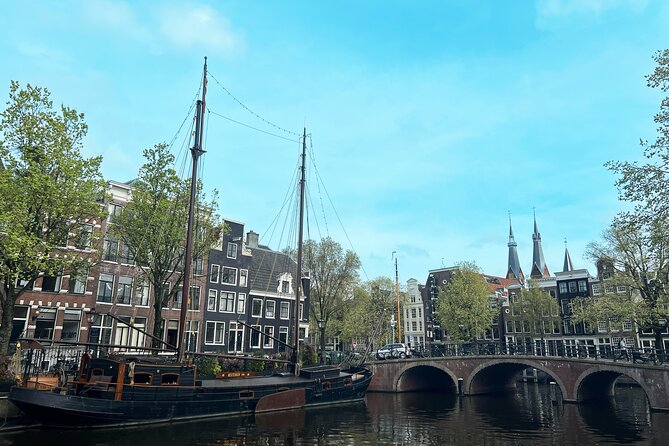
- A local Dutch guide with decades in Amsterdam who connects early geography to what you see today
- Private group experience so you can set the pace and ask questions without crowd pressure
- Medieval to Golden Age to local neighborhoods in one tidy, orientation-friendly route
- Canal Ring time (Grachtengordel) to understand why those merchant houses look the way they do
- Service animals welcome and the tour runs near public transportation
- Admission ticket stops are free on the day, so you avoid surprise extras for entries
Amsterdam at street level, a few more routes
Why This 2-Hour Private Walk Gets You Oriented Fast
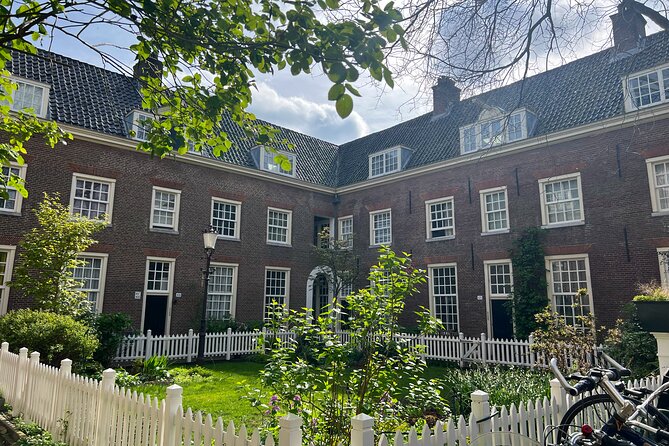
If it is your first time in Amsterdam, you want two things: easy bearings and context. This tour is built for exactly that. In about two hours, you move from medieval remnants into the city’s commercial engine, then into the kind of streets and viewpoints that help you understand Amsterdam’s layout without needing a map app for every corner.
It is also private, so the guide can adjust to your interests. In the best cases, that means you get the “why” behind the buildings, not just dates. And when you are jet-lagged, that matters. Several guide-focused stories I saw emphasized pacing that stays on track but still leaves room for questions.
Cost-wise, it is $96.02 per person for a private, guided experience. That can feel steep compared with group tours, but you are paying for a direct conversation plus the guide’s time. If you are traveling as a small group, private often becomes better value than it looks at first glance, especially when you factor in the guide tailoring and the tight 2-hour format.
Price and Duration, Plus What You Should Budget For
The tour runs about 2 hours and costs $96.02 per person. It is listed in English, and you will get a mobile ticket. All fees and taxes are included.
What is not included: bottled water. That is not a big deal, but Amsterdam days can be surprisingly active. I recommend having a refill plan or buying a bottle right before you start.
One more practical detail: this tour averages being booked about 70 days in advance, so if you want a specific day, do not wait until the last minute.
Café the Schreiertower Meeting Point, Start Smart, Stay Comfortable
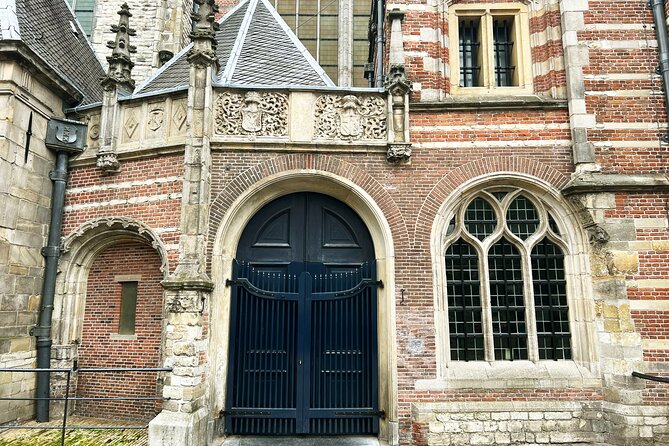
You meet at Café the Schreiertower, Prins Hendrikkade 95, 1012 AE Amsterdam. Starting at a café is handy, because it lowers stress. You can get your bearings, check your phone, and wait in a normal place rather than wandering around for a vague pointer.
The tour ends near the Anne Frank House and Westerkerk area, with the official end at Westerkerk, Prinsengracht 279, 1016 DL Amsterdam. That ending is useful because it links you to two major next steps: you can continue wandering the canal streets and plan your next visit without crisscrossing the city.
Because it is near public transportation, you can also build the rest of your day around tram and metro stops.
Worth comparing with this Amsterdam choice:
- Amsterdam: 75 Minute City Canal Cruise with Audio Guide★ 4.4 · 17,501 reviews
- Anne Frank’s Story – Guided Walking Tour through Amsterdam★ 5.0 · 11,619 reviews
- Amsterdam: Johan Cruijff ArenA Tour with Optional Guide★ 4.6 · 8,954 reviews
- Amsterdam: Royal Palace Entry Ticket and Audio Guide★ 4.6 · 6,475 reviews
Stop 1, Weeping Tower: Medieval Amsterdam in One Corner
You begin at a medieval watchtower known as the Weeping Tower, one of Amsterdam’s few remaining reminders of the Middle Ages. This is where the guide sets the “how did Amsterdam begin” story.
What I like about starting here is that it gives you a frame before you see the big, famous canal scenery. You learn that Amsterdam was not always canals and merchant houses. The city started with defense and control, and the location mattered.
It is a short stop, about 5 minutes, and admission is free. That means you do not lose momentum early on.
Stop 2, Zeedijk: The Dike Street That Protected the City
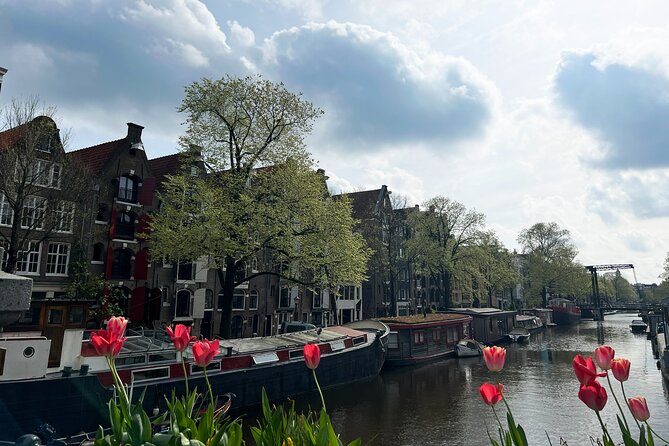
Next you head to Zeedijk, one of Amsterdam’s oldest streets. The key idea here is that it did not start as a typical street. It functioned as a dike with locks, protecting the city from flooding.
This is one of those “Amsterdam makes sense only if you understand water” moments. You will see the street layout and understand why Amsterdam had to engineer itself to survive, not just decorate itself for tourists.
Again, it is about 5 minutes with free admission. The goal is comprehension, not a long museum-style stop.
Stop 3, The Waag: A City Gate Built for Defense
At The Waag, you look at a medieval city gate that used to be part of a defensive wall and mote system. It is the kind of stop that could be boring if you just saw a gate. With a good guide, it becomes a story about how cities controlled movement and trade.
This stop is short, about 5 minutes, but it matters because it keeps the city’s earlier purpose in view. Amsterdam’s later wealth and canal elegance came from earlier control and commerce.
Stop 4, Oostindisch Huis: Spices, Power, and the Birth of Modern Business Logic
Then the tour shifts into the era when Amsterdam became a global trading hub. Oostindisch Huis is tied to the Dutch East India Company, founded in 1602.
This is where the explanation gets practical for your brain. You hear about the spice trade and also a bigger business idea: the ways company structure and stock-style thinking helped shape what we recognize today as modern corporate finance.
It is about 5 minutes and free admission, but the topic is big. If you enjoy the intersection of commerce and culture, this is one of the most interesting points on the walk.
Stop 5, Het Kleinste Huis van Amsterdam: Tiny House, Big Symbols
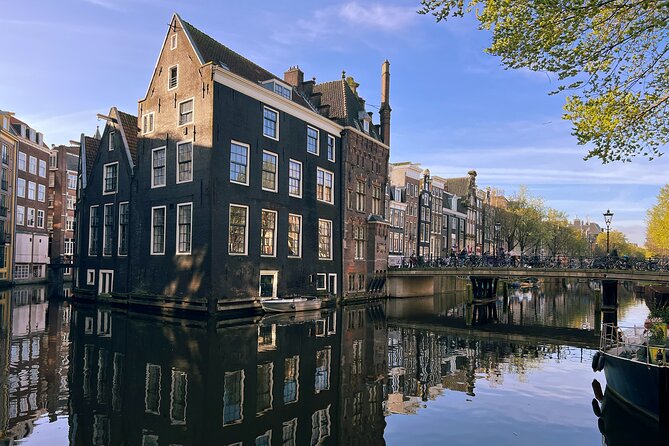
At Het Kleinste Huis van Amsterdam, you see the smallest house in Amsterdam, historically next to a gate decorated with the city’s crest and other symbolic details.
This stop is brief, about 5 minutes. The value is not the square footage. It is what the guide points out about the way Amsterdam signaled identity through architecture and ornament, even in small, odd-shaped spaces.
If you enjoy street-level oddities and how they fit into the larger urban story, you will like this one.
Stop 6, Dam Square: The Old Market Heart and Its Major Landmarks
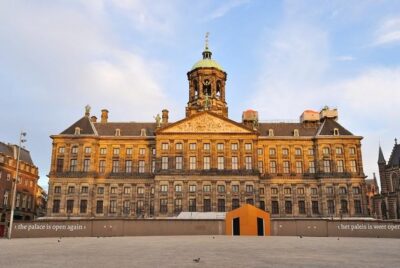
Dam Square is the city’s old market heart. Today you also find major landmarks, including the Royal Palace and the national Second World War monument.
In a short stop (about 10 minutes), you will get the sense that Dam Square is Amsterdam’s “center of attention,” not just a convenient place to take photos. A good guide helps you read the square as a civic space that has shifted roles over time.
This is also a useful moment for practical orientation. After this, you are ready to understand why the canal ring mattered and why the neighborhoods like Jordaan developed the way they did.
Stop 7, Canal Ring (Grachtengordel): Why Those Houses Look Like That
Now you walk into the Canal Ring District (Grachtengordel), built for wealthy merchants in Amsterdam’s Golden Age. This is where you see the northern baroque-style canal houses and get a sense of how widespread houseboats were as part of daily life and commerce.
The stop is about 30 minutes, which is significant. I like longer canal time on an orientation walk because you start noticing details faster: frontage, canal edges, building rhythm, and how the street-canal relationship shapes sightlines.
If you want to understand why the canals are not just pretty scenery, this portion is your payoff. The guide can connect wealth, trade, and urban planning into something you can actually picture.
Stop 8, Jordaan: Brown Cafes, Small Streets, Local Vibes
After the grand canal ring, you shift to Jordaan, a popular and charming neighborhood known for picturesque streets, traditional brown cafes, and unique boutiques.
This is another 30-minute segment, so you are not just passing through. You get time to feel the neighborhood scale and the softer side of Amsterdam that still feels local rather than purely staged.
This is also the part of the tour that many people find memorable because it steps away from only the headline landmarks. If your day in Amsterdam tends to get stuck on the “big sights only,” this stop helps you balance it.
Stop 9, Westerkerk: A Protestant Landmark Locals Actually Love
You wrap up at Westerkerk, a Dutch Protestant church known for its stylish design and the iconic spire that has become a local landmark.
This final stop is about 5 minutes. The goal is closure and a visual landmark you can remember when you continue your own exploring. It is also a convenient endpoint, since you are near the Anne Frank House area when the walk ends.
If you are planning what to do next, having Westerkerk as your finish point is smart. You can keep walking the canals, grab food nearby, or head to your next museum.
Service Animals, Pace, and Who This Tour Fits Best
Good news if you travel with a service animal: service animals are welcome.
The pace is generally effective for first-timers, and the stories I read emphasized pacing that can include pauses when you want them. That said, this tour is still designed for people who can handle about two hours of walking and standing.
It is not recommended for participants who have trouble walking and standing for 2 hours. Mobility aids are not available, and it is also not recommended for people who use a walker.
If you are in good walking shape, this tour is an excellent “day one” option. If your mobility is limited or your legs are sensitive, consider a shorter or more seated option.
What You Really Get From a 25-Year Local Perspective
This kind of tour works best when the guide can connect dots. Here, the guide lived in Amsterdam for 25 years, and that matters because you hear not only about what happened, but how the city still thinks today.
The stories I saw highlighted guides who bring Amsterdam’s past alive with humor and sharp explanations, including personalized emphasis on topics like Jewish history beyond the usual Anne Frank House stop. You should not count on specific extra themes every time, but the overall point is consistent: the best value is the guide’s ability to tailor what you notice.
A private guide is also a chance to ask “why does Amsterdam do X?” and get a real answer on the street instead of guessing later.
Should You Book This Historical Walking Tour?
Book it if you want the best first-day orientation in Amsterdam without spending the whole day piecing the city together yourself. The route is efficient, it focuses on major transitions in the city’s story, and it ends in a useful area for further exploring.
Skip it or choose another format if you cannot comfortably walk and stand for about two hours, since mobility aids are not provided. Also, if you prefer long stops and deep entry tickets, this is more of a guided orientation walk than a slow museum-style day.
If you go in with good walking shoes, a willingness to look up and ask questions, and maybe a small snack plan (since water is not included), you will leave with a working mental map. That is the real value here: Amsterdam becomes easier to navigate and more meaningful to look at.
FAQ
What is the duration of the private historical walking tour?
The tour lasts about 2 hours.
Is the tour private or shared?
It is a private tour, so only your group participates.
What language is the tour offered in?
The tour is offered in English.
Where do we meet, and where does the tour end?
You meet at Café the Schreiertower, Prins Hendrikkade 95, 1012 AE Amsterdam. The tour ends near the Anne Frank House area, with the listed endpoint at Westerkerk, Prinsengracht 279, 1016 DL Amsterdam.
Are any admission tickets included, and is bottled water included?
Admission ticket stops are free as listed. Bottled water is not included.
Are service animals allowed?
Yes, service animals are allowed.
Is the tour suitable if I use a walker or need mobility aids?
It is not recommended for participants who have trouble walking and standing for 2 hours, and mobility aids are not available. It is also not recommended if you use a walker.
What is the cancellation policy if plans change?
You can cancel for a full refund up to 24 hours in advance of the start time. If you cancel less than 24 hours before, the amount paid is not refunded.
Amsterdam on Foot






More Tours in Amsterdam




More Tour Reviews in Amsterdam




Newly reviewed around Amsterdam




Walking Tours, side by side.
 ★ 5.0Anne Frank’s Story – Guided Walking Tour through AmsterdamFrom $3911,619 reviews
 ★ 4.8Life of Anne Frank and World War II Walking TourFrom $3710,467 reviews
 ★ 5.0Absolutely Amsterdam – the Essential Introductory Walking TourFrom $53,629 reviews
 ★ 4.8Anne Frank Guided Small Group Walking TourFrom $282,722 reviews
 ★ 4.9Anne Frank Walking Tour – Guided in EN/DE/IT/ESFrom $282,676 reviews
 ★ 4.9Guided Cultural Walking TourFrom $292,384 reviews
 ★ 4.2Guided Ganja Walking Tour of Coffee ShopsFrom $272,092 reviews
 ★ 5.0Anne Frank Walking Tour Amsterdam Including Jewish Cultural QuarterFrom $751,879 reviews
More ways to plan this visit