
REVIEW · WALKING TOURS
Amsterdam: Queer City Walking Tour With Local Guide
Queer Amsterdam starts at Dam Square. This 2-hour walk threads LGBTQI+ stories through the city, from pride and protest to the places most visitors skip. Sanne keeps the tone personal, with connections that feel human, not just historical.
What I like most is how personal experiences sit right next to public landmarks, so the meaning lands fast. I also like the focus on queer perspective rather than a checklist of stops, which makes the walk easier to follow and remember.
One consideration: the route spends time in and around the Red Light District area, so if you prefer quiet neighborhoods and zero discussion of sex work-related context, this may feel intense.
Key things you will notice on this Queer City walk
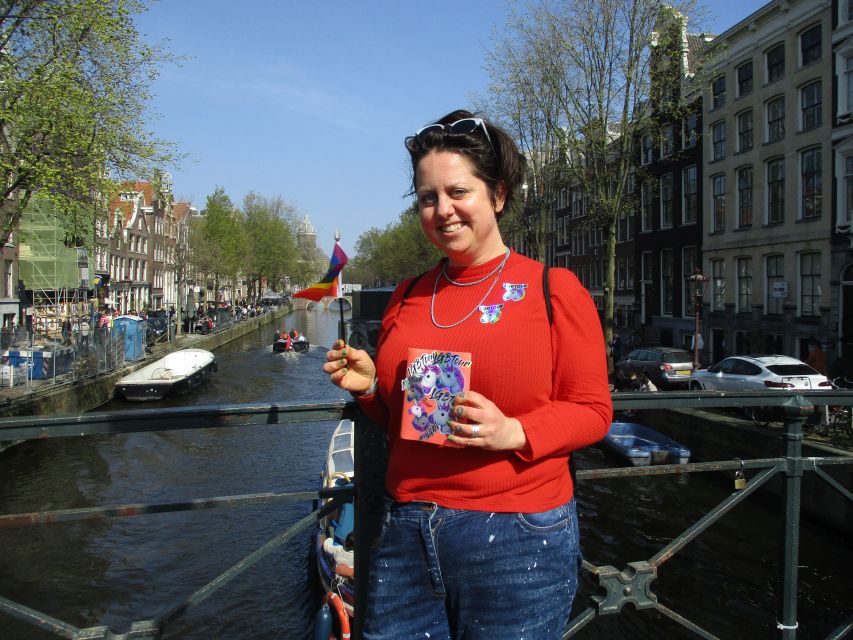
- Sanne’s storytelling style, warm and specific, with a lot of care for how people remember their lives
- Dam Square start and Monument stop with controversial origin stories
- Homomonument and other named landmarks, handled with short guided moments so you do not get bored
- Condomerie stop, tied to necessity during the AIDS crisis and the beginnings of the first condom shop
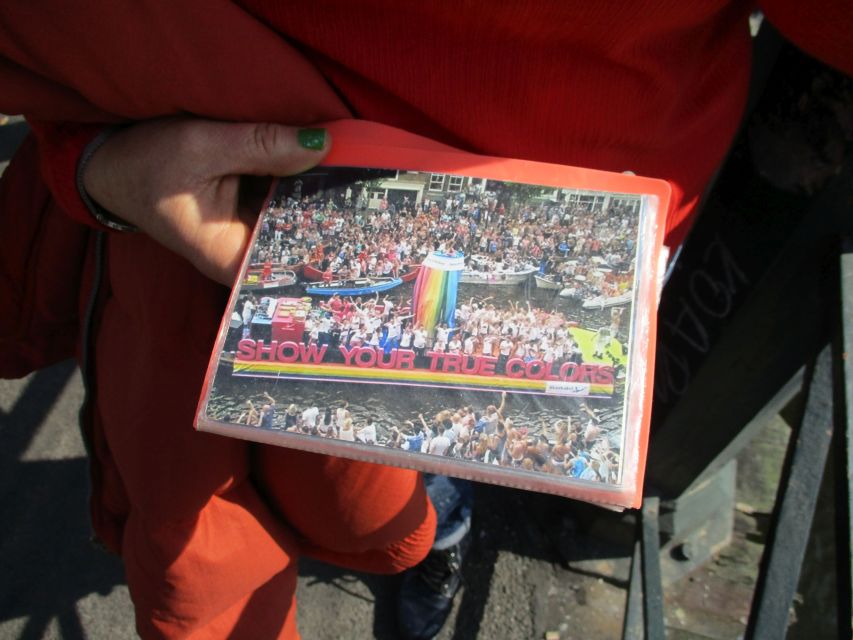
- A Pride and protest angle, including how Pride shows up on Amsterdam canals
- Finish at Cafe ’t Mandje, an old queer bar where the tour naturally closes the loop
Amsterdam at street level, a few more routes
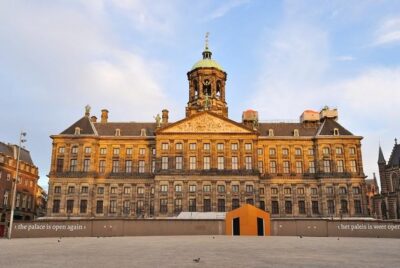
First steps at Dam Square, National Monument, and the unicorns at the Royal Palace
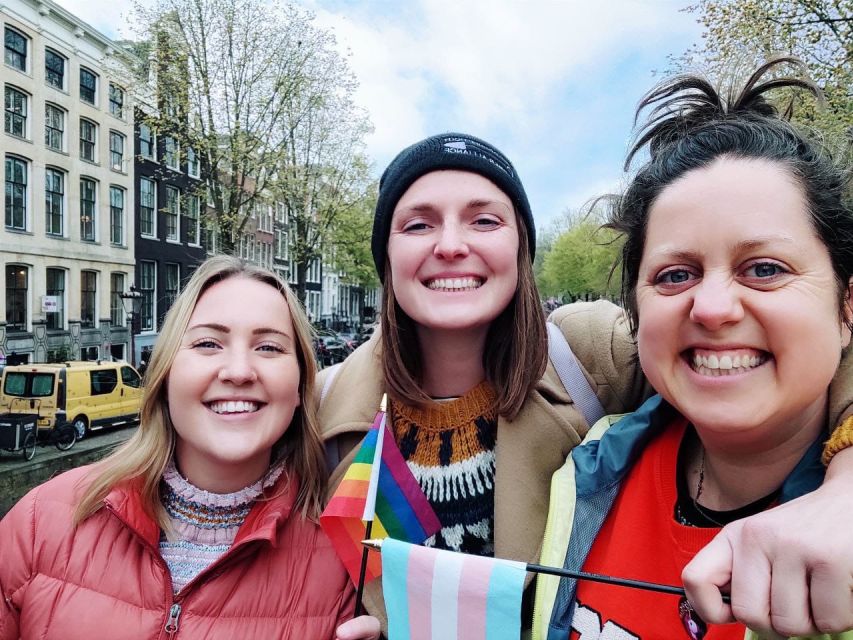
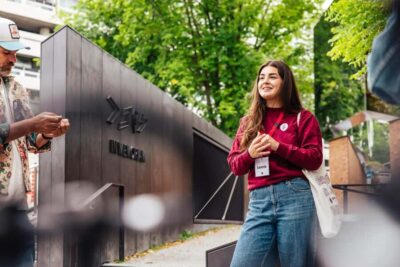
The tour begins at the National Monument at Dam Square, a smart choice because this area is central, easy to reach, and packed with visible history. You meet Sanne with her tiny rainbow flag, then get started right where Amsterdam visitors first make sense of the city.
From there, the walk connects what you see in front of you to what you might not know. The National Monument stop includes controversial stories about how it came to be, which sets the tone quickly. It is not just, here is a pretty spot. It is, here is how public memory is argued, shaped, and changed over time.
Right in this same zone, you will also be directed to look at the Royal Palace and the unicorn details on the building. It is a quick visual moment, but it matters because it shows the tour’s method: small details become conversation starters. You start noticing how symbols, style, and public space can carry messages that are not obvious at first glance.
What to bring here
Keep your footing simple, because you will be on pavement for the whole 2 hours. Comfortable shoes help, especially if you come during wind or light rain. Also, bring sunscreen or a hat, since Amsterdam can swing from cool to bright pretty fast.
Homomonument to Belle, short guided stops that keep the story moving
After Dam Square, you move into the oldest core areas of the city, where the tour is built around compact guided segments. Two things make this work well: first, the timing is tight enough that you stay engaged, and second, Sanne uses each place to connect life stories to larger events.
The Homomonument is the next stop, with a guided visit (about 20 minutes). This is where the tone often shifts from general context to lived experience. You are not just learning dates. You are hearing how people’s lives intersected with risk, identity, and community.
Then the walk continues with Belle (guided, about 10 minutes) and Condomerie (guided, about 10 minutes). These short stops are ideal if you do not want a long lecture and you would rather absorb things in small, memorable chunks.
Even if you feel like you know Amsterdam already, this part of the route can surprise you. The tour’s promise is that the least expected places are connected, and the itinerary reflects that. You do not see the landmarks in isolation, you see them as part of a chain of people, choices, and pushback.
Worth comparing with this Amsterdam choice:
- Amsterdam: 75 Minute City Canal Cruise with Audio Guide★ 4.4 · 17,501 reviews
- Anne Frank’s Story – Guided Walking Tour through Amsterdam★ 5.0 · 11,619 reviews
- Amsterdam: Johan Cruijff ArenA Tour with Optional Guide★ 4.6 · 8,954 reviews
- Amsterdam: Royal Palace Entry Ticket and Audio Guide★ 4.6 · 6,475 reviews
A practical note
If you are the type who likes to take photos nonstop, you will still be able to, but you may need to pause the camera for a few minutes. The guided bits are the heart of the experience, and skipping them means missing the point.
Condomerie and the AIDS crisis context you cannot un-hear
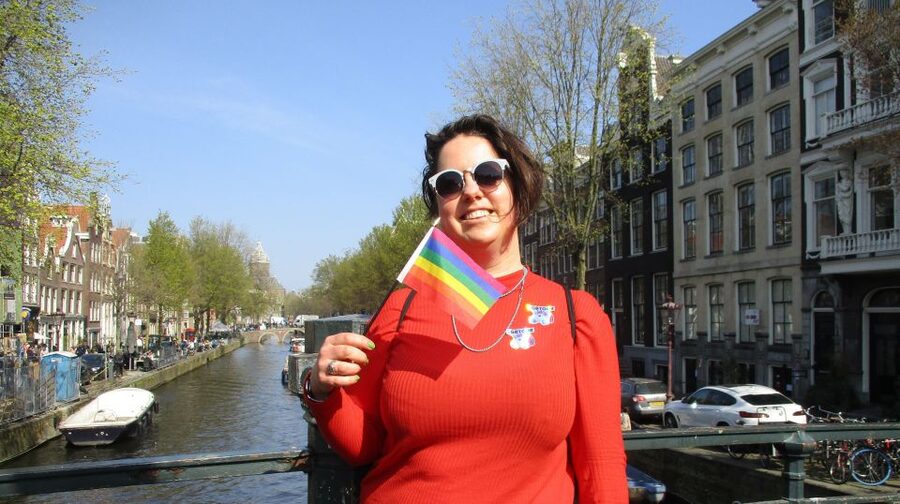
The Condomerie stop is one of the strongest anchors on the walk. The tour specifically highlights it as the first condom shop in the world, and it links its beginnings to necessity during the AIDS crisis.
This is valuable on several levels. First, it shifts LGBTQI+ history away from only celebrations and toward the real-world pressures that shaped daily life. Second, it reframes an object you might see as ordinary into something that carried survival stakes. And third, it helps you understand why community action often starts with very practical needs.
Sanne’s delivery matters here too. The tour is described as historically and personally connected, and at Condomerie that personal tone prevents the story from feeling like a distant academic topic. You are not just learning what happened. You are understanding why it mattered in the moment.
If you like your history story-shaped, this is the part
I like that the walk does not treat AIDS-era history as a side note. It puts it where it belongs, right inside the neighborhood landscape. If you want one stop that makes the tour’s theme click, this is it.
Royal Palace zone, Pride on canals, and the meaning of symbols
As the walk continues through the city’s central queer spaces, you also get the tour’s repeated emphasis on symbols and public life. You will hear about Pride and protest, including that Pride in Amsterdam includes festivities on the canals.
That canal detail is more than trivia. It explains something about Amsterdam’s queer culture that many first-time visitors miss. It is not hidden. It is visible in the everyday city, moving through public space in a way that makes community hard to ignore.
This same section also includes the unicorn moment near the Royal Palace, so you end up with a nice arc. You see symbolism on buildings, then you hear symbolism in public events, and suddenly the city feels less like a backdrop and more like a participant.
A tiny caution
If you are expecting only light, feel-good stops, note that the tour includes controversial stories and serious AIDS-era context. The energy can still be warm, but the subject matter will not be sanitized.
Zeedijk Street, Pride Clothing, and the everyday storefront culture angle
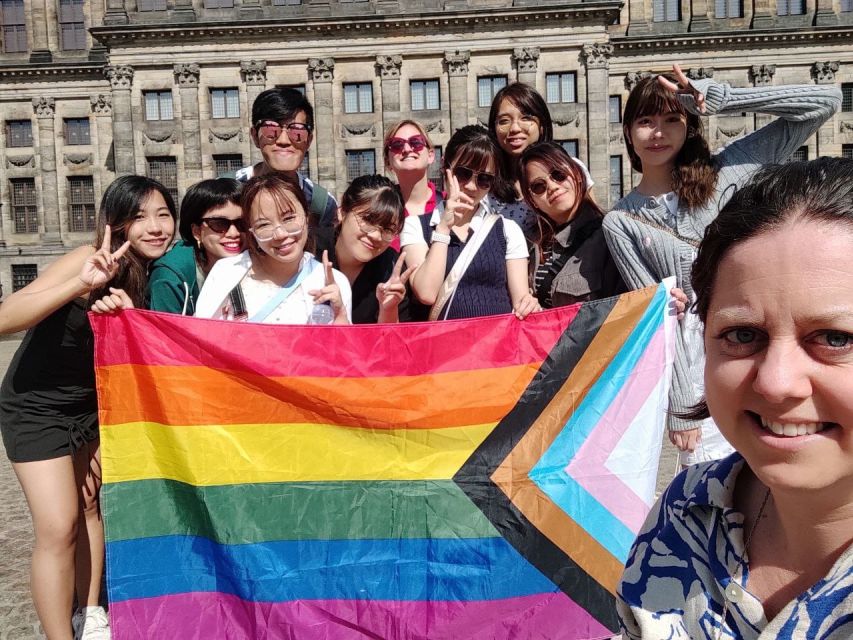
You then reach Zeedijk Street (walk time about 15 minutes) and pass Pride Clothing. These are the moments where the tour starts feeling like you are walking through living culture rather than museum displays.
I like this part because it bridges past and present. After the guided intensity, you get a calmer pacing where you can look, listen, and absorb what it means for queer spaces to exist in plain sight. Amsterdam’s queer life is not only about landmark dates and famous events. It is also about everyday visibility, retail, and the comfort of recognizing yourself in a street scene.
Sanne’s style is also designed for this pacing. The route makes room for you to take photos during the transitions, then pulls you back into story when a stop warrants it.
Eagle Amsterdam to Kokopelli, then a photo break that helps you reset
The tour continues with a quick pass by Eagle Amsterdam (about 5 minutes). Short passes like this work because you keep moving, and you still get a sense of how the neighborhood clusters queer institutions and community signals close together.
Then you reach Kokopelli (guided, about 10 minutes). As with the earlier guided stops, the purpose here is not only to show you a place, but to use that place as a springboard for people and connections. The tour’s repeated message, that different parts of the city connect in surprising ways, usually lands best when Sanne ties the stop back to the bigger theme of queer life and community.
Next comes a photo-focused moment at Dancing Houses, Amsterdam (photo stop about 10 minutes). I actually find these breaks helpful. They give you a visual reset, so you do not feel like the whole tour is just standing in history talk mode.
The tour’s personal highlight: a passport story tied to gender change
One stop is called out specifically for a major personal milestone: T in LGBTQI+ includes the story of a woman who was the first to change her gender on her passport.
That detail is not just interesting. It is practical. It shows how queer life is shaped by systems you interact with, like documents and state identity, not only social spaces. When you understand that, you start seeing why protests and legal battles mattered so much, and why community support had to grow in step.
This is also where the tour’s small-group format helps. You are more likely to feel comfortable processing what you hear, and the conversation tone becomes part of the experience.
Red Light District time, how the tour frames it, and who should think twice
You spend about 15 minutes in the Amsterdam Red Light District.
The tour frames this area as part of the queer and historic heart of the city, especially from a queer perspective. That matters, because the point is not just to say, here is a famous area. It is to connect how queer life, commerce, visibility, and risk have all tangled together in the same streets.
At the same time, you should consider your own comfort level. This is not a tour that avoids difficult reality. It includes places and themes that can be uncomfortable for people who prefer a strictly social version of queer history.
If you enjoy walking tours that take people seriously and do not flinch from complexity, you will probably find this section meaningful. If you are sensitive to the subject matter, plan to focus on the story and keep your expectations realistic.
Finish at Cafe ’t Mandje, and what to do after the walk
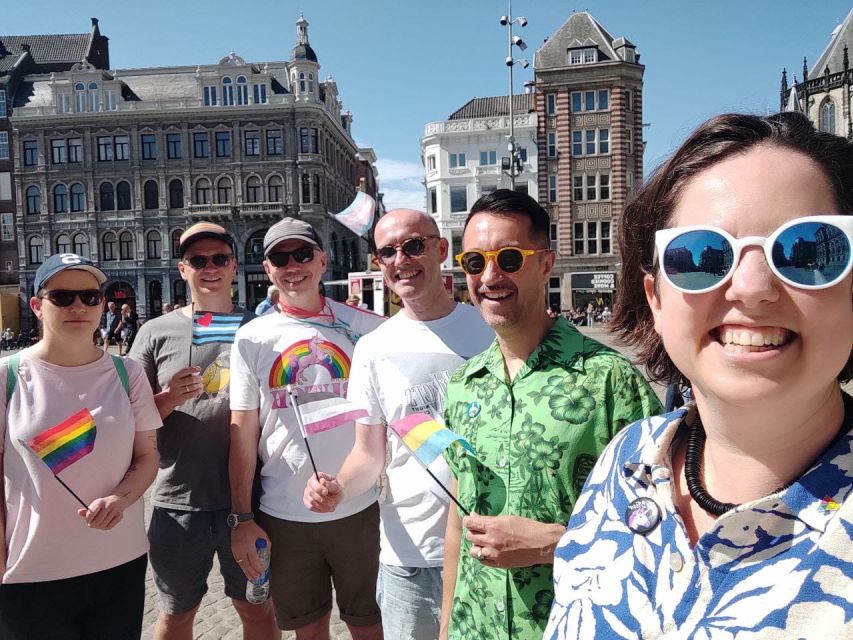
The tour ends at Café ’t Mandje, described as the oldest queer bar. Ending there is a clever choice. You close the tour in a place that feels like it belongs to the same world as the stories you just heard.
It is also a natural way to keep the experience going without forcing an immediate transition. If you want a drink or a bite, you can do that right away while the walk is still fresh in your head.
Your best post-tour move
After a story-heavy walk, you will remember more if you do one small thing right away: sit down, look around, and pick one detail from the walk to revisit in conversation. Sanne’s tone makes it easy to carry the experience forward, not just file it away.
Price, timing, and value for a $59, 2-hour walk
At $59 per person for 2 hours, this tour costs roughly what you would pay for a guided specialty walk with a local host. The value comes from three things the price buys.
First, you get a dense route in a small window, with a mix of guided stops and walking segments. Second, you get the tour’s core strength: the way personal stories and public landmarks connect. Third, you get a finish at a meaningful place, not just a random dispersal point.
If you only have a day or two in Amsterdam and you want your time to feel purposeful, this is a strong use of two hours. If you are already deeply versed in LGBTQI+ Amsterdam, you might still appreciate the personal delivery and the way Sanne uses lesser expected connections.
Who this tour is best for, and who might prefer something else
This is best for you if you want queer Amsterdam through real voices and named landmarks. The tour is also a good match if you like tours that include both celebration and protest, and that treat LGBTQI+ history as part of the city’s core, not a side attraction.
It is also suitable for allies. The tour explicitly welcomes everyone, with the idea that the rainbow is for everyone. And because it is a wheelchair-accessible walking tour, it is designed to be reachable for more people than many city walks.
You might want to skip it if you strongly prefer quiet routes with no serious context, or if Red Light District proximity would be stressful for you.
Should you book Amsterdam: Queer City Walking Tour with Local Guide?
I think you should book this tour if you want to see Amsterdam with a different lens and you like guides who talk like real people. Sanne’s storytelling approach is the reason this tour earns its high marks, and the walk’s structure keeps the experience moving without losing the personal thread.
Book it if you want a mix of named queer landmarks, Pride and protest context, and a few stops that are emotionally heavier than sightseeing alone. Skip it if you are looking only for light entertainment or you do not want any exposure to the realities tied to LGBTQI+ history in public space.
If you do book, wear comfortable shoes, bring rain gear just in case, and come ready to listen. The best part is how the city’s streets start telling a connected story in your head long after you leave Dam Square.
FAQ
How long is the Amsterdam Queer City walking tour?
The tour lasts 2 hours.
How much does it cost?
The price is $59 per person.
Where does the tour start?
The meeting point is the National Monument at Dam Square.
Where does the tour finish?
The tour finishes at Café ’t Mandje.
Is the tour guided in English?
Yes. The tour guide is listed as English and Dutch.
What’s the tour theme?
It is an LGBTQI+ rainbow perspective walk through queer history and landmark stories, including Pride and protest.
Is the tour wheelchair accessible?
Yes. The activity is marked as wheelchair accessible.
Will the tour run in bad weather?
It happens rain or shine.
What should I bring?
Bring comfortable shoes, a sun hat, sunscreen, rain gear, and comfortable clothes.
Are there guided stops along the route?
Yes. The itinerary includes multiple guided stops such as Homomonument, Belle, Condomerie, and Kokopelli, plus walking and photo or pass-by segments.
Amsterdam on Foot




More Tours in Amsterdam




More Tour Reviews in Amsterdam


Newly reviewed around Amsterdam


Walking Tours, side by side.
 ★ 5.0Anne Frank’s Story – Guided Walking Tour through AmsterdamFrom $3911,619 reviews
 ★ 4.8Life of Anne Frank and World War II Walking TourFrom $3710,467 reviews
 ★ 5.0Absolutely Amsterdam – the Essential Introductory Walking TourFrom $53,629 reviews
 ★ 4.8Anne Frank Guided Small Group Walking TourFrom $282,722 reviews
 ★ 4.9Anne Frank Walking Tour – Guided in EN/DE/IT/ESFrom $282,676 reviews
 ★ 4.9Guided Cultural Walking TourFrom $292,384 reviews
 ★ 4.2Guided Ganja Walking Tour of Coffee ShopsFrom $272,092 reviews
 ★ 5.0Anne Frank Walking Tour Amsterdam Including Jewish Cultural QuarterFrom $751,879 reviews
More ways to plan this visit