
REVIEW · WALKING TOURS
Amsterdam: Private World War Two History Walking Tour
Amsterdam has quiet reminders everywhere. This private WWII walk strings them together: German arrival, Dam Square, hunger winter impacts, and the people deported from Amsterdam.
I especially like the small private group (up to 4). It keeps the walk human, so questions do not get lost in the noise. I also like the retired historian guides, including Peter Schaapman, who turn street corners into clear, story-filled lessons.
One consideration: this tour does not stop at the big-ticket sites like the Anne Frank House, the Resistance Museum, or Hollandsche Schouwburg. If those are must-sees for you, plan them separately.
Key Things You Should Know Before You Go
- Small group of up to 4 means personal attention the whole way
- No audio system keeps it conversational, and it works better for questions
- Dam Square (May 7, 1945) is treated as a key moment, not a quick photo stop
- Winter of hunger and Allied food drops show how the city felt day to day
- A pocket-sized book with photos and names covers Jewish victims from one specific Amsterdam street
- Wheelchair accessible, with a route and coffee stop you can plan for if you email ahead
Amsterdam at street level, a few more routes
A 3-Hour WWII Walk That Feels Personal, Not Clinical
This is a history walk built for understanding, not just checking sights off a list. You are seeing Amsterdam the way you might not on a normal sightseeing loop, with reminders placed in context.
I like the tour’s tone: direct, careful, and grounded in real locations. You also get a small-group advantage. When a guide can hear your questions clearly, the answers tend to fit what you actually want to know.
Meeting at Prinsengracht, Right by the Anne Frank House Area
You start at 9:30 A.M. in front of the old Anne Frank House on Prinsengracht 263. Your guide holds a big notebook, so it is hard to miss them. There is also a fun, practical “spot check”: if you can touch the number plate 263 between the museum and the Lunch Cafe, you are at the right place.
This matters because the tour is designed to move you away from the usual “one museum, then wander” rhythm. You’re beginning in a place most visitors recognize, then learning why this city’s WWII story is bigger than any single site.
Bring an umbrella. Even in months when weather seems calm, Amsterdam likes to remind you it has its own plans.
Leaving the Museum Loop Behind (and Why That Can Be a Good Thing)
The walk does not include the Anne Frank House, the Resistance Museum, or Hollandsche Schouwburg. Tickets for museums are not included, and drinks are not included either.
At first, that may feel limiting, especially if you came to Amsterdam expecting a “classic WWII route.” But there’s a clear logic here. This tour focuses on seeing WWII through the city itself, tied to specific locations, photos, and stories you can carry in your head while you keep walking.
So if you want the emotional and personal depth those institutions offer, you may still want to visit them. But if you want a route that explains how Nazi occupation shaped daily life, and how deportations unfolded across Amsterdam streets, this format gives you a tighter street-level understanding.
Other private routes shaped around your group
- Rijksmuseum Amsterdam Small-Group Tour with Private Upgrade★ 4.5 · 1,547 reviews
- Van Gogh Museum Tour Reserved Entry Semi Private★ 5.0 · 1,437 reviews
- Private Amsterdam Red Light District and Coffee Shop Tour★ 5.0 · 763 reviews
- Anne Frank and Jewish Quarter Amsterdam Private Walking Tour★ 5.0 · 684 reviews
German Army Entry: Photos, Old Buildings, and a Hard Lesson in Contrasts
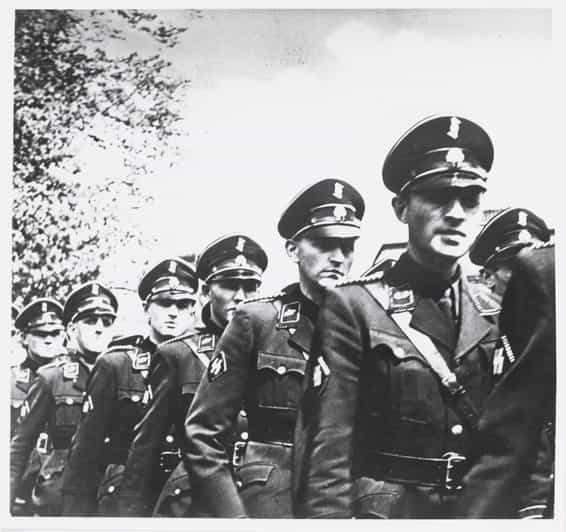
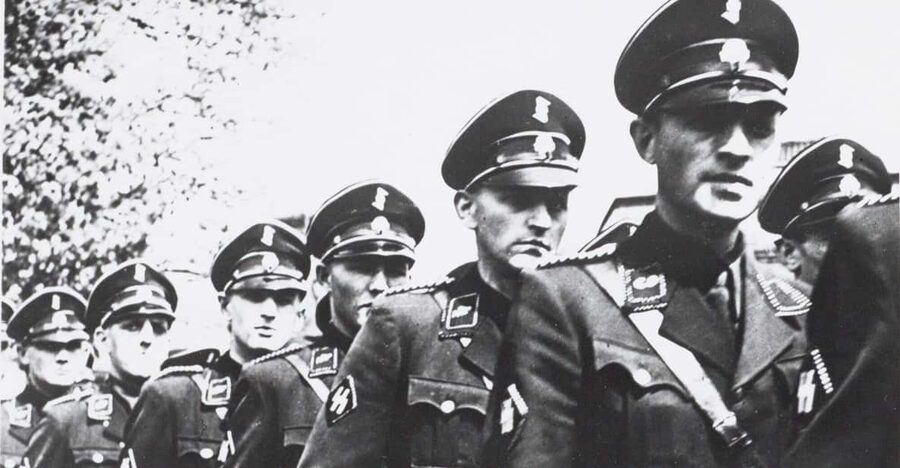
Early on, you cover the entry of the German army. The guide shows photos of the Wehrmacht entering Amsterdam, and you connect them to what you see outside your window now.
One moment I found especially compelling from the tour description is how the story moves through the former town hall, now the Grand hotel. The tour discusses how people welcomed the German army at that former civic site, and how the mood later shifted when the Canadian army arrived and was cheered.
That contrast is not just dramatic. It helps you understand something practical about occupation histories. Public behavior can change fast, depending on fear, propaganda, and what people think the next day will bring. You do not just learn events. You learn how the city reacted.
Dam Square on May 7, 1945: A Day You Should Not Skip
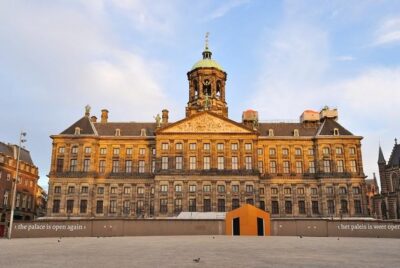
Dam Square is treated as a key stop, not a passing landmark. The tour highlights the shooting incident on Dam Square on May 7, 1945 and puts it into the broader end-of-war context.
This is the kind of moment that can be confusing if you only hear fragments from guidebooks. Here, you get the story tied to the place itself, which helps your brain store it correctly. Standing in the square, you understand why a “final days” event still mattered deeply, and why the transition from occupation to liberation was not clean or instant.
Winter of Hunger and the City Under Strain
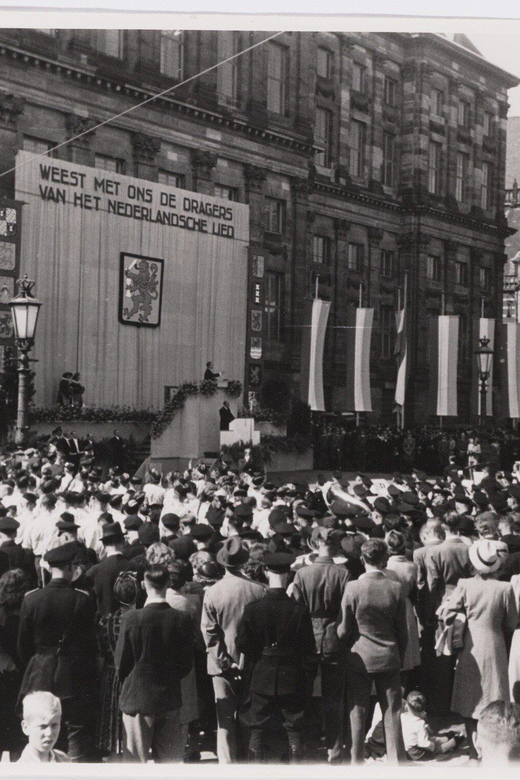
One of the standout themes is the winter of hunger. You talk about how food shortages hit Amsterdam and how food dropping became part of the story.
This section helps you connect larger events to daily survival. It also changes your perspective when you look at the city later on your own. You start noticing how “normal” streets can sit above incredibly abnormal times.
If you like history that explains cause and effect, this is where the tour earns its keep. Hunger is not just a tragedy headline. It becomes a lived condition that shapes behavior, risk, and hope.
Deportations Through a Single Amsterdam Street: Names, Photos, and Meaning
The tour’s most moving part is its focus on Jewish deportations. You will discuss the deportations of the Jewish population and the fate in the extermination camps, including Auschwitz and Sobibor.
But the emotional weight comes from the tour’s structure. The guide has selected all the Jewish residents of one street in Amsterdam and created a small book for you with photos and names. You see the people as individuals, not statistics.
I like that this does not just point to “the Holocaust happened.” It gives you something tangible to remember when you leave the walk. A list of names can fade. A guide explaining what those names represent, while you stand in the city where it happened, tends to stick.
A Statue Connected to Auschwitz: Learning How Memory Gets Placed
As part of the deportation story, you also see a statue of a famous violin player from Auschwitz. This kind of stop is worth paying attention to, because it shows how memory is built into the public space.
Statues and street memorials can be easy to walk past. Here, you get enough context that the object becomes a message. It tells you what the city chooses to remember, and how survivors and later generations wanted the story to stay visible.
Photos from Dutch Resistance and the Power of Location
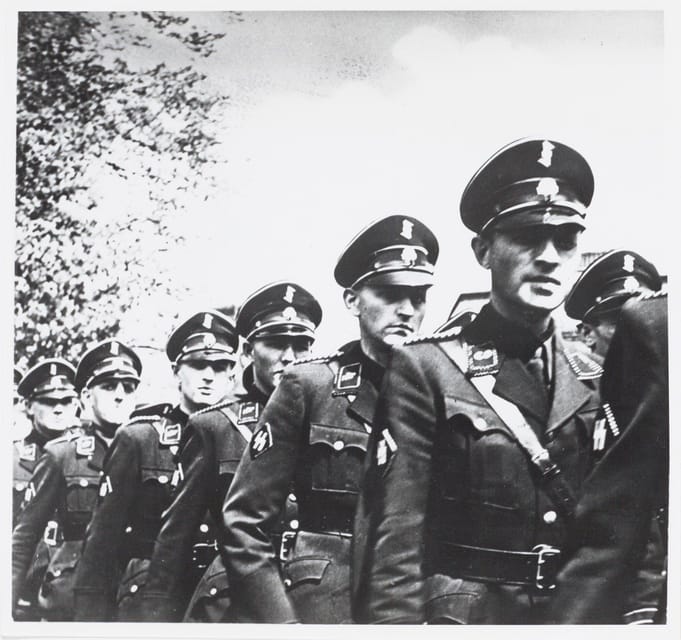
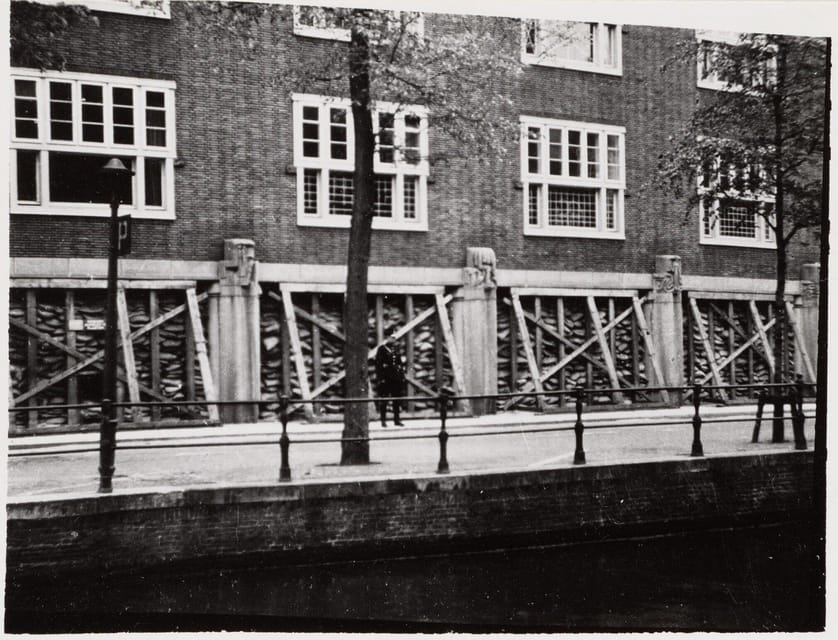
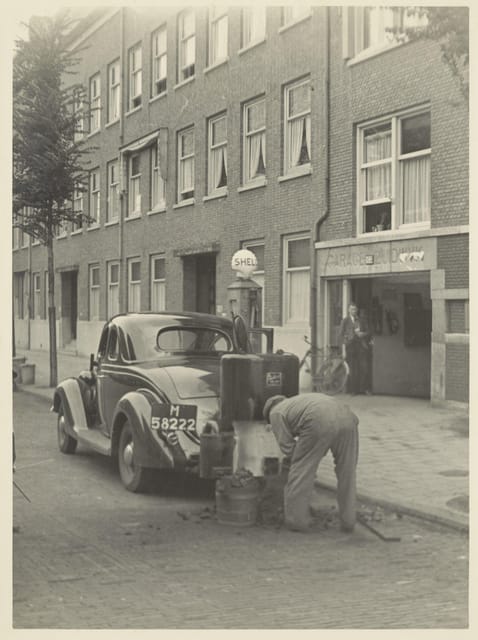
The tour uses historic photos taken by Dutch resistance fighters. You see several of these photos at the places connected to them, and the guide explains the background.
That method is practical and effective. Photos are one thing. Placing them where they were taken makes them click. It helps you connect what people saw at the time with what you see now, which is where real understanding happens.
And because the tour has no audio system, the whole thing stays intimate. You can ask questions at the exact moment something is confusing, instead of waiting for a lecture pause.
Coffee Stop, Restrooms, and Staying in Control of Your Pace
About halfway through, you get a short break for coffee and/or a restroom visit. You can also grab something to eat there, like a late breakfast. The tour duration is about 3 hours, but it can extend a bit depending on the pace and discussion flow.
The guide walks at a pace of your choosing. That matters more than people expect. This is not a “power walk, no questions” tour. It is a careful route, and thoughtful questions take time.
It is also wheelchair accessible. If you need that, you should email ahead so the guide can account for the coffee stop and adjust the route appropriately.
Guide Quality: Why the Tour Gets a Perfect Score
The strongest theme in the reviews is the guides themselves. People loved meeting Peter, describing him as highly knowledgeable and engaging, with stories that felt exceptional. One review even said the activity could not be improved.
That matches what this tour is set up to do. You are not just reading plaques. You’re hearing stories from retired historians who focus on the German occupation during World War II, and you get paper information you can keep. When guides have lived-in expertise and you can ask follow-ups, the walk turns into a real conversation, not a script.
If you care about getting the details right, a guide-led route like this is a major value driver.
Price and Logistics: Is $188 Worth It for a Private Group?
At $188 per group up to 4, this is not a budget “join a crowd” tour. But it can be strong value if you’re traveling as a small group or you want more interaction than large group tours allow.
Here’s why the cost makes sense for what you get:
- Private size up to 4 so you are not stuck whispering questions
- Retired historians leading the walk, with a story-heavy approach
- Paper handouts plus the small book of photos and names for one street
- No audio system, which means the guide can tailor pacing and explanations
- A coffee and restroom break mid-walk, with time for late breakfast if you want
What is not included is refreshments during the stop, plus any museum tickets you choose to add on your own time. So if you’re comparing prices, compare the full package of access and personalization, not just the headline rate.
Who This Tour Is For (and Who Might Prefer Something Else)
This is best for you if:
- you want off the beaten path context tied to real locations
- you enjoy history that connects occupation to daily life, not just major battles
- you like learning from retired historians and asking questions in the moment
- you want a WWII Amsterdam route that avoids the heaviest museum focus
You might skip or pair differently if:
- Anne Frank House, the Resistance Museum, or Hollandsche Schouwburg are your top priority stops
- you prefer a more general, first-time overview rather than street-level specifics and victim lists
- you want a lighter, purely scenic walking tour with fewer heavy topics
This walk does not pretend the subject is easy. It handles it in a way that aims for clarity and respect, and that is exactly what the subject requires.
Should You Book This WWII Amsterdam Private Walk?
If you want a focused, human-scale WWII walk in Amsterdam, I think this is a strong booking choice. The combination of small group, guide-led storytelling, and the street-by-street names and photos approach gives you something you can remember long after you leave.
Book it especially if you are the type of traveler who likes to understand what you are seeing, not just where it is. And if you are also planning major WWII museums, treat this tour as the street-level bridge between your museum time and the city outside your hotel window.
Either way, go in with an open mind and an umbrella, and you will get a route that turns Amsterdam’s WWII traces into a story you can actually follow.
FAQ
How long is the Amsterdam Private World War Two History Walking Tour?
The tour lasts about 3 hours, and it may extend a bit.
How much does the tour cost?
The price is $188 per group, up to 4 people.
Where do we meet for the tour?
Meeting starts at 9:30 A.M. in front of the old Anne Frank House on Prinsengracht 263, with the guide holding a big notebook.
Is the tour in English?
Yes, the live tour guide speaks English.
Is this tour private or group-based?
It is a private group experience, with a group size never more than 4 people.
Do you use an audio system during the tour?
No. There is no audio system, because the tour prefers a personal, conversation-based approach.
Is there a coffee or restroom break?
Yes. About halfway through the walk, you get a short break for coffee and/or a restroom visit.
Are coffee and drinks included?
Refreshments during the coffee stop are not included.
Is the tour wheelchair accessible?
Yes, it is wheelchair accessible. If you need wheelchair access, you should email in advance so the guide can account for the coffee stop and route.
Does the tour visit the Anne Frank House or Hollandsche Schouwburg?
No. This tour does not visit the Anne Frank House, the Resistance Museum, or Hollandsche Schouwburg.
What should I bring?
Bring an umbrella.
Amsterdam on Foot




More Tours in Amsterdam




More Tour Reviews in Amsterdam


Newly reviewed around Amsterdam


Walking Tours, side by side.
 ★ 5.0Anne Frank’s Story – Guided Walking Tour through AmsterdamFrom $3911,619 reviews
 ★ 4.8Life of Anne Frank and World War II Walking TourFrom $3710,467 reviews
 ★ 5.0Absolutely Amsterdam – the Essential Introductory Walking TourFrom $53,629 reviews
 ★ 4.8Anne Frank Guided Small Group Walking TourFrom $282,722 reviews
 ★ 4.9Anne Frank Walking Tour – Guided in EN/DE/IT/ESFrom $282,676 reviews
 ★ 4.9Guided Cultural Walking TourFrom $292,384 reviews
 ★ 4.2Guided Ganja Walking Tour of Coffee ShopsFrom $272,092 reviews
 ★ 5.0Anne Frank Walking Tour Amsterdam Including Jewish Cultural QuarterFrom $751,879 reviews
More ways to plan this visit