

REVIEW · PRIVATE
Amsterdam: Private Pedicab Historical Sightseeing Tour
Amsterdam by pedicab feels like a guided stroll with wheels. I love how the route strings together the old center plus the 17th-century canal district without turning your day into a map-chasing workout.
Two things I particularly like: first, the stops are timed so you actually understand what you’re seeing, from dikes and city defenses to merchant canal houses. Second, the experience runs with a local guide, often Bram de Haan Events, who brings clear explanations and uses visual aids like photos and maps.
One consideration: this is a short 2-hour ride, so if you want tons of long walks or heavy museum time, you’ll need to pair it with something else, or ask to extend.
Key highlights to focus on
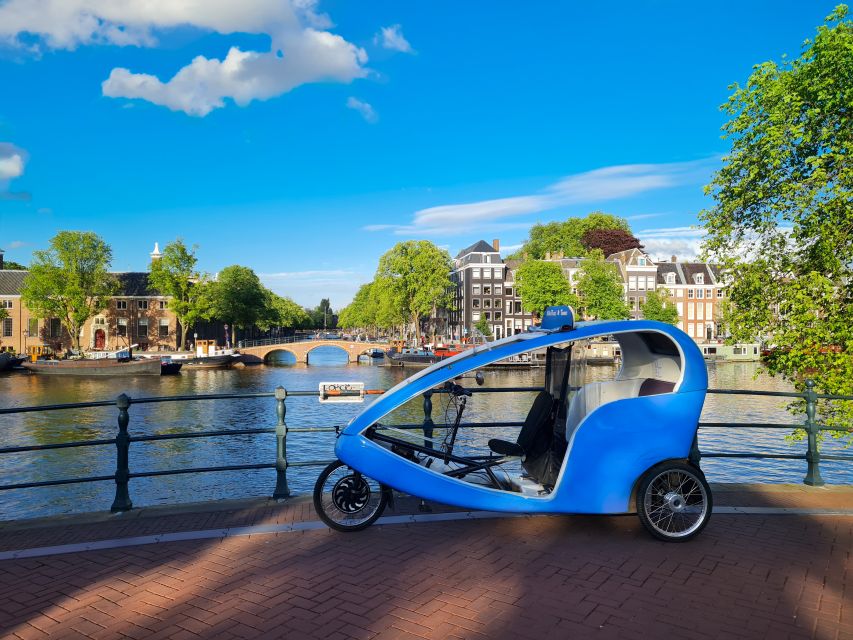
- Dam Square start: birthplace of the city, with the Royal Palace area and major monuments
- 17th-century canal ring views: classic half-circle canal neighborhoods around the center
- Jewish Quarter context: synagogues, the Holocaust Names Memorial, and historic Sephardic canal houses
- Amstel River viewpoint points: the Skinny Bridge and photo-friendly canal angles
- Museumplein “tunnel stop”: Rijksmuseum area views plus a breather in the green square
Other private routes shaped around your group
Why a private pedicab works better than a day-long bus loop
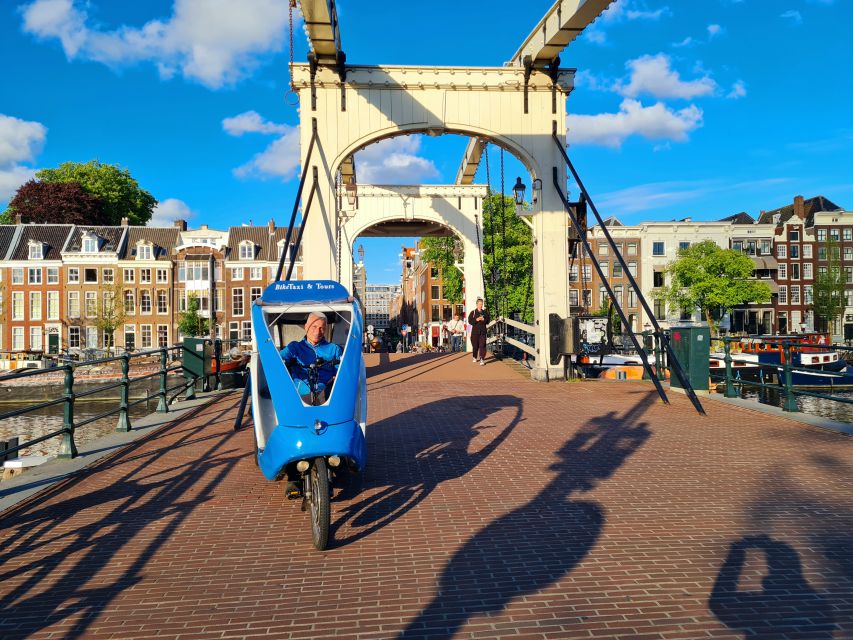
A pedicab is slow on purpose. You get that calm, low-altitude look at Amsterdam, and you glide through streets that cars can’t go down. That matters because Amsterdam’s character lives in the details: the bridge spacing, the canal curves, the way neighborhoods grade from busy squares into quieter lanes.
This is also private, so the guide can tune the pacing. People with limited walking ability often find this kind of tour the easiest way to get the big picture, while still hearing real context instead of vague “this is old” commentary.
And because it’s a guided ride, you’re not stuck figuring out what each street used to do, or why certain buildings sit where they do.
From Dam Square to Zeedijk: Amsterdam’s origin story on wheels
You start at Dam Square, the historical heart of the city. This is the place that grew from an early settlement into Amsterdam’s main stage. Your guide points out key landmarks like the Royal Palace area, the New Church, and the National Monument zone, so you can connect the modern skyline to the city’s early center of power.
Then you head to Zeedijk. Today it’s a street, but the explanation brings it back to its older job as part of the dike system that protected the city. That’s a smart way to understand Amsterdam: much of what you see is water management, not just “cute canals.”
You also get a stop with a human touch at an older café that still has its original interior, plus a glimpse down the road toward Chinatown. Even if you do not explore Chinatown on foot, this is a useful preview so you know where to go later if you feel like it.
New Market Square and Montelbaanstoren: defenses, canals, and lookout moments
Next up is New Market Square, centered on the most important building there: the 15th-century city gate sitting right in the middle of the square. The guide’s job here is to make the gate make sense. Instead of treating it like a random old structure, you learn how Amsterdam controlled movement and protected the inner town.
After that, you’ll stop at Montelbaanstoren, an early 16th-century watch and defense tower. The tower is famous for its role in Amsterdam’s expanded defense line, but the best part is what it unlocks in your brain: why the city was shaped by threats and by water.
From the area around the tour route, you also get a lookout over the oude Waal, with houseboats lined up in front of 17th-century canal houses. This is one of those moments where Amsterdam stops being “a picture you’ve seen” and starts feeling like a working system. You can take photos from a better angle than you’d get if you were just trying to sprint between hotspots.
More chapters of old Amsterdam, told on foot
- Amsterdam Food and Cultural Tour with Tastings★ 5.0 · 2,442 reviews
- Amsterdam High-End Dutch Food & History Tour – Up to 8 guests★ 5.0 · 482 reviews
- Amsterdam: Historic City Sightseeing Canal Cruise★ 4.5 · 444 reviews
- Anne Frank and the Jewish History of Amsterdam Private Tour★ 5.0 · 307 reviews
Jewish Quarter: synagogues, the Names Memorial, and canal houses of Sephardic life
The Jewish Quarter portion is thoughtful and specific. You’ll see the first synagogue Jewish people were allowed to build in Western Europe over 350 years ago, the Big Synagogue. Across the street, you’ll also spot the Portuguese Synagogue, which adds a second layer to the story.
Nearby is the Holocaust Names Memorial, marked by 102 thousand bricks with the names of Dutch Jewish victims from World War II. This stop is powerful because it turns history into something you can actually read, not just something you hear once and forget.
Then the tour shifts to the living neighborhood side of the story: across the monument area you’ll see a row of older 17th-century canal houses associated with Sephardic immigrants who found success in the diamond trade. You walk away with more than landmark knowledge. You start understanding how community, trade, and architecture interacted in real life.
The Skinny Bridge and Amstel River: your photo-friendly payoff
You’ll cross into a classic Amsterdam photo moment: the Skinny Bridge. The guide points out the bridge’s style and how it lights up at night with lots of light bulbs, so you understand why it looks so iconic in evening photos.
Right after, you get a panoramic view over the Amstel River, Amsterdam’s main and widest canal. This is a “pause and look” section of the tour. It’s not a long stop, but it’s enough to reset your perspective, especially after moving through squares and quarters.
If you like street-level photography, this is where you can capture the canal lines, bridge geometry, and the wide water feel that makes Amsterdam different from smaller canal towns.
The 17th-century canal district: reading the city’s half-circle plan
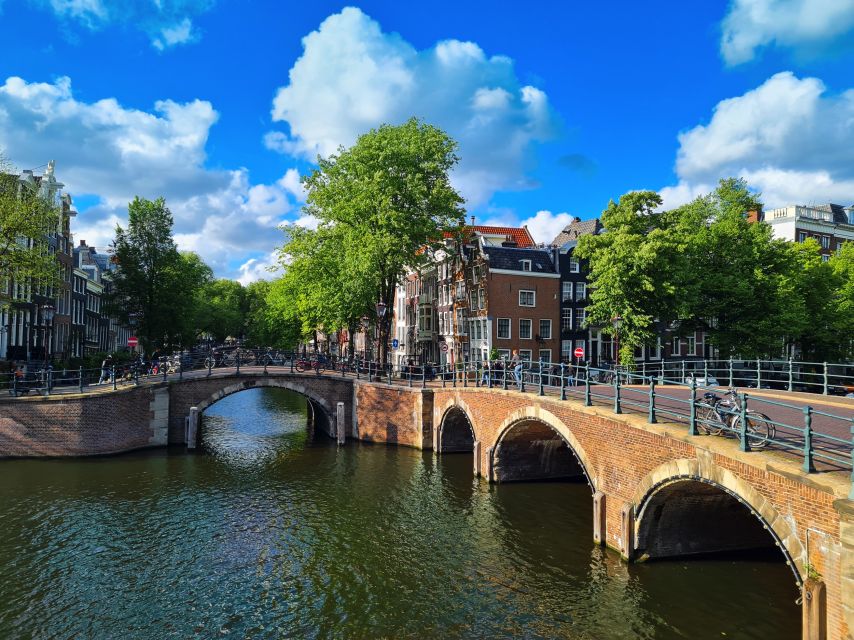
One of my favorite parts of the tour structure is the way it frames the canal district as a map pattern. Your guide explains the canal ring as half circles that wrap around the center. That simple idea helps you orient fast, even if you’re new to Amsterdam.
Then you move through the neighborhood where most of the typical Amsterdam canal houses sit. These were once merchant homes, and the guide explains what to look for in the building style, plus why not every house looks identical even though they share key similarities.
That’s what makes canal-house sightseeing click. You’re not just admiring pretty facades. You’re learning how merchants’ wealth, building eras, and urban planning showed up in the streetscape.
Hermitage and Museumplein: from a widow’s home to museum square energy
The route includes a major landmark stop: the Hermitage. Here the key detail is the building itself, a large 17th-century widowhouse that later became home to the Hermitage Museum. The guide’s explanation helps you see the building as more than a museum shell. It’s part of Amsterdam’s residential and social history, reused over time.
Finally, you arrive at Museum Square, a large 19th-century green open square that anchors the Rijksmuseum and Van Gogh Museum area. The tour includes a drive through the Rijksmuseum tunnel, then a stop in the square’s middle.
This is a good wrap-up stop because it gives you a little breathing space. You’ve been moving through tightly packed streets and historic quarters, and then suddenly you’re in open sightlines, trees, and that classic Museumplein layout.
Pedicab ride comfort: blankets, cold weather, and picture pacing
You should plan for real Dutch weather. The tour includes a blanket for cold weather, and multiple experiences note it helped on chilly or rainy days. That matters because you’ll be seated for much of the time, so comfort is not a small detail.
One fair caution from the field: if it’s very cold, you might want to bring warmer layers than you think you need, since a blanket can be limited in how much lap coverage you get depending on how you sit.
On the picture side, this tour is built around short stops. The guide doesn’t treat photo stops like a problem, and it can feel relaxed. If you want extra time for pictures at the Skinny Bridge or during lookout moments, this is the right kind of tour to ask for it.
Who this tour fits best (and who should skip it)
This pedicab format suits first-time visitors who want the city highlights plus neighborhood context, without doing long walks back and forth. It also fits people who have limited walking ability, since the ride does most of the movement for you.
It may not be ideal if you want deep museum time, because the focus stays on driving and guided stops. The whole tour is designed to give you orientation and understanding, then point you toward what to do next.
There’s also a weight consideration. The tour lists a maximum combined passenger weight of 200 kg, and it’s not suitable for people over 220 lbs (100 kg). If you’re traveling with heavier passengers, check this before booking so you don’t waste time.
Price and what value looks like at $230 for up to two
The price is $230 per group for up to 2 people, lasting 2 hours. That can be expensive if you’re traveling solo, because the price is per group, not per person. The best value comes when you fill the two seats.
Where it pays off is the combination: private guidance, multiple neighborhood transitions, and the advantage of a pedicab route through streets you can’t easily access by car. You’re paying for a guided route that compresses the “big picture” parts of Amsterdam into one easy segment, with a local who can connect the dots between landmarks.
Also, because the guide uses explanations and visual aids, you aren’t just paying for transportation. You’re paying for interpretation, like understanding the dike protection idea at Zeedijk or what the city gate meant in the medieval city structure.
Practical logistics that affect your day (pickup, language, and finish point)
Pickup and drop-off are included. You’ll be collected from outside your hotel, and you can set a desired finish location ahead of time if you want to end somewhere specific instead of going back to the starting point.
Language options include English, Dutch, and German, so you should be able to match your comfort level.
Bring warm clothing. This is Amsterdam, and even when the sky looks mild, it can feel colder once you’re seated and moving slowly.
Should you book this Amsterdam pedicab tour?
Book it if you want a smart first-pass orientation to Amsterdam: Dam Square, the canal ring, the Jewish Quarter, and the Museumplein area, all with a guide who explains what you’re seeing. It’s also a strong choice for travelers who don’t want to spend their limited vacation hours walking between distant points.
Skip it if you already have a clear plan to do long independent walks through the canal district and you’re set on deep museum time, because the tour is focused and time-limited. If you care more about sitting and looking than about extra stops, this format will feel like a good use of your schedule.
FAQ
How long is the Amsterdam private pedicab historical tour?
The tour is 2 hours.
How many people can ride in the private group?
The pricing is per group up to 2 people.
What’s included in the price?
Pickup from your hotel and drop-off, a blanket for cold weather, and an in-depth explanation about the sights are included.
Where does the tour start and where do we end?
The tour starts at Dam Square and includes pickup and drop-off. You can also set a desired finish location in advance.
What languages are available for the guide?
The guide is available in English, Dutch, and German.
Is food or drinks included?
No, food and drinks are not included.
What should I bring?
Bring warm clothing, especially if it’s chilly.
Is there a weight limit?
Yes. The maximum combined passenger weight is 200 kg, and it is not suitable for people over 220 lbs (100 kg).
Can I cancel for a full refund?
Yes. Free cancellation is available up to 24 hours in advance for a full refund.
Amsterdam for Just Your Group





More Tours in Amsterdam






More Tour Reviews in Amsterdam




Newly reviewed around Amsterdam




Private, side by side.
 ★ 4.5Rijksmuseum Amsterdam Small-Group Tour with Private UpgradeFrom $901,547 reviews
 ★ 5.0Van Gogh Museum Tour Reserved Entry Semi PrivateFrom $1731,437 reviews
 ★ 5.0Private Amsterdam Red Light District and Coffee Shop TourFrom $41763 reviews
 ★ 5.0Anne Frank and Jewish Quarter Amsterdam Private Walking TourFrom $157684 reviews
 ★ 4.5Amsterdam Airport & Non-Airport Private Transfer to City CenterFrom $60521 reviews
 ★ 5.0Private Excursion to Zaanse Schans, Edam, Volendam and MarkenFrom $840420 reviews
 ★ 5.0Van Gogh & Rijksmuseum w/ Reserved Entry Semi-Private 8ppl MaxFrom $288419 reviews
 ★ 5.0Anne Frank and the Jewish History of Amsterdam Private TourFrom $95307 reviews
More ways to plan this visit