
REVIEW · PRIVATE
Amsterdam: Private Guided City Tour by Pedicab
A pedicab tour is the smart way to see Amsterdam. You get a private ride through neighborhoods that feel made for bikes and canals, while your guide gives you the story behind what you’re passing. I especially like the way you can pause for photo stops without turning your whole day into a walking workout.
What makes this one work is the mix of motion and meaning, plus a guide who keeps the stops paced so you can actually absorb it. The main drawback to plan around is that the tour might not be practicable during bad weather, so check the forecast and be ready to adjust.
You’ll cruise through Amsterdam’s best-known areas in about 1 to 2 hours, with pickup optional for hotels in the city center zone. If you want an easy orientation day option that still feels personal, this is a strong fit.
Key Things I’d Optimize For on This Pedicab Tour

- Car-free streets and bridges: You can go places buses and cars can’t reach, so the streets feel more local.
- Frequent guided photo breaks: The ride includes natural pause points for listening and snapshots.
- A route that covers the “big picture” fast: You pass Amsterdam landmarks and classic neighborhoods in one run.
- Private group, small scale: The price is set for a group up to 2 people, so the experience stays flexible.
- Guides who handle bikes and traffic confidently: You’re in the hands of a driver who knows the flow of bike lanes.
- Language options: Italian, English, Spanish, and German are available for your live guide.
Wider sweeps of Amsterdam, compared by pace
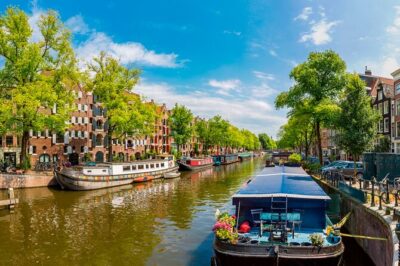
A Pedicab Tour That Feels Like Canal-Side Convenience

Amsterdam can be a lot in one day. Bikes zip by, streets are narrow, and walking distances add up fast. A pedicab lets you keep your energy for museums and canals later, while still getting the street-level experience.
I like that you’re not stuck in one place waiting for a group. This is a private format for up to 2 people, so you can move at a pace that works for your arrival day, jet lag, or a tight schedule. It’s also a good way to avoid the mental load of navigation, because your guide is choosing the best lines through the city.
You also get a unique viewing height and angle. Sitting in a pedicab changes how you see canals, bridges, and canal houses, compared with standing on foot. It’s not just easier, it’s a different perspective that still feels real.
One practical note: this is not ideal if mobility is limited, because the tour is not suitable for wheelchair users and there’s a weight limit of 243 lbs (110 kg). If either applies to you, it’s worth looking for a different Amsterdam format.
Price and Value for a Private Ride Up to Two
The price is $118 per group, up to 2 people, for a duration of 1 to 2 hours. On paper, that can look pricey compared to a free walking day. In practice, the value comes from what you’re buying: access to car-free routes, a live guide, and a low-effort way to cover a lot of Amsterdam.
If you’re traveling as a couple or two friends, the per-person cost drops fast, and you’re also avoiding the “pay twice” feeling you get with some city tours where you later realize you spent time that you could have used more wisely. For one person traveling solo, it’s more of a splurge, but the private factor still matters if you want a relaxed, personalized orientation.
This is also the kind of experience where the time window matters. With only 1 to 2 hours, you need the route to be efficient. The tour’s strength is that it hits many of the city’s best-known areas while still including guide explanations and photo stops.
The Route in Human Terms: What You’ll See and Why It Matters

On this pedicab tour, you’ll move through Amsterdam’s historical center and several recognizable districts. You’ll pass areas like Newmarket, Chinatown, the IJ bay, Damrak and Dam Square, Munttoren, the Flower Market, Rembrandt Square and the Rembrandt House area, the Old Jewish quarter, and then the canal belt along Herengracht, Keizergracht, and Prinsengracht. You’ll also go by the Museum quarter and finish around the Jordaan area.
That list can look like a lot. The trick is how the tour strings it together for context. Your guide isn’t just naming places, they’re explaining why they’re significant, and you get listening moments during the ride.
Worth comparing with this Amsterdam choice:
- Amsterdam: 75 Minute City Canal Cruise with Audio Guide★ 4.4 · 17,501 reviews
- Anne Frank’s Story – Guided Walking Tour through Amsterdam★ 5.0 · 11,619 reviews
- Amsterdam: Johan Cruijff ArenA Tour with Optional Guide★ 4.6 · 8,954 reviews
- Amsterdam: Royal Palace Entry Ticket and Audio Guide★ 4.6 · 6,475 reviews
Damrak and Dam Square, the city’s central anchor
Damrak and Dam Square are the kind of places you’ll keep seeing again in photos and maps, because they are the center of Amsterdam’s pulse. Riding through here by pedicab is useful because it reduces friction in a crowded area. You can focus on the layout, the energy, and the landmarks around you without constantly rerouting yourself.
The downside is that central zones can be busy. If your goal is quiet conversation the whole time, you might prefer a later start or a calmer day. Still, the benefit is the orientation value, especially if it’s your first day.
The IJ bay, a shift from canal streets to open water
When you reach the IJ bay, the city suddenly feels wider. That change is important because Amsterdam’s identity isn’t only canal houses and bridges. It’s also trade, waterways, and the geography that shaped the city.
From the pedicab seat, you get an in-the-moment sense of how water frames Amsterdam. It’s one of those sections where your guide’s history adds meaning, instead of being just a lecture.
Newmarket and Chinatown, a look at how Amsterdam layers cultures
Newmarket and Chinatown give you a different Amsterdam texture. The charm here is not only the food and street feel, it’s the idea that neighborhoods evolve. Your guide’s explanations help connect what you see today to how the city’s population and commerce changed over time.
A pedicab helps in these areas because you can slow down and take photos without turning the walk into a marathon. If you’re the kind of traveler who likes to stop for signage and street scenes, this part tends to satisfy.
Munttoren, a landmark you notice because you pass it close
Munttoren is one of those features you tend to clock only once you’re near enough to really register it. Seeing it from the route is useful because you get the landmark in context with nearby streets and canals, not just as a point on a map.
This is a good stop for photos, and it’s also a useful reference for later when you walk around and spot it again.
Flower Market, color that hits fast
The Flower Market is pure Amsterdam energy. Even if you don’t buy anything, it helps your brain file Amsterdam as a city of visuals, not only canals. On a pedicab, you can take photos quickly and keep moving, which is ideal if you don’t want to spend a long time shopping.
The main consideration here is timing. If you hit it during peak foot traffic, it can feel crowded near the stalls. The pedicab ride reduces the walking, but the area itself can still be busy.
Rembrandt Square and the Rembrandt House area, art tied to place
Rembrandt Square and the Rembrandt House area connect the city to a specific artist and era. This isn’t just museum talk. It’s a chance to see Amsterdam through the lens of culture and how famous names become part of the physical city.
From the pedicab, you get the “you are here” feeling without the fatigue of constant walking. If you plan to visit museums later, this stop gives you a helpful mental framework.
The Old Jewish quarter, history you can feel in the streets
The Old Jewish quarter adds weight and context to the trip. Amsterdam isn’t just postcard views, it also carries complex history, and the guide’s storytelling is what helps the neighborhood land beyond a scenic drive.
This part can be emotionally heavier than the canal belt. If you prefer light and upbeat all the way, you can treat these stops as a short pause for reflection. If you do like historical context, this is often the section that makes the whole tour feel more meaningful.
Herengracht, Keizergracht, and Prinsengracht, the canal belt in order
Seeing the canal belt along Herengracht, Keizergracht, and Prinsengracht is one of the biggest reasons to choose a pedicab. You’re moving along the classic geometry of Amsterdam’s waterways, and the ride makes it easier to compare street angles and canal curves.
By car or bus, this area can feel distant. By foot, it can be slow and tiring. The pedicab sits in the sweet spot, letting you keep rolling while still getting close enough to notice details like bridges, canal-side edges, and the rhythm of houses along the water.
Your guide’s historical context matters here too. Without it, you’ll still enjoy the views, but with it, the canals feel like infrastructure, not just scenery.
The Museum quarter and the Jordaan, where Amsterdam turns residential and artsy
The Museum quarter is helpful for orientation if you’re planning museum visits later. You’ll get a sense of how the museum area relates to the rest of central Amsterdam.
Then comes the Jordaan, a neighborhood that tends to feel more like living Amsterdam. It’s a nice finish because it shifts you from the largest “headline” sights into areas people actually wander for cafés, canals, and neighborhood streets.
How the Ride Actually Feels: Guide Style, Stops, and Comfort

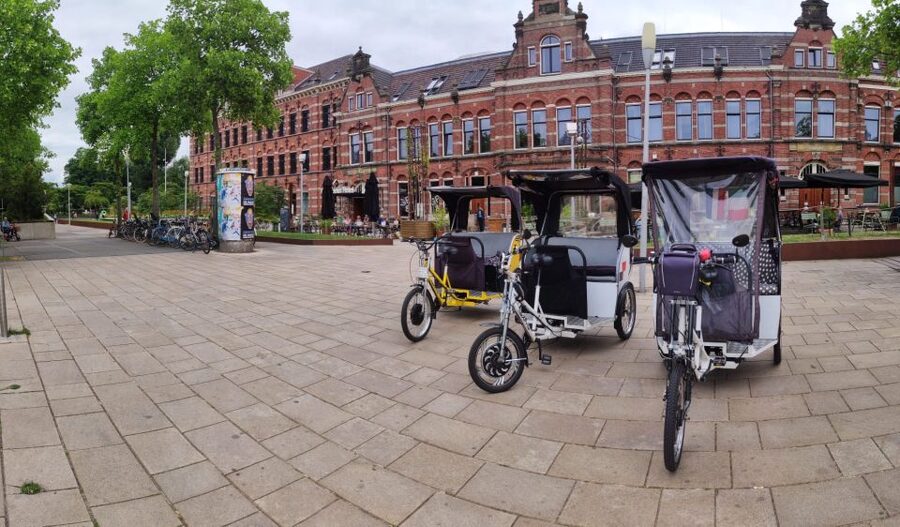
The pedicab itself is built for comfort and visibility. You’re seated, you can look around freely, and you’re not negotiating bicycle lanes on your own. That matters, because Amsterdam bike traffic is a real feature of the city, not background noise.
A standout in the experience is the way your guide manages the flow. In the feedback, guides like Alphonso, Guido, and Bobby are praised for handling traffic confidently and stopping for explanations and photos. I like that the tour doesn’t force you to choose between learning and taking pictures.
Stops are part of the rhythm. You’re encouraged to listen to the stories and then grab photos, instead of rushing through everything at speed. If your group likes to take a moment at every landmark, you’ll probably appreciate this structure.
One more practical tip: if you’re hard of hearing, ask ahead whether there is a way to hear the guide clearly. One booking specifically suggested checking about a speaker or ear piece. Even if the basics don’t mention audio gear, it’s worth confirming.
Who This Tour Fits Best, and Who Should Rethink It
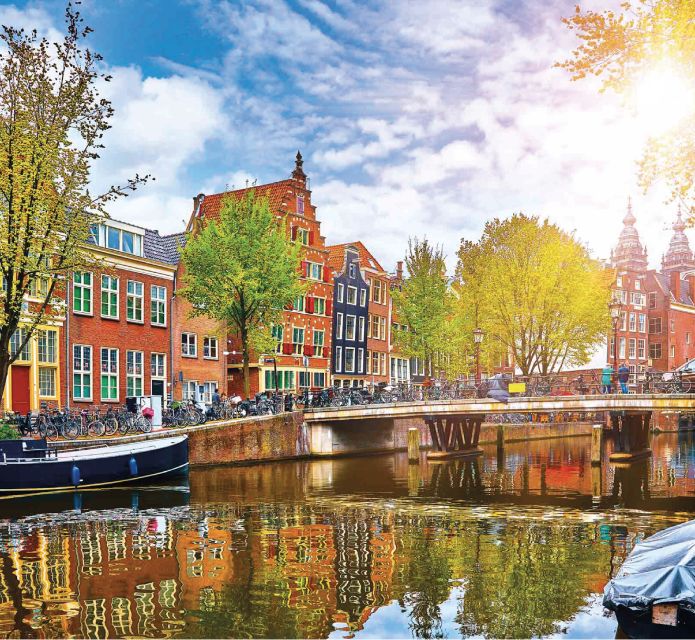
This pedicab tour is a strong choice if you want:
- An easy arrival-day plan that doesn’t require long walking
- A private way to get city orientation fast
- A chance to see famous Amsterdam areas plus canal belt highlights in one go
- Someone to handle navigation while you focus on photos and stories
It also fits well if you’re traveling with a family member who can’t walk long distances. Several bookings mention the benefit of exploring without big walking demands.
That said, I’d skip it (or seriously check alternatives) if:
- You use a wheelchair, because it’s not suitable
- Your weight is above 243 lbs (110 kg)
- Weather is looking rough, since the tour might not be practicable during bad conditions
If you want the absolute cheapest way to see Amsterdam, this is not it. If you want a high-comfort orientation with a guide and photo breaks, it often hits the sweet spot.
Pickup, Timing, and the Small Details That Change Everything
Hotel pickup is optional, and it’s offered for hotels within the city center limit between Nassauke and Stadhourderskade. If your hotel is near that zone, pickup can save you the hassle of walking to a meeting point.
If your lodging is outside the pickup area, you can still reserve and then ask what pickup options exist. The key detail here is to confirm your exact hotel location during reservation so they can suggest the best meeting point.
Language is also a practical win. You can choose live guidance in Italian, English, Spanish, or German, so you’re not stuck with a generic audio style.
As for timing, the ride runs 1 to 2 hours, and the schedule depends on availability. If you’re trying to fit it on an arrival day, aim for the time when you still have energy for a short tour but before you fully crash.
So, Should You Book This Amsterdam Pedicab Tour?
If your priority is a relaxed first look at Amsterdam, this is an easy yes. The format is private for up to 2 people, the route covers major districts, and the guide work plus photo stops make it more than just a scenic ride.
I’d only hesitate if you’re dealing with bad weather risk, mobility needs that don’t match the ride limits, or a preference for unguided walking. Otherwise, for many people, it becomes the best kind of Amsterdam start: you get your bearings fast, learn why the city looks the way it does, and save your legs for later.
If the price works for your trip, book it early so you can choose the most convenient time window.
FAQ
How much does the Amsterdam private pedicab tour cost?
It costs $118 per group for up to 2 people.
How long is the private pedicab tour?
The tour lasts 1 to 2 hours, depending on availability and the start time you choose.
Is hotel pickup available?
Yes, hotel pickup is available for hotels within the city center limit between Nassauke and Stadhourderskade. If you are unsure, ask during the reservation process so they can confirm options based on your exact hotel.
What languages are available for the live guide?
The live guide can provide the tour in Italian, English, Spanish, or German.
What weather or accessibility limitations should I know about?
The tour might not be practicable during bad weather conditions. It is not suitable for wheelchair users, and there is a weight limit of 243 lbs (110 kg).
What if I need to hear the guide clearly?
If you are hard of hearing, it’s a good idea to check with the tour company ahead of time to see whether a speaker or ear piece is available.
More Tours in Amsterdam






More Tour Reviews in Amsterdam






See the City from Another Angle






Newly reviewed around Amsterdam





Private, side by side.
 ★ 4.5Rijksmuseum Amsterdam Small-Group Tour with Private UpgradeFrom $901,547 reviews
 ★ 5.0Van Gogh Museum Tour Reserved Entry Semi PrivateFrom $1731,437 reviews
 ★ 5.0Private Amsterdam Red Light District and Coffee Shop TourFrom $41763 reviews
 ★ 5.0Anne Frank and Jewish Quarter Amsterdam Private Walking TourFrom $157684 reviews
 ★ 4.5Amsterdam Airport & Non-Airport Private Transfer to City CenterFrom $60521 reviews
 ★ 5.0Private Excursion to Zaanse Schans, Edam, Volendam and MarkenFrom $840420 reviews
 ★ 5.0Van Gogh & Rijksmuseum w/ Reserved Entry Semi-Private 8ppl MaxFrom $288419 reviews
 ★ 5.0Anne Frank and the Jewish History of Amsterdam Private TourFrom $95307 reviews
More ways to plan this visit