
REVIEW · WALKING TOURS
Amsterdam Old City Private Walking Tour
A 2-hour walk can feel like a whole story. This private Amsterdam Old City tour strings together the medieval center, major canal areas, and a few neighborhoods you might skip, with a guide who can tune the details to your interests. I especially love how the tour makes sense of Amsterdam’s big 17th-century rise, then grounds it in visible street-level things like merchant houses and old courtyards. I also like the way you hit both famous icons and quieter stops, including the Old Church area and places around the Begijnhof, not just the postcard spots. One drawback to plan for is that it is a brisk, on-foot tour, so comfortable shoes matter, and you will want to travel light.
This is a private format, priced per group (up to 10 people), so you get time for questions and a route that can flex. The guide can also add real color, including firsthand context about later decades, which helps Amsterdam feel less like a museum and more like a living city with change. If you are hoping for a slow, stop-and-sip style outing, this may feel more energetic than you want, since it stays focused on walking and explanation.
Key highlights you’ll feel fast
- Private pacing for up to 10 people, so you can steer the stops toward your interests
- 17th-century power explained on foot, tied to canals, merchant wealth, and city design
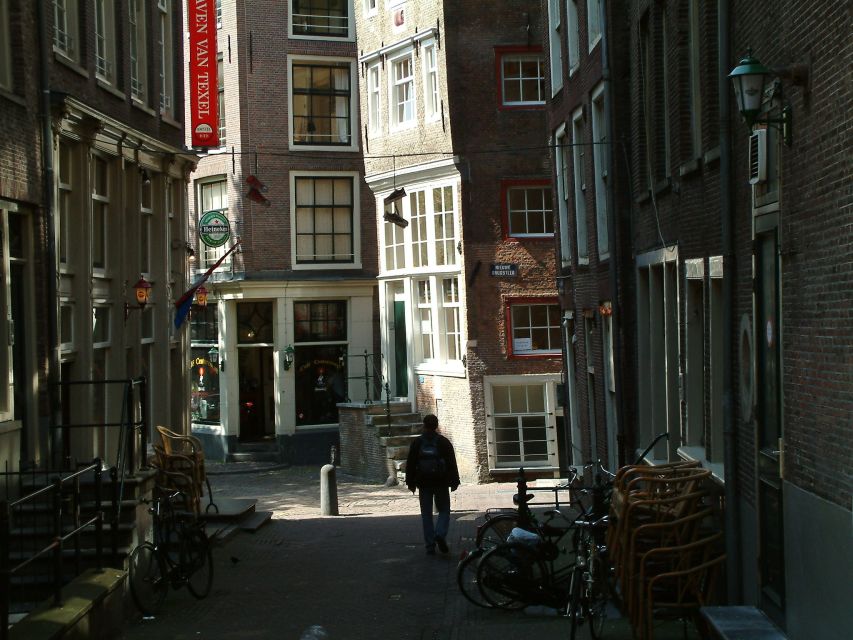
- Churches and courtyards beyond the obvious, including the Old Church and Oude Manshuispoort area
- Begijnhof women’s homes, with context for what that community was and why it matters
- Red Light District with framing, not just photos and shock value
- Nieuwmarkt to Chinatown, plus the city’s older Jewish district footprint
Amsterdam at street level, a few more routes
Entering Amsterdam’s Old City, from reclaimed land to world power
Start at Amsterdam Central Station, right in front of the main entrance. That is a smart choice because it helps you get oriented quickly and puts you on foot in the core area without wasting time on extra transport. From the start, the tour’s tone is practical: you learn what Amsterdam is, how it grew, and why the canal city you see today exists at all.
One of the best parts is the “how did this place even work?” background. Amsterdam grew on reclaimed swamp land, where the ground was buried in mud and the harbor was tough to access. Connections to the North Sea were not realized until the 19th century, but Amsterdam became a major world city long before that, powered by trade and shipping networks.
That sets up the rest of the walk. When you start looking at merchant houses, canal banks, and city-center layout, you are not just seeing pretty streets. You are seeing the physical result of wealth, risk, engineering, and global commerce, especially from the 17th century, when the city’s population reached about 220,000, making it the third-largest city in Europe. You begin to understand why the places around the canals look the way they do, and why the story does not end with the medieval era.
The 2-hour rhythm: what you gain (and what you don’t)
A 2-hour private walking tour is a sweet spot for Amsterdam. Long enough to connect multiple neighborhoods, short enough that you are not worn out by the time the light shifts. It is also ideal for first-time visitors who want a framework for later самостоятель wandering, because you leave with names for streets, districts, and landmark types you will actually recognize.
What it does not promise is deep, museum-level time at a single site. Instead, it gives you a guided route that moves through the medieval center, canal areas, and a few distinct districts like the Old Jewish District and Chinatown. The value is in how the guide links those stops into one story, so the city stops feeling like a random collection of attractions.
Also, keep in mind the tour is private, but not unlimited in group size. It is up to 10 people, and it is wheelchair accessible, which makes it a good fit if your group needs mobility support. The practical catch is that luggage or large bags are not allowed, so plan to carry only what you need for two hours.
Old walls, canal thinking, and the merchant-house look
As you move through the medieval center, you get to see parts of the old city wall. That matters more than it sounds. Amsterdam’s canals and neighborhoods are not just scenic, they reflect layers of planning, expansion, and defense. Seeing even small sections of the wall helps you understand why the center evolved the way it did.
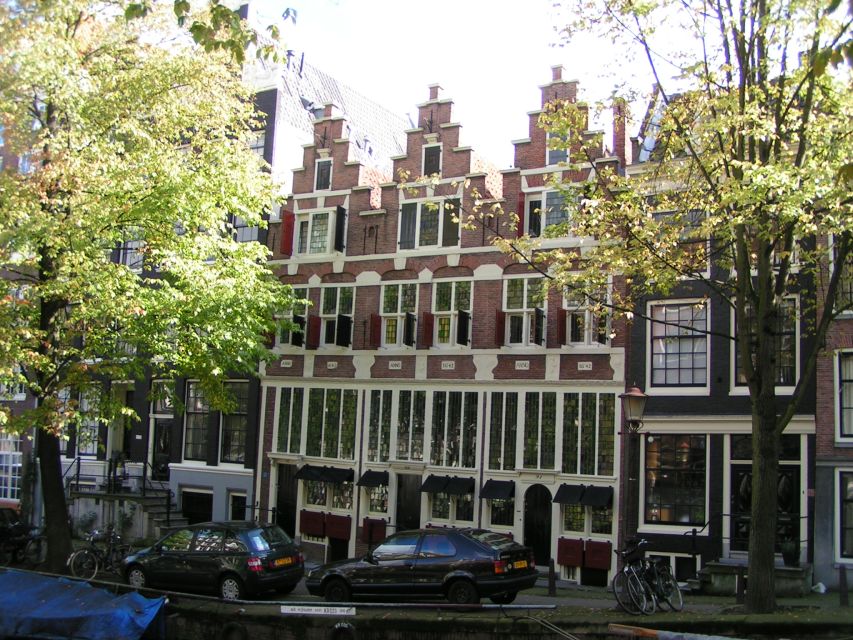
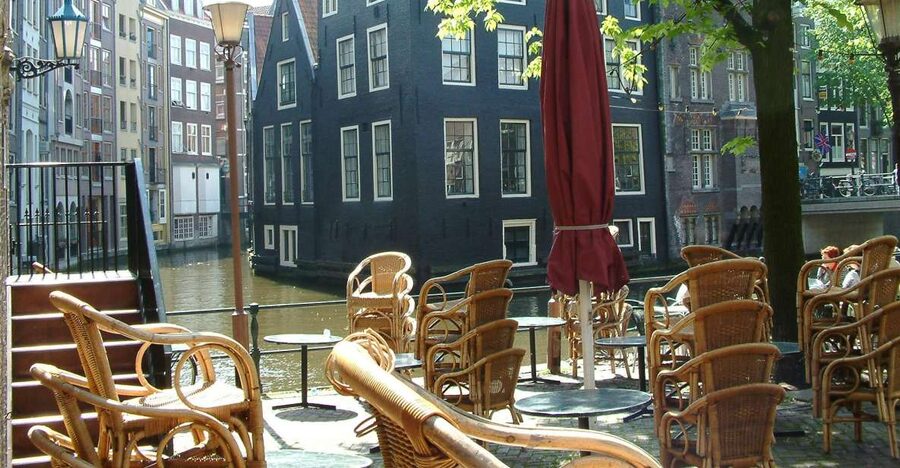
Then you shift to the canal side of the story. The tour includes classic canal banks like the Herengracht, one of the first major canals. Walking the banks is a fast way to grasp why canal cities became global trade engines. Water routes were practical transport, but they also became visible statements of status, with merchant wealth and impressive homes lining the waterways.
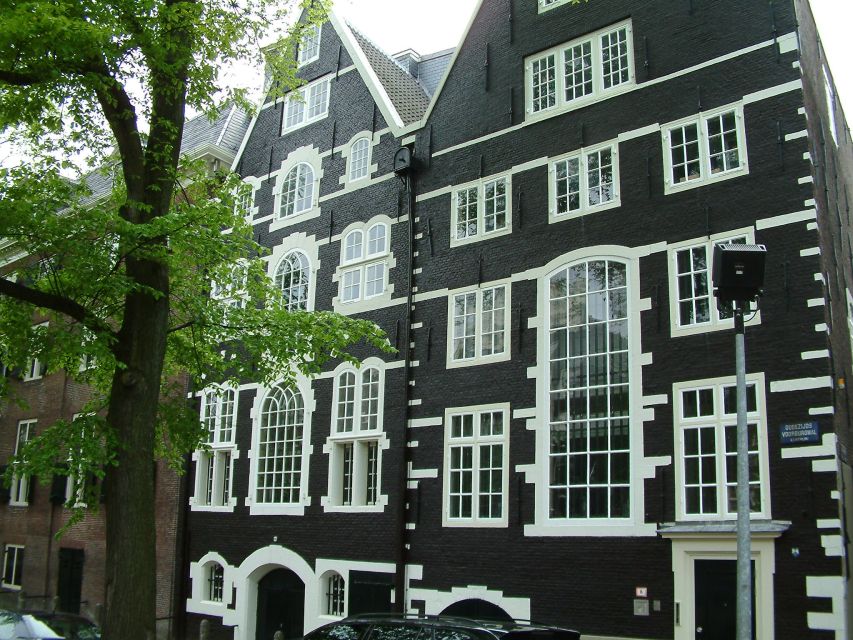
You will also notice the tour’s emphasis on architecture and history. That is the right level of detail. You do not need a PhD in Dutch urban planning to follow along, but you do get enough context to read the street scene with confidence. When you look at a handsome merchant house afterward, you are more likely to spot the cues that indicate how it functioned and who it served.
Worth comparing with this Amsterdam choice:
- Amsterdam: 75 Minute City Canal Cruise with Audio Guide★ 4.4 · 17,501 reviews
- Amsterdam: City Centre Canal Cruise★ 4.2 · 12,827 reviews
- Amsterdam: Smoke and Lounge City Boat Cruise★ 4.7 · 8,572 reviews
- Amsterdam: Guided Bike Tour City Centre in EN/DE/FR/ES★ 4.7 · 4,187 reviews
Old Church and Oude Manshuispoort: quiet history breaks
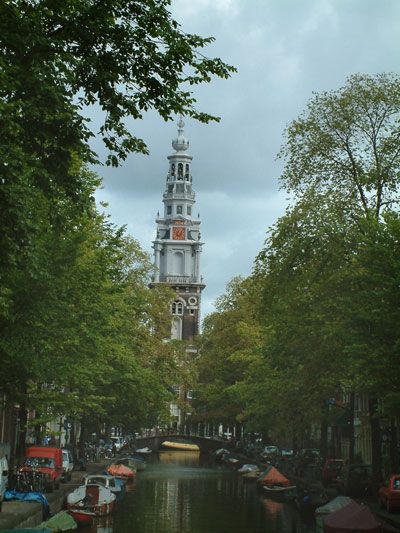
One of the most appealing aspects is that the tour includes hidden churches and specific older sites like the Old Church and Oude Manshuispoort. These stops are valuable because Amsterdam’s best atmosphere is often in small spaces, not just big landmarks. A courtyard, an older portal, or a church interior can change the way you feel about a district within minutes.
The guide can help you notice what makes these places different from the more famous church stops you may have seen on your own. Hidden churches usually mean fewer crowds and a stronger sense of everyday historic continuity. Oude Manshuispoort adds another layer, because it is the kind of place you might only find if someone points you toward it.
This is also where the tour’s private format really helps. You can spend a bit more time on one stop if it grabs you, or move on quickly if your group prefers faster pacing. That flexibility is hard to get on group tours that move like a school field trip.
Jordaan streets, pawn shop ghosts, and the East India Company link
The Jordaan district is part of the story here, and it is not just about pretty canal views. You will pass through areas that help explain what trade wealth looked like on the ground, including references to old pawn shops and handsome merchant houses. That mix is important, because it hints at how money moved through society, not only at the top end.
The tour also points out the Oostindisch Huis, the Amsterdam headquarters of the East India Company. Even if you know Amsterdam is a trading powerhouse, it is one thing to hear that, and another to connect it to an actual building presence in the city. The guide’s job is to translate global history into local geography, and stops like this do that well.
If you are the type of traveler who enjoys “why is this here?” questions, you will enjoy this segment. It turns canal-side architecture into a timeline. You begin to see how Amsterdam’s commercial muscle made certain locations important, and how the city’s role as a science and cultural center grew alongside its trading networks.
Begijnhof women’s homes: a different kind of Amsterdam
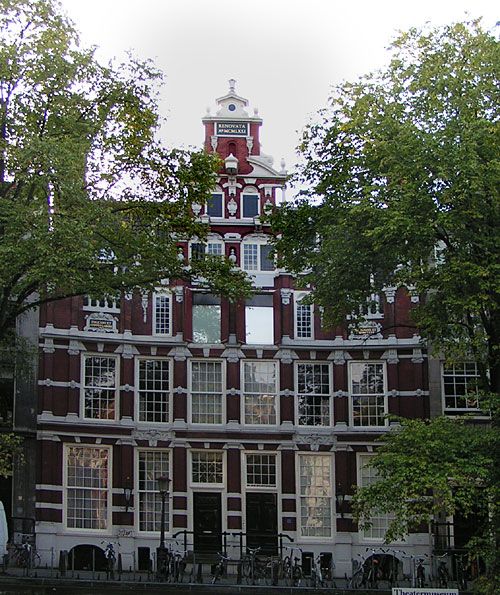
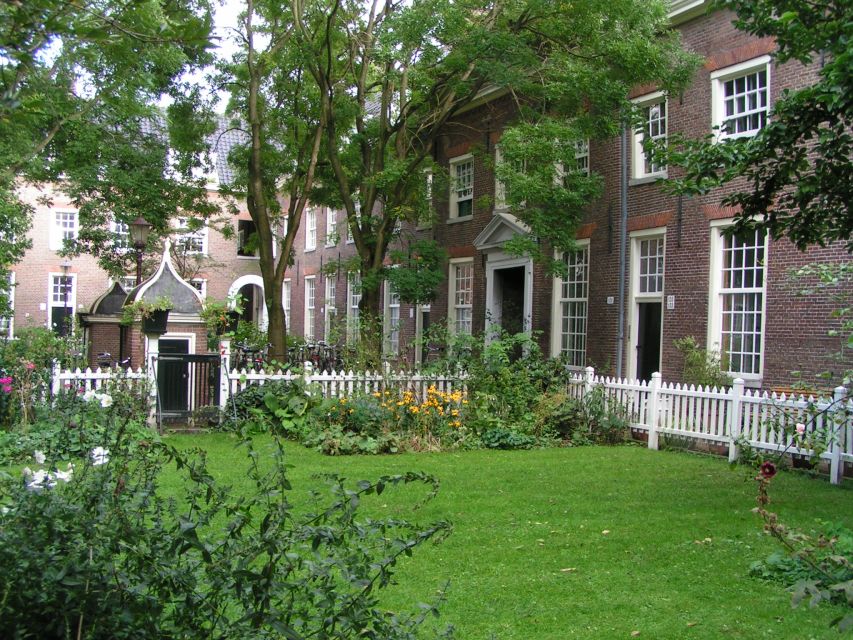
One of my favorite stops to include on any Amsterdam walk is the Begijnhof. This tour brings you to the Begijnhof women’s homes, which changes the pace from commerce and politics into a more human-scale story. The Begijnhof is not about “big power” in the same way the 17th-century trading narrative is, but it still reflects how people organized their lives.
What you gain here is variety. In two hours you can easily end up with only one flavor of sightseeing, mostly churches and canals. Adding the Begijnhof gives the tour a social dimension, showing that Amsterdam’s history is not only about merchants, ships, and city expansion. It is also about community structures, faith, and the ways people lived with intention inside a dense urban center.
In practice, this stop works well because it feels calmer and more contained than some of the busier streets. If your group appreciates small-scale atmosphere, this is often the moment you feel the tour shift from “seeing” to “feeling.”
Red Light District, but with real framing
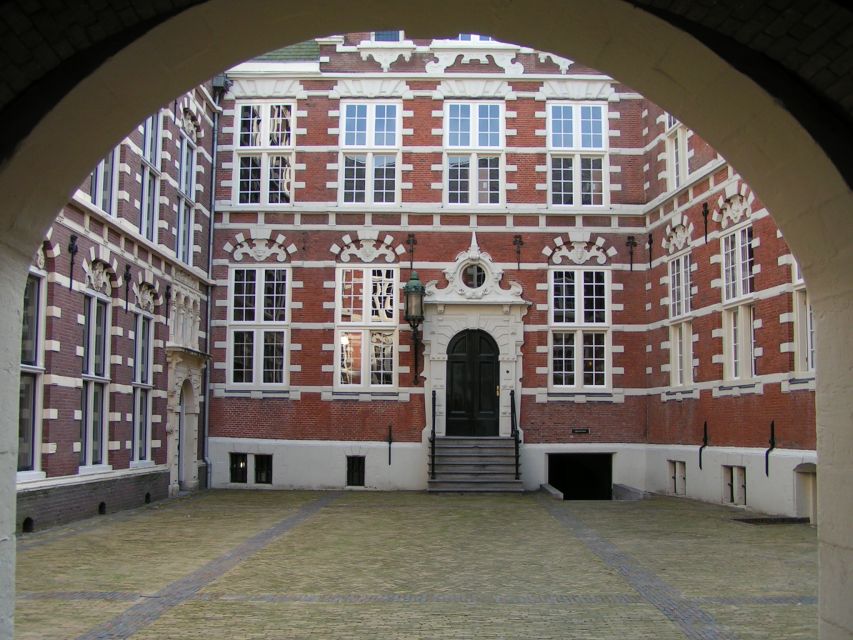
Yes, the tour walks through the infamous Red Light District. The difference here is framing. Instead of treating it like a pure spectacle, you get context while you pass through the area, tied to Amsterdam’s overall growth and the way the city has always had complicated social sides.
That framing is useful for two reasons. First, it prevents the walk from turning into awkward photo-taking. Second, it helps you understand why the district exists in this particular city and how Amsterdam’s identity includes both prosperity and contradiction.
Keep expectations practical. This is still a street-area visit in an active part of town. If you are sensitive to that environment, you might prefer to step back with your group for a moment, listen to the explanation, then move on quickly.
Old Jewish District to Nieuwmarkt and Chinatown
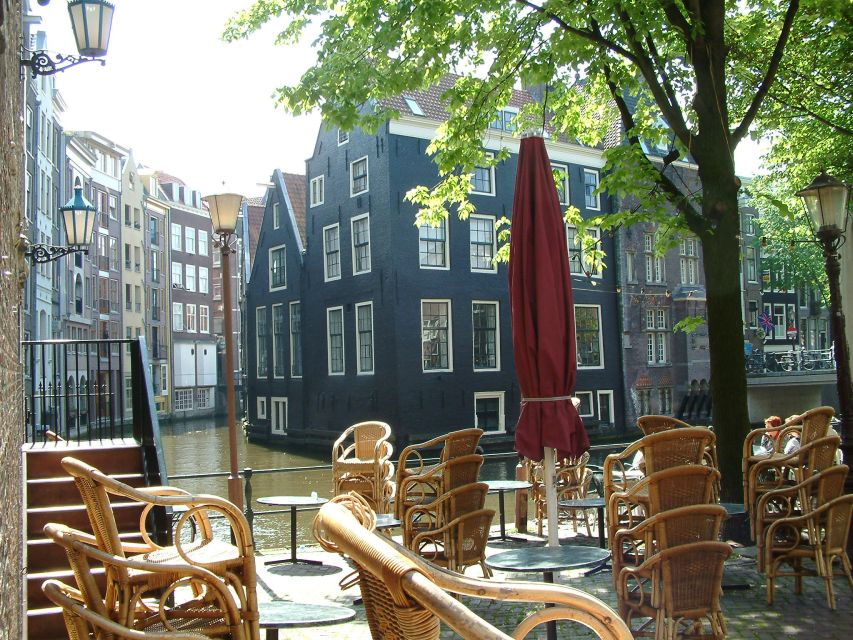
Amsterdam’s Jewish district history is woven into the tour route, and it is not treated as an isolated “topic stop.” You walk through the old Jewish District area as part of the same story about how the city developed and changed over time. The guide’s explanations help connect the neighborhood’s identity to Amsterdam’s broader role as a major cultural center.
Then you head toward Nieuwmarkt and Chinatown. This transition is a smart way to end the walk because it shows how Amsterdam keeps layering newer communities on top of older city fabric. You see that the city is not stuck in the Golden Age, even though that era is the backbone of the architecture you are seeing.
At Nieuwmarkt, and then into Chinatown, the tour gives you a feeling for Amsterdam’s modern multicultural reality. It is not only about food or sights. It also helps you read how Amsterdam’s identity is always in motion, even when the streets look old.
Price and value: what $265 per group buys you
The tour costs $265 per group up to 10 people for a 2-hour walking experience. On the surface, that can sound pricey if you compare it to a standard group bus tour. But private walking tours should be judged differently.
Here is the value logic I use. You pay for time with a guide who can tailor the route to your interests, not just march everyone along a fixed checklist. With up to 10 people, your group can spread the cost. If you are traveling as a small family or with a few friends, the per-person number often becomes reasonable compared with museums and separate paid attractions.
You are also paying for efficiency. In two hours, you get multiple districts, multiple architectural stories, and context that makes later self-guided wandering easier. If you would otherwise spend a chunk of time trying to map out the “right” route yourself, this becomes cheaper than it seems.
What makes the guide experience stand out
This tour works best when your guide is strong at storytelling and local detail, and the best part is the human element behind the route. I like how guides here often bring a real sense of what it means to be an Amsterdam local, not only a script of historic facts. That includes the ability to talk about later developments, including the 1970s, in a way that makes the city feel lived-in.
You also get that practical “where should we go next?” sense. The tour can take you into places that do not always make the top pages of guidebooks, while still staying within a tight two-hour window. That means you leave with a feeling for Amsterdam as a layered place, not just a set of landmark photos.
Who should book this private Old City walk
Book this tour if you want a fast, structured introduction to Amsterdam that still feels personal. It is ideal for couples, small groups, and families who enjoy architecture and history and would like to see more than only the most obvious streets.
It is also a good choice if your group is split in interests. One person might want canal-house detail, another might want the social history around the Red Light District and Begijnhof, and another might be curious about Chinatown and the Nieuwmarkt area. A private route with a guide who adapts to your wishes helps those different preferences fit into one walk.
You might skip it if you are only chasing the biggest museum interiors or if your group wants long stops and lots of time to sit down. This tour is about moving, learning, and noticing, not lingering for hours in one place.
Should you book this Amsterdam Old City private walking tour?
I think you should book it if you want the best part of Amsterdam’s Old City, explained clearly, without wasting time. For $265 per group up to 10, you get a private guide, a two-hour route that hits major story points like reclaimed-land origins and the 17th-century rise, plus specific stops such as the Old Church, Oude Manshuispoort area, Begijnhof women’s homes, and the shift from the Jewish district to Nieuwmarkt and Chinatown.
You should also book if you value context. Amsterdam can feel overwhelming because every street seems historic. This tour helps you connect the dots quickly, so you know what you are looking at when you walk on your own afterward.
If your group is sensitive to busy nightlife areas or prefers very slow pacing, consider that the route includes the Red Light District and keeps things moving. But for most visitors, the mix of classic canals, quieter historic spots, and social context is exactly what makes a short private walk worth it.
FAQ
How long is the Amsterdam Old City private walking tour?
The tour lasts 2 hours.
Where does the tour meet?
The meeting point is Amsterdam Central Station, in front of the main entrance.
What is the price for this tour?
It costs $265 per group up to 10 people.
What is included in the price?
The tour includes a 2-hour walking tour adapted to your wishes, a guide, and VAT.
What is not included?
Food and drinks are not included.
What languages are available for the guide?
The live tour guide is available in English, Dutch, and German.
Is the tour wheelchair accessible?
Yes, the tour is wheelchair accessible.
Can I bring luggage or a large bag?
No, luggage or large bags are not allowed.
Is free cancellation available, and how does reserve and pay later work?
Free cancellation is available up to 24 hours in advance for a full refund. You can also reserve now and pay later to keep your plans flexible.
Amsterdam on Foot






More Tours in Amsterdam




More Tour Reviews in Amsterdam





Newly reviewed around Amsterdam



Walking Tours, side by side.
 ★ 5.0Anne Frank’s Story – Guided Walking Tour through AmsterdamFrom $3911,619 reviews
 ★ 4.8Life of Anne Frank and World War II Walking TourFrom $3710,467 reviews
 ★ 5.0Absolutely Amsterdam – the Essential Introductory Walking TourFrom $53,629 reviews
 ★ 4.8Anne Frank Guided Small Group Walking TourFrom $282,722 reviews
 ★ 4.9Anne Frank Walking Tour – Guided in EN/DE/IT/ESFrom $282,676 reviews
 ★ 4.9Guided Cultural Walking TourFrom $292,384 reviews
 ★ 4.2Guided Ganja Walking Tour of Coffee ShopsFrom $272,092 reviews
 ★ 5.0Anne Frank Walking Tour Amsterdam Including Jewish Cultural QuarterFrom $751,879 reviews
More ways to plan this visit