
REVIEW · WALKING TOURS
Amsterdam City Center & History – Exclusive Guided Walking Tour
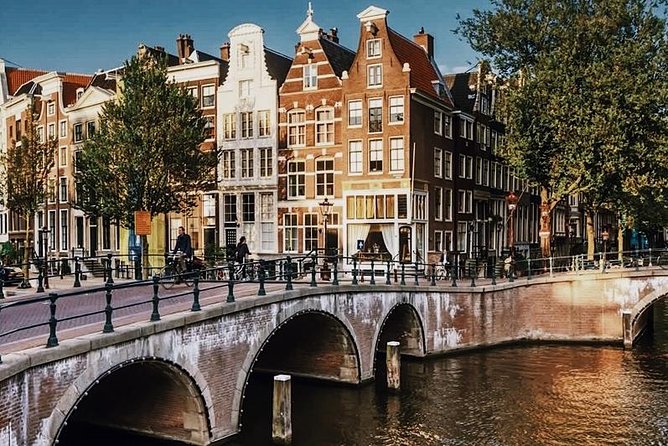
Amsterdam clicks when you walk it. This 2.5-hour guided city-center route strings together churches, canal houses, and trade-era landmarks so the old streets feel less like a maze.
I love the stop-by-stop context that makes what you see on the street finally make sense, and I love that the guides, including people like Anita, Pedro, and Diana, keep the pace friendly even when the weather turns. You also leave with concrete ideas for where to go next, so you are not stuck wandering on day one.
The only real drawback is that it is a steady walk in all weather, and many sights are view-only or limited by security, so you will not get an inside experience everywhere.
Key Things to Know Before You Go
- A 2.5-hour, city-center route that connects major landmarks without hopping across town
- Insider-style pacing from guides like Anita, Pedro, or Diana, with lots of time for questions
- Practical Amsterdam orientation, from canal bridges and locks to hofjes and Protestant churches
- View-first sightseeing, with some stops not included for entry or affected by on-site security
- Rain or shine walking, so comfort gear matters more than you think
Amsterdam at street level, a few more routes
A 2.5-Hour Amsterdam City-Center Walk That Helps You Think Like a Local
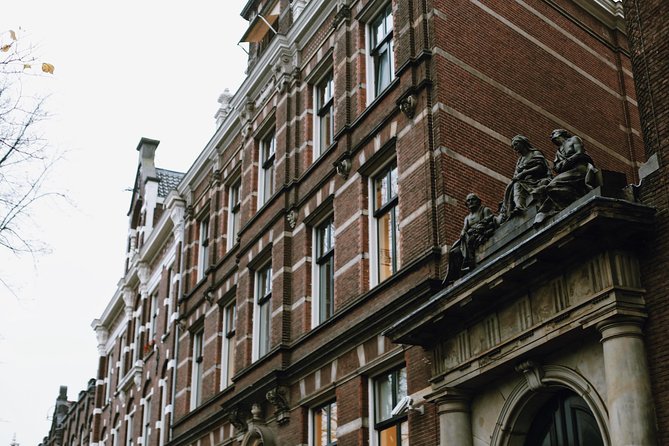
This tour is built for people who want Amsterdam to click fast. You start in the historic core and finish at a pretty canal corner, with a route that moves through different eras of the city: faith and restrictions, seafaring and shipping, trade and taxes, and the Protestant city that grew around it.
The value here is not just that you are seeing famous places. It is that someone is translating what you are looking at in real time. Amsterdam has a habit of rewarding attention: a gable stone, a courtyard layout, a church plan, even a lock bridge. On this walk, those details get explained in plain language, which helps you spot patterns later when you explore on your own.
Price is $62.48 per person for about 2 hours 30 minutes. In practical terms, you are paying for a focused, guided route through a dense area where self-guided wandering can turn into random movement. If you are the type who likes to understand what you are seeing before you take photos, this cost usually feels fair.
Meeting at Prins Hendrikkade and Staying Comfortable for a Rain or Shine Route
The start is Prins Hendrikkade 73, 1012 AD Amsterdam. The end is Papeneiland on Prinsengracht 2, 1015 DV Amsterdam. That end point choice is smart: it is a scenic finish and an easy place to keep the evening going.
A few practical notes matter for enjoying the walk:
- You should expect moderate physical fitness needs. This is not a sit-and-watch tour.
- Wear comfortable shoes. The route runs rain or shine.
- Bring a bottle of water, and an umbrella or hat depending on the season.
- No large bags or suitcases, so travel light.
Also, you will need a mobile phone number (with country code) and you will use a mobile ticket. This is one of those small logistics items that can save you stress if you plan ahead.
St. Nicholas Basilica to the Weeping Tower, a City Shaped by Faith and Farewells
Your first stop is St. Nicholas Basilica. Even from the outside, it is a reminder of Amsterdam’s religious shifts. The basilica was built in the late 19th century after centuries of prohibition, and the building’s mix of architectural styles reflects that long, complicated backstory. If you have ever wondered why Amsterdam’s religious landscape looks layered rather than uniform, this is a great first clue.
Then you head to the Weeping Tower, also called the Schreierstoren, a medieval tower tied to maritime departures. This one is oddly emotional for a sightseeing stop. The idea is that women bid farewell to loved ones departing by ship, and you can read the tower as a symbol of how important shipping was to daily life here.
Two tips for this part:
- Look at the details your guide points out. Tower stories often hinge on small features.
- Use this moment to ask your guide what to prioritize later, because the route gets more about patterns as you move on.
Worth comparing with this Amsterdam choice:
- Amsterdam: 75 Minute City Canal Cruise with Audio Guide★ 4.4 · 17,501 reviews
- Anne Frank’s Story – Guided Walking Tour through Amsterdam★ 5.0 · 11,619 reviews
- Amsterdam: Johan Cruijff ArenA Tour with Optional Guide★ 4.6 · 8,954 reviews
- Amsterdam: Royal Palace Entry Ticket and Audio Guide★ 4.6 · 6,475 reviews
Zeedijk and Nieuwmarkt: Sea-Dike Engineering Meets Market-Day Amsterdam
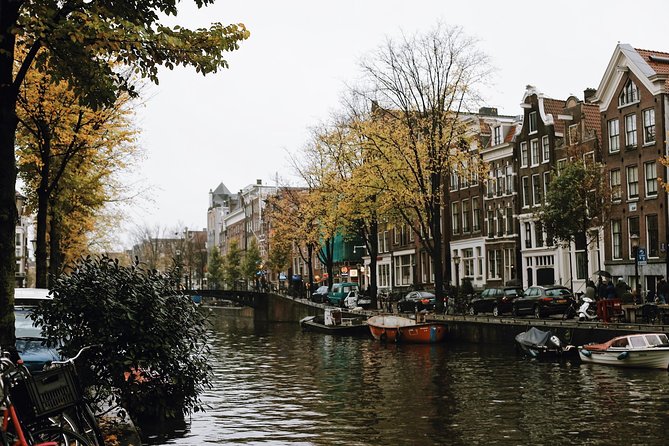
Zeedijk is next, and it is the kind of street that rewards attention to origins. You are walking on one of Amsterdam’s oldest streets, once a sea dike holding back water from the IJ. Then near the Kolksluis, you get to admire lock bridge scenery that feels very Amsterdam: practical infrastructure that is also photogenic.
Next comes Nieuwmarkt. It is a lively square and market area in the old city center, known as a place for commerce and social life since the 17th century. The square’s location just inside the old city gate made it convenient for traders and shoppers, so you can see it as the city’s “front door” for supplies and gossip.
If you like city texture, this is one of the strongest zones on the route. It is active, it is central, and it gives you a feel for what daily life used to look like here.
De Waag and Canal-Era Trade Power at the Trippenhuis and Oost-Indisch Huis
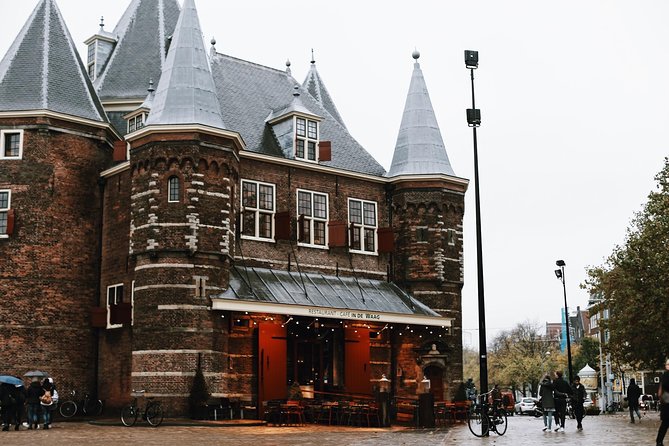
While you are at Nieuwmarkt, you also see De Waag. This 15th-century building is one of Amsterdam’s oldest remaining non-religious buildings. It started as part of the city gate system and wall, then later served different civic and commercial roles, including a guild hall, a museum, and even a fire station.
After that, the walk shifts from civic buildings to wealthy household statements. You pass the Trippenhuis, Amsterdam’s grandest 17th-century mansion, once owned by the wealthy Trip family. Opposite it is the Kleine Trippenhuis, often described as the city’s smallest house in this pairing. Seeing them in relation to each other is a quick lesson in how money and space worked in the canal age, including the way land taxes pushed architecture upward.
Then comes Oost-Indisch Huis. You step into the courtyard of the Dutch East India Company headquarters, presented here as the birthplace of the world’s first multinational corporation. Even if you are not a big economics person, the significance lands because Amsterdam’s wealth and canal layout are tied to trade routes and corporate power.
One practical consideration: some buildings are not included for inside visits, and you may have limited access due to on-site security. That is normal here. The value of this section is still strong because the symbolism is visible in the streetscape.
The Stopera, Rembrandthuis, and the Canal Houses That Make Amsterdam Readable
Next, you will see the National Opera & Ballet building complex, commonly called the Stopera. The design story is one of patience: construction took at least 60 years. It is a striking reminder that Amsterdam keeps layering functions into major buildings, so you get civic governance and major arts in the same complex.
You will also pause near Museum Het Rembrandthuis, the former home and studio of Rembrandt, where he lived and worked for nearly 20 years. In this tour, you see it from the outside. But the context matters: you are not just spotting a name, you are linking the city’s art world to its residential life.
Then the route moves into canal-house “look harder” territory with Huis Aan De Drie Grachten. This rare 17th-century canal house is located at the junction of three canals, with façades facing in three directions. If you tend to skim streets, this stop helps train your eye. Amsterdam is full of geometry, and this is a clear example.
Protestant Landmarks and the Begijnhof Peace Break
Zuiderkerk is next, Amsterdam’s first purpose-built Protestant church designed by Hendrick de Keyser. The tower is one of the city’s defining landmarks, and this stop helps you understand how Amsterdam’s Protestant identity was not just a belief shift. It reshaped the skyline too.
After that, you get a calmer mood at Begijnhof. This medieval courtyard was once home to a community of devout women known as Beguines. The courtyard is peaceful in a way that contrasts with the busy streets around it, and it is also home to one of Amsterdam’s oldest wooden houses. Even if you do not spend long here, the change in atmosphere is noticeable.
Later, you will also see Noorderkerk, a 17th-century Protestant church built for the Jordaan district. The cross-shaped floor plan is tied to Reformation worship ideals, and it is one of those architectural choices that turns into a clear story about how people wanted to worship and gather.
This whole section is valuable if you like your sightseeing to include human meaning, not just building photos.
Dam Square, Anne Frank House, and Looking Up at the City’s Gables
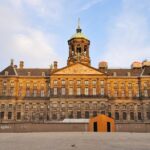
Dam Square is the historic heart of Amsterdam. You see it framed by the Royal Palace, the 15th-century New Church, and the National Monument to WWII victims. It is the kind of place where the city’s identity shows up in one view, from power and pageantry to remembrance.
From there you pause outside the Anne Frank House. This stop is not about touring the museum inside. It is a moment of recognition, and right next door rises the Westerkerk, described here as the tallest church tower in Amsterdam. Even if you already know the story, the physical closeness of the sites helps you understand how Amsterdam packs major historical threads into tight spaces.
Then you look up at De Drie Hendricken aan de Bloemgracht 87-91. These façades have quirky gable stones with allegories and trade emblems. You are not just admiring shapes. You are seeing how commerce and symbolism got carved into the street identity.
Herengracht Golden Bend, Karthuizerhof Courtyard, and Noorderkerk
Herengracht is where the walk leans hard into the Golden Bend visual. This canal section is lined with some of the richest and most ornate canal mansions from the Dutch Golden Age. Standing here with a guide matters because you start seeing what makes a façade “rich” beyond just fancy windows. You learn to connect style to power, wealth, and the way Amsterdam marketed itself.
Then you get a different kind of wealthy, at least in function, with Coöperatieve Vereniging Karthuizerhof, the largest hofje in Amsterdam. Hofjes are courtyard almshouses, built for the city’s poor and elderly. You can picture how the city provided for people through shared community spaces, not just through streets and buildings.
Noorderkerk returns you to your earlier Protestant theme. You see how different worship buildings look across neighborhoods, and how the Jordaan district’s planning includes a distinct church footprint.
Ending at Papeneiland for Apple Pie Energy and Your Next-Day Plan
The tour ends at Papeneiland on Prinsengracht, a canal corner that is described as one of the prettiest spots in town. You will also see Het Papeneiland, a brown café from 1642, and it is said to serve the best apple pie in town. Even if you do not order pie right away, the ending works because it sets you up for a relaxed next step after a focused walk.
One thing I like about finishing here: you are not stuck at a far-flung edge of town. You are right in a scenic area where you can decide your next move, whether that is canalside wandering, dinner, or a nightcap.
Should You Book This Walking Tour of Amsterdam’s Old Centre?
Book it if you want a fast, smart orientation through the center of Amsterdam. This is especially good for first-timers who feel overwhelmed by how dense the city feels. The route keeps returning to big themes, faith, water control, trade, and architecture, so you leave with a mental map that helps you later.
Consider skipping or adjusting expectations if you need lots of indoor time. Several stops are not included for entry, and security rules at attractions can limit inside access. It is still a great tour for seeing and understanding, but it is not a museum pass.
If you like asking questions while you walk, this is a strong pick. Guides such as Anita, Pedro, and Diana have a reputation for keeping the group moving and for handling questions with care, including during rain and wind.
FAQ
How long is the Amsterdam City Center & History walking tour?
The tour runs for about 2 hours 30 minutes.
What language is the tour offered in?
The tour is offered in English.
Is the tour private or shared?
It is described as a private tour/activity, meaning only your group participates. The guide exclusivity does not apply if you choose the SAVE! BOOK SEMI-PRIVATE option.
Are tickets for all stops included?
No. Some stops are free, and others are not included for admission. Also, some locations may not allow inside entry due to security measures.
Where does the tour start and end?
It starts at Prins Hendrikkade 73, 1012 AD Amsterdam, Netherlands. It ends at The Papeneiland, Prinsengracht 2, 1015 DV Amsterdam, Netherlands.
Do I need to worry about weather?
The tour runs rain or shine. You should dress appropriately and bring items like an umbrella and comfortable shoes.
Is pickup from my hotel included?
No. Hotel pickup and drop-off are not included. It is recommended to use UBER or a taxi.
Amsterdam on Foot




More Tours in Amsterdam




More Tour Reviews in Amsterdam




Newly reviewed around Amsterdam



Walking Tours, side by side.
 ★ 5.0Anne Frank’s Story – Guided Walking Tour through AmsterdamFrom $3911,619 reviews
 ★ 4.8Life of Anne Frank and World War II Walking TourFrom $3710,467 reviews
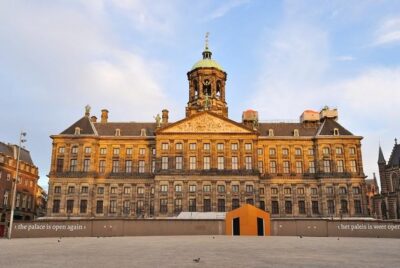 ★ 5.0Absolutely Amsterdam – the Essential Introductory Walking TourFrom $53,629 reviews
 ★ 4.8Anne Frank Guided Small Group Walking TourFrom $282,722 reviews
 ★ 4.9Anne Frank Walking Tour – Guided in EN/DE/IT/ESFrom $282,676 reviews
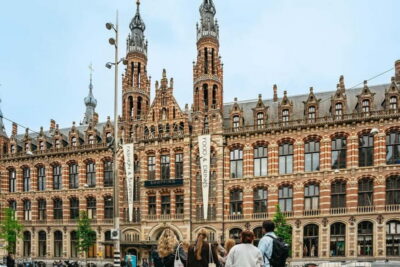 ★ 4.9Guided Cultural Walking TourFrom $292,384 reviews
 ★ 4.2Guided Ganja Walking Tour of Coffee ShopsFrom $272,092 reviews
 ★ 5.0Anne Frank Walking Tour Amsterdam Including Jewish Cultural QuarterFrom $751,879 reviews
More ways to plan this visit