
REVIEW · WALKING TOURS
Amsterdam Central Walking Tour
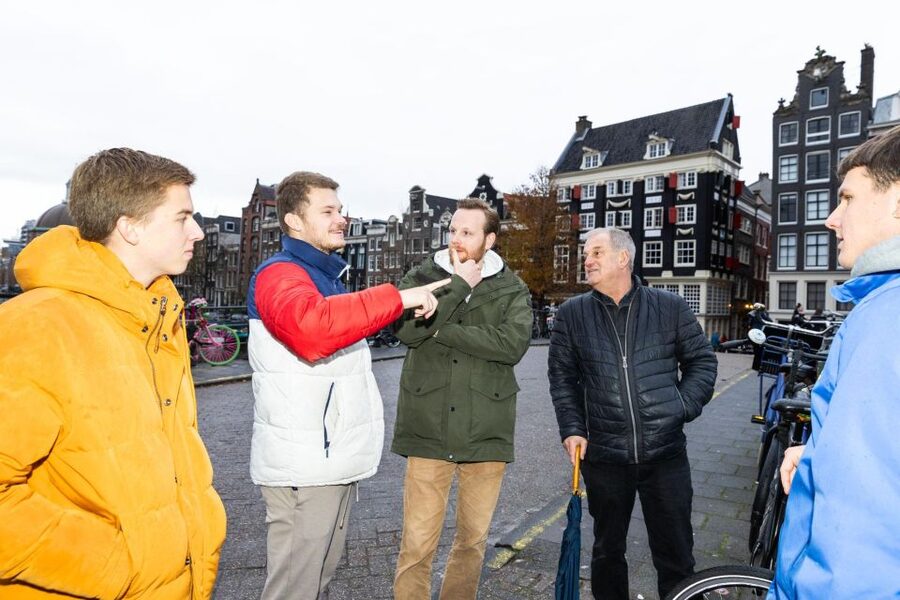
Amsterdam’s streets feel like a living museum. This 2-hour Yellow Bike walking tour links major landmarks with street-level stories, from the Negen Straatjes to Dam Square. I like the way it stays practical while covering big themes, like life in the Westerlijke Wallen and the political energy around Spui, and I especially like the small-group size, capped at 12.
One thing to consider: this is a winter walk on cobblestones, so you need solid shoes and warm layers. And if you prefer very detailed, stop-by-stop facts at every corner, the pacing may feel light to you in parts, depending on the day and guide.
Highlights and quick takeaways
- Small groups (max 12) that make the walk feel personal, even when it is crowded outside
- Guides with strong English and a talent for connecting past and present
- Iconic stops, explained including the tilted houses and Westertoren
- Spui and Provo context for understanding modern street culture and civil resistance
- Red Light District rules with a respectful, photo-free approach
- A traditional Dutch café break to warm up, with drinks not included
Amsterdam at street level, a few more routes
From Nieuwezijds Kolk to a City You Can Read on Foot
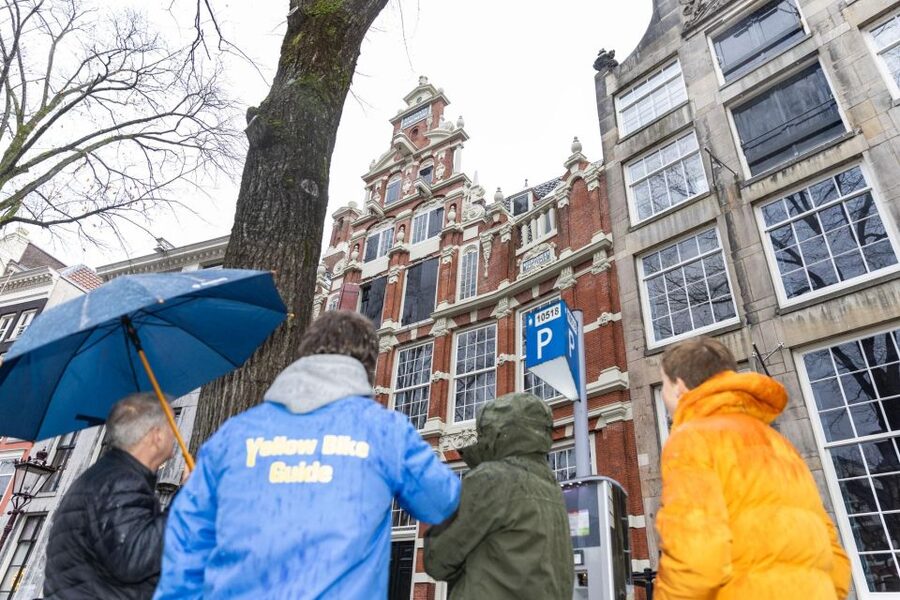
Most Amsterdam visits start with big icons. This walk starts with something more useful. You meet at Nieuwezijds Kolk 29, near the center of the action, which means you are not spending your morning or afternoon zigzagging just to get going. After 2 hours, you end at Dam Square and then walk back toward Yellow Bike at Nieuwezijds Kolk.
I like how the route is built so you can actually “read” the city as you go. Amsterdam is water, trade, defense, religion, and reinvention, all stacked on top of each other. On this walk, those themes keep showing up in unexpected ways, like why houses tilt, why canals matter for supply chains, and why certain neighborhoods have earned their reputations.
If you are short on time, this is a strong opener. It helps you orient fast, so the rest of your trip makes more sense. And because it runs rain or shine, it is a good plan when weather apps are doing their usual guessing game.
The Real Value: Small Groups on Real Cobblestones
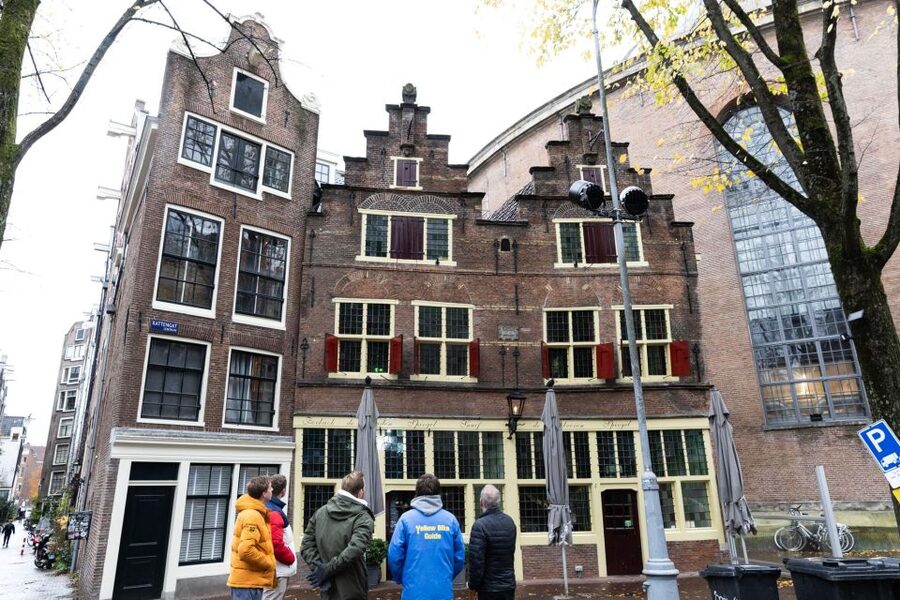
Amsterdam looks romantic in photos. On foot, it is also practical. This tour stays small, with a maximum of 12 participants, and it is often fewer. That matters because cobblestones and canal-side streets make crowds feel tighter than you expect. A smaller group also means your guide can keep control, adjust pacing, and handle questions without losing the thread.
A plus is that you can usually bring less with you. Free luggage storage is included, which is a small detail that saves you from lugging bags around the center. You just show up in what you can move in.
One more practical point. The tour is wheelchair accessible, but it also says it is not suitable for people with mobility impairments. That combination suggests a walk that may still be challenging in practice. If your mobility is limited, you should assess the route honestly, especially on uneven surfaces and in winter conditions.
Bent Houses, Wooden Foundations: Getting the Tilted-House Story Right
One of the first pleasures of this tour is how it uses the city’s odd angles to teach you its engineering. You will admire Amsterdam’s crooked or tilted houses, and you will hear the reason they exist: Amsterdam stands on wooden poles. That one detail changes how you see everything, because you start noticing how the whole city is built around slow, stubborn stability in soft ground.
This is not just trivia. It is the kind of explanation that makes your later photos more meaningful. You can stand in front of a tilted facade and know you are looking at something practical, not just charming. You also get a sense for how water and foundations shaped daily life.
If you like architecture but do not want to spend half a day in a museum, this is a smart approach. You get the “aha” moments outside, where Amsterdam actually lives.
- Amsterdam Classic Saloon Boat Cruise with Drinks and Cheese★ 5.0 · 31,825 reviews
- Amsterdam Luxury Canal Cruise + Unlimited Drinks & Bites option★ 5.0 · 30,518 reviews
- Amsterdam: Heineken Experience Ticket★ 4.6 · 30,055 reviews
- Amsterdam: Rijksmuseum Entry Ticket★ 4.7 · 25,535 reviews
Westertoren and the Red Light District: Two Sides of Respect
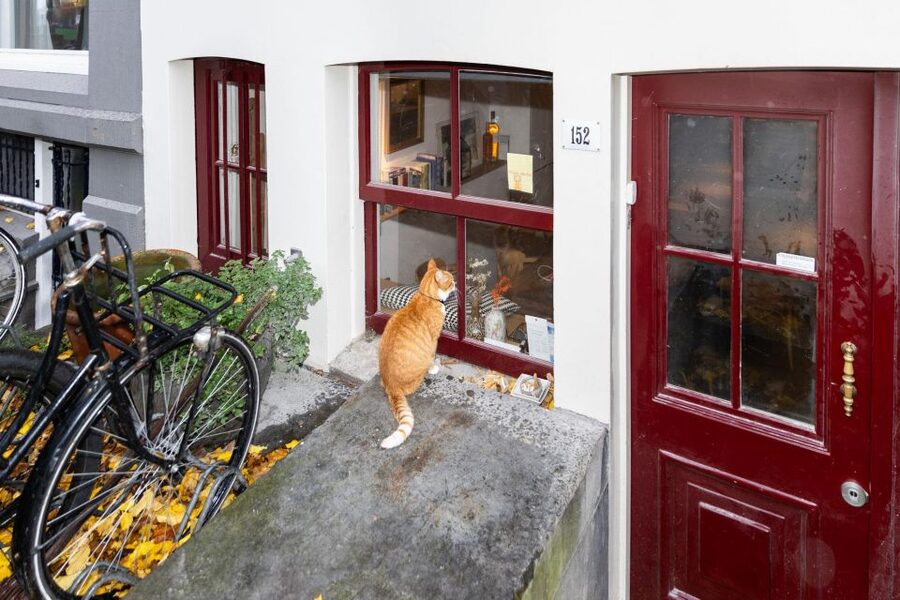
The walk gives you a contrast you rarely get in one package. You will see the Westertoren, Amsterdam’s tallest church tower, and hear its historical significance. Even if you do not care about church towers in general, it is a useful landmark, because it helps you map the city in your head. When you can picture where the tower sits, distances start to feel shorter.
Then the route moves into Westerlijke Wallen, the Red Light District area, with a strong emphasis on respect. The rules are clear: no photos and no lingering. That matters because it keeps the focus on understanding the neighborhood instead of turning it into a spectacle.
This is also where I think the guide impact matters most. Some guides can talk about the area with clarity and boundaries, and others can get too casual. The better guided experiences here are the ones that treat the subject seriously, and that is what you should look for in the vibe of your group.
Spui and Provo: How Street Politics Became Part of Amsterdam
Spui is one of those places that feels like a hub, but it becomes memorable only when you know what happened there. You will explore the area around Spui, including the Provo statue. You will also learn how the Provos orchestrated events advocating civil resistance, tied to student protests and cultural movements.
This is where the tour earns its “central walking tour” label. It is not only about old stone. It is about how Amsterdam’s public space has been used to argue, organize, and push back. Even if you are not into politics, the story gives you a lens for understanding why the city still feels slightly rebellious in its attitude.
You will also hear about squatting history along Spuistraat, which helps explain how certain neighborhoods developed their identities over time. That kind of context is valuable because it turns what could be just another street into a place with meaning.
Anne Frank House and Jordaan: Heavy Stories, Carefully Placed
The itinerary includes the Anne Frank House area and also connects you to Jordaan, known as a working-class enclave. WWII stories can feel heavy, even when you are just learning from the street. Here, the value is in how the guide situates those themes among the everyday city around them.
You do not get a museum-level experience in a 2-hour walk. But you do get orientation and context. That is huge if you plan to come back later for deeper visits. Walking near the Anne Frank House early in your trip also helps you approach a later ticketed visit with better grounding, instead of arriving as a blank slate.
For Jordaan, the benefit is less about listing facts and more about giving you a sense for how people lived and clustered. When you later wander Jordaan on your own, you will feel like you are recognizing patterns instead of just wandering.
Negen Straatjes: From Artisans to Trendy Streets
A highlight route segment leads you through the Negen Straatjes, the nine little streets area known for its mix of canalside charm and storefront energy. You will wander through streets that were once home to artisans and are now full of trendy boutiques and cafes.
This is the part where I recommend you slow down. Even on a short tour, spend a minute or two watching how the streets funnel people and how the canal-side layout shapes sightlines. The Negen Straatjes are great for photos, but they are even better when you use them to understand the neighborhood feel.
Also, this portion pairs well with winter. It is easier to explore small lanes after you already know the bigger landmarks around you. By then, you are not overwhelmed. You feel ready.
The “Engineering City” Stops: Sea Walls, Grain, and Beer Clues
Amsterdam often gets described as pretty. It is also logistical. This tour quietly teaches that with several specific stops and story beats.
You will explore Nieuwe Haarlemmersluis, where you learn how the city combats seawater intrusion from its historic canals. It is a practical story, and it makes the city’s water management feel less abstract.
You will also hear about the herring trade, described as a significant part of Amsterdam’s past. That sets up the idea of Amsterdam as a trade city before it was a tourism city.
Then come the canal-and-brewing clues, including Brouwersgracht, where you trace the supply of grain to breweries and hear why Amsterdam earned the nickname Booze Capital. Again, you are not getting a historical lecture for the sake of it. You are getting a framework. After this, you start to notice how canals supported commerce, not only reflection.
If you like cities that run on systems, these stops will feel like they connect the dots.
Churches, Fire Aftermath, and the Stories Under Bridges
The tour includes Koepelkerk, the copper-clad Lutheran church, plus the intriguing story behind it and the sense of resilience after a massive fire. You will also learn about Jan Roodenpoortstoren, including secrets hidden beneath a bridge and historic prison cells.
You will then pass Torensluis, described as the oldest bridge in Amsterdam, once part of the city’s defensive wall. These stops work because they show Amsterdam as a city that keeps changing while still remembering what it went through.
Even if you are not a history buff, you should enjoy how these locations add depth to ordinary corners. A bridge is a bridge until you hear that it used to be part of defense. Then it becomes a story you carry with you as you walk.
Bartolotti House and a World-First Pride Milestone
You will also see the Bartolotti House, described as one of Amsterdam’s finest mansions, with an interesting history. That is a welcome change from the more public or solemn stops, and it gives you a visual sense of power and wealth in the city’s architecture.
Then you will learn about the gay monument, tied to Dutch LGBTQ+ struggles and victories, and specifically marking the site of the world’s first gay marriage. For many visitors, that is a reminder that Amsterdam’s story is not just about trade and war. It is also about social progress.
The Brown Café Pit Stop: Warm Up Without Spoiling the Budget
Mid-walk, you get a break at a cozy traditional Dutch pub, called Brown Café Pitstop. This is where the tour earns points for comfort. After an hour of winter air, it feels good to step inside, reset, and let your guide keep the stories moving at a calmer pace.
One budgeting note: drinks are not included. That is not a dealbreaker, but it helps to plan for it. Think of this as a chance to refill water or order something warm, not a free meal.
What $26 Gets You in a 2-Hour Amsterdam Plan
Price matters most when your time is limited. At $26 per person for 2 hours, you are paying for three things that are hard to replicate alone:
- A guide to interpret the city quickly
- A small-group experience that keeps you from feeling lost in crowds
- A route that covers major themes without turning into a marathon
You also get free luggage storage, which can be surprisingly helpful if you have bags from train stations or hotels. For many visitors, that alone makes the price feel less like a splurge.
This tour is also known for strong guides. On some dates, you might have a guide like Sid, Willem, or Willen. The consistent thread is clear: guiding that mixes old stories with current context and makes the walk enjoyable even when the weather is miserable.
Who This Tour Fits Best
This is a great fit if you want a well-paced introduction to Amsterdam’s center, with real context around places you will recognize later. You will likely enjoy it if:
- You like walking routes that help you orient fast
- You want both landmark highlights and street-level explanations
- You plan to visit a few key museums or neighborhoods afterward
- You prefer small groups over big bus crowds
If you are someone who needs every minute packed with highly detailed facts, you may want to pair this with more targeted experiences later. And if your mobility is limited, pay close attention to the cobblestone reality, even with the wheelchair-accessible listing.
Should You Book Yellow Bike’s Amsterdam Central Walking Tour?
Yes, if you want an efficient, story-focused way to get grounded in Amsterdam in just 2 hours. The value is in the small-group feel, the mixture of major sites and lesser context, and the guide style that tends to connect history with the city you see today.
Book it especially if you are arriving in winter or rainy weather, because it runs in bad conditions and still aims to keep the experience engaging. My advice: wear warm layers, bring comfortable shoes, and go in ready to listen. This tour works best when you treat the city like a text, not just a photo set.
FAQ
How long is the Amsterdam Central Walking Tour?
The tour lasts 2 hours.
What is the meeting point for the tour?
You meet at Nieuwezijds Kolk 29. Look for Yellow Bike and check in at the counter.
How much does it cost?
The price is $26 per person.
What is included in the price?
Included items are a friendly local guide and free luggage storage.
Are drinks included during the café break?
No. The café break includes a stop at a traditional Dutch café, but drinks are not included.
What languages does the guide speak?
The tour is guided in Dutch and English.
Does the tour run if it rains?
Yes. The tour takes place rain or shine.
What should I wear or bring for the winter walk?
Wear comfortable shoes and warm clothing. Bring a hat, gloves, and a scarf.
Is the tour wheelchair accessible?
It is listed as wheelchair accessible, but it is also noted as not suitable for people with mobility impairments.
Can I cancel for a full refund?
Yes. You can cancel up to 24 hours in advance for a full refund.
Amsterdam on Foot





More Tours in Amsterdam




More Tour Reviews in Amsterdam



Newly reviewed around Amsterdam




Walking Tours, side by side.
 ★ 5.0Anne Frank’s Story – Guided Walking Tour through AmsterdamFrom $3911,619 reviews
 ★ 4.8Life of Anne Frank and World War II Walking TourFrom $3710,467 reviews
 ★ 5.0Absolutely Amsterdam – the Essential Introductory Walking TourFrom $53,629 reviews
 ★ 4.8Anne Frank Guided Small Group Walking TourFrom $282,722 reviews
 ★ 4.9Anne Frank Walking Tour – Guided in EN/DE/IT/ESFrom $282,676 reviews
 ★ 4.9Guided Cultural Walking TourFrom $292,384 reviews
 ★ 4.2Guided Ganja Walking Tour of Coffee ShopsFrom $272,092 reviews
 ★ 5.0Anne Frank Walking Tour Amsterdam Including Jewish Cultural QuarterFrom $751,879 reviews
More ways to plan this visit