
REVIEW · WALKING TOURS
Amsterdam: 2.5-Hour Historic Private Walking Tour
Amsterdam rewards slow walking, especially with a guide. In this 2.5-hour private route, you follow the city’s paper-cut details, from gable stones to the Amstel and Seven Bridges, with a local who knows where to look and what to ignore.
I love two things most: the focus on building details that most people never notice, especially the gable stones and the story-rich stops like the House of Riga. I also like the rhythm of the walk, with big squares for orientation and quieter pockets like Begijnhof for a reset.
One consideration: you need to be able to walk for at least 45 minutes without sitting, and it is not suitable for people with mobility impairments.
Key Things You Should Know Before You Go
- Private guide, up to 4 people, so you can ask questions and steer the pace
- Start opposite Central station at the Victoria Hotel, making it easy to get oriented fast
- Historic highlights packed into 2.5 hours, including gable stones, the House of Riga, and the Begijnhof courtyard
- Pass-through Red Light District streets, with a guided lens on what you’re seeing
- Civic Guards Gallery and original paintings near Begijnhof, a smart stop if you like art and local lore
- A break at Rembrandtsquare or Amstelveld, so you’re not walking nonstop the whole time
Amsterdam at street level, a few more routes
2.5-Hour Private Walking Tour: Why This Route Works
This tour is built for people who want Amsterdam to make sense quickly. You’re not just moving from postcard to postcard. You’re walking through the city in a way that connects the dots: street layout, canal-side intersections, old civic places, and the small architectural clues that tell you who lived there and why.
The private setup matters. With up to 4 people, you’re less likely to get shuffled along as a human camera tripod. You can ask follow-up questions, linger when something catches your eye, or speed up when you’ve already got the gist.
And because the start point is so central, you can treat this like your first or second Amsterdam walk. It gives you a foundation for the rest of your trip, especially if you plan to explore more neighborhoods on your own afterward.
Price Per Group Up To 4, And When It Feels Like Good Value
The price is $283 per group, up to 4 people, for a 2.5-hour guided walk. That may sound steep if you’re thinking of a solo, fixed-departure tour. But in practice, private tours are often about control: your pace, your route emphasis, and your ability to ask questions.
Here’s how it can feel like good value:
- If you’re traveling as a couple or small group (2 to 4), you split the cost and get a guide focused only on you.
- If you care about details like gable stones and historical building stories, a guide saves time. You skip the guesswork of trying to figure out what you’re looking at.
- If you want a walking tour with pickup from a central hotel or station area, you avoid logistical friction before you even start.
It’s also the kind of tour where you want quality interpretation, not just movement. You’re paying for clarity, context, and the ability to read the city while you’re there, not after.
Starting Opposite Central Station at Victoria Hotel
The tour begins at the Victoria Hotel opposite Central station. That sounds minor, but it’s huge in Amsterdam. Central station is one of the best anchors in the city. You get an easy meeting point, and you reduce the stress of finding a corner that looks exactly like the last corner.
From there, the guide leads you into the historic center on the eastern side. You’ll be walking through streets where buildings are close together and sightlines are short. That’s why having a guide helps so much. Without one, it’s easy to miss the exact element you came for.
Other private routes shaped around your group
- Rijksmuseum Amsterdam Small-Group Tour with Private Upgrade★ 4.5 · 1,547 reviews
- Van Gogh Museum Tour Reserved Entry Semi Private★ 5.0 · 1,437 reviews
- Private Amsterdam Red Light District and Coffee Shop Tour★ 5.0 · 763 reviews
- Anne Frank and Jewish Quarter Amsterdam Private Walking Tour★ 5.0 · 684 reviews
Gable Stones, Old Houses, and the City’s Built-In Storytelling
One of the tour’s strongest themes is how Amsterdam tells stories in stone and wood. You’ll encounter a large collection of so-called gable stones, and the guide connects them to the people and eras that produced them.
This is the kind of stop that changes how you look at Amsterdam. Those ornate frontages and side details are not random decoration. They are identifiers, status markers, and local signals of a neighborhood’s past. A good guide helps you stop treating the facades like wallpaper and start reading them like a map.
You’ll also pass notable historic buildings that build momentum toward the more specific religious and civic sites later on. Think of this section as your visual warm-up, where your eyes get trained for the rest of the walk.
House of Riga and the Former Hidden Church: Small Places With Big Context
Two highlights in the tour are the House of Riga and the former Hidden Church. These are stops that tend to pull you out of the typical Amsterdam loop. Instead of only seeing the obvious big-name sights, you get a glimpse of how the city functioned socially and spiritually in earlier times.
Why these matter:
- The House of Riga gives you a concrete link to Amsterdam’s trading-era connections and the way wealth and identity showed up on buildings.
- The former Hidden Church connects you to how religious life could be shaped by the realities of its time. Even without you being a church-history fanatic, it makes the city feel more human and less like a photo set.
You’ll also move through narrow streets and quieter corners here, which is where private walking tours really earn their keep. The guide can help you understand what you’re seeing at the scale of a doorway, a facade, or a courtyard entrance.
Red Light District Pass-Through: Seeing It With a Guide’s Lens
Yes, the route includes the Red Light District, and that can be either a relief or a worry depending on your comfort level. The good news is that this is a guided pass-through, not a linger-and-watch event.
With a guide, you’re more likely to come away with context:
- what parts of the area mean historically,
- how Amsterdam’s streets and canal layout affected life there,
- and how to keep your focus on the city itself rather than the shock-factor.
Practical note: if you’re easily uncomfortable with adult-entertainment storefronts, decide ahead of time whether you want this element in your day. It’s part of the tour’s highlights, so skipping it would mean deviating from the planned route.
Nieuwmarktsquare Gateway, Rembrandtsquare, and the Walk Toward the Amstel
The tour swings through major public squares, which is smart planning. Squares help you reset your bearings and give you a sense of scale before you move back into the tighter street grid.
You’ll see Nieuwmarktsquare, including its former gateway to the city dating back to the late 1400s. Standing near an old gateway changes how you picture the city’s expansion. It’s not just about pretty buildings. It’s about borders, movement, and who got in and out.
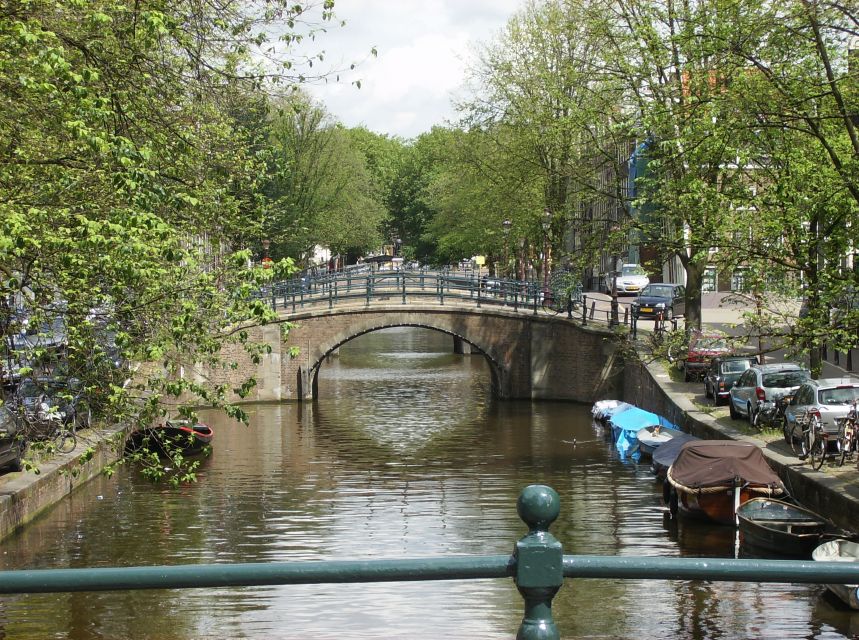
Then you head toward Rembrandtsquare on the way to the Amstel River and the Seven Bridges area. This canal section is a highlight for a reason. Amsterdam’s “river intersections” can look simple on a map, but on foot you feel how the waterways shape movement and viewpoints.
The Seven Bridges area tends to be the part of the walk where you slow down naturally. You’ll see how the city frames water with stone, how traffic of people and boats used to and still does matter, and how perspective changes as you cross from one side of the Amstel to the other.
Spui, Mansions With Late-Century Ornaments, and Then Begijnhof
Next comes the transition to the Spui area. On the way, you’ll pass mansions with large late-century ornaments. This is another “pay attention” segment. Those details are often what make an Amsterdam street feel theatrical. With a guide’s explanation, you start noticing which elements are purely decorative and which ones signal wealth, craft, and the period’s style.
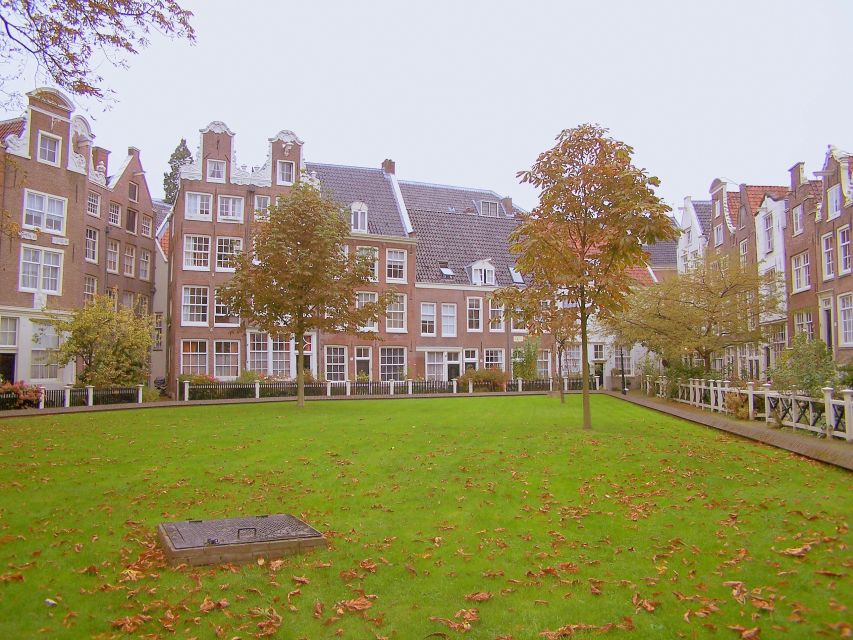
Then the walk takes you to the Begijnhof courtyard. Begijnhof is a calmer, enclosed feeling in the middle of a city that can be loud and crowded elsewhere. Being there on a guided schedule helps because you understand what you’re looking at beyond the courtyard itself.
Civic Guards Gallery With Original Paintings: Art Meets Local Power
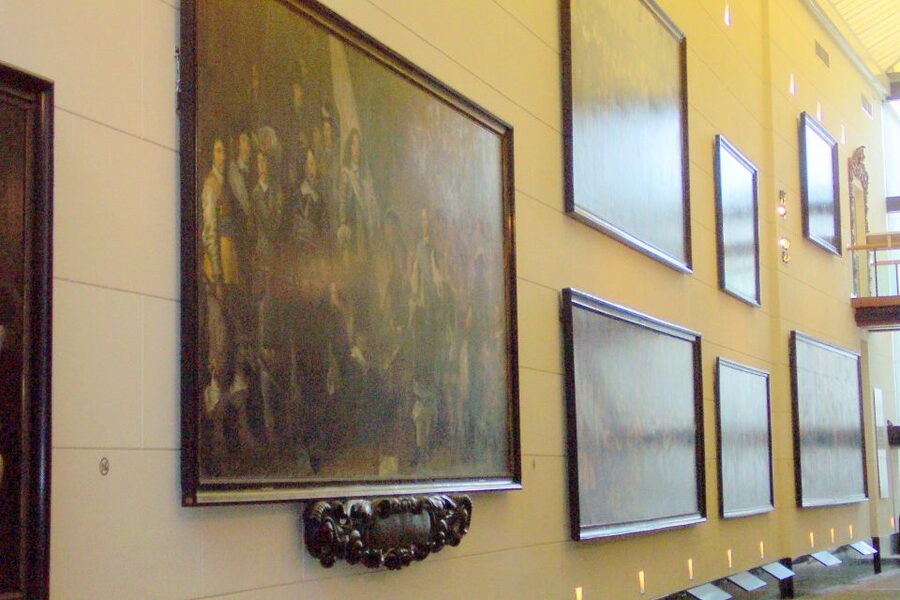
Near Begijnhof, you’ll visit the Civic Guards Gallery with its original paintings. This is a standout if you like art but also want the story behind it.
Why it works on a walking tour:
- It connects visual culture to civic life.
- It gives you context for who had influence in the city and how it was displayed.
- It’s close enough to the Begijnhof stop that you don’t feel like you’re burning time traveling across town.
Even if paintings are not your main reason for coming to Amsterdam, this stop can make the day feel more grounded. Amsterdam has plenty of museums you can choose later. This one functions like a local-scale “why it mattered” moment, rather than a big ticket, all-day commitment.
Break at Rembrandtsquare or Amstelveld: Use It Wisely
The tour includes a break at either Rembrandtsquare or Amstelveld. Since food and drinks are not included, use this time practically.
I suggest you do two things during the break:
- Reset your legs and posture. You’ve got a bit more walking after this, and the tour requires real mobility.
- Scan your surroundings before you sit. Remind yourself where you are and what you just learned. That turns a break from downtime into part of the sightseeing.
Squares in Amsterdam are excellent for this because you can see how streets feed into a wider space. You get context without needing extra explanation.
Pickup in Central Amsterdam and a Truly Private Pace
One of the easiest parts to like is that pickup is included. You can meet the guide at any hotel, railway station, or any other agreed-upon location in central Amsterdam.
That is a real convenience, especially if you’re arriving from another city, taking trains, or staying in a neighborhood where getting to the “official” meeting point would mean extra hassle.
Because it’s private, the guide can also adjust the pace to your group’s comfort. One theme you’ll appreciate is that private tours are less rigid. If you already know parts of Amsterdam, the guide can often shift emphasis to the things you don’t.
What You Should Wear, And How Much Walking It Really Means
This is a walking tour that requires stamina. You need to be able to walk for at least 45 minutes without sitting down, and it is not suitable for people with mobility impairments.
So plan like this:
- Wear comfortable shoes with grip. Amsterdam streets can be slick.
- Bring a layer. Weather changes quickly.
- If you’re traveling with someone who needs frequent rest breaks, this might feel too tight.
The good side of the walking requirement is that the time is efficient. In 2.5 hours, you get a lot of Amsterdam texture: historic facades, civic squares, canal viewpoints, and courtyards.
Who This Tour Is For, and Who Might Skip It
This tour is a strong match if you:
- want a historic walk that focuses on what buildings and squares mean,
- enjoy architecture and small details like gable stones,
- like art-related stops such as the Civic Guards Gallery,
- and prefer a private guide who can tailor questions to your interests.
You might skip it if:
- you struggle with sustained walking,
- you know you will not enjoy walking through the Red Light District area at all,
- or you only want quick photo stops and do not care much about context.
Should You Book This Tour?
I’d book it if you want Amsterdam to feel readable. The route is compact but thoughtful, and it uses key neighborhoods and landmarks to teach you how the city is put together. The best part is the mix: architectural details, square landmarks, canal framing by the Amstel, and a calm courtyard break at Begijnhof with the Civic Guards Gallery nearby.
If your trip includes only one guided walk, this is one of the better choices for seeing both the famous sights and the in-between details that most people miss. Just be honest with yourself about the walking time. If you can handle at least 45 minutes on your feet, you’ll get a lot out of it.
FAQ
Where does the tour start?
The tour starts at the Victoria Hotel opposite Central station.
How long is the walking tour?
It lasts 2.5 hours.
What is the price?
It costs $283 per group, up to 4 people.
Is this tour private?
Yes, it is a private group tour.
Is pickup included?
Yes. Pickup is included from any hotel, railway station, or any other agreed-upon location in central Amsterdam.
What languages are available?
The live tour guide is available in Dutch and English.
Is food or drinks included?
No. Food and drinks are not included.
How much walking is required?
You need to be able to walk for at least 45 minutes without sitting down.
Is it wheelchair accessible?
No. It is not suitable for people with mobility impairments.
How does cancellation work?
You can cancel up to 24 hours in advance for a full refund.
Amsterdam on Foot






More Tours in Amsterdam




More Tour Reviews in Amsterdam






Newly reviewed around Amsterdam





Walking Tours, side by side.
 ★ 5.0Anne Frank’s Story – Guided Walking Tour through AmsterdamFrom $3911,619 reviews
 ★ 4.8Life of Anne Frank and World War II Walking TourFrom $3710,467 reviews
 ★ 5.0Absolutely Amsterdam – the Essential Introductory Walking TourFrom $53,629 reviews
 ★ 4.8Anne Frank Guided Small Group Walking TourFrom $282,722 reviews
 ★ 4.9Anne Frank Walking Tour – Guided in EN/DE/IT/ESFrom $282,676 reviews
 ★ 4.9Guided Cultural Walking TourFrom $292,384 reviews
 ★ 4.2Guided Ganja Walking Tour of Coffee ShopsFrom $272,092 reviews
 ★ 5.0Anne Frank Walking Tour Amsterdam Including Jewish Cultural QuarterFrom $751,879 reviews
More ways to plan this visit