
REVIEW · WALKING TOURS
5 hrs Golden Age Amsterdam Private Walking Tour With Local Guide
Five hours, and Amsterdam clicks. This private walking tour uses local storytelling to connect the big-name sights with the canals, hidden courtyards, and surprising history in between.
I especially like the range of places you cover in one go, from Centraal Station and the St. Nicholas Basilica to Begijnhof, De Wallen, and Dam Square. And I really liked how the guide, Aleksandar (Aleks), tailors the pace and explanations, even for families, so everyone actually stays with you.
The main thing to plan for is time, and the fact that several major interiors have extra ticket costs. If you want to go into the Anne Frank House or the Royal Palace, you’ll need to handle those separately.
Key highlights worth knowing before you go
- Private group up to 4 means more questions and a calmer pace.
- Aleksandar (Aleks) brings strong history plus practical tips, and he adjusts how he explains things for different ages.
- Golden Age highlights plus real-life Amsterdam: canals, guild buildings, secret churches, and the De Wallen area.
- Most stops are outside or free to view, so you spend money where it matters, not everywhere.
- Anne Frank House requires advance online booking, so timing is on you.
- A loop that ends back near Amsterdam Centraal keeps logistics simple.
Amsterdam at street level, a few more routes
Why this Golden Age tour feels different than a checklist
I like tours that help you understand the city, not just photograph it. This one does that by stitching together Amsterdam’s timeline: medieval defenses, Dutch commerce, and later layers of religion, immigration, and politics. You get a guided path that turns landmarks into clues.
With a max of four people, you are not stuck in a rope-line rhythm. You can ask why something is shaped the way it is, why a street bends, or how a building like Het Kleinste Huis survived so long. That private feel also makes it easier to take photos when the light is right.
The guide matters. In the feedback I saw, Aleks came up again and again for being friendly, patient, and quick to answer questions. One family even said the explanations worked for kids and adults at the same time, and that he adjusts his style depending on who is in front of him. That is a big deal on a dense walking tour.
Start at Amsterdam Centraal: poles, power, and quick orientation
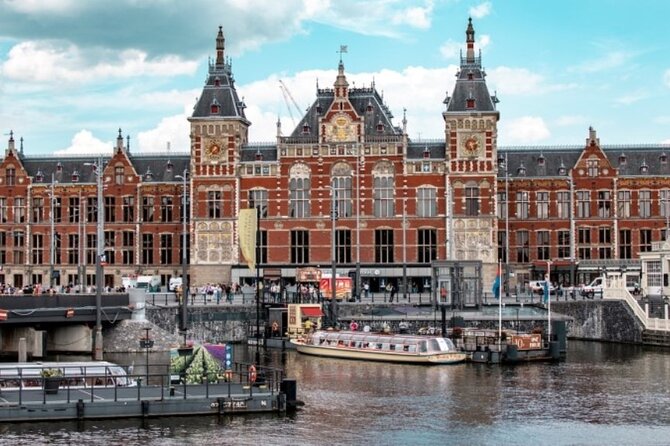
You begin at Amsterdam Centraal, right by the station building. This is not a random starting point. It is where the city’s 19th-century comeback energy shows up, including the fact that the station sits on 6,059 wooden poles.
From there, you get a fast orientation to how Amsterdam is laid out. You learn where the city’s main lines run, how the waterways connect, and what it means when a guide points out bridges like the city’s built-in shortcuts.
Why this stop helps you: Centraal is a mental anchor. Once you understand where you are relative to the core sights, the rest of the afternoon becomes easier to navigate on your own afterward.
St. Nicholas Basilica: late-19th-century Amsterdam’s big Catholic statement
Next comes St. Nicholas Basilica, described as the biggest Catholic temple in the Netherlands, dating to the second half of the 19th century. Even if you are not into church architecture, it is a useful contrast point in Amsterdam. The city is famous for Protestant history, yet Catholic power and presence came back with a strong public face.
You usually get about 15 minutes here, and the goal is not a long interior worship visit. It is more like a guided snapshot so you understand why Amsterdam’s religious history is not one note.
Small drawback: if you were hoping for deep time inside the building, this is likely to feel quick. But on a 5-hour walk, quick stops are the tradeoff for covering a lot of ground.
Worth comparing with this Amsterdam choice:
- Amsterdam: 75 Minute City Canal Cruise with Audio Guide★ 4.4 · 17,501 reviews
- Anne Frank’s Story – Guided Walking Tour through Amsterdam★ 5.0 · 11,619 reviews
- Amsterdam: Johan Cruijff ArenA Tour with Optional Guide★ 4.6 · 8,954 reviews
- Amsterdam: Royal Palace Entry Ticket and Audio Guide★ 4.6 · 6,475 reviews
The Weeping Tower and the medieval wall story
Then you hit the Weeping Tower area, tied to the medieval wall around Amsterdam. The guide also connects this spot to Henry Hudson’s journey toward Northern America. This is the kind of story that turns a wall remnant into a turning point.
Expect about 10 minutes for this. You are mostly learning the why behind the location, not just looking at stone. If you like cause-and-effect history, this is one of the moments that makes the tour feel like a guided lesson.
Het Kleinste Huis van Amsterdam and the canal-meaning lesson
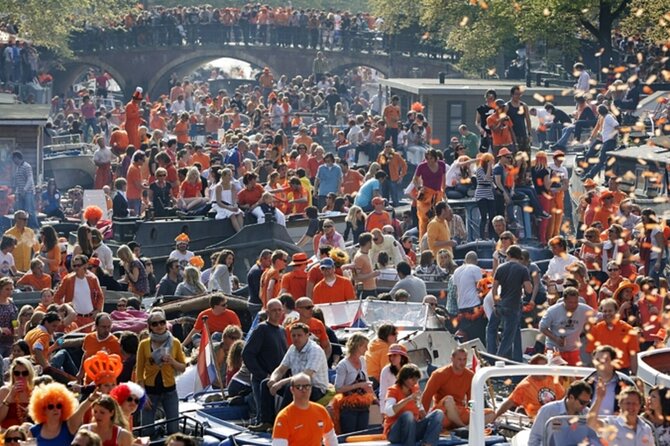
Het Kleinste Huis van Amsterdam is exactly what it sounds like: the smallest house in Amsterdam by canal Singel. Here, the tour gets especially fun because it links tiny scale to big-city systems.
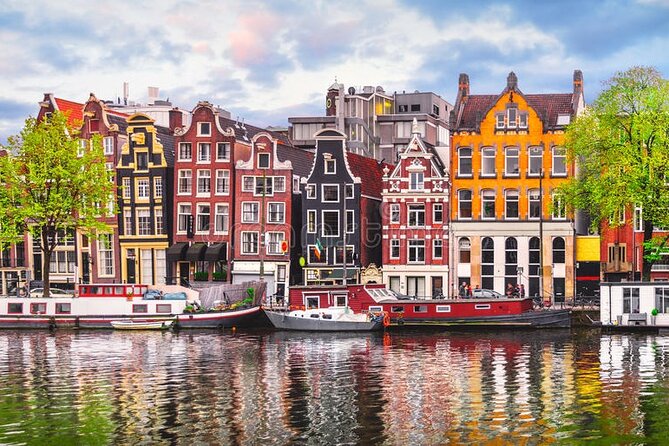
You will hear about the meaning of gracht(en) (the canals), their history, their purpose, and even maintenance. That canal angle is one of the most practical parts of the tour, because canals are not decoration here. They are infrastructure.
Time is about 20 minutes, which feels right. You also get trivia about bridges plus the reasons some houses look narrow, tall, and slightly leaning. If you have ever wondered how Amsterdam buildings handle the weight and water table, this is the kind of stop that helps you stop guessing.
Het Waag: guild HQ and the old gate role
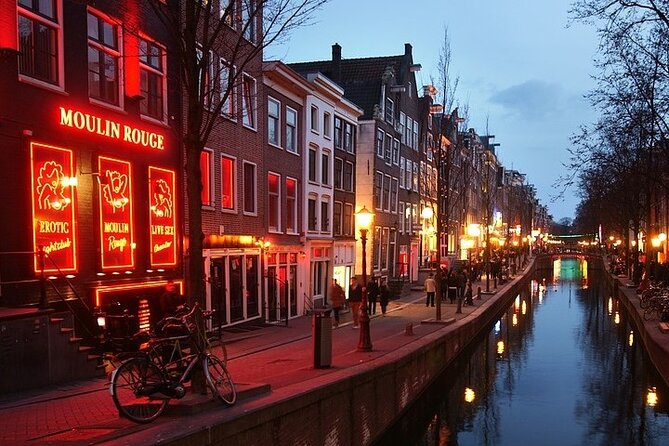
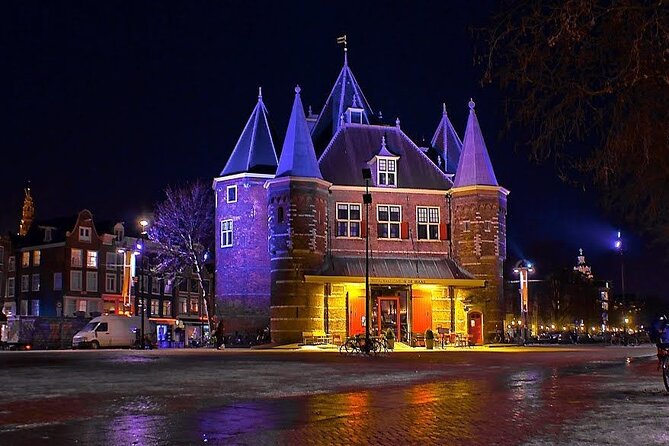
At Het Waag, the guide frames it as the City’s weigh-building and customs-style facility, tied to guilds. The building dates to the beginning of the 15th century and is also connected to the fact that this area was once part of a city-gate system.
You get roughly 15 minutes. Again, it is not an in-depth museum visit. The value is in context: how commerce worked, who benefited, and why buildings like this show up near major routes.
Practical tip for your day: take a minute here to look around beyond the doorway. The surrounding streets and canal edges help the story make sense when you keep walking.
Ons’ Lieve Heer op Solder: secret church time, but tickets cost extra
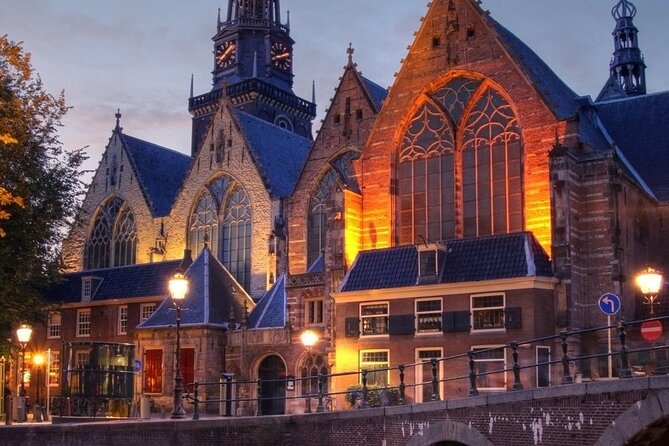
This is one of the most talked-about stops on Amsterdam tours, and this one includes it as a short stop of about 5 minutes. The Ons’ Lieve Heer op Solder is described as Amsterdam’s most famous secret church, restored and now operating as a museum.
Important: admission for this museum is not included. You will decide on the spot whether to enter or just take in the outside briefing.
If you love unusual religious history, plan your energy for it. If you are tired, you may prefer to focus on the next parts that match your interests more closely.
Fo Guang Shan: a Chinese temple in the heart of Amsterdam
In Chinatown, you visit Fo Guang Shan, a Buddhist (Chinese) traditional temple. The tour notes it is the second biggest in Europe of its kind.
This stop is a reminder that Amsterdam’s story is not only Golden Age merchant wealth and Protestant politics. It also includes later waves of immigration and modern religious life.
The stop is around 10 minutes, more of a guided orientation than an extended visit. If you want to go inside, you can, but the tour timing is designed to keep momentum.
De Wallen: a short, guided reality check on prostitution policy
Next comes the Red Light District, De Wallen. The tour gives you a short break from walking, roughly 30 minutes with moderation about prostitution and drug policy in the Netherlands. It includes stories about the history of prostitution, how it looks today, plus a yes-and-no style approach to light drugs and policy.
This is handled as a careful walk, not a shock show. The guide also offers friendly recommendations about how to enjoy the area responsibly without breaking the law.
My advice: treat this stop like a cultural lesson, not like a nightlife plan. Keep your curiosity grounded. That is usually where the best experience happens, and where it stays respectful.
Dam Square and the surrounding power map
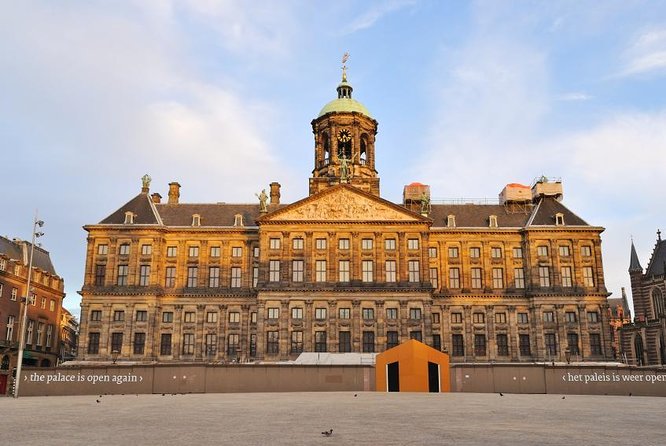
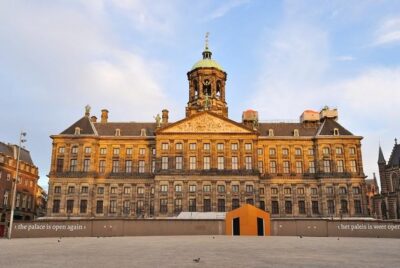
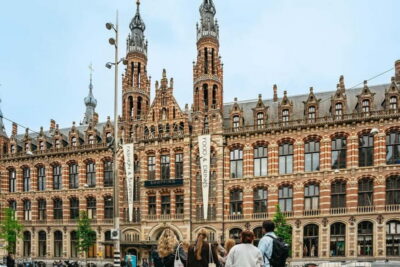
Dam Square is a great anchor. It is described as the oldest central square tied to Amsterdam’s birthplace, and the tour uses it to point out key buildings around it, including the Royal Palace, New Church, the National Monument, Museum Madame Tussaud, Magna Plaza, and Hotel Krasnopolski.
You get about 10 minutes here. The practical value is that you learn how to read the square as a map. Once you know what is where, you can return later and explore at your own pace without feeling lost.
Royal Palace and Nieuwe Kerk: political center, but plan for extra tickets
The tour then moves to the Royal Palace Amsterdam, formerly City Hall from the mid-17th century, and connected to the Dutch Royal Family residence history. The building is described as being built on 13,659 wooden poles.
This stop is about 15 minutes, and admission is not included. If you want to go in, you will pay separately.
After that, you visit Nieuwe Kerk, with its roots in the 15th century and continued use for royal ceremonies. Admission is also not included, and you get about 15 minutes.
This pair matters because it shows how the city’s merchant-era wealth turned into formal authority. You are watching Amsterdam’s power story evolve in physical form.
National Monument: the 22-meter WWII memory marker
The National Monument is next, described as a national remembrance. It is a 22-meter-high stand from 1956 commemorating casualties of World War II and subsequent armed conflicts.
You get around 15 minutes. This is one of the few stops where the tone naturally shifts toward reflection. It also helps balance the day’s more curious stops with something serious and human.
Begijnhof: calm, semi-secret devotion, and the feel of old Amsterdam
Begijnhof is where the city slows down. It is described as a hidden memorial area dedicated to Beguines, a semi-closed order similar to nuns. The stop also includes mention of another secret Catholic church and the oldest wooden house in Amsterdam.
You also get the English Church reference, plus legend and storytelling about sister Cornelia Arens and a Miracle of Amsterdam from 1345.
Expect about 20 minutes. This is one of those places where you will want to stop walking and just look. The courtyard feeling is part of the lesson, not a bonus.
The old center feel: coffee shops, gables, and all the contradictions
This tour does pass through the “old center” atmosphere, including mention of stone gables, museums, restaurants, theaters, and the general sense of Amsterdam contradictions in one place.
There is a line in the data about entrance fees tied to adults and students. What you should take from that: some parts around the old center are not free, even when you are just wandering nearby.
If you are budget-aware, use the guide’s advice on where to spend time and where to simply look from the street.
Munt Tower and the coin-mint gate story
Then you reach Munt Tower (Munttoren), tied to the meeting point of the Amstel river and the canal Singel. The tour notes it served as one of the main gates into medieval Amsterdam, plus it was a coin minting site during the 17th century.
This is a short stop, about 5 minutes, focused on why the tower exists at all. Even a quick visit teaches you how Amsterdam’s economy and city walls overlapped.
Rembrandt Monument: The Night Watch in 3D
At the Rembrandt Monument, the tour includes trivia and points out a 3D exposure of Rembrandt’s masterpiece The Night Watch. It also shares interesting facts about Rembrandt van Rijn and his private life.
Time is about 15 minutes. This can be a nice reset in the middle of a long walking stretch. It also keeps the tour tied to Amsterdam’s art legacy, not just its street-level history.
Flower market area: practical souvenir and bulb timing
The tour mentions the biggest and most famous flower and garden accessories market in the city. It is a good stop for flower lovers, plus a chance to obtain tulip bulbs and other flower items.
This is one of the few moments where you can turn sightseeing into a real-world purchase. If you like plants and you travel with luggage planning in mind, this can work.
Quick reality check: bulb purchases still need packing care. But the upside is you are buying from the city’s best-known flower source area.
Sint Luciënsteeg and Burgerweeshuis: orphanage to stone-gable storytelling
Next comes Sint Luciënsteeg, tied to the Burgerweeshuis city orphanage from 1580. You also see stone tablets and descriptions of house identities across medieval ages, plus plenty of stone gables.
Expect about 15 minutes. This stop is valuable because it shifts the story from kings and guilds to ordinary lives. You get a human scale.
Anne Frank House: powerful, and booking is your job
Then you arrive at the Anne Frank House area. The guide frames it as learning about life in the secret shelter, suffering, and human solidarity, with details about Anne Frank and her diary translated in 57 world languages.
This stop includes a 15-minute time slot, but admission is not included. The data is very clear: tickets for Anne Frank House can be booked only online and at least 6 weeks in advance.
My practical advice: if Anne Frank House is a top priority for you, do not treat this as a casual stop. It is a commitment. If you cannot get tickets, you can still use the area visit to understand the context, but you will want to be ready for that adjustment.
Westerkerk: leaning tower, royal weddings, and the Rembrandt burial legend
Finally, you reach Westerkerk. It is described as the third oldest church from 1631, and it is known for its leaning tower. The tour notes it was built for Protestant believers and was the wedding place of former Dutch queen Beatrix.
It also mentions a Rembrandt van Rijn burial place claim nearby, with the important wording that it is never precisely proven.
Time is about 10 minutes, and admission is not included. This is more of a landmark orientation stop than a full interior visit.
Still, Westerkerk helps you connect earlier stops about religious life to the way Protestants built visible institutions in the city.
The Amstel and the bridge views: Blue Bridge and Skinny Bridge
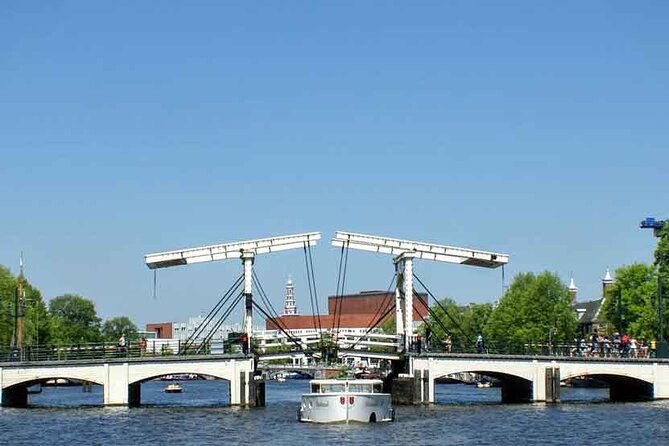
The tour then turns to the Amstel river view and the surrounding buildings with higher social and cultural meaning. You get a look toward some of the city’s most famous bridges, including the Blue Bridge and Skinny Bridge.
This is about 10 minutes, and it works as a reset. After heavier history and busy squares, a river view helps your brain breathe and makes the walking feel worth it.
Jodenbuurt (Plantage): Jewish Quarter and WWII memory
Your last thematic stop is Jodenbuurt, also called Plantage, the Jewish Quarter. The tour describes it as the area where many Jews lived from the end of the 16th century until World War II, and it points out important buildings for Amsterdam’s Jewish community through centuries, along with Holocaust monuments and memorials.
You get around 30 minutes here. This is the kind of stop where you should take your time with the meaning, not just the photos.
Even though the tour does not list every monument by name here, you still get enough guided context to make the streets feel purposeful rather than random.
Price and value: what $540.69 per group really buys
The tour price is $540.69 per group for up to 4 people, lasting about 5 hours. That is not cheap on a solo traveler budget, but private Amsterdam walking tours rarely are. Where the value shows up is in the guide time and the planning.
You are paying for:
- a tight route that hits a lot of key places in one loop,
- a guide who explains meaning behind buildings and canals, not just dates,
- and the ability to ask follow-up questions in a smaller group.
Then comes the big variable: entry tickets for some major sites are not included. Based on the listed extra fees, you may pay for things like the Royal Palace Amsterdam (€10.00), Westerkerk (€7.00), Our Lord in the Attic Museum Ons’ Lieve Heer op Solder (€16.50), Anne Frank House (€16.00), Nieuwe Kerk (€10.00), and Old Center (€13.50). If you choose to go into all those, the added cost can stack up fast.
That is why I think this tour is best for small groups who want guidance for the whole day, and who are realistic about ticketing. If your group wants to do some interiors and you can get tickets in advance for Anne Frank House, the private structure can actually save you time and stress.
Who this private tour suits best
This tour is a strong fit if you:
- are in Amsterdam for the first time and want fast orientation,
- like history stories connected to real streets and canals,
- travel in a small group and want less crowding,
- want both famous sights and a few less expected angles.
It may be less ideal if you:
- hate walking for several hours,
- only want free outdoor sights and are not interested in paying for key interiors,
- are not able to book Anne Frank House tickets early.
Also, it sounds like it is near public transportation and ends back at the starting area, which is helpful if you want flexibility afterward.
Should you book this 5-hour private Golden Age tour?
I would book it if your goal is to understand Amsterdam quickly, not just stamp off photos. The mix of canal meaning, important civic buildings, religious history, and the candid but moderated De Wallen stop gives you a fuller picture than a standard “top 10” route.
Book with confidence if your group can handle the extra tickets you care about, especially Anne Frank House. If you cannot book Anne Frank House ahead of time, you can still enjoy the walk, but I would not promise the same impact you would get with that interior.
If you want a private guide day that helps you feel oriented and informed by the end of it, this one looks like a very solid bet.
FAQ
How long is the Golden Age Amsterdam private walking tour?
It runs for about 5 hours.
What is the group size for this tour?
The maximum group size is 4 travelers.
Where does the tour start, and does it end nearby?
It starts at Amsterdam Centraal railway station, Stationsplein, 1012 AB Amsterdam. It ends back at the meeting point.
Are any entrances included?
Some sights are listed as free to enter, while others are not included, including Royal Palace Amsterdam, Westerkerk, Our Lord in the Attic Museum Ons’ Lieve Heer op Solder, Anne Frank House, Nieuwe Kerk, and Old Center.
Do I need to book the Anne Frank House in advance?
Yes. Tickets for the Anne Frank House can only be booked online, and they are noted as needing at least 6 weeks advance booking.
Is pickup offered?
Yes, pickup is offered.
How much does the tour cost?
The price is $540.69 per group (up to 4).
Amsterdam on Foot






More Tours in Amsterdam




More Tour Reviews in Amsterdam





Newly reviewed around Amsterdam



Walking Tours, side by side.
 ★ 5.0Anne Frank’s Story – Guided Walking Tour through AmsterdamFrom $3911,619 reviews
 ★ 4.8Life of Anne Frank and World War II Walking TourFrom $3710,467 reviews
 ★ 5.0Absolutely Amsterdam – the Essential Introductory Walking TourFrom $53,629 reviews
 ★ 4.8Anne Frank Guided Small Group Walking TourFrom $282,722 reviews
 ★ 4.9Anne Frank Walking Tour – Guided in EN/DE/IT/ESFrom $282,676 reviews
 ★ 4.9Guided Cultural Walking TourFrom $292,384 reviews
 ★ 4.2Guided Ganja Walking Tour of Coffee ShopsFrom $272,092 reviews
 ★ 5.0Anne Frank Walking Tour Amsterdam Including Jewish Cultural QuarterFrom $751,879 reviews
More ways to plan this visit