
REVIEW · RIJKSMUSEUM TOURS & TICKETS
Rijksmuseum & Amsterdam City Center Semi-Private Tour 12ppl Max
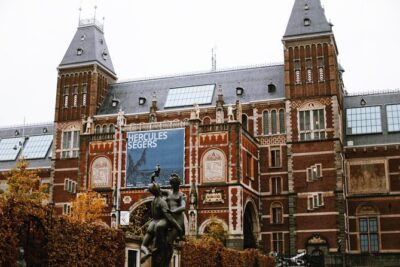
Amsterdam hits different at a human pace. This semi-private Rijksmuseum and city-center walk keeps the group small, so you get real time with your guide and not just a blur of faces. I especially liked the skip-the-line help for the Rijksmuseum and the max 8 group size, which makes questions feel normal. One thing to consider, though: this is still a long day on your feet, and lunch is on your own.
What you’re really buying is flow. You start at the Rijksmuseum, then shift into a landmark-packed walking route through the historic core, finishing by the canals at Papeneiland. I also appreciate the all-day museum ticket, because it means you can return after the walk if you want more time in your favorite rooms.
Key things I’d circle before you go
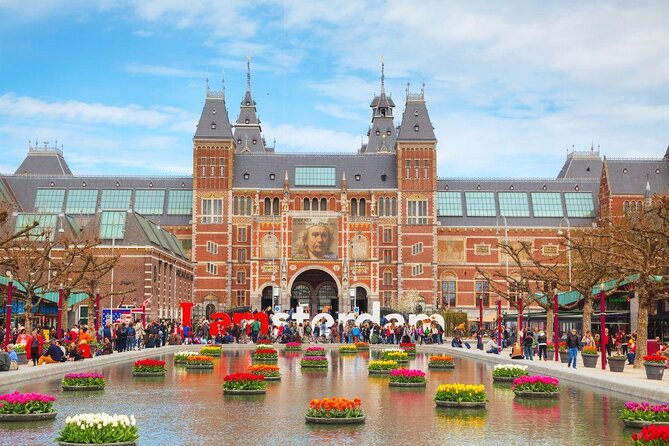
- Max 8 group size means more attention, and it is easier to track what your guide is pointing at.
- Prebooked Rijksmuseum entry helps you avoid the slow, shuffle-to-the-front feeling.
- Rijksmuseum + canal-core walking in one day saves you from planning two separate outings.
- Ticket valid all day lets you go back to the museum after the walk, not just during your scheduled time.
- A quick stop-by-stop city route covers medieval gates, churches, canal houses, and hofjes without feeling random.
More focused ways through the Rijksmuseum
Semi-private Rijksmuseum entry that actually changes your morning
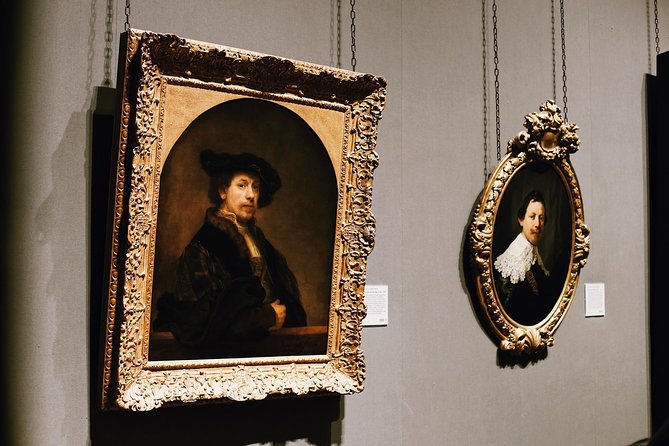
The day starts with a focused plan: get you into the Rijksmuseum fast, then use that time wisely. Your meeting is tied to the museum area, with the start at 10:00 am. From there, you work through the museum before the city energy fully kicks in.
I like this approach because the Rijksmuseum is big, and most first-timers get stuck doing one of two things: either they rush, or they wander with no idea what they are looking at. This tour aims to prevent both. With a small group and a guide, you get a guided path through Dutch art and culture, then you have time left to keep exploring on your own.
The price of $286.56 per person sounds steep until you break it down like a practical traveler. You are paying for a guide, a timed window, and museum admission, plus the second half of the day with a walking route that covers dozens of sights. If you were to try to piece this together yourself, you would end up spending time booking separately, then losing the benefit of someone mapping it into one efficient route. For many people, that time savings is the real value.
Security, bag limits, and how to keep the museum day smooth
The Rijksmuseum has security rules that can slow things down if you show up unprepared. You should plan on going in with only what you truly need. No large bags or suitcases are allowed inside, and you are expected to carry something handbag-sized or a small thin bag pack.
Also, some rooms have quiet or restricted rules for speaking. Your guide will flag those places before you enter, which helps you avoid that awkward moment where you realize you are talking too loudly.
Dress matters too. You may need appropriate attire for entry to certain sites on the walk, and Amsterdam weather can be unpredictable, so it is smart to wear layers you can adjust quickly.
A final timing note that I think matters: museum opening schedules can sometimes change. If the museum delay pushes more than 1 hour from the tour starting time, you are supposed to get an appropriate alternative. It is not something you can fully control, so I treat it like any big attraction in a major city, check expectations, and move on.
Inside the Rijksmuseum: Dutch masters, everyday details, and a 19th-century library
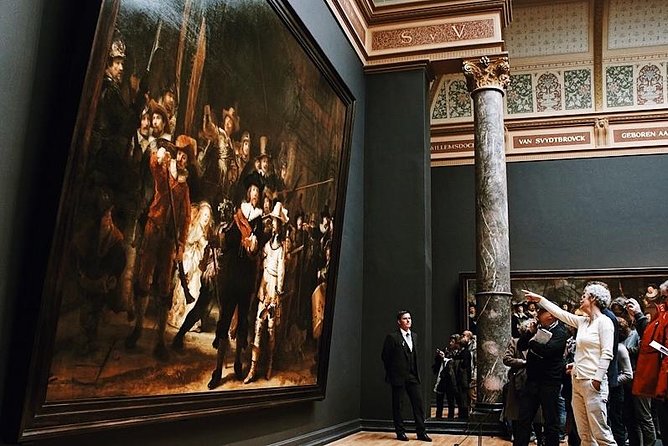
Your museum time is about 2 hours 30 minutes, which is long enough to see the big-name works, but not so long that you forget what you were there for. The guide’s job is to help you connect the dots across the collection, especially if Dutch history and Dutch names are new to you.
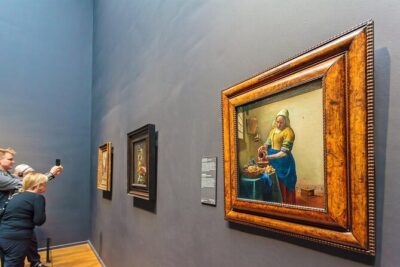
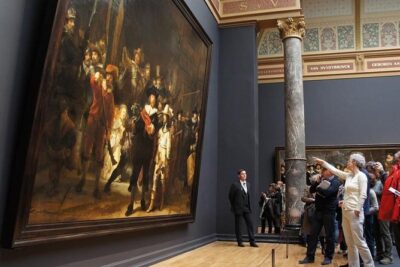
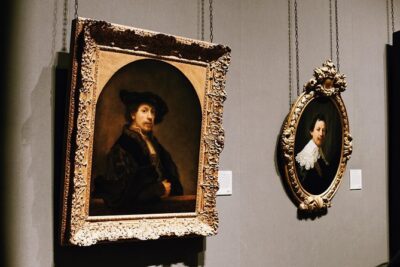
You start by getting your bearings in a museum that holds more than 8,000 objects. That number can feel like a trap. The tour helps by zeroing in on a set of highlights, including works by Rembrandt and Vermeer, plus cultural objects that show how people lived.
Here are a few examples of what this kind of guided focus tends to bring to life:
- You learn how Dutch culture shows up in painting and artifacts, not just in art style.
- You get pointed at the famous names like Rembrandt, then steered toward lesser-known objects that make the bigger story feel human.
- You see domestic life through works linked to everyday scenes, including Vermeer’s The Milkmaid.
- You hear about 17th-century dollhouses, which are not just cute, they are a window into status and family life.
- You get access to the 19th-century library, where Dutch and international literature are gathered in a way that changes how you think about the museum.
One of the best parts of this setup is that you leave with context. Instead of seeing isolated masterpieces, you have a framework for what you are looking at. That makes your future self-guided wandering inside the museum much more rewarding.
Worth comparing with this Amsterdam choice:
- Amsterdam: 75 Minute City Canal Cruise with Audio Guide★ 4.4 · 17,501 reviews
- Amsterdam: City Centre Canal Cruise★ 4.2 · 12,827 reviews
- Amsterdam: Smoke and Lounge City Boat Cruise★ 4.7 · 8,572 reviews
- Amsterdam: Guided Bike Tour City Centre in EN/DE/FR/ES★ 4.7 · 4,187 reviews
The smart part: lunch break plus a ticket that lets you come back
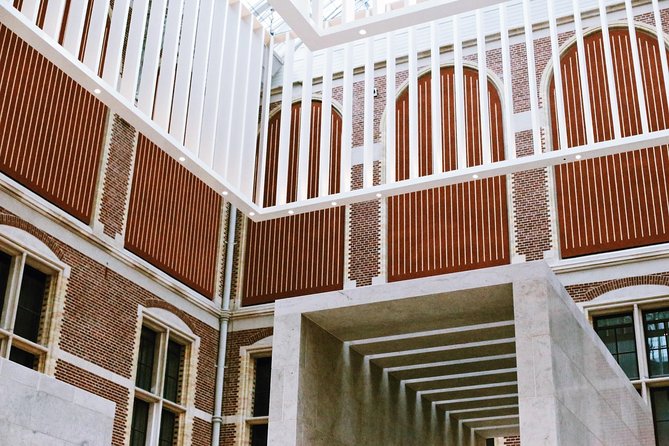
After the museum, you take a lunch break. Lunch is not included, so you will want to plan for a meal you can actually enjoy, not a rushed bite because you feel time pressure.
Then comes the key perk: your Rijksmuseum ticket is valid all day. When the walking tour finishes, you are free to return to the museum. That matters because 2.5 hours can feel like just the opener. If you fall into a favorite section, you can extend your time without paying for another entry or trying to squeeze everything into a single block.
If you do not want to go back, that is fine too. But I love having the option. It is one of those small choices that makes the whole day feel less locked-in.
Stop-by-stop Amsterdam walking route, starting with the big church story

After lunch, the walk shifts into city history mode. The route moves through the older parts of Amsterdam where you can still feel how the city grew.
You start with St. Nicholas Basilica, described as the city’s primary Roman Catholic church. The building dates to the end of the 19th century, at a time when Roman Catholics could practice publicly again after centuries of prohibition. It is the kind of context that makes architecture feel political, not just pretty.
From there you head toward the Schreierstoren, also called the Tower of Tears or Weeper’s Tower. The story tied to it is simple and human: it is connected to the belief that women wept there while husbands left to war or to fish. Even if you take it with a grain of doubt, the point is clear. This is a city where people attached emotion and memory to specific places.
Zeedijk, Nieuwmarkt, and the market square energy you do not want to miss
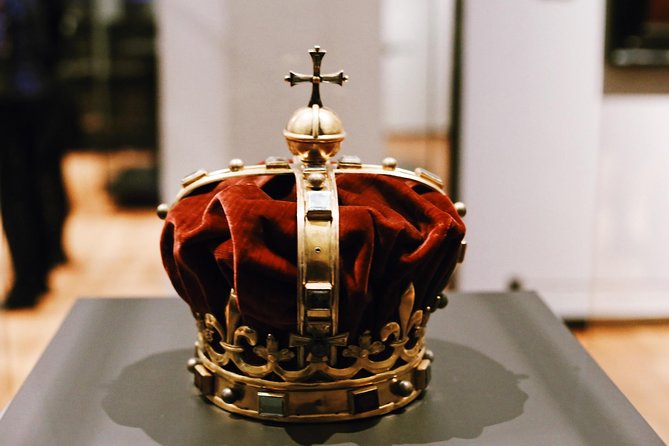
Next you move into Zeedijk, known as Amsterdam’s Chinatown area. The street is lined with Asian markets, restaurants, and shops, plus a Zeedijk Buddhist temple. This is one of those quick stops where you get a sense of modern Amsterdam layering on top of the historic core.
Then you arrive at Nieuwmarkt, a lively square with commerce and social life dating back to the 17th century. The location inside the old city gate made it practical for traders and shoppers.
Around Nieuwmarkt you also see De Waag, a 15th-century building that once functioned as part of the city defenses and later as a guildhall, museum, and firestation. Even when you are just passing by, it helps to know what the building used to do. Otherwise it is easy to miss how functional much of old Amsterdam architecture really is.
The Trippenhuis, Dutch East India Company court, and old money in narrow spaces

You get a run of architectural character stops that are brief but memorable.
First, the Trippenhuis and Klein Trippenhuis. The Trippenhuis is Amsterdam’s widest house, described as spanning an enormous 22 meters. Across from it, the Klein Trippenhuis is one of the narrowest houses in the city. That contrast is the real story. Amsterdam built tall and narrow in part due to land taxes, and these buildings make that economic idea visible.
Then you step into the courtyard of the Dutch East India Company headquarters. This is tied to the birthplace of the world’s first multinational corporation, at least in the framing of this stop. Again, even a short courtyard visit can change how you read the city, because you realize how trade power helped shape Amsterdam’s layout and wealth.
You also catch another narrow house called the Kleine Trippenhuis, mentioned again as part of this theme. It is not repeat for the sake of repeating. It is reinforcing a visual idea: Amsterdam learned to build vertically and efficiently.
Zuiderkerk, Stopera, and the religious-versus-public feel of the city
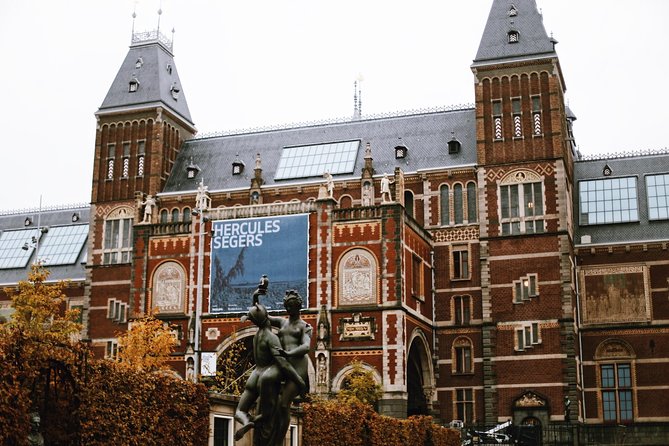
Your walk then shifts to major landmarks that show different eras and different ways of organizing civic life.
Zuiderkerk is Amsterdam’s first purpose-built Protestant church, designed by Hendrick de Keyser. Its tower is highlighted as a defining landmark. It is a good pause because you can look up and realize how much older churches shape the city silhouette.
Next comes the Stopera, a complex that houses both the city hall and the Dutch National Opera and Ballet. The construction took at least 60 years. That detail matters because it tells you this is not just one building, it is a long-term civic statement.
If you are the kind of person who loves architecture details, this part can feel like a quick mini-lesson. If you are not, it still gives you a sense of why Amsterdam looks the way it does.
Canal houses, Begijnhof hofjes, and Dam Square’s big-stage energy
At Huis Aan De Drie Grachten, you get a rare 17th-century canal house at a junction of three canals, with facades facing in three directions. This is one of those stops where you benefit from the guide pointing out what is easy to miss from street level.
Then you reach Begijnhof, one of the oldest hofjes, or almshouses, in Amsterdam. Hofjes matter because they show a different version of community life, centered around a courtyard and garden. In this case, it is tied to the Beguines, unmarried women living together under vows of chastity. Today it is also the site of two churches.
From there, you arrive at Dam Square, one of the tour’s well-known stops. The square includes the Royal Place, the New Church, and the National Monument. Dam Square can feel busy, but it is also one of the clearest “big city” moments in Amsterdam. It is where you get a sense of scale and official history.
Herengracht Golden Bend, Anne Frank House area, and what to look at even from outside
After Dam Square, you see the Herengracht “Golden Bend,” lined with some of the richest and most ornate canal mansions from the Dutch Golden Age. The stop is short, so the biggest win is knowing what to look for: the canal-side grandeur, the symmetry, and the way the neighborhood reads as wealth made visible.
You then pause outside the Anne Frank House area. Your tour framing connects it to WWII and her hiding period, with the Westerkerk mentioned nearby as the tallest church tower in Amsterdam. Note that this is an outside stop in this format, so you are not getting an entry ticket here, just a moment to locate the history in the city.
Another quick but fun stop follows: De Drie Hendricken at Bloemgracht 87 to 91. The guide helps you spot gable stones with carved allegories and trade emblems. This is where looking up pays off. If you rush through, you miss the point.
Karthuizerhof and Noorderkerk, then the Papeneiland finish by the canals
You wrap up the historical walk with more hofje character at Coöperatieve Vereniging Karthuizerhof. It is described as the largest hofje in Amsterdam, built for almshouses around a tranquil courtyard for the poor and elderly. Again, the courtyard concept is key. Amsterdam is famous for canals, but hofjes teach you the city also made room for quiet, inward spaces.
Noorderkerk comes next. It is a 17th-century Protestant church for the Jordaan district, with a cross-shaped floor plan tied to Reformation worship ideals. This stop is brief, but it is one of the more “plan-focused” landmarks on the walk, which makes it more interesting than it first looks.
Finally, you end at Papeneiland on Prinsengracht. It is described as one of the prettiest canal corners, and you are given the chance to visit Het Papeneiland, a brown café from 1642 said to serve some of the best apple pie in town. Even if you do not go in, finishing here gives you a calm landing after the city-core sprint.
How the group size, timing, and walking length affect your comfort
This tour is designed for people who like structure but still want freedom. The max group size is 8, which is the sweet spot between private and public. You will generally move faster than a huge group, but slower than a DIY plan where you keep checking your phone and losing your flow.
The duration is about 5 hours 30 minutes including the lunch break. That means you are looking at a full morning plus afternoon, with walking throughout. The pace is mostly guided, and the stops are short, but your legs do the heavy lifting.
If you have walking disabilities or you use a wheelchair, the tour is not recommended. Even if you can handle normal city walking, you should still consider cobblestones and long stretches between quick stops.
If weather is bad, the tour runs rain or shine. Pack accordingly. Waterproof shoes can be the difference between enjoying the walk and counting minutes until you can sit.
Should you book this Rijksmuseum plus Amsterdam city-center tour?
I think this is a strong pick if you want two things at once:
1) A structured way to see the Rijksmuseum without feeling lost in 8,000 objects.
2) A guided walk that strings Amsterdam highlights together logically, from churches and city gates to canal mansions and hofjes.
Book it if you like efficient days, love art but also want city context, and you are okay with a moderate amount of walking. I would skip it if you want a slow, unstructured “wander only” vacation, or if your mobility is limited.
One last thought: this tour is praised for guide quality and depth, including a standout name like Diana, known for pairing an in-depth Rijksmuseum experience with a long, landmark-filled walk. That combo is exactly what you want when you only have half a day to get your bearings in Amsterdam.
More Tours in Amsterdam






More Tour Reviews in Amsterdam


Stay with the Dutch Masters


Newly reviewed around Amsterdam



Rijksmuseum Tours & Tickets, side by side.
 ★ 4.7Rijksmuseum Entry TicketFrom $3125,535 reviews
 ★ 4.5City Canal Cruise and RijksmuseumFrom $452,129 reviews
 ★ 4.5Rijksmuseum Amsterdam Small-Group Tour with Private UpgradeFrom $901,547 reviews
 ★ 4.3Rijksmuseum Entry Ticket and Canal Cruise ComboFrom $451,276 reviews
 ★ 4.7Rijksmuseum Guided Tour and TicketFrom $78649 reviews
 ★ 5.0Rijksmuseum Amsterdam Exclusive Guided Tour w/ Reserved EntryFrom $108440 reviews
 ★ 5.0Van Gogh & Rijksmuseum w/ Reserved Entry Semi-Private 8ppl MaxFrom $288419 reviews
 ★ 5.0Van Gogh & Rijksmuseum w/ Reserved Entry Exclusive Guided TourFrom $288254 reviews
More ways to plan this visit