
REVIEW · RIJKSMUSEUM TOURS & TICKETS
Rijksmuseum Amsterdam Exclusive Guided Tour w/ Reserved Entry
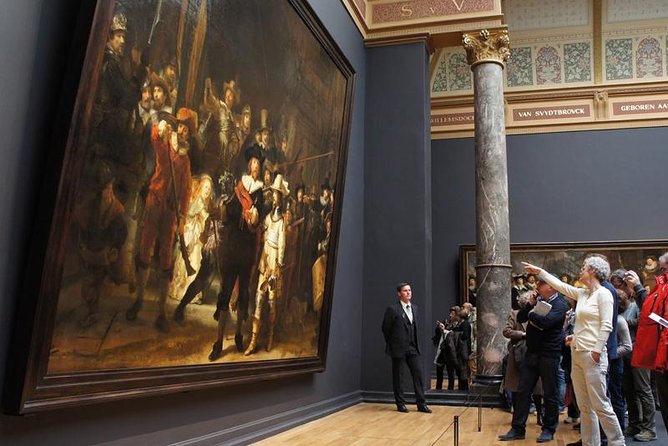
The Rijksmuseum feels huge, until someone points you right. This guided tour uses expert art-historian storytelling to connect Dutch art, history, and everyday life across the museum’s famous rooms. I really like how you get reserved entry plus a guide who helps you understand what you’re looking at, not just where to walk.
Two standout strengths: you cover key highlights like works tied to Rembrandt and Vermeer, and the tour also spotlights surprising details such as 17th-century dollhouses. One thing to consider is that the overall pace can be quick for deep browsing, so if you want to linger for 30-minute stops, you may want extra time on your own after the tour.
Key Things I’d Prioritize Before You Go
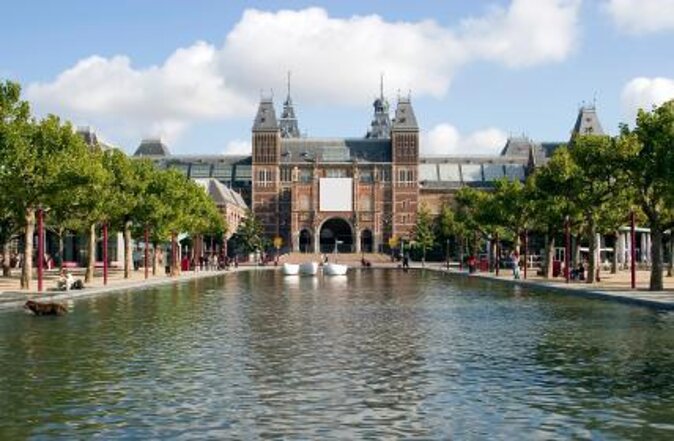
- Reserved entry with a guide that keeps you from wandering and guessing
- Small groups (up to 12 people) for a more personal feel inside a big museum
- Art + Dutch history context across thousands of objects, from paintings to artifacts
- Signature highlights that include Rembrandt, Vermeer, and themes tied to Van Gogh
- Practical museum rules covered upfront, like what bags are allowed through security
More focused ways through the Rijksmuseum
Why the Rijksmuseum Feels Easier With a Pro Guide
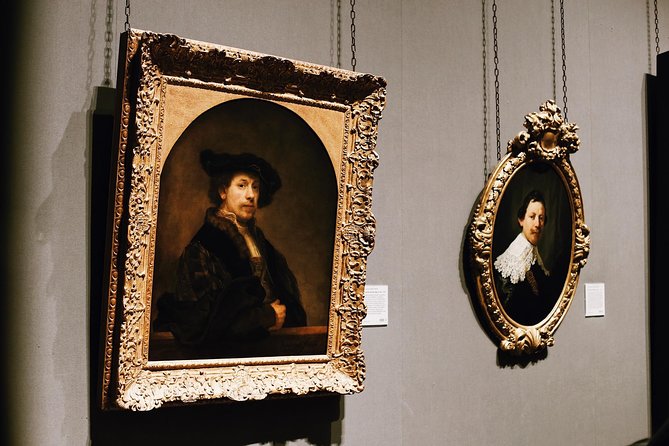
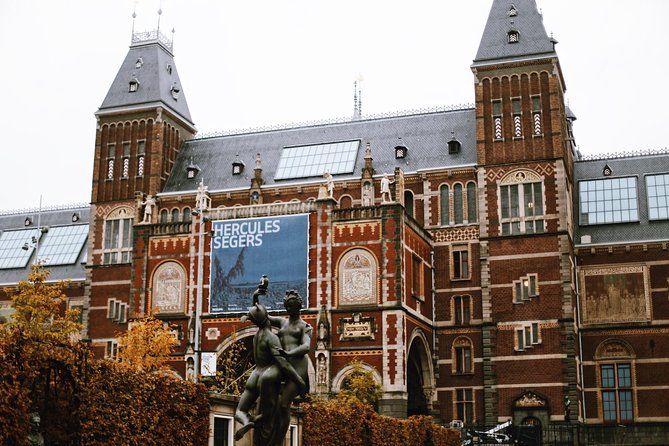
The Rijksmuseum is not a quick, casual museum. It’s big, and it’s dense with objects that are meaningful, but not always obvious at first glance. A guided visit helps you read the place, so you stop seeing it as endless rooms and start seeing it as a story about Dutch life and ambition over centuries.
What I like most is that the guide doesn’t just list famous names. In a good tour flow, you learn how to connect paintings to the world around them, including politics, trade, and what people wanted to own or display. That’s the difference between seeing art and actually getting something from it.
Also, the tone tends to be practical. You’ll get help with orientation, and by the end you might even know how to pronounce Rijksmuseum like a local. (Yes, that matters. Amsterdam loves a good attempt.)
The tour length is about 2 hours 30 minutes, so it’s built for a strong overview. That’s great if you’re short on time. If you have a whole day and love slow looking, plan to return later, because the guided portion is designed to hit the main beats.
Where the Tour Starts, and How You Get Inside the Museum
You meet at Cobra Café, Hobbemastraat 18, 1071 ZB Amsterdam. From there, you head over to the museum as a group. The end point is simply at the Rijksmuseum itself, so you can keep wandering afterward if you still have energy.
There’s no hotel pickup. You’ll make your own way to the meeting point, and a taxi or ride-share is usually the easiest move when you’re juggling time and walking. The area is near public transportation, which helps if you like buses and trams instead of more walking.
You also get a mobile ticket, which is handy in Amsterdam. Just make sure you have your phone ready and the right contact details submitted at booking, including a mobile number with country code. That’s the kind of “small” detail that prevents last-minute stress.
Inside the museum, security rules matter. You should expect bag screening. Large bags and suitcases aren’t allowed, only handbags or small thin bag packs. If you’re traveling with a tote that looks bigger than you think it is, consider swapping to something compact before you arrive.
The 2.5-Hour Rijksmuseum Itinerary, Stop by Stop
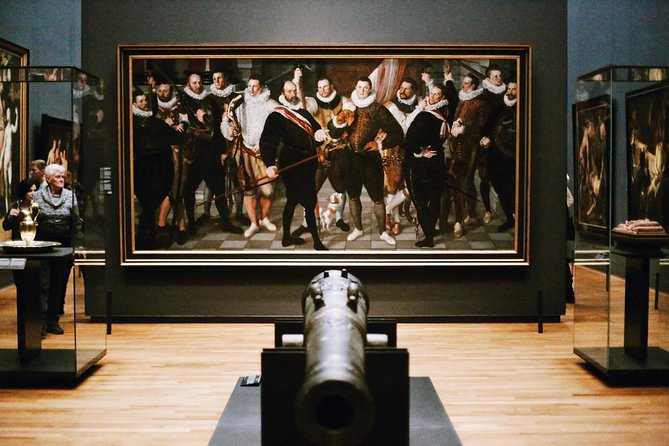
This tour is essentially one main stop, the Rijksmuseum, but it’s run like a guided pathway through big themes.
Worth comparing with this Amsterdam choice:
- Amsterdam: 75 Minute City Canal Cruise with Audio Guide★ 4.4 · 17,501 reviews
- Anne Frank’s Story – Guided Walking Tour through Amsterdam★ 5.0 · 11,619 reviews
- Amsterdam: Johan Cruijff ArenA Tour with Optional Guide★ 4.6 · 8,954 reviews
- Amsterdam: Royal Palace Entry Ticket and Audio Guide★ 4.6 · 6,475 reviews
Stop: Rijksmuseum and Dutch Art Across Centuries
You’ll start with a “big picture” orientation. Think of it like the museum’s map, but explained in human language. The guide walks you through a selection pulled from the museum’s display of about 8,000 objects, so you’re not trying to guess what matters most while your feet do the deciding.
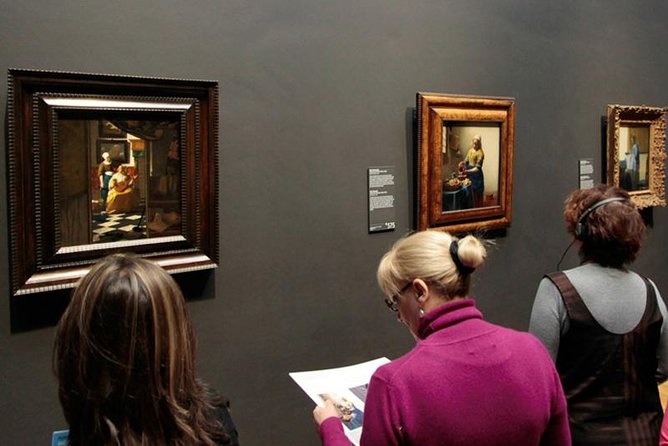
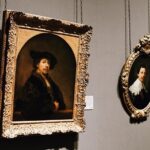
Expect a focus on artists you already recognize. You’ll see and discuss works connected to Rembrandt and Vermeer. You’ll also hear about themes that connect to Van Gogh and the wider Dutch art world, even though the museum’s emphasis is on earlier Dutch masters and historical context.
One of the best parts is that the tour doesn’t treat only the obvious masterpieces as worth your time. You’ll learn about lesser-known displays too, like 17th-century dollhouses. That kind of object works because it’s practical evidence of how people lived, what they valued, and how wealth and domestic life looked on the inside of a home.
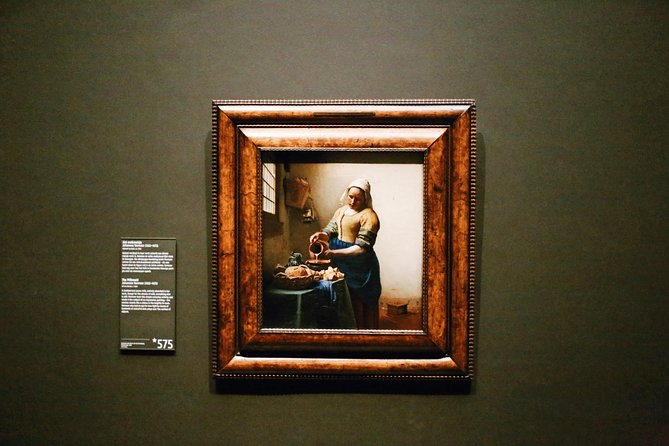
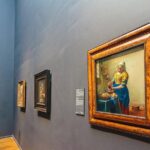
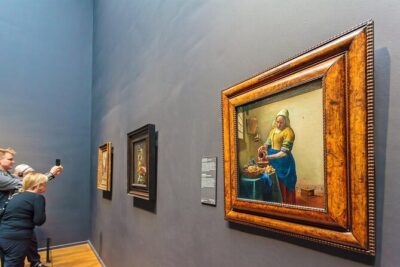
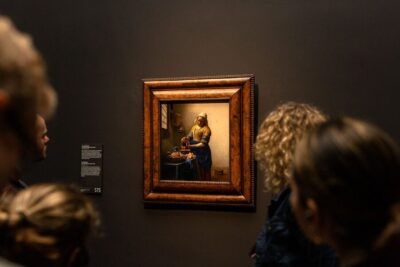
You’ll also hear about The Milkmaid by Vermeer and how it fits into portraits of domestic life, not just the painting itself. When you get that context, the work stops feeling like a title on a wall and starts reading like a snapshot of daily values.
Then there’s the 19th-century library. Even if you don’t read Dutch, it’s a powerful setting because it tells you the Rijksmuseum is not only collecting art, it’s collecting ideas. The guide uses it to connect culture, learning, and how museums become guardians of national identity.
If you’re the kind of person who worries you’ll miss important rooms, this itinerary helps you avoid that. You won’t cover every corner, but you’ll leave with a coherent view of what the collection is trying to do and where your interests might pull you next.
Noise rules in some rooms
One detail I appreciate is that the tour covers how quiet and restricted spaces work inside the museum. Some rooms restrict speaking. Your guide explains these rules before you enter the areas where the museum asks for extra silence. It keeps the whole group on track, and it avoids awkward interruptions.
What You’ll Learn From the Stories, Not Just the Art

The core value here is translation. Art is visual, but it’s also coded. A guide helps decode who commissioned works, what symbolism might mean, and how Dutch society shaped art tastes.
From the guide styles praised most in the tour feedback, you can expect a blend of art history and practical storytelling. People repeatedly highlight guides such as Cecilia, Victoria, Anna, Ewald, Hanneke, Paula, and Fleur as standouts. The common thread in those praises is clear communication and a guide who ties artwork to its cultural setting, not just facts.
Here are the kinds of learning moments that typically make a tour feel worth it:
- Meaning behind composition, not just naming the painter
- How objects connect across rooms, so you start seeing patterns
- Symbolism explained in plain language, especially in domestic and portrait subjects
- Historical timeline awareness, so the museum stops feeling like random masterpieces in random halls
In other words, you spend your time looking with purpose. That’s why a guided visit can feel more valuable than a self-guided route, even if you end up coming back later.
Private Tour vs Semi-Private: Choose Your Trade-Off
This is where your decision matters. The experience offers either a private format or a more budget-friendly semi-private option.
In the private version, the guide is exclusively for your group, and the tour is listed as wheelchair friendly. If mobility access is a priority, you’ll want the private option so those accessibility features apply.
In the semi-private option, the guide-exclusive part does not apply, and the wheelchair-friendly note does not apply either. That doesn’t automatically mean it’s impossible or unpleasant, but it does mean you should not count on the same support.
So how do you choose?
- Pick private if you want maximum interaction, a smoother pace for questions, and you care about wheelchair friendly status.
- Pick semi-private if you want the guided value at a lower cost and you’re comfortable sharing the guide’s attention.
Also, the tour allows up to 12 people per tour. That’s already a small scale compared with typical museum crowds. Still, even small groups move differently than solo exploring.
Timing and Pacing: What 2 Hours 30 Minutes Really Means
Two and a half hours is a sweet spot for first-time visits. You get enough time to see the key works and major themes, and you still have energy to continue afterward on your own.
The drawback is simple: you might not get unlimited time at one painting. If your vacation style is slow looking, you’ll probably want to do this tour early in your museum visit window. Then you can return later for the works that stuck.
The best moments happen when the guide helps you build fast “mental thumbnails.” You learn what to look for, how to interpret it, and then you can revisit with better eyes. Several praised guides were singled out for giving structure while still making space for specific interests, like focusing in-depth on a particular artist.
One extra perk that pops up in the guide feedback is practical help after the tour, like support in finding a restaurant for lunch. That’s not the main reason to book, but it’s a nice sign of service-minded guiding.
Price and Value: What You Actually Get for $108.85
At $108.85 per person, this is not a budget museum stroll. But it includes entrance fees and a guided museum tour for about 2.5 hours, plus reserved entry.
Here’s how I think about the value:
- You’re paying for time savings. In a museum this large, getting oriented quickly is worth real money. You avoid the “wander, regret, rush” cycle.
- You’re paying for interpretation. The guide effort is what turns famous rooms into meaningful ones. Without context, many objects become just décor.
- You’re paying for access efficiency. Reserved entry matters when you want a smoother arrival and fewer entry headaches.
- You’re paying for small-group quality. Up to 12 people is a realistic size for questions and close viewing.
If you love art and want more out of every room, the cost starts to feel reasonable fast. If you’re mostly there for a quick glance at the big names and you’re fine using a museum audio guide, you might feel it’s pricier than you want. But if you want structure and real meaning, this is priced like a proper guided experience, not like a ticket-only add-on.
Practical Museum Tips So You Enjoy It, Not Endure It
A great guide helps, but you’ll still want to manage the basics.
Bring a small bag. Security does not love large luggage. Stick to a handbag or a small thin pack.
Wear comfortable shoes. The Rijksmuseum is a lot of walking, even on an organized route. Moderate physical fitness is the stated expectation, so plan accordingly.
Expect a little friction from security. Even with reserved entry, security lines and museum rules can still create delays on some days. If you’re hoping for zero wait, that’s not always how big-city museums work.
Plan your lunch timing. The tour ends at the museum, so you can keep exploring or head out. Some guides have helped people find a place to eat, which is useful if you want to avoid hunting around hungry.
Know you might not speak in every room. A guide will tell you about quiet or restricted speaking areas. This keeps the tour respectful and keeps you from feeling like you did something wrong.
Should You Book This Rijksmuseum Tour?
I’d book it if you fit one of these scenarios:
- You’re visiting the Rijksmuseum on a short timeline and want a fast, organized overview.
- You want to understand Dutch art and history in a way that sticks.
- You prefer small groups and direct explanation, not a random museum shuffle.
- You want a guide who can connect the dots, including surprising objects like 17th-century dollhouses.
I might skip or reconsider if:
- You want to spend your whole day doing slow looking with no schedule pressure.
- You’re perfectly happy with a self-guided route and don’t care about context or symbolism.
If you’re on the fence, my advice is simple: do this guided tour early. Then use your remaining museum time for the works you personally care about. The guide gives you the map and the language, and you get to choose what to linger on next.
FAQ
How long is the Rijksmuseum guided tour?
The tour lasts about 2 hours 30 minutes.
Where do I meet the guide?
You meet at Cobra Café, Hobbemastraat 18, 1071 ZB Amsterdam, Netherlands.
Is admission included in the price?
Yes. Entrance fees are included.
What language is the tour offered in?
The tour is offered in English.
How big is the group?
A maximum of 12 people is permitted per tour.
Do I need hotel pickup?
No. Hotel pickup and drop-off are not included.
Is the tour wheelchair friendly?
Wheelchair friendly is listed, but it does not apply if you choose the SAVE! BOOK SEMI-PRIVATE option.
What is the cancellation window?
Free cancellation is available, and you can cancel up to 24 hours in advance for a full refund.
More Tours in Amsterdam






More Tour Reviews in Amsterdam






Stay with the Dutch Masters



Newly reviewed around Amsterdam





Rijksmuseum Tours & Tickets, side by side.
 ★ 4.7Rijksmuseum Entry TicketFrom $3125,535 reviews
 ★ 4.5City Canal Cruise and RijksmuseumFrom $452,129 reviews
 ★ 4.5Rijksmuseum Amsterdam Small-Group Tour with Private UpgradeFrom $901,547 reviews
 ★ 4.3Rijksmuseum Entry Ticket and Canal Cruise ComboFrom $451,276 reviews
 ★ 4.7Rijksmuseum Guided Tour and TicketFrom $78649 reviews
 ★ 5.0Van Gogh & Rijksmuseum w/ Reserved Entry Semi-Private 8ppl MaxFrom $288419 reviews
 ★ 5.0Van Gogh & Rijksmuseum w/ Reserved Entry Exclusive Guided TourFrom $288254 reviews
 ★ 4.5Rijksmuseum Amsterdam Semi-Private Guided TourFrom $66229 reviews
More ways to plan this visit