
REVIEW · RIJKSMUSEUM TOURS & TICKETS
Rijksmuseum & Amsterdam City Center – Exclusive Guided Tour
Five hours, a hundred years of Amsterdam. This exclusive tour pairs the Rijksmuseum with a walk through canal streets, so Dutch art and city history click together fast, guided with real personality, not just facts.
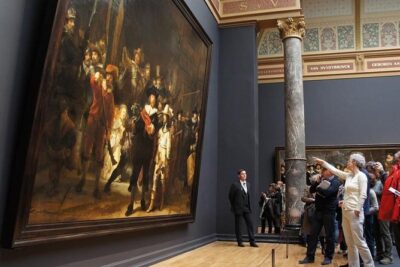
I especially like the way the museum block is organized around major works, including Rembrandt and Vermeer’s The Milkmaid, plus detail-heavy Dutch stories like 17th-century dollhouses and the museum’s library. Guides such as Jacopo, Josje, Giuseppina, Paola, and Victoria are known for keeping you oriented and making what you see feel connected.
The main thing to consider is how much you pack into one day. It’s a lot of walking and many stops are brief, you’ll need to manage cobblestones, and Rijksmuseum security rules mean no big bags inside.
Key Takeaways Before You Go
- Rijksmuseum first, then an on-foot city circuit so your museum learning pays off outside.
- A private setup for your group (confirm the exact option you book, since semi-private can change exclusivity).
- Art and Dutch history in the same storyline, from dollhouses to church buildings and canal architecture.
- Many “see it and move on” photo stops keep the pacing efficient, but they are not long visits.
- Practical museum rules matter: dress requirements for some sites, and strict bag limits for the Rijksmuseum.
- You end at a canal corner with atmosphere at Papeneiland, not in a parking lot.
More focused ways through the Rijksmuseum
How This 5.5-Hour Tour Brings Museum Art Into Real Streets
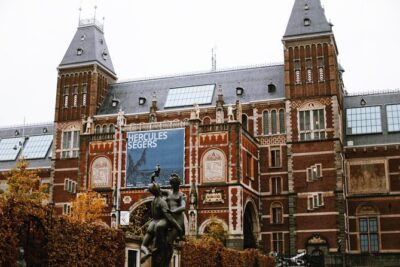
This tour works because it does not treat Amsterdam like two separate experiences, museum day and city day. It links them. You start at the Rijksmuseum and then you walk the historical center so the themes you hear inside, Dutch power, everyday life, religion, trade, and architecture, show up again on the street.
The schedule is designed for a tight, half-day rhythm. You get about 2.5 hours in the museum, then a guided walking route through landmarks and neighborhoods that help you understand where Amsterdam’s story turns. If you like seeing big highlights without planning a separate museum route and separate city route, this is a strong match.
And if you worry about being “art-ed out,” don’t. The museum focus is on recognizable masters and the details that make the Dutch Golden Age make sense, then you shift gears to bridges, canals, church towers, and canal mansions. It is a good balance between thinking and looking.
Meeting at Cobra Café, Then Getting Into the Rijksmuseum Flow
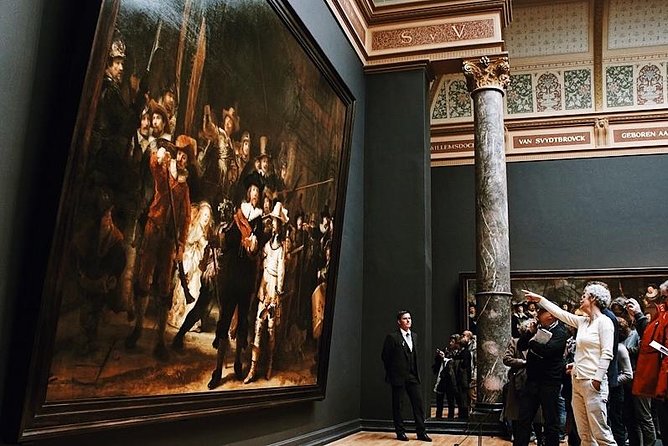
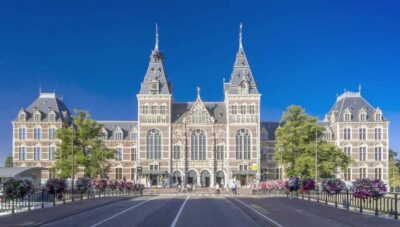
You meet at Cobra Café, Hobbemastraat 18, in Amsterdam. The tour starts at 10:00 am, and you’re done back near Papeneiland at Prinsengracht 2.
One practical benefit: the tour includes private transportation if necessary between locations. That helps when weather turns or if the walking route needs a quick repositioning. You still walk a fair amount, so it helps to plan for real shoe time, especially on cobblestones.
Also, you’ll want to be ready with a mobile phone number (with country code). That is required for confirmation and likely day-of coordination. And because the tour runs rain or shine, bring layers you can handle when the sky changes its mind.
Rijksmuseum: 2.5 Hours That Actually Focus on What Matters
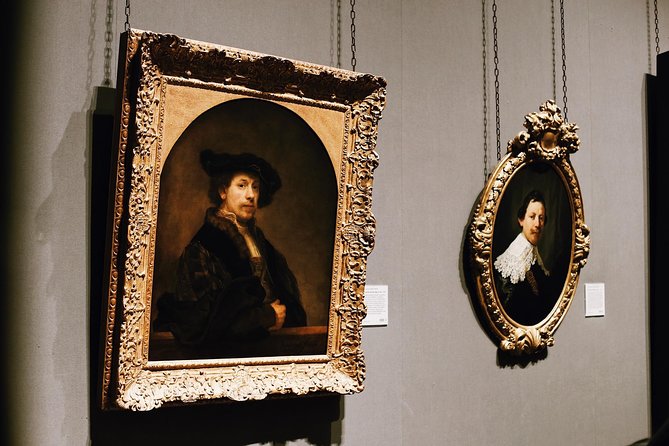
The museum portion is long enough to feel substantial, but short enough to keep you moving. You’re in for around 2 hours 30 minutes, and admission is included.
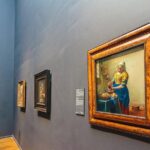
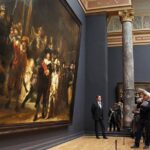
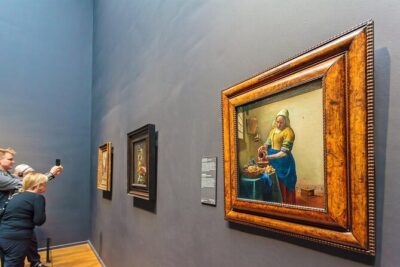
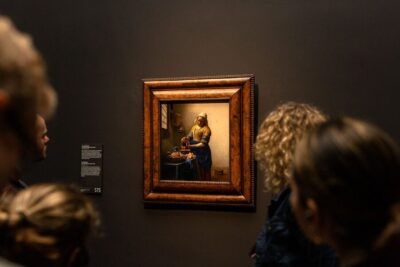
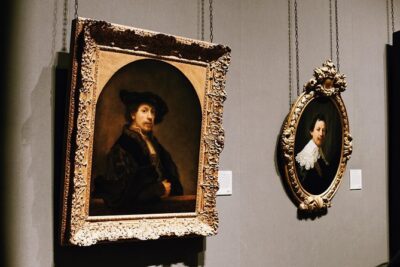
This is the part I like most when you’re short on time: the guide is not trying to cover the entire museum floor. Instead, you concentrate on major Dutch artists and the stories behind what you see. Expect time with works connected to Rembrandt and Vermeer, including The Milkmaid by Vermeer. You also get context that helps you look past the famous name and notice what the painting signals about daily life.
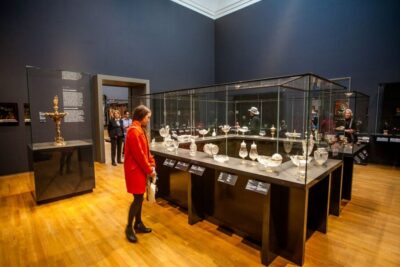
The Rijksmuseum is also where the tour pays off if you want more than surface art appreciation. You’ll hear about the museum’s deep collection, with more than 8,000 objects on display over the galleries. Even if you cannot see everything, the guide’s selection helps you understand the museum’s big themes.
A standout detail from the tour approach is how it connects famous names with lesser known windows into history. 17th-century dollhouses are a perfect example, they turn abstract “Dutch life in the 1600s” into something you can actually picture. And the museum’s 19th-century library is mentioned as part of the experience, which is a good reminder that Amsterdam’s culture was never just painting and canals.
Worth comparing with this Amsterdam choice:
- Amsterdam: 75 Minute City Canal Cruise with Audio Guide★ 4.4 · 17,501 reviews
- Anne Frank’s Story – Guided Walking Tour through Amsterdam★ 5.0 · 11,619 reviews
- Amsterdam: Johan Cruijff ArenA Tour with Optional Guide★ 4.6 · 8,954 reviews
- Amsterdam: Royal Palace Entry Ticket and Audio Guide★ 4.6 · 6,475 reviews
Museum rules you should plan around
Rijksmuseum security is strict. You’ll need to go light: no large bags or suitcases, and only handbags or small thin bag packs through security. That means if you travel with a day bag, fine, but if you have a big backpack, you may need to leave it somewhere.
One more thing people forget: some rooms have rules where speaking is restricted. Your guide will tell you before you enter quiet or restricted areas. It helps to treat the museum like a library, keep your voice down, and ask questions before or after.
If the Rijksmuseum is delayed
There’s a built-in contingency: if Rijksmuseum timing is delayed by more than 1 hour from the tour start time, the team will offer an appropriate alternative. That alternative comes without refunds or discounts, so the best strategy is to be on time and keep your plans flexible if opening timing shifts.
St. Nicholas Basilica and the Weeping Tower: Quick Stops With Strong Atmosphere
After lunch, your walking route starts moving through the medieval and religious layers of Amsterdam.
One early highlight is St. Nicholas Basilica. It’s Amsterdam’s primary Roman Catholic church, built at the end of the 19th century after Roman Catholics could again practice publicly. Expect a short history lesson plus a close look at how the building mixes different architectural styles and artistic movements.
Then you head toward the Schreierstoren, also called the Weeping Tower or Tower of Tears. The idea tied to this place is haunting in a very Amsterdam way: the tower is associated with the belief that women wept there for husbands leaving to fish or go to war. Whether you take the legend literally or not, it’s a strong narrative anchor for understanding Amsterdam’s past as a port city.
These are brief stops, around 10 minutes each, and that is the trade-off. You get story and orientation, but not long sits. If you want long museum-style time at every site, you may prefer a slower, single-neighborhood tour. If you want a compact “get oriented fast” day, this pacing is practical.
Zeedijk, Nieuwmarkt, and De Waag: Markets, Temples, and Old Gate Energy

Next you walk through Zeedijk, famous as the Chinatown area of Amsterdam. It’s not just one landmark, it’s a street feel: Asian markets, restaurants, shops, and a Buddhist temple. The tour also points out the Zeedijk Buddhist temple, described as the largest Chinese style Buddhist temple in Europe. Even if you do not go inside, the location tells a story about immigration, trade, and Amsterdam’s habit of mixing cultures in everyday spaces.
Then comes Nieuwmarkt, a lively square in the old city center that has served as a commerce and social hub since the 17th century. The key detail here is why it formed: it was just inside the old city gate, so traders and shoppers had a convenient place to meet and move goods.
During your time around Nieuwmarkt you’ll also see De Waag, a 15th-century non-religious building described as one of Amsterdam’s oldest remaining examples of its kind. It started as a city gate element and has served multiple roles over time, including guild hall, museum, and fire station.
A practical note about “not included” stops
Some stops along the route are marked with admission ticket not included in the itinerary detail. In practice, these are set up so you can still get the value from seeing exteriors or using the guide’s context. But if a specific building interests you for a full interior visit, you might want to plan a separate visit on your own time.
The Trippenhuis and Canal Mansions: Narrow Houses, Big Ambition
Your route keeps feeding you architecture clues.
You see the Trippenhuis and Klein Trippenhuis as quick photo stops. The tour notes that the Trippenhuis is Amsterdam’s widest home, spanning about 22 meters, while the Klein Trippenhuis is one of the narrowest houses, standing across from it. That contrast is a classic Amsterdam lesson: how city rules and economics shaped how people built.
Next you step into the story of trade power with the Oost-Indisch Huis, the courtyard connected to the Dutch East India Company. The tour describes it as the birthplace of the world’s first multinational corporation. Even a short look here helps you connect why Amsterdam merchants became such major players.
And you’ll also see Kleine Trippenhuis again as a reminder of how land taxes influenced tall, narrow architecture. It is the kind of detail you remember later when you walk another canal and notice the shape of the buildings.
Zuiderkerk, Begijnhof, and the Peaceful “Hofje” Courtyards
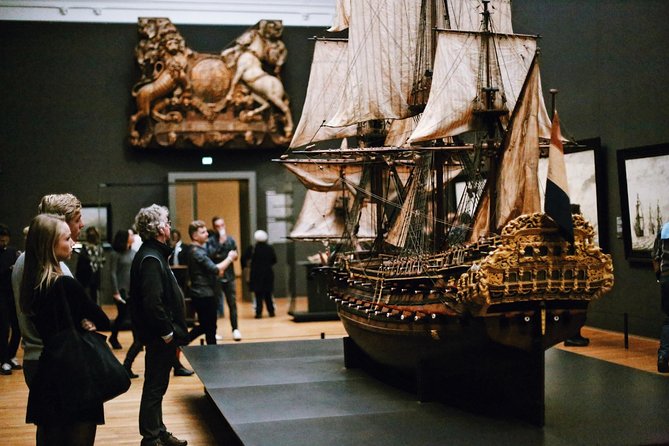
A nice pattern in this tour is that it alternates energy level. Big city squares and trade buildings are followed by quieter places.
You’ll spot Zuiderkerk, Amsterdam’s first purpose-built Protestant church, designed by Hendrick de Keyser. The guide highlights its tower as one of the city’s defining landmarks. Even if you only catch the view from outside, it gives you an immediate point of reference for Amsterdam’s skyline.
Then you reach Begijnhof, a secluded courtyard with hofjes, or almshouses. The tour explains it as a home area built around a quiet garden, historically for the Beguines, unmarried women living together under vows of chastity. Today it includes churches, but the feel is still private and calm, which makes it a good moment to slow your pace and take a breath after busy streets.
Because these stops are short, your role is not to try to absorb everything, it’s to let the guide’s story give you a mental map. Later, when you wander again on your own, you’ll recognize these places faster.
Dam Square, Herengracht Golden Bend, and Looking Toward Westerkerk
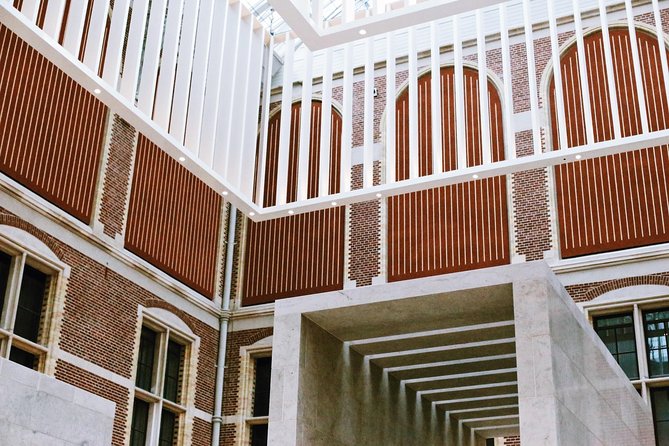
No Amsterdam highlights walk feels complete without Dam Square. You see the square’s well-known buildings and frequent events, including the Royal Place, New Church, and National Monument. It is also one of the easiest places to orient yourself because it sits at the center of the city’s main energy.
From there you’ll head to Herengracht, where the guide focuses on the “Golden Bend” and the canal mansions from the Dutch Golden Age. This is one of those moments where the tour’s value is less about one building and more about reading the skyline and canal line. Once you understand what “Golden Bend” means, you can spot the wealth signals more easily elsewhere.
Anne Frank House area, without the full commitment
You’ll pause outside the Anne Frank House, where she hid during WWII, and you’ll also see the Westerkerk, noted for its tall church tower. The tour’s mention here is clearly about context and orientation, not about going deep into the attraction itself. If that site is top priority for you, plan a separate visit with tickets, since this tour is built around a broad route.
Canal Gables, the Karthuizerhof Hofje, and Finishing at Papeneiland
The later part of the walk leans into Amsterdam’s details.
You’ll look up at De Drie Hendricken aan de Bloemgracht 87-91, where gable stones with allegories and trade emblems decorate ornate façades. You’ll also pass by Karthuizerhof, described as the largest hofje in Amsterdam, built for the city’s poor and elderly around a tranquil courtyard.
Then you reach Noorderkerk, a 17th-century Protestant church for the Jordaan district, noted for its unusual cross-shaped floor plan tied to Reformation worship ideals.
The tour ends at Papeneiland, said to be one of the prettiest canal corners, with the brown café from 1642 that the guide notes serves the best apple pie in town. Even if you are not hungry right at the end, finishing here feels like closing the day with a postcard you can actually walk into.
Price and Value: What $287.18 Buys You Here
At $287.18 per person, this is not a budget activity. So the question is, what are you getting for the money?
You’re paying for three things that add up:
- A guide-led museum experience at the Rijksmuseum, where ticketing is included and time is structured around major works and context, not just wandering.
- A guided city walk that covers many high-visibility landmarks plus less obvious history points like hofjes and trade-related buildings.
- Private setup for your group, which changes the feel. You get pacing that fits your day, plus the guide can handle questions without dealing with crowd chaos.
If you are traveling as a couple, family group, or small group of friends, private value is usually strongest. If you’re alone and you want the cheapest option, you might shop for a less structured walk. But if you want the “see it all in one plan” advantage, the price starts to make sense quickly, especially with entrance fees included and a long, story-focused museum block.
Also, booking earlier helps. The tour is typically booked around 63 days in advance on average. That tells me demand is real, and your odds of good timing improve if you lock it in sooner rather than later.
Walking Comfort and Day-of Tips That Save You Energy
This tour calls for moderate physical fitness and includes lots of stop-and-walk movement. Cobblestones are part of the deal. Here is what you should do to avoid wasting your day in blisters and stress:
- Wear shoes you trust on uneven stone. If you’ve ever slipped on a Dutch curb, you know why.
- Bring a small day bag that fits Rijksmuseum security. If you can’t carry it comfortably, you’ll feel it later.
- Dress appropriately for entry into some sites. The tour warns that certain locations have dress requirements.
- Expect some queues to appear at major attractions, even with access levels that promise less waiting. Security lines and check-ins are often the bottleneck.
- Keep your phone with you. You’re asked for a mobile number up front, and you may want it on hand for day-of updates.
- Plan your lunch as a real break. Lunch is own expense, and the itinerary builds it in so you can reset before the walking portion.
Should You Book This Exclusive Guided Tour?
You should book if you want a structured Amsterdam day that ties the Rijksmuseum to the city streets, and you like learning through guided storytelling rather than doing everything on your own. It’s especially good if your time is short, your group wants a single plan, or you care about Dutch Golden Age art and how it connects to daily life, trade, and architecture.
Skip it or swap it for something slower if you hate fast pacing, need long museum time at your own pace, or you want a deep ticketed visit at every major stop. This tour is built to cover a lot, so you get context and highlights, not a full-length sit-down at each attraction.
If you do book, my advice is simple: pack light for museum security, wear good walking shoes, and treat each stop like a clue. By the end, Amsterdam will feel less like separate sights and more like one connected story.
FAQ
What time and where does the tour meet?
The tour meets at Cobra Café, Hobbemastraat 18, 1071 ZB Amsterdam, and it starts at 10:00 am.
How long is the tour, and is lunch included?
It runs about 5.5 hours and includes a lunch break, but lunch itself is not included, so you pay for it separately.
Are entrance fees included?
Yes, all entrance fees are listed as included, though specific itinerary stops may note ticket information separately.
Is this tour private?
It is described as private, and only your group participates. The guide availability for exclusive use does not apply if you choose the SAVE! BOOK SEMI-PRIVATE option, so confirm the option you select.
How much walking is involved?
It includes a walking tour of Amsterdam’s city center after the museum. The tour requires moderate physical fitness.
Are there bag and dress rules for the museum and sites?
Yes. No large bags or suitcases are allowed inside the Rijksmuseum, only handbags or small thin bag packs through security. The tour also notes that appropriate dress is required for entry into some sites.
What happens if the Rijksmuseum is delayed or closed?
If the Rijksmuseum opening time is delayed more than 1 hour from the tour starting time, the team provides an appropriate alternative. No refunds or discounts are offered in those cases.
More Tours in Amsterdam






More Tour Reviews in Amsterdam


Stay with the Dutch Masters
Newly reviewed around Amsterdam



Rijksmuseum Tours & Tickets, side by side.
 ★ 4.7Rijksmuseum Entry TicketFrom $3125,535 reviews
 ★ 4.5City Canal Cruise and RijksmuseumFrom $452,129 reviews
 ★ 4.5Rijksmuseum Amsterdam Small-Group Tour with Private UpgradeFrom $901,547 reviews
 ★ 4.3Rijksmuseum Entry Ticket and Canal Cruise ComboFrom $451,276 reviews
 ★ 4.7Rijksmuseum Guided Tour and TicketFrom $78649 reviews
 ★ 5.0Rijksmuseum Amsterdam Exclusive Guided Tour w/ Reserved EntryFrom $108440 reviews
 ★ 5.0Van Gogh & Rijksmuseum w/ Reserved Entry Semi-Private 8ppl MaxFrom $288419 reviews
 ★ 5.0Van Gogh & Rijksmuseum w/ Reserved Entry Exclusive Guided TourFrom $288254 reviews
More ways to plan this visit