
REVIEW · AMSTERDAM MUSEUMS & GALLERIES
Rembrandt House & Neighborhood Guided Tour Semi-Private 8ppl Max
Rembrandt’s Amsterdam feels personal, not postcard. This semi-private tour threads canal landmarks with a real stop inside Rembrandthuis, so you see how the city shaped his world. I love the tight group size, and I love that the best part, Rembrandt’s house, is actually included. The main catch is that it is not a good fit for wheelchairs or major walking limitations, and you should expect a fair bit of walking.
The route is built for sense-making. You start in the canal district, work your way through places tied to Rembrandt and the wider neighborhood, and finish with an hour in the museum. If you want your guide to answer questions without the pressure of a big crowd, this small-group format is a big reason to book.
One more practical note: the tour runs in English with a professional guide, and the museum may have occasional closure issues. The operator says they will provide an alternative if Rembrandt House is delayed more than one hour, but refunds or discounts are not offered in those cases.
Key things I liked about this Rembrandt House tour
- Small-group, max 8 format means more attention and fewer “wait, what did they say?” moments
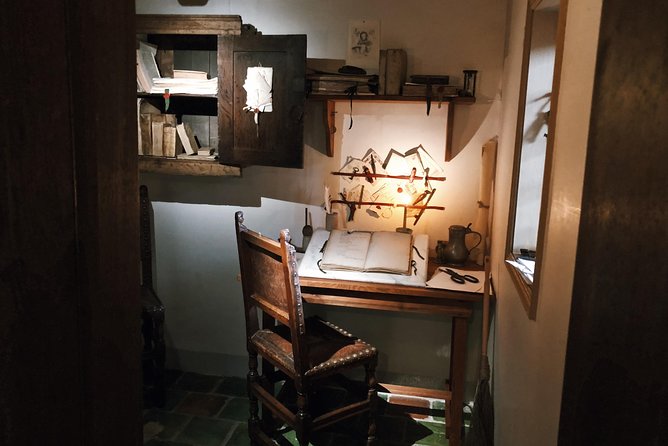
- Rembrandthuis is included (about one hour inside), not just a quick look from the outside
- You get canal and neighborhood context before you ever step into the house
- Stops include big photo moments like Rembrandtplein and the Night Watch bronze representation
- The pace fits moderate fitness, with rain-or-shine operation
- A guide like Jo (praised for her focus and friendly style) can turn landmarks into a story you remember
Another gallery door worth opening in Amsterdam

A 2.5-Hour Rembrandt Walk With a Small Group (Max 8)
This is a semi-private tour with a maximum of 8 people, starting at 1:30 pm from Cobra Café, Hobbemastraat 18 and ending at Rembrandt House Museum, Jodenbreestraat 4. The total time is about 2 hours 30 minutes, with the last stretch focused on Rembrandthuis for about one hour.
Why that matters: a big walking tour can feel like a moving train, where you only catch the highlights. Here, the guide gets room to slow down, explain what you are seeing, and help you connect names and places. In the reviews, the standout praise was for Jo and her undivided attention in a small group, which matches what you want if Rembrandt is your main goal.
Do note the fitness expectation. The operator lists moderate physical fitness as the target and says it is not recommended for walking disabilities or wheelchair use. The stops are close, but Amsterdam walking surfaces and the amount of time on your feet can add up.
Also, bring a mobile phone number with country code. That is required, and it is a good idea to have your phone charged and ready. You will be on a guided route, and having a way to reach you helps the logistics run smoothly.
Canal Landmarks First: Singelgracht and Spiegelgracht in the Centre
The tour begins with a canal orientation, and that is exactly how I like to start Amsterdam neighborhood walking. You head from the meeting point toward Singelgracht, described as the canal that borders the centre and originally formed the city’s outer defenses. Even if you are not a history buff, it helps you understand why the centre feels the way it does, tight, structured, and built around water.
Next comes Spiegelgracht, another central canal in the Canals of Amsterdam UNESCO World Heritage site. This is where your guide can point out the vibe shift: canals here are not only views, they are corridors lined with buildings that have served as homes, studios, and businesses. The plan specifically mentions art galleries and antiques, which is a nice match for a Rembrandt-focused day.
One practical tip: wear shoes that handle damp pavement. Canalside areas can be slippery, and the tour is rain or shine. If the weather turns, you will still walk, so plan for grip and comfort.
Keizersgracht, the Widest Inner Canal, and a Very Rembrandt-Era Name
From Spiegelgracht, the tour moves to Keizersgracht, also called the Emperor’s Canal. This is the middle of three main canals in the inner city and, as the tour description notes, it is the widest. Names in Amsterdam often carry clues, and Keizersgracht is tied to Emperor Maximillian of Austria.
This stop is short, around 10 minutes, but it does a useful job: it helps you place the other canal stops on the map in your head. If you are the type who likes to “get your bearings fast,” these canal names are the anchors that make the rest of the walk click.
You should also look outward from the canal edges, not just at the water. Amsterdam canal architecture is all about relationships between buildings and street-level views. A good guide can help you notice the patterns, even in a brief stop.
Worth comparing with this Amsterdam choice:
- Amsterdam: 75 Minute City Canal Cruise with Audio Guide★ 4.4 · 17,501 reviews
- Anne Frank’s Story – Guided Walking Tour through Amsterdam★ 5.0 · 11,619 reviews
- Amsterdam: Johan Cruijff ArenA Tour with Optional Guide★ 4.6 · 8,954 reviews
- Amsterdam: Royal Palace Entry Ticket and Audio Guide★ 4.6 · 6,475 reviews
Museum Van Loon Pause: Ferdinad Bol, Rembrandt’s Favorite Pupil
You will also be taken to Museum Van Loon, located in a canalside house along the Keizersgracht. The tour description links the site to Ferdinand Bol, described as Rembrandt’s favorite pupil.
Important detail: the itinerary lists admission here as not included. That does not necessarily mean you are locked out of seeing anything, but it does mean you should not expect time inside unless the guide confirms otherwise on the day. If your heart is set on going into Van Loon itself, treat this stop as a context marker unless you have been told you will be entering.
Still, even if you only get exterior context or a brief look-in moment, it makes your Rembrandt day smarter. You are not only following Rembrandt as a solitary genius. You are also seeing how his artistic circle was tied to real places.
Flower Market, Munttoren, and the Medieval Gate Tower Feel
Next up is Bloemenmarkt, the well-known flower market area. Here, the route plan points out Munttoren, nicknamed the Mind Tower, and it explains the tower’s original role: it was part of one of Amsterdam’s main medieval city gates.
This is one of those stops that is short but useful. It gives you a quick contrast between old defenses and modern street life, and it connects to the city’s layering. You get the canal logic, then you get the gate logic, and suddenly your walk feels like a timeline you can navigate.
If you are visiting in busy seasons, expect people around the market. The upside of a small group is that you do not get separated the way you often do in crowded group tours, and your guide can help you keep moving.
Rembrandtplein and The Night Watch Bronze: Where the Story Shows Up
Then you walk to Rembrandtplein, the busy square named for Rembrandt. The plan highlights a centerpiece: a bronze-cast representation of The Night Watch, which was displayed as part of the celebration of Rembrandt’s 400th birthday in 2006.
The way this works for me is simple. You see the landmark here in the real urban space it belongs to, not framed behind glass. Even if you already know the painting, the bronze casting helps you understand how Amsterdam public art points people back to artists and shared identity.
You may also notice that the itinerary lists a second stop that repeats the Rembrandtplein theme, calling it Rembrandt van Rijn en Nachtwacht. In practice, this often translates to a shared viewpoint stop, where your guide keeps the explanation tight around the statue and its meaning.
Over the Amstel: Skinny Bridge and the Blue Bridge That Is Not Blue
Next the tour tracks along the Amstel River. Two bridges are specifically named: the Skinny Bridge, described as Amsterdam’s most famous bridge spanning across the Amstel from 1934, and the Blue Bridge, which the tour notes is not actually blue today.
The Blue Bridge name comes from an older wooden blue bridge from the 17th century that spun across the Amstel. That little correction is exactly why I like having a guide on this kind of stop. Without context, it is easy to treat bridges as just “pretty shots.” With context, you start thinking about technology, shipping, and what the river needed at different times.
This section is another short one, about 10 minutes, but it is perfect for a photo and a mental reset. You also get a break from the shopping-street energy that can dominate parts of the centre.
Stopera and the Art-Civic Mashup at a Single Complex
The next stop is Stopera, a building complex that houses both city hall and the Dutch National Opera and Ballet. The tour description adds that construction took at least 60 years.
This is not a deep museum stop, but it is a meaningful one for how Amsterdam functions. You are seeing the city treat performance and governance as neighbors. If you like architectural contrasts, this is a good place to look at the shape and massing from street level.
Admission here is listed as not included, so keep expectations realistic. Think: exterior views, a guide explanation, then back to walking.
Jodenbuurt: Walking Toward the Former Jewish Neighborhood
Then you head toward Jodenbuurt, the former Jewish neighborhood. The description says many historically important buildings are preserved and managed by the Jewish Cultural Quarter.
This stop is short, about 10 minutes, so it is not a heavy program in itself. Still, it changes the tone of the day. After Rembrandt’s art and the canal geometry, you are also seeing how Amsterdam remembers and protects neighborhoods.
A practical tip: be ready for a slightly more reflective mood here. Even when the group is moving fast, the guide can help you look at buildings with care. If you have any interest in Amsterdam beyond famous painters, this is a helpful pivot.
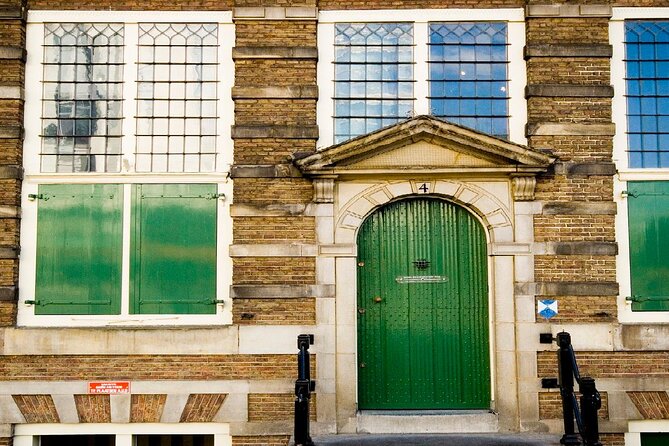
Inside Rembrandthuis: Rembrandt’s Home Life, Etchings, and the Quiet Rules
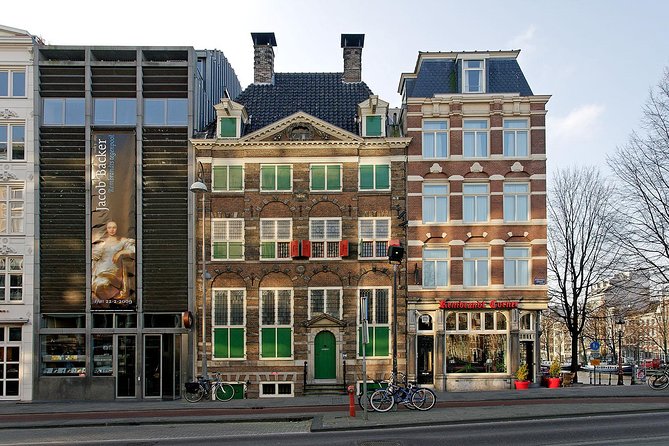
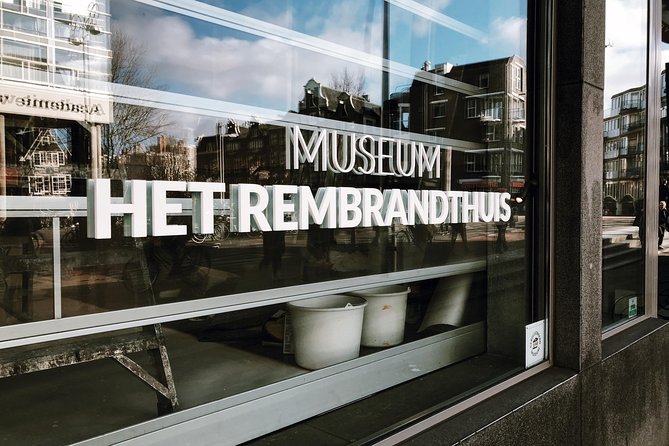
The tour ends with Museum Het Rembrandthuis (Rembrandt House). This is the big finish, with about one hour on-site, and the itinerary lists admission included.
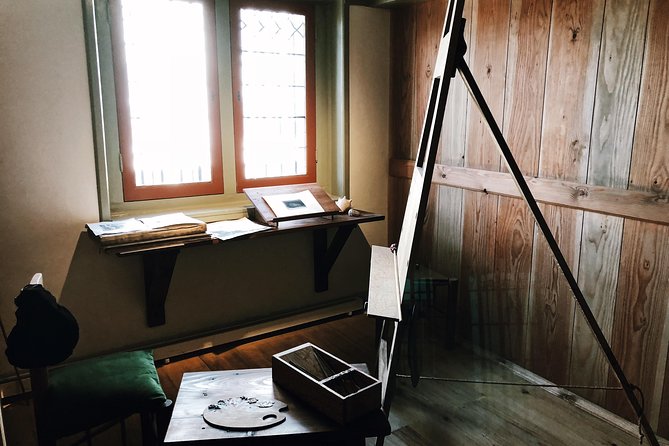
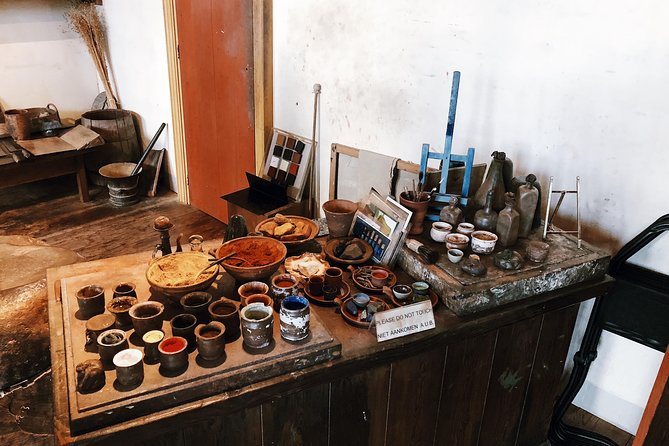
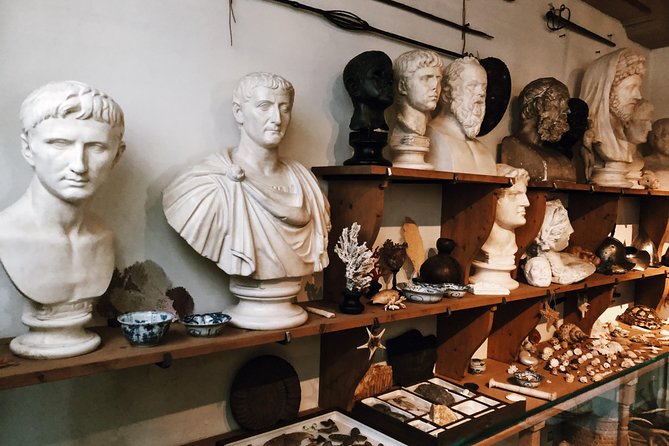
What you are getting is not just a display of paintings. The museum is housed in the historical building where Rembrandt lived and worked between 1639 and 1656. That date range matters because it frames the collection in terms of lived work, not just a static gallery.
The museum’s collection, as described, includes Rembrandt’s etchings and paintings of his contemporaries. That mix is a smart angle for understanding Rembrandt’s artistic world. You get to see him as both a maker and someone responding to other artists around him.
A few rules you should plan for:
- Appropriate dress is required for entry into some sites on the tour.
- Inside the museum, the notes specify no large bags or suitcases, and only handbags or small thin bag packs should go through security.
- Some rooms inside the museum have very quiet or restricted right to speak. Your guide will tell you about these specific areas before entering.
These details sound fussy, but they affect your comfort. If you show up with a big bag, you might spend time sorting it at the last minute. If you keep it small and respectful, you can focus on the artwork and interior rooms as intended.
One more “value” point: because the guide walked you through the surrounding neighborhood first, the house visit feels connected. You are less likely to see Rembrandthuis as a standalone stop, and more likely to understand it as part of the city that shaped his working life.
Price and Value: What $159.21 Gets You in Real Time
The price is $159.21 per person for an approximately 2.5-hour guided tour in English, with a max group size of 8. The big value lever is that it includes all entrance fees and covers the museum time you actually care about.
But there is one wrinkle worth flagging. In the day’s stop list, a couple of specific sites are marked as admission not included (for example Museum Van Loon and Stopera). Meanwhile, the “Included” section says entrance fees are covered. The safest way to think about it is this: Rembrandthuis admission is definitely included, since the itinerary clearly says so, and the other stops function as guided context stops unless the operator confirms entry for those points on the day.
Why the small-group format matters for value: when you pay for a guide, you are buying explanation. In a group of 8, you are more likely to get your questions answered and to receive real navigation help between stops. A canal tour can become a memorization game if you are left on your own. Here, you are not.
The operator also lists a 100% satisfaction guarantee, but the key practical angle is that you have to contact them within 24 hours if something did not meet expectations. If you do book, treat it like a proper service: arrive on time, keep your bag policy in mind for the museum, and you will set yourself up for a smoother experience.
Who Should Book This Rembrandt House Tour
This tour is a strong fit if you:
- Want Rembrandt-focused time without turning your trip into museum marathon math
- Prefer a semi-private walking tour where you are not squeezed into a large pack
- Like canal neighborhoods and want quick context as you move, especially around central Amsterdam
- Enjoy learning from a guide in the moment, including practical explanations tied to what you see outside
It is less suitable if you:
- Use a wheelchair or have significant walking limitations, since the operator does not recommend it for those needs
- Need museum access to be perfectly predictable down to the minute, since the museum may have occasional closures and the alternative plan does not come with refunds or discounts
One “timing” note from the tour description: it is typically booked about 53 days in advance on average. That suggests demand, especially for the afternoon slot. If you have fixed dates, I would not wait until the last week.
Should You Book This Rembrandt House & Neighborhood Guided Tour?
If Rembrandt is your main reason for being in Amsterdam, I think this is one of the more sensible ways to spend your afternoon. You get the house visit you came for, plus the neighborhood logic that helps it feel real. The small-group ceiling of 8 is not just a comfort perk, it is how you get a guide who can give attention, like Jo did in the reviews.
Book it if you can handle moderate walking and you are ready to follow museum rules on bag size and quiet-room behavior. Skip it if mobility is a concern and you cannot do long walking stretches.
If you want a Rembrandt day that is more than a museum ticket, this one gives you that connection, from canal landmarks to the rooms where he lived and worked.
More Tours in Amsterdam






More Tour Reviews in Amsterdam






Another Amsterdam Museum Afternoon






Newly reviewed around Amsterdam





Amsterdam Museums & Galleries, side by side.
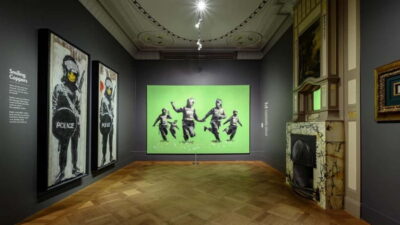 ★ 4.4Moco Museum Amsterdam Entrance Tickets with Banksy & MoreFrom $1810,088 reviews
 ★ 4.4Madame Tussauds TicketFrom $219,415 reviews
 ★ 4.8This is Holland 5D Flight Experience Entry TicketFrom $283,610 reviews
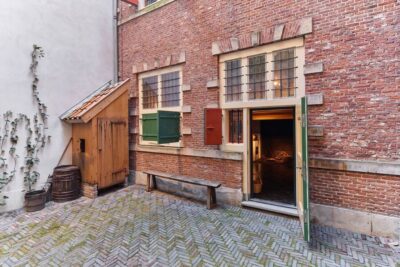 ★ 4.7Rembrandt House Museum Entrance TicketFrom $233,385 reviews
 ★ 4.5Body Worlds Amsterdam: The Happiness Project TicketFrom $263,295 reviews
 ★ 4.4NEMO Science Museum TicketFrom $252,979 reviews
 ★ 4.8Streetart Museum STRAAT Entrance TicketFrom $252,137 reviews
 ★ 4.0Moco Museum Amsterdam Admission Ticket with Banksy and moreFrom $271,745 reviews
More ways to plan this visit