
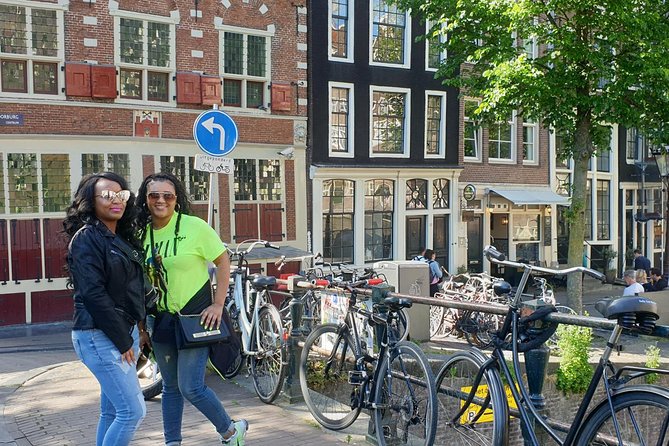
REVIEW · RED LIGHT DISTRICT TOURS
Private Amsterdam Red Light District tour with food tastings
This tour turns a famous neighborhood into a story you can walk through. I love the way a live guide connects the Red Light District’s past to what you see today, and I also love the built-in food tastings that keep things human and fun. You are not just looking at street scenes, you are learning why this area looks the way it does.
A possible drawback is that this is an adult-themed part of town, so the vibe may feel uncomfortable if you prefer a more traditional sights-only Amsterdam day. It is also a compact 2-hour walk, so you will want to wear comfortable shoes.
Key highlights you should know before you go
- Private guide, private pace: Only your group, and the route can be adjusted to what you care about.
- Old Amsterdam facts, not just slogans: You learn how buildings were built on wooden poles due to local ground conditions.
- Landmarks you can actually point to: You pass by spots tied to the Old Church area and Chinatown, plus several historic buildings.
- Food tastings during the walk: You stop at different places to sample local flavors along the way.
- Real neighborhood structure, explained clearly: Prostitution history, coffeeshop culture, and how the area works together.
Other history-led walks through De Wallen
Entering Amsterdam’s Red Light District With Context, Not Shock
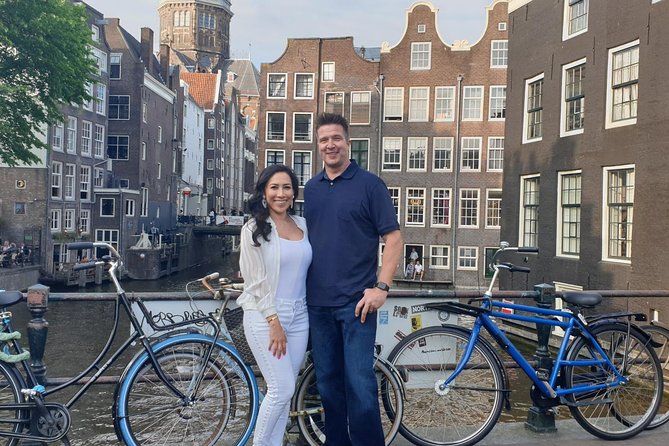
If the Red Light District is on your Amsterdam list, this kind of tour helps you see it as a living neighborhood, not a headline. The best part is the way your guide turns the street-level scenes into explanations you can remember, including how the area fits into Amsterdam’s older town layout.
I also appreciate that this is a private experience. You can ask questions without speaking over a crowd, and the guide can slow down if something is interesting or speed up if you want to keep moving. And since the tour is in English, the details land without guesswork.
The tone can feel candid, because the subject is candid. Still, the goal is understanding: how the neighborhood evolved, why laws and building styles changed, and what the coffeeshop culture adds to the local story.
A 2-hour Plan That Fits First Timers and Curious Food Lovers
This tour runs about 2 hours, which is the sweet spot for people who want a real introduction without turning the day into a marathon. It is built around a walk through key spots, plus food stops along the way, so you get motion, information, and a few breaks.
At $121.52 per person, you are paying for two things that are hard to replicate alone. First, you are buying a guide who can explain what you are seeing, including the history behind specific buildings. Second, you are paying for the structure of the tastings, since the tour provides stops instead of you trying to guess where to eat in a busy area.
If you already know you want a guided look at this neighborhood, the price can feel fair. If you are hoping to wander freely and only need a map, then you might prefer a self-guided walk and pick your own snacks.
Meeting at Prins Hendrikkade and Getting Your Bearings Fast
You meet at ParkBee Parking NH Collection Amsterdam Barbizon Palace, Prins Hendrikkade 59, and the tour ends back at the same meeting point. That matters more than it sounds. You start in an area that is easy to reach, and you do not have to worry about finding a new pickup point later.
It is also near public transportation, which helps if you are combining this with other Amsterdam plans. Because the format is a private walk, you will generally spend your time with your group and your guide, not hunting down landmarks.
If you are the type who likes to get oriented early in a trip, this is a good fit. Learning how the ground beneath Amsterdam influenced the city’s building choices helps you understand why the old parts look the way they do.
Worth comparing with this Amsterdam choice:
- 10 Tastes of Amsterdam: Food Tour by UNESCO Canals and Jordaan★ 5.0 · 3,020 reviews
- Amsterdam Food and Cultural Tour with Tastings★ 5.0 · 2,442 reviews
- Amsterdam Jordaan Food & Drinks Tour with Eating Europe★ 5.0 · 2,425 reviews
- Amsterdam: Premium Henri Willig Cheese Tasting Experience★ 4.7 · 1,106 reviews
Stop 1: The Red Light District Explained, Plus Food Tastings
The tour’s main focus is the Amsterdam Red Light District, with your guide walking you through history and how the area works today. You will hear about prostitution history and the famous coffeeshop culture, but the explanation is tied to what you see on the street and why it became what it is.
The other key element is the food. Instead of treating tastings as an afterthought, the tour builds in stops for you to try different foods during the walk. That turns the experience from a purely observational visit into something more like a neighborhood food stroll, with context layered on top.
One practical tip: eat lightly before you go if you have a big lunch plan later. Tastings can add up, and you will enjoy them more if you are not already stuffed.
Dam and the Wooden-Pole Foundations of Amsterdam
One of the most memorable moments is the connection between the city’s ground and its buildings. You learn that Amsterdam sits on a thick layer of fen and clay, with water and peat under many areas. Because of that, houses were built on wooden foundation piles driven down until they reach solid sand, about 11 meters deep.
This might sound like construction trivia, but it changes how you see the city. When your guide explains the foundations, the architecture stops looking like magic and starts looking like engineering in action.
You also learn that part of this route falls in the oldest section of the city, where there is a lot of history because the neighborhood grew over time in a tightly defined urban footprint. In other words, the Red Light District is not floating in from nowhere. It sits inside the older Amsterdam story.
Pub The Ape and Amsterdam’s Surviving Wooden Buildings
Another standout stop is Pub The Ape, known in Dutch as Int Aepjen. This place is built around 1540 and is one of only two remaining wooden buildings in Amsterdam.
Your guide also covers the reason this is special: there was a big fire in 1452, and after that point the government pushed buildings toward brick facades. So when you stand in front of Pub The Ape, you are not just seeing a pub. You are seeing a piece of Amsterdam that survived shifts in building rules.
Even if you are not a pub person, this is a useful pause. It gives the tour a “human-scale” moment, and it helps you understand how policy and disasters shaped what Amsterdam could build.
Waag, a City Gate Turning Into a Trade Hub
Next comes the Waag, which your guide explains as a former city gate and part of Amsterdam’s defensive wall. Built around the 1400s, it is described as the second oldest building of Amsterdam.
Later, the Waag was used as a guild and crafts organization meeting place. The square and surrounding area became a setting where craftspeople gathered, which adds a “work and trade” layer to a neighborhood people often only associate with nightlife.
This is a good moment to slow down. The architecture is worth looking at, but what matters more is the story that connects the building’s original purpose with its later life. Amsterdam reused structures, and your guide points out how that reuse shaped neighborhood identity.
The Smallest House and the VOC Storage-to-Living Story
You also see the smallest house of Amsterdam, built around the 1700s. The explanation is fascinating: it began as storage for the VOC trading company, then later became a place people lived for a long time.
That is a strong reminder that Amsterdam’s old areas were never only showpieces. They were places where the practical business of trade, housing, and reuse all mixed together. And even in a super famous adult district, the neighborhood’s footprint reflects earlier centuries of commerce.
This stop is especially good if you enjoy “how did they fit everything in” history. You get the small scale perspective, and it helps you understand why this city grew in tight, clever ways.
Condom Shop Culture: Shopping as Part of the Street Story
A final stop is the world’s first condom shop, described as being in place since 1987. You can get size customized condoms and special condom types, according to what your guide shares.
This is one of those “only Amsterdam” details that makes the tour feel concrete. It also helps connect the adult-themed reputation of the area to how businesses serve practical needs within the neighborhood.
If you are expecting the tour to focus only on the stereotypes, this kind of stop shifts the lens. It shows how commerce, health products, and the neighborhood’s identity overlap.
How the Guide Makes It Work: Aaron, Sander, and Tony’s Style
The best part of any Red Light District tour is the guide, because tone matters. In the feedback for this experience, guides named Aaron, Sander, and Tony come up for clear explanations, good pacing, and answers to questions.
That lines up with what you should look for in a guide here. The subject is sensitive for some people, so you want someone who can explain without getting preachy, and someone who can handle your questions directly. If your guide has humor and keeps a good rhythm, the walk feels easier and less awkward.
Because this is private, you can also steer the conversation. If you want more Amsterdam history, ask for it. If you want more cultural context about coffeeshops and how rules shape behavior, ask for that too.
Food Tastings: A Practical Way to Enjoy the Neighborhood
The tastings are not just a snack break. They are a strategy. Food gives you a normal, everyday touchpoint inside a neighborhood that can otherwise feel like a stage.
The tour includes multiple stops for food tastings, and you will move between them during the walk. That means you are not stuck eating in one place while the rest of the experience happens elsewhere.
I suggest going in ready to try small portions and learn what you are tasting. Ask what each item is and where it fits in local life. Even if you do not love one bite, the guide’s explanations usually help you appreciate the why behind the what.
Who This Tour Is Best For, and Who Might Skip It
This tour is a strong match if you fit one of these profiles:
- You are a first-time Amsterdam visitor who wants context, not just photos.
- You like history and want it connected to architecture, not dates on a screen.
- You enjoy food tastings and want them woven into the walking route.
- You prefer a private setting where your questions can get real answers.
It might be less ideal if you are uncomfortable with adult themes, or if you hate walking in an area known for flashing signs and nightlife energy. You cannot change the neighborhood you are visiting, but a good guide can help you understand it more calmly.
If you are traveling with kids, be careful. The topic is not child-friendly, based on the tour focus on prostitution history and adult district culture.
Price and Value for a Private 2-hour Walking Tour
At $121.52 per person for about 2 hours, the value comes from three pieces: guidance, access to the right stops, and the tastings. A self-guided walk can be cheaper, but you would miss the explanations for why Amsterdam’s foundations work the way they do, and why buildings like Pub The Ape are so rare.
Group discounts exist, which can lower the per-person cost if you come with friends or family. And since it is private, you get the benefit of pacing and customization to your interests, rather than a fixed script you have to endure.
So if you are deciding between buying a guided tour and doing your own thing, I would compare what you want most. If you want food plus history plus a guide who can answer questions in the moment, this is usually a good deal.
Should You Book This Red Light District Food Tour?
Book it if you want a guided Amsterdam experience that treats the Red Light District like a real neighborhood with real history, and you want food tastings folded into the walk. It is also a good pick when you like architecture and details, because the route includes specific landmarks tied to the city’s development, not just street scenes.
Skip it if adult-themed topics will make you tense. In that case, you might enjoy a different Amsterdam tour that focuses on canals, museums, or neighborhoods without that adult context.
If you do book, show up with comfortable shoes, a curious mindset, and room in your schedule for questions. With the right guide, this can be one of the most memorable, practical Amsterdam stories you take home.
FAQ
How long is the private Amsterdam Red Light District food tour?
It runs for about 2 hours.
Is the tour private or shared with other people?
This is a private tour, so only your group participates.
Are there food tastings included?
Yes. The tour includes stops for food tastings during the Red Light District visit.
What language is the tour offered in?
The tour is offered in English.
Where do we meet, and does the tour end nearby?
You meet at ParkBee Parking NH Collection Amsterdam Barbizon Palace, Prins Hendrikkade 59, 1012 AD Amsterdam. The tour ends back at the meeting point.
Can I cancel for a full refund?
Yes, you can cancel for a full refund up to 24 hours in advance of the experience start time.
More Tours in Amsterdam





More Tour Reviews in Amsterdam


De Wallen Beyond the Spectacle


Newly reviewed around Amsterdam


Red Light District Tours, side by side.
 ★ 4.2Red Light Secrets Museum Entry TicketFrom $175,722 reviews
 ★ 4.9Red Light District Tour in German/English/ItalianFrom $285,623 reviews
 ★ 4.6Amsterdam Red Light District & Coffee Shop TourFrom $294,134 reviews
 ★ 4.1Red Light District Pub Crawl with Unlimited ShotsFrom $242,130 reviews
 ★ 4.5Amsterdam Red Light District Pub CrawlFrom $241,497 reviews
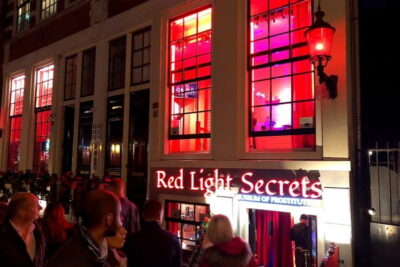 ★ 4.5Red Light District TourFrom $331,135 reviews
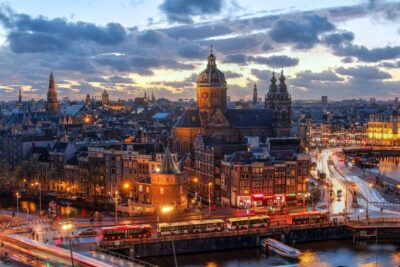 ★ 4.1After Dark Red Light District TourFrom $571,030 reviews
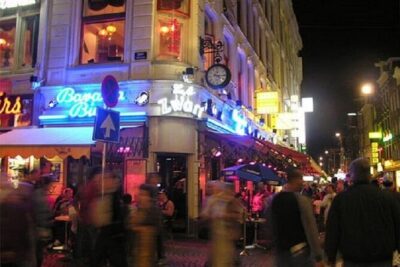 ★ 5.0Private Amsterdam Red Light District and Coffee Shop TourFrom $41763 reviews
More ways to plan this visit