
REVIEW · PRIVATE
Amsterdam: Private Hidden Gems Discovery Tour
Amsterdam gets better when you slow down. This private 2-hour walking tour helps you read the city like a local, with stops that range from Dam Square to the Jordaan and commentary that connects architecture and everyday Dutch life. I especially like the way the guide explains the why behind what you see, and I like the mix of headline sights plus calmer side streets. One thing to watch for is tour-to-tour emphasis, since some departures can feel heavier on big landmarks or church time, even if you booked for lots of lesser-known corners.
You’ll walk through the historic center passing the Old Town, the Red Light District, and the Jordaan, with viewpoints and streets like Noordermarkt, Westertoren, Anne Frank’s House area, and Westerstraat. The route also touches Dam Square, the Nieuwe Kerk, and the former main post office, with stories that link the canal district’s origins and the Dutch Royal Family to what you’re standing beside. Food and drinks are not included, so plan on water and a snack before or after.
Key things I’d plan around
- Local-first storytelling that helps you understand why buildings and canals look the way they do
- A route that hits all the major zones, Old Town to Jordaan, without turning into a bus tour
- Dam Square and Nieuwe Kerk included, so you get the civic and religious landmarks in one walk
- Canal district connections explained through what you see, including ties to the Dutch Royal Family
- Stops that include recognizable names, like the Anne Frank’s House area, plus nearby streets that feel more everyday
- Language support in English, German, Spanish, and Dutch, so you can actually follow the details
Other private routes shaped around your group
Entering the historic center on foot
This is the kind of tour that helps you get your bearings fast. Amsterdam’s streets can feel a little like a maze until someone points out the logic in the layout. On this walk, you’re not just ticking off photos. You’re moving through the historic center in a way that makes the map start to make sense.
You’ll cover multiple neighborhoods on foot, including Old Town, the Red Light District, and the Jordaan. That sweep matters, because Amsterdam’s different areas are almost like different chapters of the same story. When you walk from one to the next with a guide, the city stops feeling random.
Also, it’s built around a local guide, not a script read at speed. In one group example I’ve heard about, a guide named Peter adapted the tour to match the interests of the people in front of him. In another, Andrea was described as very interesting and guiding people through lots of lovely places. Even if your guide is not the same person, that gives you a clue about the style: interactive, adjusted, and focused on what you want to notice.
Route snapshot: Old Town to Red Light District to Jordaan
The tour’s pacing is simple: walk through the historic center, then let the explanations connect the dots. Starting in the Old Town area makes sense because it sets the stage. The city center is where you get the “classic Amsterdam” look, the canals, the canal-side architecture, and the density that made the city grow.
Then you move toward the Red Light District. This is a sensitive zone for many visitors, so what matters is context. The tour frames what you see through culture and history rather than making it just a spectacle. You’ll pass through this area as part of the broader city walk, which can feel more comfortable than treating it like its own attraction.
After that, you head to the Jordaan. This is where the mood can shift. The streets feel more residential and neighborhood-like, and you’re more likely to notice everyday details: courtyards, building facades, and street-level rhythm. The tour specifically includes passing hidden courtyards and standout sights along the way, so you’ll get a contrast between the city’s most famous headlines and the calmer corners that locals care about.
One small reality check: some versions can lean more toward certain types of landmarks, and that can influence how “local” the walk feels. If churches are not your thing, keep an open mind, but also consider asking your guide where the emphasis will be before you start.
Dam Square: city hall roots, now a royal-civic stage
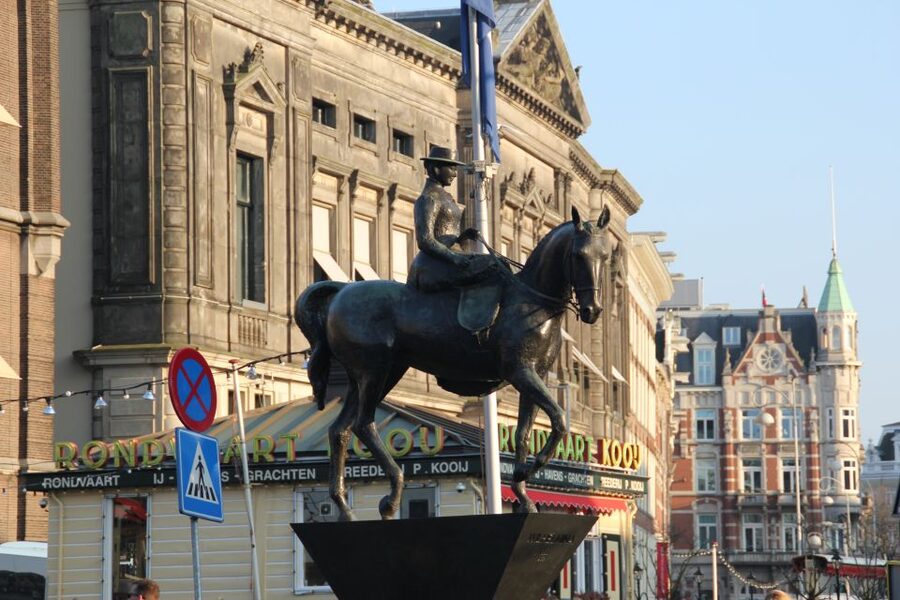
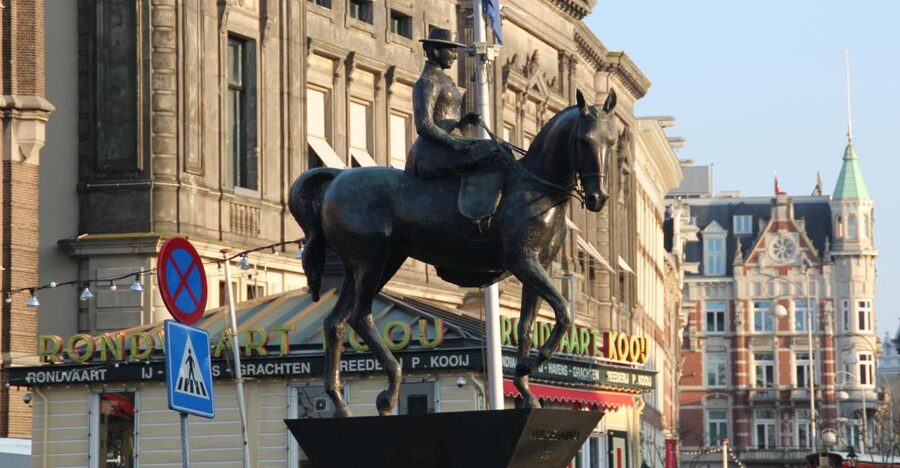
Dam Square is one of those places where you can stand and feel like you’re in the center of everything. The tour helps you understand why. You’ll see the palace on Dam Square, originally built as the city hall. That tidbit matters because it reframes what the building represents. It is not just a pretty backdrop. It’s part of Amsterdam’s governance story, and it explains the city’s civic identity through architecture.
From there, the walk moves you toward other landmark stops that tie together the city’s public spaces. The key value here is interpretation. Without guidance, Dam Square can turn into a quick photo-and-walk-through. With a guide, it becomes a “start here” orientation point. You leave it knowing what to pay attention to later.
- Amsterdam Classic Saloon Boat Cruise with Drinks and Cheese★ 5.0 · 31,825 reviews
- Amsterdam Luxury Canal Cruise + Unlimited Drinks & Bites option★ 5.0 · 30,518 reviews
- Amsterdam: Heineken Experience Ticket★ 4.6 · 30,055 reviews
- Amsterdam: Rijksmuseum Entry Ticket★ 4.7 · 25,535 reviews
Nieuwe Kerk and the former main post office, what they signal
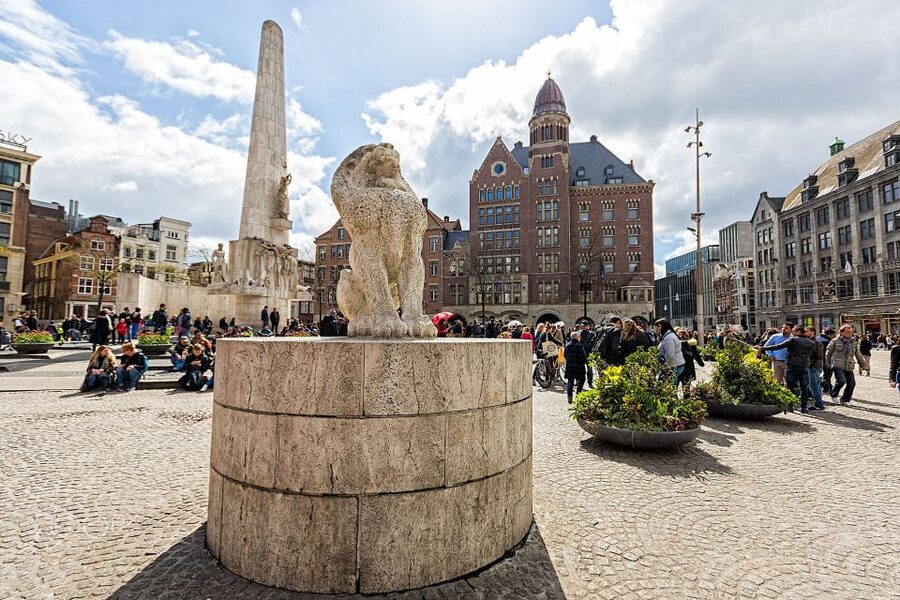
A big part of this tour is landmark variety. The itinerary includes the Nieuwe Kerk and passes the former main post office. These are not just stops for sightseers. They hint at Amsterdam’s role as a city of ceremony and communication.
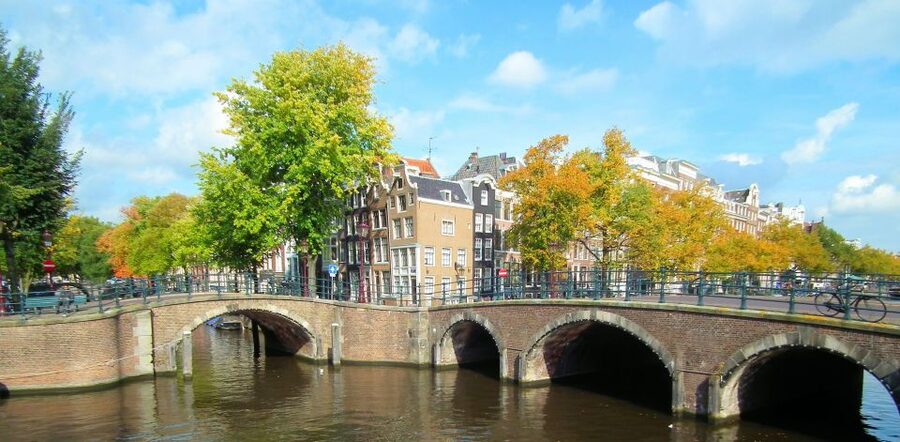
The tour also connects these locations to the canal district’s origins. That might sound indirect, but it’s actually practical. When someone explains how canals evolved and how the city functioned, the canal layout becomes less of a random pattern and more of a system. You start to see canals as infrastructure, not just scenery.
The former main post office is especially useful because it connects Amsterdam’s growth to practical services. Cities don’t just become famous because of buildings. They become famous because people and goods move through them. That’s the kind of context a good local guide brings.
Noordermarkt and Westertoren: why the smaller stops matter
Noordermarkt and Westertoren are exactly the kind of stops that can make you enjoy Amsterdam more than the big-name landmarks alone. Noordermarkt is the sort of place you can walk past quickly on your own, but with a guide you understand what makes it feel distinct in the city fabric. It’s tied to neighborhood life, not just tourism.
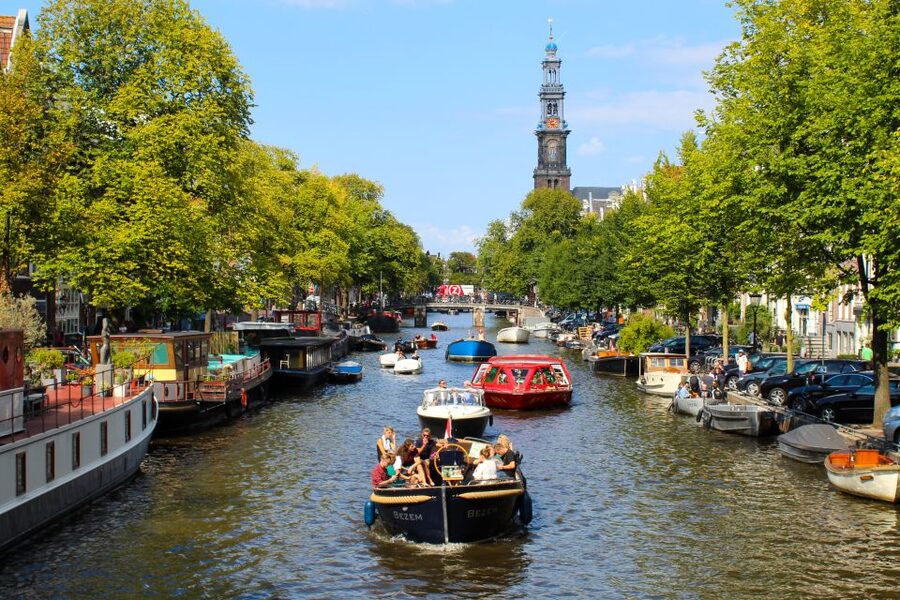
Westertoren is also a good example of how the tour works. A tower sounds straightforward until you learn what it means in the cityscape. Hearing how towers, church structures, and building heights shaped how people navigated the city makes the view feel purposeful rather than decorative.
What I like about these stops is how they balance the itinerary. If your walk only focused on the “must sees,” you’d miss the texture. These points keep it grounded.
Anne Frank’s House area and Westerstraat, more than a checkbox
The tour passes by Anne Frank’s House area and includes Westerstraat. These are major, emotionally loaded places. The value of including them in a general walking route is that you’re not just rushing between high-traffic photo moments. You can absorb the surrounding streets and understand how this part of the city fits into the wider neighborhood story.
The tour frames what you see through history, architecture, and present-day activity. That combination helps you avoid the common problem where famous sites feel disconnected from everything around them. When you walk the area with commentary, it clicks into place: the city’s past is not tucked away behind rope barriers. It’s embedded in streets, facades, and the way people still live around landmark points.
If you’re planning your own schedule, keep this in mind. If you want time for quieter looking or if you’re sensitive to crowd dynamics, a guided walk can help you decide where to pause later on your own.
How the guide’s style affects your experience
A private walking tour lives or dies by the guide’s approach. This one gives you a serious advantage: the guide can adjust to the group’s questions and interests. That’s not just a nice idea. It changes what you take away.
In one example, David was described as personable, and the tour became more informative as people asked questions. That points to an important tip for you. If there’s something you care about, say it. Ask why a building looks the way it does. Ask what a street name suggests. Ask how the canal district formed and why it matters. A responsive guide will usually turn your questions into better explanations than a fixed script.
Also, because the tour is available in multiple languages, you can focus on details rather than playing catch-up with translation. The supported languages are English, German, Spanish, and Dutch.
If you’re the type who likes a fast, minimal tour, this might feel a little more conversational. If you’re the type who enjoys learning in motion, you’ll probably find it’s a strong match.
Price and value: is $35 a good deal for 2 hours?
At $35 per person for a 2-hour walking tour, you’re paying for two things: a local guide and a guided route through major areas plus specific landmark stops. That’s often the sweet spot in a city like Amsterdam, where getting oriented can save you hours of aimless wandering.
You’re not paying extra for food or admission included in the description. So the real value is the guide time. If you would otherwise spend those 2 hours walking on your own, hoping you pick the right streets and understand the context, this tour buys you back that uncertainty.
It can be especially good value if you like structure. Amsterdam is beautiful, but it can also be easy to overplan yourself into decision fatigue. A guided walk gives you a clear spine for your day: Dam Square, Nieuwe Kerk, canal-area context, then up to Jordaan streets.
One careful note: since this is a guided walking experience, your enjoyment will track with your expectations. If you expect purely off-the-beaten-path routes and zero big-name landmarks, you might feel it includes too many famous stops. If your goal is to understand Amsterdam as a whole city, this balance usually works well.
Timing, pacing, and why you might want comfy shoes
The duration listed is 2 hours, and starting times depend on availability. That sounds straightforward, but walking tours can vary in how long they stop at each place. If you’re the kind of person who wants every stop to include lengthy explanations, plan a little flexibility. If you want a quick hit and then freedom, check that your departure’s emphasis matches your style.
Also, this is a walking tour. Even if it never feels like a marathon, you’ll cover enough ground to appreciate comfy shoes and a light layer. Since food and drinks are not included, you’ll want water and maybe a snack before you meet up, or plan to grab something right after.
One more practical point: some versions can include more church time. If you’re churched-out, it helps to mentally frame the churches as landmarks for architecture and local meaning, not as religious experiences. Think of it like learning the city’s design language.
Making the Red Light District and canals feel understandable
Amsterdam’s canal district and its famous neighborhoods are not just scenery. They are connected to how the city organized itself over time. The tour specifically mentions learning about the origins of the canal district and the Dutch Royal Family. That combination is a clue about the overall teaching style.
Instead of listing facts, you learn meaning. Why canals developed where they did. Why royal connections mattered for a city’s identity. Why certain civic buildings became landmarks.
The reason this matters to you is simple. Once you understand the city’s logic, you can explore better on your own later. You’ll spot patterns, you’ll know which streets to slow down for, and you’ll be less dependent on constant guidance.
Even in the Red Light District area, you’re not just passing through. The walk’s context helps you treat it like part of Amsterdam’s social fabric, not just a headline.
Languages and private group options, a small but real advantage
The tour offers multiple languages, which is a big deal in Amsterdam where you can easily lose nuance if your guide is speaking too fast or in a language you barely understand.
Supported languages are English, German, Spanish, and Dutch. If you have a strong preference, pick the language you feel most comfortable with. You’ll catch the smaller details, and those are the bits that make the walk feel personal.
It’s also available as a private group option. That matters if you’re traveling with friends or family and want the pace and question time to fit your group. A private format usually makes it easier for the guide to tailor.
In a past group experience, Peter adjusted the tour to the group. That’s the kind of benefit you’re hoping for when you book private.
Should you book this Amsterdam walking tour?
Book it if you want a guided way to connect Dam Square, the Nieuwe Kerk, canal district context, and Jordaan neighborhood streets into one coherent story. It’s especially useful for first-time visitors who want the major sights without turning the day into an exhausting sightseeing checklist.
Skip it, or at least double-check your expectations, if your idea of fun is only the most obscure, side-street corners and nothing recognizable. This walk includes major landmarks, and some schedules can also include more church-focused time.
My practical call: if you like learning in motion and you can ask questions, this is a solid value way to understand Amsterdam beyond the obvious highlights. If you prefer total minimal structure, plan on doing your own wandering the same day, because you might want more control over how long you linger at each stop.
FAQ
How long is the Amsterdam walking tour?
The tour duration is 2 hours.
Is this tour private?
A private group option is available.
What does the tour cost?
The price is $35 per person.
Where does the tour start?
The meeting point may vary depending on the option booked.
Are food and drinks included?
No, food and drinks are not included.
What languages are available?
The live tour guide is available in English, German, Spanish, and Dutch.
Is there free cancellation?
Yes. Free cancellation is available up to 24 hours in advance for a full refund.
Amsterdam for Just Your Group






More Tours in Amsterdam






More Tour Reviews in Amsterdam




Newly reviewed around Amsterdam




Private, side by side.
 ★ 4.5Rijksmuseum Amsterdam Small-Group Tour with Private UpgradeFrom $901,547 reviews
 ★ 5.0Van Gogh Museum Tour Reserved Entry Semi PrivateFrom $1731,437 reviews
 ★ 5.0Private Amsterdam Red Light District and Coffee Shop TourFrom $41763 reviews
 ★ 5.0Anne Frank and Jewish Quarter Amsterdam Private Walking TourFrom $157684 reviews
 ★ 4.5Amsterdam Airport & Non-Airport Private Transfer to City CenterFrom $60521 reviews
 ★ 5.0Private Excursion to Zaanse Schans, Edam, Volendam and MarkenFrom $840420 reviews
 ★ 5.0Van Gogh & Rijksmuseum w/ Reserved Entry Semi-Private 8ppl MaxFrom $288419 reviews
 ★ 5.0Anne Frank and the Jewish History of Amsterdam Private TourFrom $95307 reviews