
REVIEW · AMSTERDAM FOOD TOURS
Amsterdam : Guided Cultural Food Tour
Dam Square first, then street food stories. This Amsterdamliebe walk connects big landmarks to how the city developed, with guide-led context that helps you understand what you are looking at. I especially liked the small-group size, capped at 15, which kept it feeling personal instead of lecture-y.
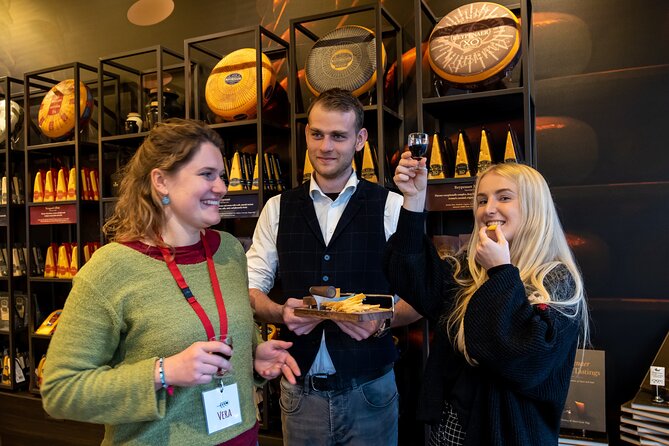
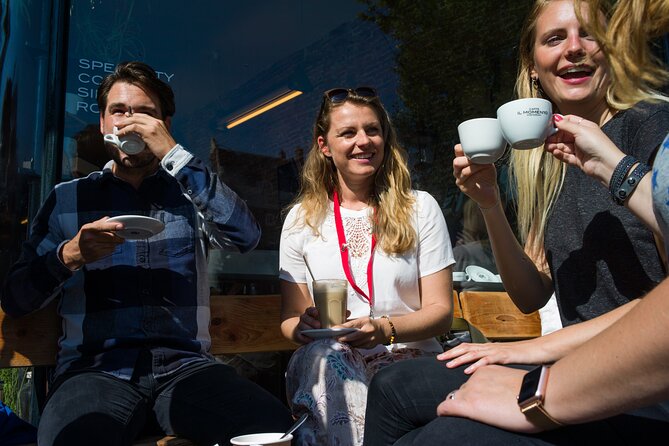
I also liked how smoothly the tour runs in English. The guide came across as friendly and easy to follow, and they answered questions without making you feel rushed. You get snacks along the way, plus practical pointers for food and drink in the Jordaan and the 9 Straatjes area.
One heads-up: most major sights are quick, mostly exterior stops. If you want to go inside places like the Anne Frank House, Westerkerk, or Begijnhof, you will need to plan for admission on your own since those are not included.
Key things I’d plan around
- A 2.5-hour walking route that gives you fast context for Amsterdam’s center
- English commentary that is clear and question-friendly
- Snacks included, plus guidance on where to eat and shop near the 9 Straatjes
- 15 people max, so the guide can actually interact
- Free viewing at most stops, with only a few interior options requiring tickets
Keep tasting: other compact food routes through Amsterdam
Price and what you actually get for about $102
At $102.41 per person for roughly 2.5 hours, this tour is not the cheapest way to see central Amsterdam. But it is also not just a sightseeing walk with a handout. You are paying for a real guide, a tight route, and the built-in “how to read the city” commentary that makes landmarks mean something.
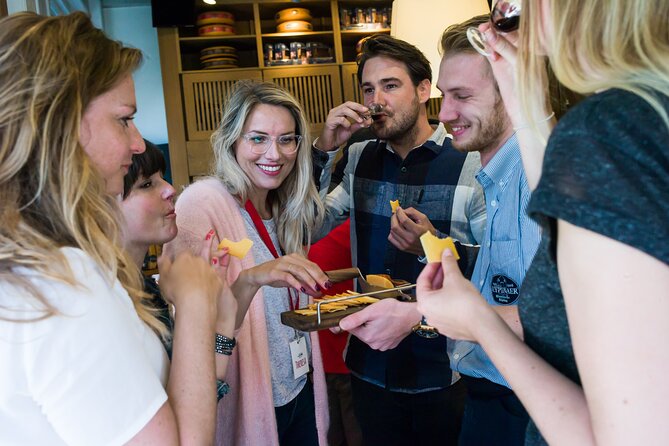
You also get practical value in the details: snacks are included, and a 1.50€ tourist tax is included as part of the total. You will also receive a mobile ticket, so you are not stuck hunting through paper confirmations right before you meet up.
If your goal is first-pass orientation, plus food and neighborhood tips you can use the rest of your trip, this price makes more sense. If you are hoping for lots of long museum time or many paid admissions included, you may feel the time is better spent elsewhere.
Meeting at National Monument and ending at Spui Square
The tour starts right by the National Monument on Dam. That is a smart starting point because you are immediately in the thick of Amsterdam’s civic center, not out on the edges where you would need extra transit or time just to get oriented.
The walk finishes around Spui Square, near Spui 20HS. If you want to return to Dam Square afterward, it is simple, you can follow your guide back the way you came. This matters because after two and a half hours of walking, you do not want your “how do I get back” moment to eat the end of your day.
Stop-by-stop: what you will learn (and what you might want to do next)
Worth comparing with this Amsterdam choice:
- 10 Tastes of Amsterdam: Food Tour by UNESCO Canals and Jordaan★ 5.0 · 3,020 reviews
- Amsterdam Food and Cultural Tour with Tastings★ 5.0 · 2,442 reviews
- Amsterdam Jordaan Food & Drinks Tour with Eating Europe★ 5.0 · 2,425 reviews
- Amsterdam: Premium Henri Willig Cheese Tasting Experience★ 4.7 · 1,106 reviews
1) National Monument: Amsterdam’s early roots and why the city matters
You begin on the steps at the National Monument. From here, the guide sets up a bigger picture of how Amsterdam grew from its early beginnings, including the city’s establishment dating to the 13th century.
What I like about starting here is the emotional and historical grounding. You are not just looking at architecture, you are learning what the site represents and why it became part of Amsterdam’s identity. The stop is brief, but it gives your brain a framework for everything that comes next.
2) Dam Square: from fishing village beginnings to modern center stage
From National Monument, you move a short distance to Dam Square, one of the most central and historical parts of Amsterdam. The storytelling is focused on how Amsterdam changed over time, including the shift from a small fishing village to the city you recognize today.
You also pass key royal references and get the reminder that this square is not just scenic. The guide has you think about World War II victims as you walk past the National Monument area. It is a quick moment, but it adds weight to what could otherwise feel like just another “big square” stop.
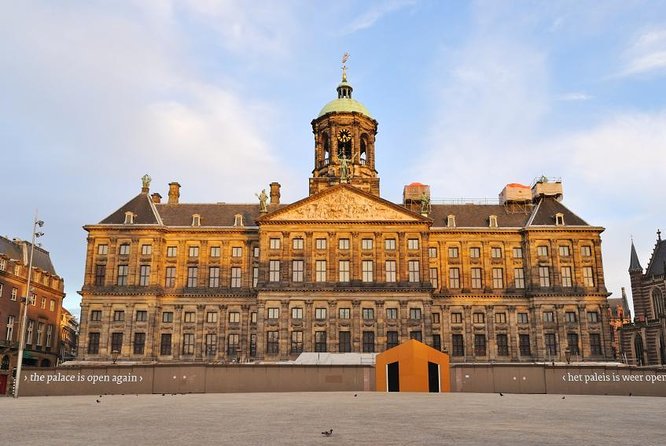
3) Royal Palace Amsterdam: monarchy then and now
Next up is the Royal Palace Amsterdam. This is where the tour turns slightly from “how the city formed” to “how power and symbolism still show up in everyday streets.”
The stop is short, about 10 minutes, so you are not getting a long lecture. Instead, you get just enough framing to understand why the monarchy matters in a contemporary setting, not just as a historic fact.
If you are the type who likes to connect politics, art, and public space, you will likely appreciate this stop. If you are only chasing photo ops, you might wish it was longer.
4) Oude Kerk: the old church and the city’s complicated development
You then visit Oude Kerk, described as the oldest church in Amsterdam. The key idea here is timing and urban development, including how the red light district was established back in the 14th century, according to the tour’s explanation.
This is one of those moments where the guide’s tone matters. Even though the stop is about 10 minutes and mostly about seeing and context, it helps you understand why certain neighborhoods took the shape they did, instead of treating them like random tourist folklore.
If you do not want any mention of adult industry topics, you may want to be mentally prepared. The tour is still respectful and historical in framing based on the way it is presented.
5) Beurs van Berlage: trade, wealth, and the Golden Age engine
At Beurs van Berlage, the tour slows down slightly, around 15 minutes. This is where you get the trade story, including how Amsterdam became one of the richest cities worldwide during the Golden Age, driven by commerce.
Why this stop is worth your attention: it explains the “why” behind the city’s big, confident architecture. When you later walk around Amsterdam on your own, you are more likely to connect the dots between money, building, and street-level life.
It is also one of the more substantial learning stops, so if you like absorbing context instead of just taking pictures, this is a good place to pay extra attention.
6) Magna Plaza: a former post office turned modern landmark
Next is Magna Plaza, known as a former post office. The tour frames the building’s importance through its architecture and role in the city’s evolution.
The stop itself is short, about 5 minutes, so think of it as a “spot and understand” moment rather than a deep architectural breakdown. Still, it helps you notice the reuse of historic buildings in central Amsterdam, which is one of the city’s defining patterns.
7) Multatuli statue: colonialism, criticism, and literature’s role
You then stop at the Statue of Multatuli. This part focuses on the dark sides of colonialism that helped generate wealth, and it ties that critique to one of the Netherlands’ important authors, Multatuli.
I like that this is not skipped, even though the route is tight. Amsterdam’s prosperity is connected to global systems, and hearing that acknowledged in the open makes your understanding more complete. The stop is about 10 minutes, so you get key context without getting stuck on one topic too long.
8) The Jordaan: atmosphere plus the story behind the neighborhood
Now you reach the Jordaan, one of Amsterdam’s most picturesque neighborhoods. The tour explanation connects the neighborhood’s character to its history, including how the “cute little houses” came to be part of the area.
This is one of the longer stops, around 15 minutes. That extra time matters because the Jordaan is best understood by walking slowly for a moment and letting the vibe register. If you love neighborhoods more than monuments, this is likely one of the highlights for you.
9) 9 Little Streets (Negen Straatjes): shopping streets and food/drink direction
Then you head to 9 Little Streets, also called Negen Straatjes. This stop is about 10 minutes and is where the tour shifts more directly into the food angle.
The guide gives tips for bars, restaurants, and shopping opportunities in the area. Even if you do not plan to shop heavily, this kind of local direction is useful because it points you toward places that match your tastes, not just what a map ranks highest.
This stop pairs well with the included snacks. You finish with a better sense of where to go next for a proper meal or drink.
10) Anne Frank House area: a brief look and a human story
You get a brief look at the Anne Frank House on your route, about 5 minutes. This part is handled as a short listening moment, and it gives the moving story context without pretending you are doing the full visit.
Important: admission to the Anne Frank House is not included, so this is more of a route-based introduction. If you want to go inside, you will need to plan that separately.
11) Westerkerk: big church energy, short stop
Next is Westerkerk, one of the biggest churches in Amsterdam. The tour description keeps this stop short, around 5 minutes, and notes that admission is not included.
This works as a visual pause, especially if you have been walking and listening for the full route. Even without going inside, you get a sense of how prominent certain religious buildings were in Amsterdam’s skyline.
12) Begijnhof: a quiet courtyard moment and a hidden church
Finally, you visit Begijnhof, a stunning courtyard area where you can try to spot the hidden church inside. The stop is about 10 minutes, and again, admission is not included.
What I like here is the contrast. You start in the largest civic spaces and then finish in a quieter pocket. That shift helps the tour feel like more than a checklist.
How this tour connects history to your next meal

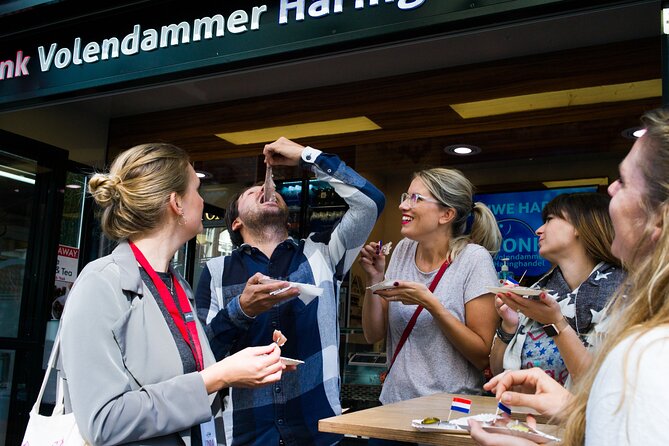
Even though the route is packed with major sites, the tour still earns the cultural food label through the way it ties the city to daily life. You get snacks, you learn how neighborhoods formed, and you receive practical tips for bars and restaurants around the Jordaan and the 9 Straatjes.
If you are visiting Amsterdam for the first time, this is a strong way to avoid the common mistake of eating only where you happen to walk past. After this walk, you will likely have a better sense of which streets feel more local and where to look for a good plan for dinner.
Also, the 15-person cap helps here. When a group is small, you can ask more specific questions. That is where a guide can steer you toward what will work for you, whether you care more about Dutch comfort food, a quick drink, or simple places with a good atmosphere.
Weather, pace, and who this tour suits best
This experience requires good weather. That matters because the tour is a walking route, and the stops are spread over central Amsterdam. If the forecast looks rough, expect the operator to offer another date or a full refund if it is canceled due to poor weather.
The pace is also worth noting. Many stops are 5 to 10 minutes, with only a few longer ones. If you like slow museum-style time, this probably will feel a bit brisk. If you like getting orientation and then wandering back later with clearer context, you will probably enjoy it.
This tour fits best if you:
- Want a guided Amsterdam starter route that covers key history and neighborhoods
- Care about culture as much as food, especially where they overlap in real streets
- Appreciate clear English commentary and the chance to ask questions
- Prefer a small group over a large bus-tour feeling
Should you book this guided cultural food tour?

I would book it if you want an efficient, guide-led way to understand central Amsterdam, then use that knowledge to plan your meals afterward. The best reasons are the small group, the clear English guide, and the fact that you get not just sights but also food and drink direction around the 9 Straatjes.
I would skip it if you are only interested in going inside major attractions. Several major sites are shown from the outside and require separate admission if you want more. In that case, it could be better paired with one or two timed entry visits on different days.
FAQ
How long is the Amsterdam Guided Cultural Food Tour?
It is about 2 hours 30 minutes.
What is included in the tour price?
You get a 2.5-hour walking tour, a guide, snacks, and a 1.50€ tourist tax.
Is the tour offered in English?
Yes, it is offered in English.
Are entrance tickets included for every stop?
Most stops are listed as free for viewing, but admission for the Anne Frank House, Westerkerk, and Begijnhof is not included.
How big is the group?
The tour has a maximum of 15 travelers.
What happens if the weather is bad?
The tour requires good weather. If it is canceled due to poor weather, you will be offered a different date or a full refund.
More Tours in Amsterdam






More Tour Reviews in Amsterdam

Keep Eating through Amsterdam





Newly reviewed around Amsterdam


Amsterdam Food Tours, side by side.
 ★ 4.8Traditional Dutch Syrup Waffle Making WorkshopFrom $234,093 reviews
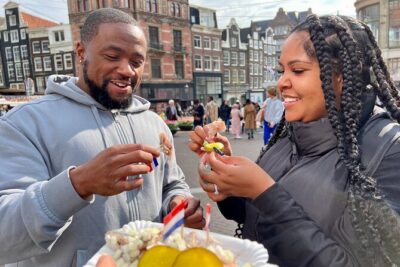 ★ 5.010 Tastes of Amsterdam: Food Tour by UNESCO Canals and JordaanFrom $1023,020 reviews
 ★ 4.7Premium Henri Willig Cheese Tasting ExperienceFrom $211,106 reviews
★ 5.0Amsterdam Traditional Dutch Syrup Waffle Making WorkshopFrom $27960 reviews
★ 4.7Premium Henri Willig Cheese Tasting ExperienceFrom $211,106 reviews
★ 5.0Amsterdam Traditional Dutch Syrup Waffle Making WorkshopFrom $27960 reviews
 ★ 4.0Zaanse Schans and Cheese Tasting Guided Tour from AmsterdamFrom $45661 reviews
 ★ 4.7Dutch Cheese Tasting Experience with WineFrom $23658 reviews
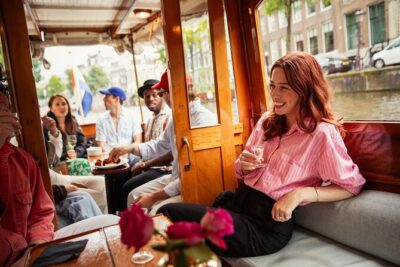 ★ 5.0Eating Amsterdam: Food Tour & Canals CruiseFrom $163496 reviews
 ★ 5.0Amsterdam’s Market Street Food Tour with Streat BitesFrom $133398 reviews
More ways to plan this visit