
REVIEW · VAN GOGH MUSEUM TOURS & TICKETS
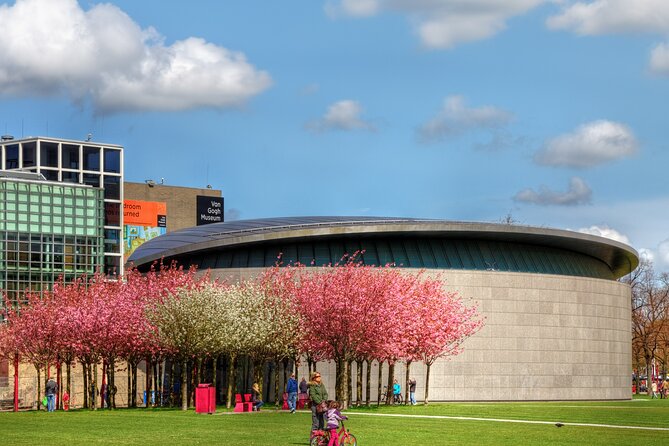
Van Gogh Museum Amsterdam Small Group Guided Tour
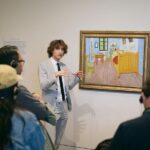
Van Gogh starts with his own face. This 2-hour Van Gogh Museum Amsterdam small-group tour follows his life across the galleries, and wireless whisper headphones make it easy to catch every explanation, while a guided timeline helps you see how his style shifts from room to room. I especially like how guides such as Martina and Clare connect the paintings to what was happening in Vincent’s life. One possible drawback: the route spends a good chunk of time on self-portraits, so if you only want late works, you may feel the start is a bit heavy.
You also get a genuinely manageable group size, capped at 14 people, with an adult-only (18+) format in English. The tour ends inside the museum, so you can keep going at your own pace after the guided portion, including time for any special exhibitions you want to add.
Quick reasons to pick this Van Gogh Museum small-group tour
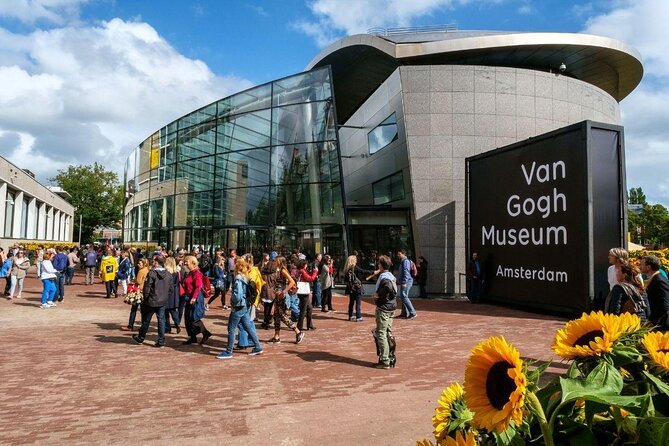
- Wireless whisper system helps you hear the guide clearly in busy rooms.
- Max 14 people keeps the experience personal and question-friendly.
- A life-and-style timeline moves from self-portraits to Paris, Arles, Saint-Rémy, and Auvers.
- Admission to the museum stops is included, so you are not piecing tickets together.
- A pace that still leaves time afterward, since the tour ends inside the museum.
- Special exhibitions are up to you after, since they are not part of the guided stops.
Other Van Gogh visits with time and context made clear
A 2-hour timeline through Van Gogh’s life, not a random museum walk
The big win of this tour is structure. Instead of wandering from painting to painting on your own, you get a planned route that makes Van Gogh’s development feel logical, even if the museum is packed.
With a 2-hour pace and short viewing windows, the guide pushes you toward the details that explain the next room. That is the difference between simply seeing paintings and actually understanding what changed, when it changed, and why it might have mattered to him.
Because the tour is adults-only and runs in English, you can also expect the discussion to stay focused on art, technique, and context, not translation or group logistics.
Self-portraits first: training your eye for change
You start with Van Gogh’s self-portraits, and that choice makes sense. Self-portraits are like a moving laboratory. You can watch his face, posture, and expression shift as his approach to art evolves.
This early portion is also where you learn what to look for as you move deeper into the museum. The guide’s explanations typically point you toward things like how he builds expression through brushwork and paint handling, and how those choices show up again later in major works.
Practical tip: if you tend to move fast in museums, set yourself a rule here. Give each self-portrait at least enough time to notice one detail, like the direction of strokes or the way the eyes are handled. That way, the rest of the tour becomes easier to follow.
Millet and the peasant rooms: The Potato Eaters and the power of faces
Next comes the First Floor foyer area with works connected to the tradition Van Gogh was reacting to. You get context from painters such as Millet and Jules Breton, and then you move into Van Gogh’s interest in peasants and ordinary life.
Key stops include Woman Lifting Potatoes, the portrait wall with Head of a Peasant Woman, and The Potato Eaters. This is where Van Gogh’s worldview feels grounded. The guide helps you see how he uses heavy subjects and strong faces to create emotional weight, not just realism.
You might also find this segment useful even if you are not chasing every historical influence. It gives you a baseline for what Van Gogh was aiming to do, and what he later tried to break away from.
If you are sensitive to slower starts, this is where patience pays off. The payoff is that Paris, Arles, and Saint-Rémy later feel like responses, not random jumps in subject matter.
Worth comparing with this Amsterdam choice:
- Amsterdam: 75 Minute City Canal Cruise with Audio Guide★ 4.4 · 17,501 reviews
- Anne Frank’s Story – Guided Walking Tour through Amsterdam★ 5.0 · 11,619 reviews
- Amsterdam: Johan Cruijff ArenA Tour with Optional Guide★ 4.6 · 8,954 reviews
- Amsterdam: Royal Palace Entry Ticket and Audio Guide★ 4.6 · 6,475 reviews
Paris years (1886 to 1888): felt hat, absinthe, and social scenes
From there, the tour shifts to the Paris period between 1886 and 1888, and the atmosphere changes quickly. You focus on self-image again, but now with different energy and more varied scenes.
The stops include Self Portrait with Felt Hat, Still Life with Absinthe, In the Café: Agostina Segatori in Le Tambourin, and Garden with Courting Couples. This section is a great reminder that Van Gogh’s work was not only about his inner life. It was also about what he was seeing and learning around him.
I like how the guide frames Paris paintings as a time of experimentation. Even if you love the famous masterpieces, this part helps you understand the bridge years, when he tested new subjects, new compositions, and new ways to organize a scene.
Practical tip: watch for how the paintings handle movement. Café scenes and garden scenes are full of small cues, gestures, and arranged rhythms. If you know what to look for, you enjoy them more than you might expect.
Arles and the South of France: sunflowers, almond blossoms, and the Yellow House
Then the route jumps to 1888 and the move to Arles and the South of France, and the colors and themes start to feel more intense. This is the portion many people are most excited for, and the tour earns that excitement with smart sequencing.
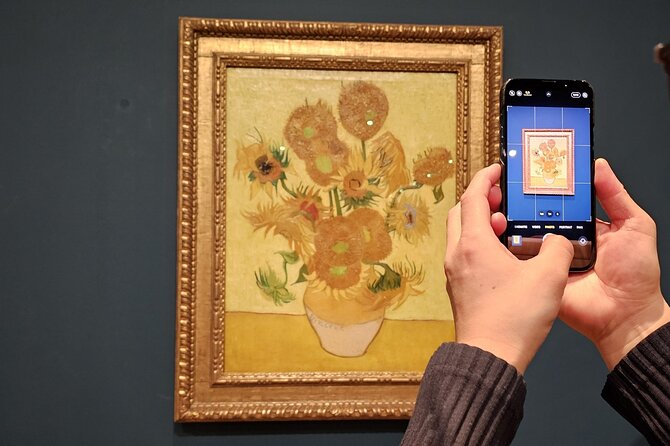
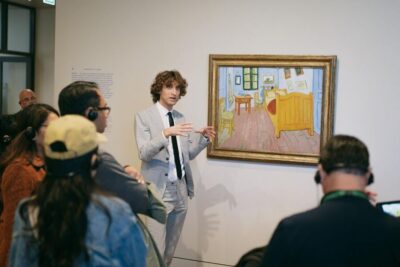
You see Sunflowers, Almond Blossoms, The Bedroom, and the Japanese-inspired paintings (described here as copies from prints), plus The Yellow House. The guide helps you connect the paintings to what Arles meant for him: a place to live, create, and shape his surroundings into art.
I also like that the tour includes both interior and still-life moments. The Bedroom gives you a sense of how he treated space and mood, while Sunflowers and Almond Blossoms show how he worked with color, repetition, and symbolism.
One small thing to keep in mind: Japanese prints and related influences can be easy to miss if you only glance. If your guide points out what to compare, actually compare it. That is how you understand why these elements mattered, not just that they were present.
Saint-Rémy-de-Provence: the sky starts to tighten
Level 3 brings you to Saint-Rémy-de-Provence, and the mood grows more serious. This section includes Almond Blossoms, Wheatfield with a Reaper, Iris, and Pietà (After Delacroix).
This is a good place to slow down slightly, even with a timed stop. The paintings here can feel simpler at a glance, but the meaning often lives in the choices: the structure of the field, the mood of the sky, and the intensity of a single color.
I like how the guide treats this as more than a biography stop. You are learning how his artistic methods track his mental and creative state, and how subjects change without losing their artistic logic.
Practical tip: for Iris and Wheatfield with a Reaper, spend a few seconds noticing composition first, not brushwork first. It helps you read the painting like a whole before you go into details.
Auvers at the end of the line: wheatfields, tree roots, and weight
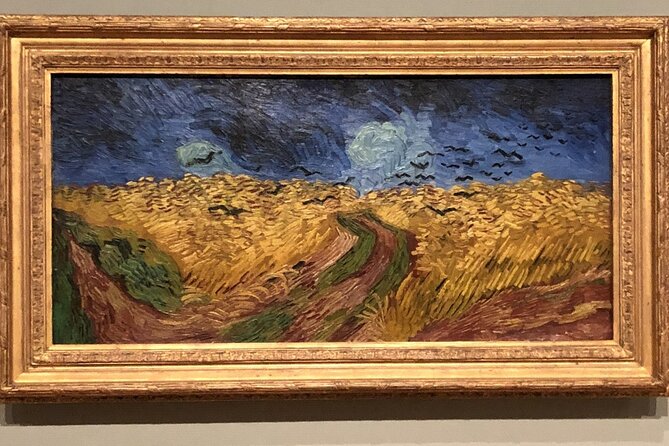
Finally, the tour reaches the Level 3 Auvers room, with stops that land with extra force. You see Tree Roots and Wheatfield with Crows in about 15 minutes.
This is the end of the guided storyline, so the guide typically nudges you to notice what has tightened or intensified. The subject matter can be familiar, like fields, but the emotional tone feels sharper, and the painting construction feels more deliberate.
If you usually think art is about inspiration alone, this is where you might learn a different lesson. The guide’s framing tends to emphasize method, repeated decisions, and how he handled paint to create a specific kind of atmosphere.
Hearing every word with the whisper system in a crowded museum
This tour includes a whisper system with wireless headphones. In a museum, sound is everything. If you are standing mid-pack and the gallery is noisy, you do not want to fight to hear your guide.
What I like here is that the wireless system lowers the pressure. You can stay closer to the painting rather than constantly turning your head to catch audio. A review even highlighted that the system worked well even with hearing aids, which is a useful detail if you rely on hearing support.
Group format matters too. With a cap of 14 people, guides can actually pause, address questions, and adjust the pace. Names that came up often in feedback include Martina, Kawika, Roland, and Sylvia, all praised for clearly linking life context and painting technique.
Some guides also use tools such as an iPad to support explanations with photos or facts. If you are the type who learns visually, that kind of reinforcement can help you spot details you might otherwise miss.
Price and value of the Van Gogh Museum small-group format
At $77.43 per person for about 2 hours, the value is best understood as a bundle. You are paying for a live guide, an audio system, and admission tied to the museum time you spend on the guided route.
You also avoid a common museum headache: figuring out how to structure your own Van Gogh visit. The guide’s job is to connect the dots across floors and years, so your time inside the museum feels less like sprinting and more like a guided learning path.
Is it for everyone? Not necessarily. If you already know Van Gogh deeply and want zero structure, you could choose to self-guide and spend more time where you personally love. But if you want a fast, organized understanding, this price tends to make sense because you are not spending extra time planning or navigating.
Also note: special exhibitions are not included in the guided stops. You can add them afterward on your own, but they are an extra choice, not part of what you are paying for.
After the tour: staying inside until closing and choosing special exhibitions
One practical perk that many people overlook: the tour ends inside the Van Gogh Museum, and you can keep your ticket time going until closing. That means you get the best of both worlds.
First, you get the guided route that gives you context and technique. Then, you can go back to the paintings that hit for you most. Sunflowers might be your favorite, or The Bedroom, or the later wheatfields. The tour does not lock you into only seeing what the guide covers.
If there is a special exhibition running during your dates, you can visit it after the tour at your own pace. Just plan your timing so you are not rushing between gallery areas at the end of the day.
Also, food and beverages are not included. If you are doing this as part of a bigger Amsterdam day, you may want to eat before or after. The meeting point is at Cobra Café on Hobbemastraat 18, which is handy for a pre-tour coffee or a quick bite if you need one.
Should you book this Van Gogh Museum guided tour?
Book it if you want a guided Van Gogh story that shows how the paintings develop over time, not just a list of famous works. The combination of a small group (up to 14), English-speaking guides, admission included for the museum route, and the whisper system makes it a strong fit for art fans who want clarity fast.
Skip it, or consider an alternative approach, if you only care about a narrow slice of Van Gogh and you hate any structure. The self-portrait start and the timed stops mean you will not control every minute, and the early focus may feel long if you are chasing late masterpieces only.
For most people, this tour is a practical way to get far more out of the Van Gogh Museum with less guesswork. If you are deciding, my advice is simple: if you want to understand what you are seeing, and you appreciate hearing technique and context explained clearly, this is a smart use of your time in Amsterdam.
FAQ
How long is the Van Gogh Museum Amsterdam small-group guided tour?
It runs for about 2 hours.
How much does the tour cost?
The price is $77.43 per person.
What language is the tour offered in?
The tour is offered in English.
What group size should I expect?
The maximum group size is 14 travelers.
Is admission included?
Yes. Admission tickets for the museum stops in the permanent collection are included as part of the tour.
Does the tour include a hearing system?
Yes. The tour includes a whisper system.
Where does the tour start and end?
It starts at Cobra Café, Hobbemastraat 18, 1071 ZB Amsterdam, and ends inside the Van Gogh Museum at Museumplein 6, 1071 DJ Amsterdam.
Can I visit special exhibitions during or after the tour?
Special exhibitions are not included, but you can visit them after the tour at your own pace.
Is this tour suitable for children?
This tour is only available for adults age 18 or older.
Can I cancel for a full refund?
Free cancellation is available up to 24 hours before the experience starts. Cancel at least 24 hours in advance for a full refund.
More Tours in Amsterdam





More Tour Reviews in Amsterdam

More Time with Van Gogh


Newly reviewed around Amsterdam


Van Gogh Museum Tours & Tickets, side by side.
 ★ 4.7Van Gogh Museum TicketFrom $3252,054 reviews
 ★ 4.6Van Gogh Museum Ticket and City Canal CruiseFrom $473,899 reviews
 ★ 4.5Van Gogh Museum Ticket & Canal CruiseFrom $473,304 reviews
 ★ 5.0Van Gogh Museum Amsterdam Exclusive Tour w/ Reserved EntryFrom $1731,760 reviews
 ★ 5.0Van Gogh Museum Tour Reserved Entry Semi PrivateFrom $1731,437 reviews
 ★ 4.9Van Gogh Museum Entry Ticket and Guided TourFrom $175681 reviews
 ★ 4.0Combo Ticket: Van Gogh Museum Ticket and 1-Hour Canal CruiseFrom $45676 reviews
 ★ 4.7Van Gogh Museum Guided Tour with EntryFrom $69535 reviews
More ways to plan this visit