
REVIEW · TOURS
Small Group Hidden Gems Tour in Amsterdam
Amsterdam history turns personal on this walk. This small-group tour threads together nine street-side stops, from the world’s first gay marriage connection to philosophy, 17th-century communities, and WWII resistance stories.
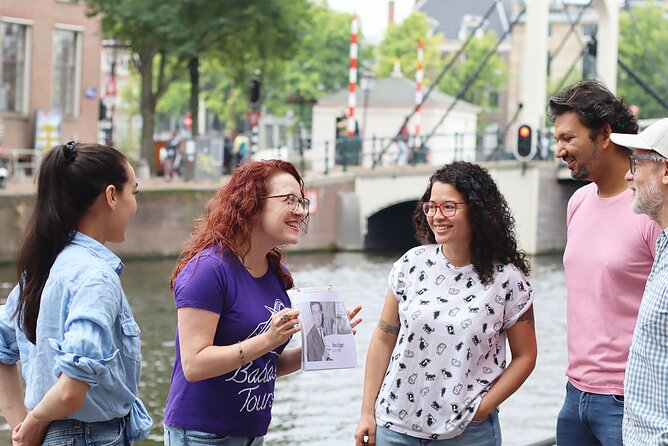
I like the way the guide works like an Amsterdam history nerd with a purpose. Guides such as Elizabeth (and others like Tanja and Astrid) are praised for staying approachable, not rushing, and answering questions in plain language, which makes it easier to absorb tough topics without feeling lectured.
One consideration: it’s a short, story-heavy route, and it leans on good weather. If you want long museum time or slow wandering at every building, this may feel brisk, even though most stops are outside or quick.
Key things I’d mark on your itinerary
- World’s first gay marriage story tied to a real, unassuming city building
- Spinoza Monument with a human angle on exile and community boundaries
- Mozes en Aaronkerk and the free Black community story from the 1600s
- Portuguese Synagogue of Amsterdam and a hidden network tied to Inquisition-era persecution
- Artis Royal Zoo as a springboard for artists and WWII resistance heroes
- University of Amsterdam stop that links suffrage and diplomacy to real people
Before fixing the day, compare this with a few well-reviewed Amsterdam alternatives:


Why this 2-hour Amsterdam tour works so well
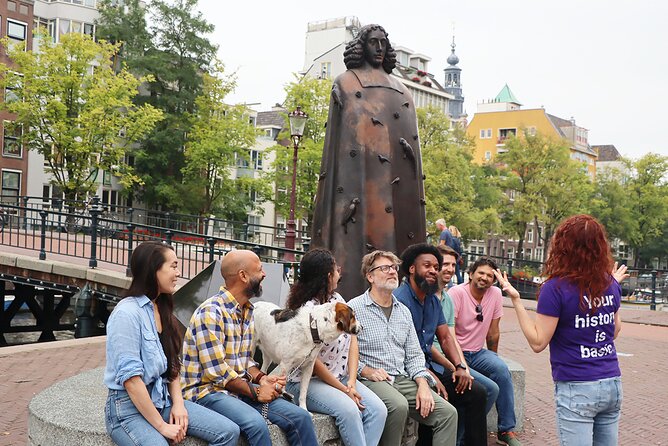
This is the kind of Amsterdam walk that helps you see patterns instead of just passing landmarks. You’re in and out of stops over about 2 hours, with a tight focus on people and turning points, not on checking boxes.
The small group size matters more than you might think. With a maximum of 12 people, the guide can keep the pace humane and make room for questions, including practical ones like what to notice from the sidewalk or how certain stories fit into Amsterdam’s larger shifts.
The guide style is also a big part of the value. One theme in the guide feedback is that they keep things approachable and well-paced, even for people who need extra time or accommodations. That makes the tour feel more like a conversation walk than a rapid-fire lecture.
At $48.16 per person, you’re paying for guided storytelling plus a route that uses outdoor time efficiently. And because each stop lists admission as ticket-free in the tour flow, you’re not paying extra at every location just to hear the story.
Meeting at Amstel, ending at H’ART Museum
You’ll start at Monument Megadlé JethomiemAmstel 23, 1011 PT Amsterdam and finish in front of H’ART Museum (Hermitage Amsterdam), Amstel 51, 1018 EJ Amsterdam. Ending near H’ART is convenient because it gives you a natural next step if you want to see more art after the walk.
The tour uses a mobile ticket, which is helpful in a city where you might be moving between tram stops and quick transfers. It’s also described as near public transportation, so you can arrive without building your whole day around a single parking plan.
Also, the group is English-offered. That sounds obvious, but it matters for story tours, because subtle context can get lost if the guide has to simplify too much.
Stop 1: Dutch National Opera and Ballet and the gay marriage connection
You begin with an introduction that sets the tone, then you get the standout story at the Dutch National Opera and Ballet. The building is tied to the world’s first gay marriage, and you learn how a significant event happened in a place that might look ordinary from the outside.
That’s a clever way to start. Instead of beginning with a “big museum moment,” the tour starts by showing you how Amsterdam’s values show up in real public spaces. It’s also a fast way to get oriented, because the guide can connect what you’re seeing now to what the city became later.
A practical note: since this is a short stop, you mostly experience it through the guide’s framing and what you can observe nearby. If you’re hoping to wander inside the building for a long time, plan that as a separate visit.
- Amsterdam Classic Saloon Boat Cruise with Drinks and Cheese★ 5.0 · 31,825 reviews
- Amsterdam Luxury Canal Cruise + Unlimited Drinks & Bites option★ 5.0 · 30,518 reviews
- Amsterdam: Heineken Experience Ticket★ 4.6 · 30,055 reviews
- Amsterdam: Rijksmuseum Entry Ticket★ 4.7 · 25,535 reviews
Stop 2: Spinoza Monument, exile in one of Amsterdam’s own circles
Next is the Spinoza Monument, a quick stop of about 5 minutes. The story centers on one of modern philosophy’s titans, and how he was pushed out and treated as an outcast by parts of his own community.
I like this stop because it prevents Amsterdam history from becoming one-note “tolerance wins every time.” The narrative angle is more complicated, and that’s the point. You get a reminder that acceptance can have limits, and communities can still enforce conformity even when the city is famous for being open.
This is also a good stop for people who like ideas as much as buildings. Even though you’re not going deep into scholarship, you leave with a human summary you can carry into your later conversations and museum visits.
Stop 3: Mozes en Aaronkerk and the free Black community in the 1600s
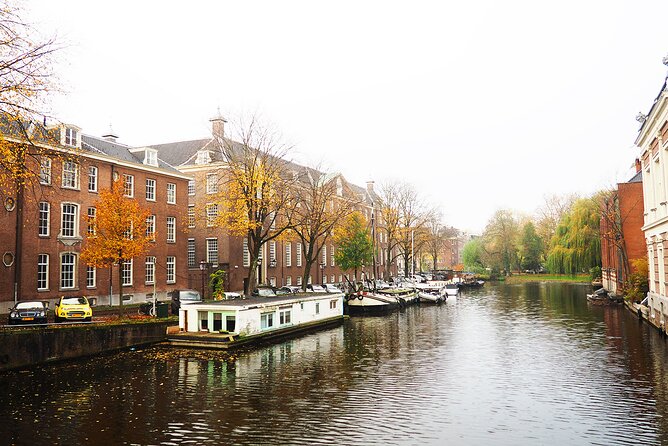
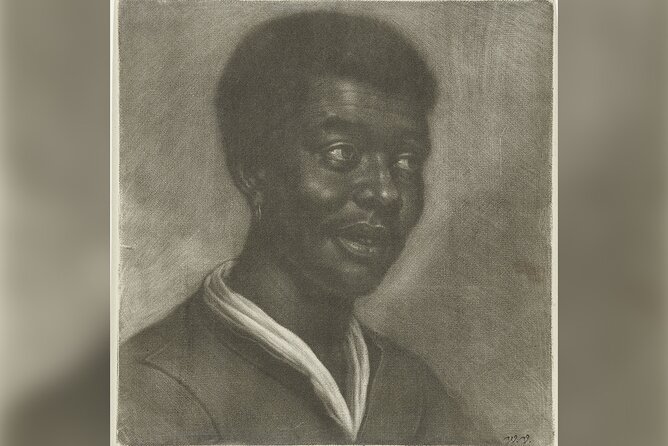
At the Mozes en Aaronkerk, you hear about a couple in Amsterdam’s free Black community in the 17th century. It’s a small, focused moment, but it targets a part of Amsterdam’s story that many visitors never encounter in a standard sightseeing loop.
The value here is perspective. The guide doesn’t treat this as a footnote, they treat it as a lived social world with real people, relationships, and a community presence in the city.
Because the stop is short, you’ll want to listen for the “why this place” explanation. Even if you don’t know much before you arrive, the story is designed to connect you to the building’s place in community life.
Stop 4: Portuguese Synagogue of Amsterdam and an Inquisition-era underground network
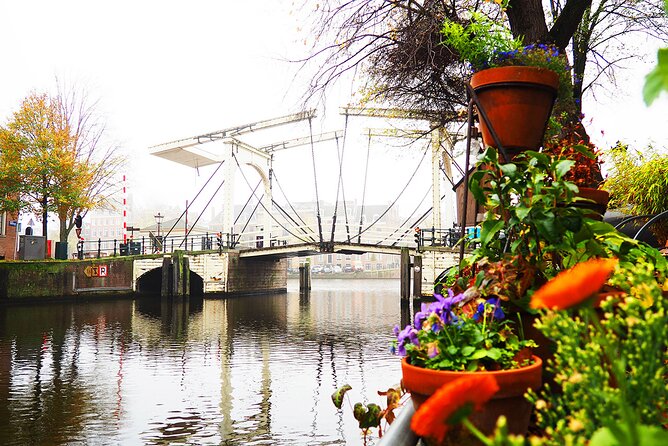
Then comes the Portuguese Synagogue of Amsterdam. This stop is longer than the previous ones, around 10 minutes, and it carries one of the most cinematic storylines in the route: the account of an heiress who created an underground railroad during the Spanish and Portuguese Inquisitions.
Even if you know the phrase underground railroad, the key is that the tour connects the concept to the specific historical pressure faced by Jewish families during those Inquisitions. The guide’s job is to help you understand what secrecy meant in practice, not just as an idea.
Also, remember synagogues are serious places. You’ll typically be outside or viewing the site in the ways a respectful visitor can, but it helps to keep your posture and volume calm. The story hits harder when you treat the place like a witness, not a backdrop.
Stop 5: Hortus Botanicus, Indonesian rebels, and two very different lives
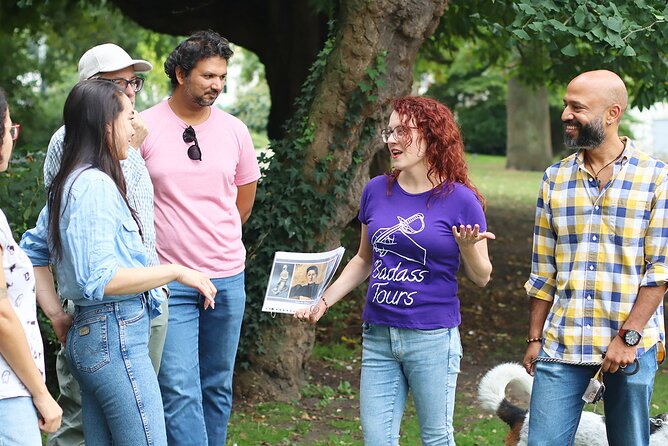
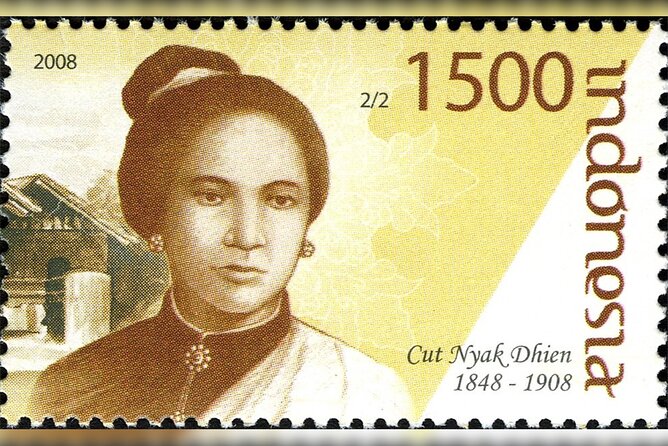
At Hortus Botanicus, you get harrowing stories about two Indonesian rebels and revolutionaries who led very different lives. This is one of the stops where the location works like a bridge, linking Amsterdam’s physical spaces to broader global history.
If you like your sightseeing grounded in cause and effect, this stop delivers. You see how a European city’s institutions can connect to lives shaped by colonial rule, resistance, and political choices that had consequences back home.
The main consideration here is emotional pacing. The stop is only about 10 minutes, so the guide moves steadily. If you’re sensitive to intense historical stories, the short format can be a plus because it prevents lingering too long in distressing context in one go.
Stop 6: De Burcht and the diamond city, plus workers’ rights
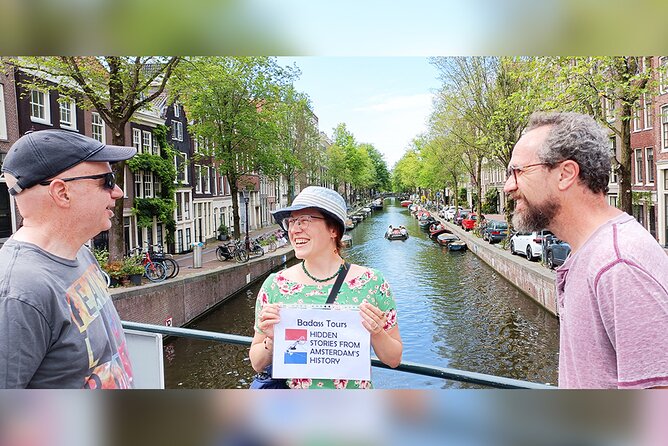
Next is De Burcht, where the story pivots to Amsterdam’s diamond history and the workers’ union that built this iconic building. The guide explains how that labor story helped lead to rights citizens rely on today.
I like this stop because it ties craftsmanship and economics to everyday life. It’s easy to think history is only kings, wars, and paintings. Here you get a reminder that unions and working conditions can change what people experience in daily reality.
You should also look at the building itself during the stop. The guide’s framing makes architecture feel like evidence, not just scenery. Even if you only spend around 10 minutes here, you’ll likely notice details more carefully than you would on a self-guided stroll.
Stop 7: ARTIS Amsterdam Royal Zoo, flamingos and WWII resistance heroes
This stop gives you the longest time: about 30 minutes at ARTIS Amsterdam Royal Zoo. You pass by flamingos, but the guide uses the zoo setting to talk about influential Amsterdammers, including groundbreaking artists and WWII resistance heroes.
The zoo context changes how you experience the stories. Instead of hearing only about politics and institutions, you hear about people who shaped culture and courage within Amsterdam’s own social fabric. The contrast between calm animal viewing and heavy WWII narrative can feel emotionally strange, but it’s also honest to real life, where major events sit inside everyday routines.
Because it’s a longer stop, you’re more likely to get clearer personal takeaways. You’ll have time to ask about connections, or to ask how the stories fit together thematically across the earlier stops.
If you’re expecting lots of animal time, adjust your expectations. The tour includes passing by flamingos while keeping the focus on storytelling and movement within the zoo area.
Stop 8: University of Amsterdam, suffragists and diplomats
At University of Amsterdam, you cross the main campus area and learn about an influential suffragist and a world-changing diplomat. The stop is about 15 minutes, which is long enough for context but short enough to keep the tour momentum.
This is one of the sections that makes the tour feel less like “Amsterdam past” and more like “Amsterdam ideas.” Suffrage and diplomacy are both about how societies negotiate power, and the guide connects those themes back to places you saw earlier.
One tip for this kind of campus walk: watch for small moments where the guide points out a detail you might otherwise miss. Even without a formal museum entry, the guide’s attention helps you read the campus as a space where decisions and influence were formed.
Stop 9: H’ART Museum, why a family name mattered to art fame
Finally, you reach H’ART Museum for about 15 minutes. The story is about how one giant in the art world would not be known today if not for a relative who barely knew him, and the guide shares the fall and rise of a household name.
This is a smart closing move because it turns a museum destination into a story about reputation and chance. It also links perfectly to the tour theme: people, relationships, and power shaping what becomes famous and what gets forgotten.
Since the tour ends at the museum entrance area, you can decide what to do next. If you want to keep the momentum, you’ve got a short step into the art world right where you left off. If you’re museum-ed out, the ending still works because you’re in a central, walkable area for continuing your day.
Value check: is $48.16 a good deal for this route?
For two hours of guided storytelling with a max group size of 12, you’re paying for three things: time with a strong storyteller, access to context you would not easily find alone, and a route that hits multiple communities and turning points without charging admission at each step.
The admission note is important: every stop in the flow lists admission ticket-free. That reduces friction and keeps your day budget-friendly, since you’re not piecing together extra tickets just to stay engaged.
The best value factor is the guide impact. Multiple guide names show up in feedback, including Elizabeth, Tanja, and Astrid, and the common praise is for being engaging, approachable, and organized. That kind of pacing makes it easier to enjoy the tour even if you come in with only basic Amsterdam knowledge.
If you do this hoping for a traditional canal-sightseeing checklist, you might feel slightly out of your comfort zone. But if you want a focused story walk that connects neighborhoods and institutions to real people, the price feels fair.
Who this tour fits best, and who might want another plan
This tour is a strong match for you if you like history with people at the center. The route covers philosophy, community life, persecution and secrecy, labor rights, artists, and WWII resistance, all in a compact format.
It’s also a good fit if you want a more inclusive angle on Amsterdam. The tour is described as responsive for solo travelers looking for a BIPOC-focused perspective, and one guide feedback specifically highlights accommodations for a mother in a wheelchair and with hearing limitations. That suggests the guides take care with how they communicate and pace the group.
One mismatch: if you want long indoor museum time at each stop, this is not built for that. The stops are short by design, so you’ll likely come away wanting deeper independent follow-up at the sites that hooked you most.
Should you book this Amsterdam story walk?
Book it if you want a compact, guided route that connects Amsterdam’s famous face to its complicated human stories. The pacing, small group size, and multiple guide strengths are exactly what you want when you’re trying to understand a city in a limited time window.
Skip it if your top goal is slow sightseeing, long entries, or classic postcard moments with minimal context. This tour is more about the people behind the places than about spending half a day standing in one square.
If you do book, time it with good weather and bring layers. You’ll be happier when you can focus on the stories, not the wind.
FAQ
How long is the Small Group Hidden Gems Tour in Amsterdam?
The tour lasts about 2 hours.
What is the price per person?
The price is $48.16 per person.
What language is the tour offered in?
It is offered in English.
How big is the group?
The tour has a maximum of 12 travelers.
Where do I meet the guide, and where does the tour end?
You start at Monument Megadlé JethomiemAmstel 23, 1011 PT Amsterdam, Netherlands. The tour ends in front of H’ART Museum (Hermitage Amsterdam) at Amstel 51, 1018 EJ Amsterdam.
Do I need to buy tickets for the stops?
The tour information lists admission ticket free for the stops included in the itinerary.
Is the ticket mobile?
Yes, the tour uses a mobile ticket.
Is good weather required?
Yes, the experience requires good weather. If it’s canceled due to poor weather, you’ll be offered a different date or a full refund.
Is free cancellation available?
Yes. You can cancel for a full refund up to 24 hours before the experience starts.
Are service animals allowed?
Yes, service animals are allowed.
More Tours in Amsterdam






More Tour Reviews in Amsterdam





Newly reviewed around Amsterdam



Tours, side by side.
 ★ 4.6Zaanse Schans, Edam, Volendam & Marken Bus TourFrom $3215,034 reviews
 ★ 5.0Anne Frank’s Story – Guided Walking Tour through AmsterdamFrom $3911,619 reviews
 ★ 4.8Life of Anne Frank and World War II Walking TourFrom $3710,467 reviews
 ★ 4.6Johan Cruijff ArenA Tour with Optional GuideFrom $328,954 reviews
 ★ 4.9Red Light District Tour in German/English/ItalianFrom $285,623 reviews
 ★ 4.4Guided Zaanse Schans, Windmills & Cheese TourFrom $224,826 reviews
 ★ 4.0Windmill Tour from Amsterdam, Including Volendam & MarkenFrom $374,572 reviews
 ★ 4.7Guided Bike Tour City Centre in EN/DE/FR/ESFrom $414,187 reviews