
REVIEW · RIJKSMUSEUM TOURS & TICKETS
Skip-the-line Rijksmuseum & Rembrandt House & City – Exclusive Tour Guided Tour
Two museums, one tight half-day, big art payoff. This skip-the-line guided experience pairs the Rijksmuseum’s famous Dutch masters with Rembrandt’s home museum, so you see the work and the world it came from. I love that the Rijksmuseum portion is guided with a clear path through major hits like The Night Watch and The Milkmaid, yet you also get side stops that most visitors miss. I also like the walk that connects the paintings to real Amsterdam scenes, from Rembrandtplein to the old Jewish neighborhood. The main drawback to plan for is stamina, because you are on your feet for about 5.5 hours even though the street stops are short.
If you luck into a guide who goes beyond labels, the tour gets extra good. One guide named Frank was praised for adding details an average tour might skip, plus clear directions to keep you moving without wandering. Still, even with skip-the-line access, security rules can create some lines once you’re inside, and a few rooms can require quiet.
Key things that make this tour worth your time
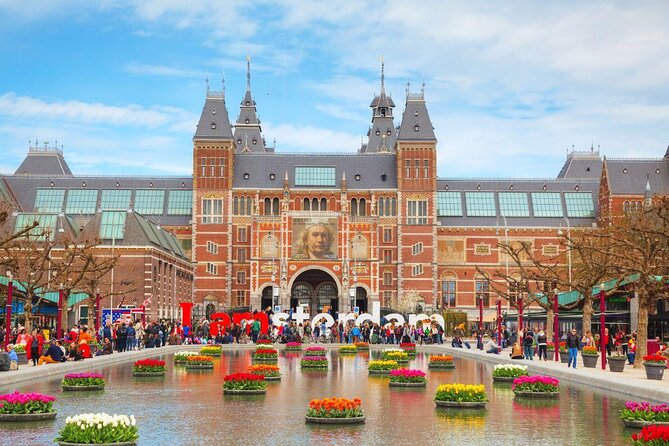
- Skip-the-line entry at both the Rijksmuseum and Rembrandt’s House, so your day stays focused on art
- A guided plan for thousands of works at the Rijksmuseum, including Rembrandt, Vermeer, and standout Dutch objects
- Stop-and-stare Amsterdam streets along the Singelgracht, Keizersgracht, and Rembrandtplein links between art and place
- A focused Rembrandt House visit with context for how he lived and worked from 1639 to 1656
- Practical pacing for a 5.5-hour day, with short outdoor segments and museum time when you want it
- Clear rules before you enter sensitive areas, since some museum rooms restrict speaking
More focused ways through the Rijksmuseum
Why pairing Rijksmuseum and Rembrandt’s House makes sense
I get why people pick the Rijksmuseum first. It’s Amsterdam’s art anchor, with a collection built to show how Dutch life, politics, faith, and trade shaped what people painted and built. But the Rijksmuseum can also feel like trying to drink from a firehose, especially if you show up with zero structure.
This tour solves that problem by tying together two different kinds of Dutch art experience.
At the Rijksmuseum, you’re walking through curated context: 17th-century painting, Dutch material culture, and the visual language of domestic life. Then you move to the Rembrandt House museum, where you’re not just seeing Rembrandt’s name, you’re stepping into the setting he worked in. You’ll still be in Amsterdam’s museums, but the emphasis shifts from masterpiece overview to working-life detail.
For me, the value is in how it compresses your learning curve. Instead of spending your afternoon bouncing between rooms, you get a tour flow that keeps pointing you at what matters and why it matters.
Rijksmuseum: turning 8,000 objects into a story you can follow
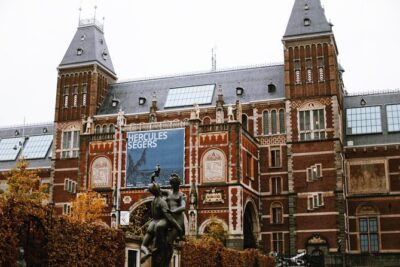
At about 2 hours 30 minutes, the Rijksmuseum segment is long enough to feel satisfying, but short enough that you should come out with a mental map. The tour frames the museum as a Dutch history walk, using paintings and artifacts to explain what life looked like across centuries.
Here’s what that looks like in practice. You get guided attention on major works, plus supporting objects that make those paintings feel less random. For example, you’re introduced to familiar names like Rembrandt and Vermeer, while also picking up context around things that can otherwise be overlooked, such as 17th-century dollhouses and Delft ceramics. That matters because the Dutch Golden Age was not only about grand portraits and dramatic scenes. It was also about everyday objects, rooms, and domestic routines.
The museum has a 19th-century library too, and it’s the kind of stop that can completely change how you think about the collection. Even if you’re not a book person, it gives you a sense of how the museum system tried to organize knowledge. After that, the paintings don’t just look pretty, they start to look like evidence.
What to expect if works are on loan or under restoration
The tour notes that highlighted works may vary depending on whether pieces are on loan or being restored. That’s common at big museums. The key is that the guide still has a structure, so you aren’t left with a random walk. Just keep your expectations flexible and trust the flow.
Another gallery door worth opening in Amsterdam
- Amsterdam: Madame Tussauds Ticket★ 4.4 · 9,415 reviews
- Amsterdam: NEMO Science Museum Ticket★ 4.4 · 2,979 reviews
- Moco Museum Amsterdam Admission Ticket with Banksy and more★ 4.0 · 1,745 reviews
- Ticket to The Ultimate 5D Flight Experience at THIS IS HOLLAND★ 4.5 · 1,413 reviews
The masterpieces you’ll likely focus on (and what to look for)
You’re not expected to “see everything.” The tour intentionally spotlights signature works so you can recognize them fast and understand what makes them distinct.
At the Rijksmuseum, the tour highlights include:
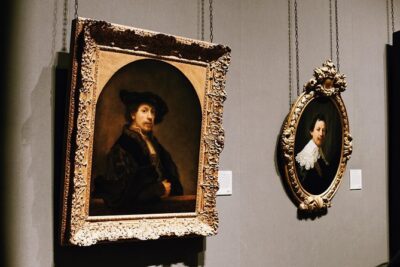
- Rembrandt masterworks
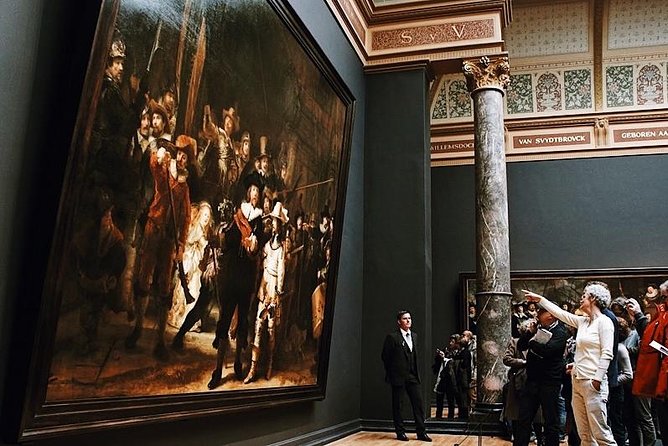
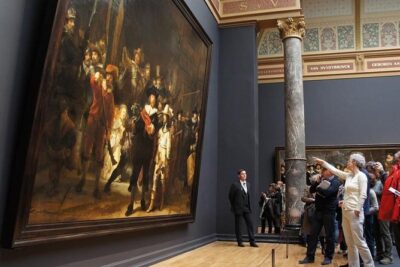
- The Night Watch
- The Jewish Bride
- The Syndics of the Drapers’ Guild
- Vermeer’s The Milkmaid
The practical upside of having these anchor pieces in your route is that your brain starts grouping everything else around them. If you pause at The Night Watch, for instance, you start thinking about civic pride and group identity, then the guide can point out how other artworks fit the broader social picture.
And with Vermeer’s The Milkmaid, the guiding value is in how you look at domestic space. You’ll likely be reminded that Dutch art wasn’t only about big historical events. It also chronicled labor, household routines, and how people arranged their worlds.
If you’re the type who wants an art “starter kit” for first time museum visits, this is the kind of plan that actually helps. Instead of you guessing what’s important, you get a shortlist and an explanation style that sticks.
More than paintings: Dutch artifacts, dollhouses, and what they say about life
One of the smartest parts of this tour is that it treats the Rijksmuseum as more than a painting gallery. You’ll spend time with objects that represent how Dutch people lived and what they valued.
Examples mentioned include 17th-century dollhouses, globes, ship replicas, and Delft ceramics. That set of details is more than trivia. It gives you a sense of how knowledge traveled. Globes and ship replicas connect to exploration and trade, while Delft ceramics speak to taste and everyday display.
The dollhouse angle is especially good for visual learners. It shows you miniature domestic life, which makes later paintings of interiors feel less abstract. If you’ve ever stared at a room painting and wondered what you were supposed to notice, these artifact stops train your eye for the right stuff.
Outside the museum: canallines, landmarks, and the Rembrandt-era streets
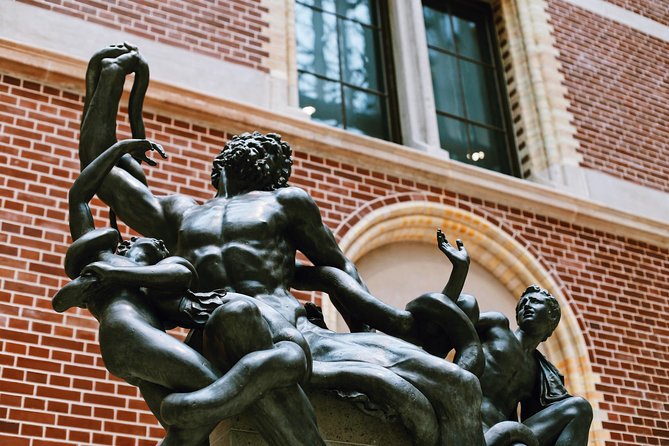
After the Rijksmuseum, the tour shifts into walking mode. Expect quick, timed breaks rather than long stops, since the goal is to stitch the day together.
You’ll head toward Amsterdam’s canals and key street landmarks:
- Singelgracht (former outer city defenses) near Spiegelkwartier
- Keizersgracht (the widest of the inner canals), tied to Emperor Maximillian of Austria
- Museum Van Loon for a quick look at the canalside house associated with Ferdinand Bol, Rembrandt’s favorite pupil
Even though these are short segments, they matter because Amsterdam’s layout is part of the story. Canals are not just scenery, they shaped where people lived, traded, and built wealth. Seeing the waterway borders right after the Rijksmuseum makes the museum’s economic context feel more real.
Stopera and the shift from art to city life
You’ll also pass the Stopera, the building complex housing both the Dutch National Opera and Ballet and the city hall. The construction took decades, so it’s a reminder that Amsterdam keeps reworking its cultural spaces. It’s a neat contrast after walking through centuries of art.
Flower market, Munttoren, and Rembrandtplein moments
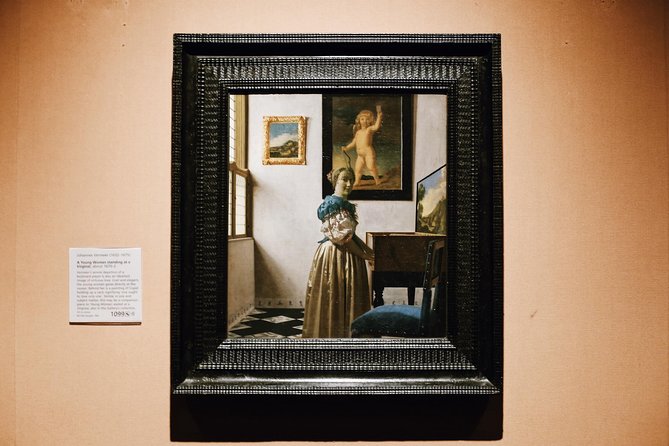
This tour includes a short walk through the Bloemenmarkt area, where you’ll see the Munttoren, nicknamed the Mind Tower. It’s described as originally part of a main medieval city gate, and that’s a great example of how Amsterdam layers time on top of itself.
Then the route moves through Rembrandtplein, one of the busiest squares in the city. Here you’ll see a bronze-cast representation of The Night Watch, displayed for the artist’s 400th birthday in 2006. This is more than a photo stop. It’s a quick way to bring the museum piece back into street-level Amsterdam, so the painting feels less trapped behind glass.
The Amstel, two bridges, and a quick geography reset

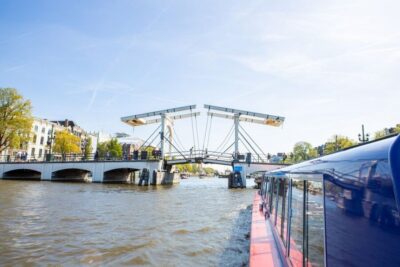
Near the end of the walking portion, you’ll see the Amstel River and two bridges called the Skinny Bridge and the Blue Bridge. The Blue Bridge isn’t actually blue, and the naming comes from an earlier wooden blue bridge from the 17th century.
This kind of information is useful because it trains you to look at names as clues. In Amsterdam, place names carry the memory of what used to exist. That’s exactly the kind of “small added value” good guides bring, and it makes the city walk feel more purposeful.
Museum Het Rembrandthuis: stepping into the years 1639 to 1656
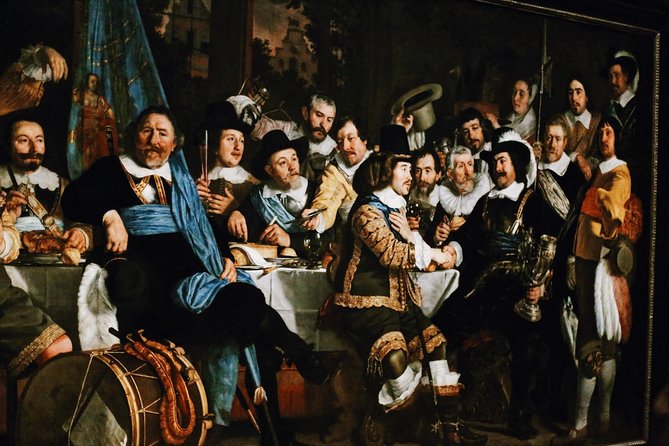
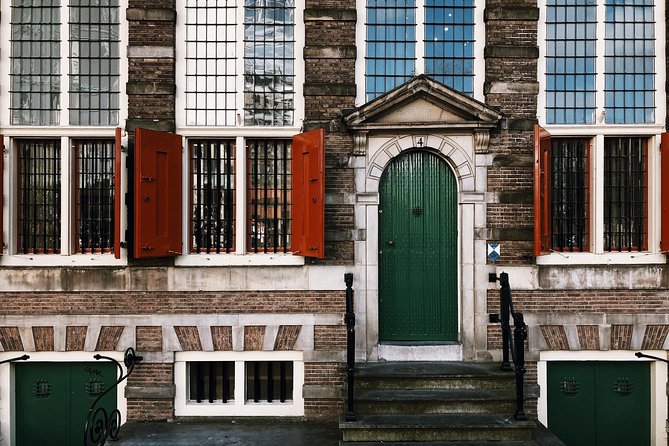
The final museum stop is Rembrandt House Museum. You get about 1 hour here, and the focus is on Rembrandt’s life and work between 1639 and 1656.
This is the part of the tour that feels most personal, even though it’s still a museum. A house museum changes the scale. Instead of thinking about Rembrandt as an artist hanging in a gallery somewhere, you see him as a working person in a working space.
The tour notes that the collection contains Rembrandt’s etchings and paintings of his contemporaries. That’s a strong match for the day’s earlier emphasis on his major works. If you’ve been seeing his paintings through the Rijksmuseum spotlight, this is where you can connect the dots to his broader artistic activity.
Important onsite notes that affect your experience
A few practical things can make or break your comfort during the Rembrandt House and Rijksmuseum parts:
- Appropriate dress is required for entry to some sites.
- No large bags or suitcases inside the museums. Only handbags or small thin bag packs through security.
- Some rooms can have quiet or restricted speaking rules, and the guide will explain where that applies before you enter.
- Even with skip-the-line, security may still create some lines.
This isn’t meant to scare you. It’s just the reality of big museums and the best way to avoid stress.
Timing and pacing: how this 5.5-hour day feels in real life
The day is built like this: a substantial Rijksmuseum block, then a chain of short city stops, then the Rembrandt House.
You also get a lunch break built into the 5.5 hours. The tour duration includes that break, but it does not say lunch is provided. Plan to use the walking breaks and the lunch window to grab something nearby so you don’t end up hungry at the wrong time.
Also, the tour runs rain or shine. Amsterdam weather can change quickly, so bring a rain layer you can actually move in.
Price and value: what $284.15 buys you
At $284.15 per person, this is not a budget day. What makes it feel reasonable is that you are paying for three things that add up fast in Amsterdam:
- Skip-the-line access at both the Rijksmuseum and Rembrandt House, which protects your schedule.
- Guided interpretation that organizes a huge museum into a walkable route.
- City walking context that connects the art stops to recognizable streets and canals.
You also get entrance fees included, which matters because museum pricing can stack quickly when you’re doing multiple sites in one half-day.
The tour is described as private, meaning only your group participates. That usually makes the pacing smoother, especially with a tight schedule and short street segments where you need to stay together.
If you’re traveling with art-loving people who want maximum clarity without spending hours planning, this price starts to look like convenience plus education rolled into one.
Who this tour fits best (and who might want a different approach)
This tour is ideal if:
- you’re short on time but want both the Rijksmuseum and Rembrandt House
- you like a guide who points out what to look for, not just a list of facts
- you want art plus city context, like canals, bridges, and historic neighborhoods tied to the artists
You might want to consider something else if:
- you strongly prefer self-paced museum browsing and hate structured routes
- you dislike walking for a full half-day, even with short segments
- you’re traveling with someone who can’t handle museum security and bag rules
Quick tips to get the most out of your day
Here’s how to make this kind of structured museum and walking tour work well:
- Have your phone number ready with country code, since a mobile phone number is required.
- Bring a small bag that fits museum security rules, because large bags or suitcases are not allowed.
- Wear shoes you can walk in for hours, since the short stops add up.
- If the Rijksmuseum has an occasional closure, the tour says you’ll be offered an appropriate alternative if delayed more than 1 hour from the tour start time. Keep some flexibility in your schedule.
Should you book it?
If you’re trying to see the Rijksmuseum and Rembrandt House without spending your trip mapping out routes and ticket timing, this tour is a strong choice. The biggest win is the combination of skip-the-line access, a guided plan through high-impact Rijksmuseum highlights, and a street walk that gives those artworks real geographic context.
Book this if you want clarity and momentum. Skip it if you want total freedom to roam or if walking four plus miles across museums and streets will feel like too much.
If you fit the first group, you’re likely to come away with both better museum memories and a better sense of where Rembrandt fits into Amsterdam.
FAQ
Is this a private tour or a shared group?
It’s described as private, meaning only your group will participate.
How long is the tour?
The duration is about 5 hours 30 minutes (approximately), and it includes a lunch break.
What time does it start and where do you meet?
It starts at 10:00 am. The meeting point is Cobra Café, Hobbemastraat 18, 1071 ZB Amsterdam.
What language is the tour offered in?
The tour is offered in English.
Do I get skip-the-line access?
Yes. The tour includes skip-the-line guided museum access for both the Rijksmuseum and Rembrandt House.
Are entrance fees included?
Yes. The tour includes all entrance fees.
Is there a mobile ticket?
Yes, the tour includes a mobile ticket.
Are there any bag or dress requirements?
Appropriate dress is required for entry to some sites. Also, no large bags or suitcases are allowed inside the museums, only handbags or small thin bag packs through security.
What if the Rijksmuseum is unexpectedly closed?
The Rijksmuseum may close occasionally without prior warning. If the opening is delayed more than 1 hour from the tour starting time, the tour will provide an appropriate alternative. In these cases, refunds or discounts are not provided.
Who should bring a mobile phone number?
You must provide a mobile phone number (including the country code).
More Tour Reviews in Amsterdam






Another Amsterdam Museum Afternoon






Stay with the Dutch Masters





Newly reviewed around Amsterdam





Rijksmuseum Tours & Tickets, side by side.
 ★ 4.7Rijksmuseum Entry TicketFrom $3125,535 reviews
 ★ 4.5City Canal Cruise and RijksmuseumFrom $452,129 reviews
 ★ 4.5Rijksmuseum Amsterdam Small-Group Tour with Private UpgradeFrom $901,547 reviews
 ★ 4.3Rijksmuseum Entry Ticket and Canal Cruise ComboFrom $451,276 reviews
 ★ 4.7Rijksmuseum Guided Tour and TicketFrom $78649 reviews
 ★ 5.0Rijksmuseum Amsterdam Exclusive Guided Tour w/ Reserved EntryFrom $108440 reviews
 ★ 5.0Van Gogh & Rijksmuseum w/ Reserved Entry Semi-Private 8ppl MaxFrom $288419 reviews
 ★ 5.0Van Gogh & Rijksmuseum w/ Reserved Entry Exclusive Guided TourFrom $288254 reviews
More ways to plan this visit