
REVIEW · RED LIGHT DISTRICT TOURS
Red Light District tour in Amsterdam
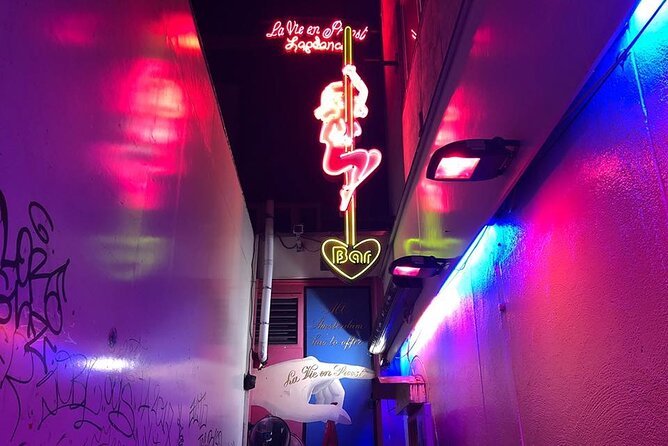
Amsterdam explains its Red Light District with real context. This walk circles De Wallen and major squares for about 90 minutes, connecting prostitution history, the coffee shop tradition, and how the neighborhood changed.
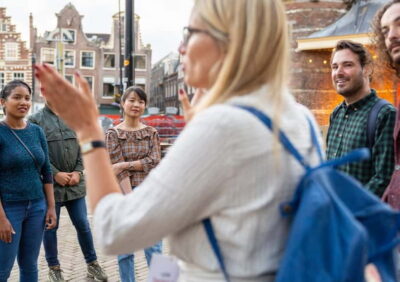
I love the small group setup (up to 15 people), and I like that guides, including Carlos and Nadav, keep things question-friendly. You get a relaxed stroll and a chance to ask what you are actually wondering, not just hear a script.
One consideration: since city rules tightened in 2020, this tour stays outside the Red Light District viewing zone, so you will not go in. Also, a few people said the meeting point can be a little tricky to spot at first.
Key things I’d bookmark before you go
- You stay on the perimeter of De Wallen, so think context, not inside access
- Coffee shop history is part of the story, including how it fits local tolerance
- Dam Square, Warmoesstraat, and Old Church area add layers beyond the sex trade topic
- Zeedijk and Chinatown make a sharp contrast, including how the area changed from danger to everyday hangout
- A map ends the tour, so you can explore the last stretch at your own comfort level
- Guides bring personality, and names like Carlos, Nadav, and David show up in the feedback for a reason
Other history-led walks through De Wallen
Price and logistics: what you get for $31.44
At $31.44 per person for about 1.5 hours, this is priced like a specialty walking tour, not a museum visit. The value is the guided interpretation, not admissions, since the listed stops don’t require ticket fees.
It is offered in English with a mobile ticket, and the group size caps at 15. The walk is described as moderate, and Amsterdam is flat enough that, for most people, this is more “comfortable strolling” than “real hiking.”
You start at Bistro Berlage, Beursplein 1, 1012 JW Amsterdam, and the tour ends back at the same meeting point. Expect typical city weather, so bring layers. One review even mentioned the guide was careful with slippery snow, which is exactly the kind of small detail that matters on a night walk.
Your 90-minute itinerary, stop by stop
This is a guided loop that uses the city like a living textbook. The route focuses on key landmarks around the Red Light District area, then gives you a map for what to do next.
Stop 1: De Wallen (the Red Light District perimeter)
You start at De Wallen, the core area people associate with Amsterdam’s reputation. The guide’s goal is to explain why sex workers settled here, and how Amsterdam built (and defended) a famously liberal approach over time.
What you should expect: you will learn the place’s role in the city’s history, but you won’t enter the viewing zone as a group. In other words, come for the meaning, not for a close-up.
- Amsterdam Classic Saloon Boat Cruise with Drinks and Cheese★ 5.0 · 31,825 reviews
- Amsterdam Luxury Canal Cruise + Unlimited Drinks & Bites option★ 5.0 · 30,518 reviews
- Amsterdam: Heineken Experience Ticket★ 4.6 · 30,055 reviews
- Amsterdam: Rijksmuseum Entry Ticket★ 4.7 · 25,535 reviews
Stop 2: Dam Square and the origin of coffee shops
Next is Dam Square, where the guide connects the idea of coffee shops to Amsterdam’s older tolerance and freedom. Even if you already know Amsterdam’s modern coffee shop reputation, this stop puts it in a longer storyline: laws, public attitudes, and what “allowed” looked like in different eras.
The drawback here is time. It is only about 10 minutes, so the value is what the guide points out, not how much you can learn just by standing around.
Stop 3: Warmoesstraat, one of the city’s oldest streets
On Warmoesstraat, you get a street-level feel for how the neighborhood shifted from older urban fabric into an entertainment strip. The guide also helps you notice nearby landmarks, including a glimpse of the Old Church.
This stop works best if you like reading a place from the street. If you want only the sex trade story, you might think this part is “extra,” but it helps you understand why the area looks the way it does today.
Stop 4: Zeedijk and Chinatown’s change of identity
At Zeedijk, the tour turns to Chinatown and how the street was once considered dangerous in the 1970s. The guide then walks you through why the area declined and what replaced it, so it feels less like a shock story and more like a real urban transformation.
A practical tip: this is a good moment to ask questions. The topic spans crime, migration, and local policy, so a quick “why did it change?” question can unlock a lot.
Stop 5: Nieuwmarkt and what legalization means in practice
At Nieuwmarkt, the guide addresses legalization and then shifts to the hard part, the challenges sex workers still face today. This is where the tone can feel most human, because it is not just “how it works,” but “what it costs.”
What helps: the tour keeps a respectful focus. Still, if you have a very low tolerance for adult-content discussion, this portion may not feel comfortable.
Stop 6: Kloveniersburgwal, the coffeeshop scene and its legal status
At Kloveniersburgwal, the guide brings it back to coffeeshops, explaining their cultural significance and the basics of their legal standing. This is also where you start seeing the neighborhood as a mix of tourism, local rules, and day-to-day life.
One thing I like about this stop: it frames coffeeshops as part of Amsterdam’s identity, not just a strange side note.
Stop 7: Paulusbroederssluis, map time and self-guided exploring
Finally, at Paulusbroederssluis, you get a map with info and a nudge to discover the area yourself. This matters because you are not entering the viewing zone as a guided group, so the map becomes your “okay, now what” tool.
A few people loved this structure, because it lets you choose how close you want to get and when to step away.
Coffee shop culture, Dam Square, and Amsterdam’s tolerance story
What makes this tour feel different from a generic city walk is the way it connects coffee shops to tolerance as an ongoing system. Dam Square is the anchor, and then other stops show you how that idea spread across streets and behaviors.
You also learn a key point that clears up confusion fast: Amsterdam’s tolerance is not just a vibe. It is tied to rules, enforcement, and how the city managed public attitudes over time. Once you hear that, coffeeshops stop feeling like random oddity and start feeling like a piece of the city’s logic.
I also appreciate that the tour aims for context, not just shock value. Several guides, including Carlos, were described as funny and open to questions, which keeps the topic from feeling like a one-note lecture.
Zeedijk and Nieuwmarkt: how “legal” meets real life
The Zeedijk and Nieuwmarkt pairing is smart. Zeedijk gives you the big-city shift story: a place can go from risky to normal, and the streets can change in what feels like a blink. Nieuwmarkt then brings you back down to the human reality of legalization.
This is where you learn that legalization is not a magic wand. The guide explains why it happened, then outlines what sex workers still deal with. If you care about policy and social outcomes, this section is the most thought-provoking part.
If you do not, it can still be worthwhile because it helps you avoid a common trap. Without this context, the Red Light District becomes only a spectacle. With it, you see the neighborhood as an ongoing negotiation between people, laws, and public opinion.
Kloveniersburgwal and the map: your next moves after the tour
Because city regulations prevent guided groups from entering the Red Light District viewing zone, the tour ends with practical help. You get a map and info for the last stretch, so you can decide how you want to explore after you finish.
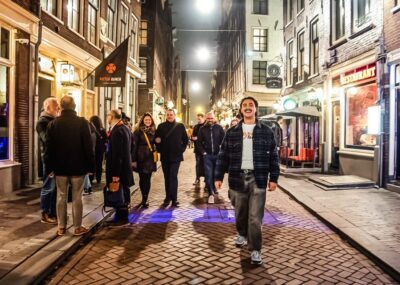
I like that this approach respects different comfort levels. You can keep walking, you can stop for a photo (from where you are allowed), or you can simply enjoy the surrounding streets without turning the night into awkward fieldwork.
The tour also includes a small gift guaranteed to bring a smile. One review even mentioned genital-shaped gummies, which sounds silly until you realize it does something useful. It breaks tension, signals a light, respectful tone, and reminds you that Amsterdam is playful even when the topic gets serious.
Guides, pace, and how to get the best experience
This is the part that can make or break a tour like this, and the feedback here is strongly positive on guide style. People praised guides for being fun, personable, patient, and really able to answer questions. Carlos and David were called out by name for enthusiasm and humor, and Nadav was described as careful with conditions like snow.
You should still set expectations. The tour is marketed as about 1.5 hours, but real groups are real groups. One person said it finished closer to 1 hour, while another said it ran longer. That variation can depend on how many questions the group has and how the guide paces the stops.
Also pay attention to the content tone. The tour is described as informative without being overly graphic, but it still covers sex work and drugs as part of the area’s story. One review said the guide handled it respectfully, while another felt some topics were not a good fit. If you want a tour that is strictly historical and never uncomfortable, you might want to think twice.
If meeting points are stressful for you, plan a little buffer time. A few reviews mentioned trouble finding the exact meetup spot, so take a quick look around Bistro Berlage before everyone converges.
Should you book this Red Light District walking tour?
Book it if you want context. This is one of the better ways to understand why Amsterdam developed its reputation, how prostitution and coffee shop culture connect to local tolerance, and how the surrounding streets evolved.
Skip it if your main goal is to watch the Red Light District up close as a guided group, because the tour stays outside the viewing zone under city rules from 2020. Also skip if you prefer a totally sanitized tour, because the guide will discuss the adult reality of the neighborhood even when they keep it respectful.
If you like asking questions and walking at a steady pace, this is a strong value for your first night in the area, especially because you leave with a map and a clearer sense of what you are looking at.
FAQ
How long is the Red Light District walking tour in Amsterdam?
It runs for about 1.5 hours.
Where does the tour start, and where does it end?
The tour starts at Bistro Berlage, Beursplein 1, 1012 JW Amsterdam, Netherlands, and it ends back at the same meeting point.
Is the tour allowed to go inside the Red Light District itself?
No. Tours in the Red Light District have been prohibited since 2020, so the tour goes around the outskirts.
What is included in the tour?
You get a 1.5 hour walking tour, a map with information for the last stretch, and a small gift.
Is the tour offered in English?
Yes, it is offered in English.
Are tickets mobile?
Yes, the tour includes a mobile ticket.
Is there an entry fee for the stops?
The listed stops show admission ticket free, so no separate admission is indicated.
Are service animals allowed?
Yes, service animals are allowed.
More Tours in Amsterdam





More Tour Reviews in Amsterdam


De Wallen Beyond the Spectacle



Newly reviewed around Amsterdam


Red Light District Tours, side by side.
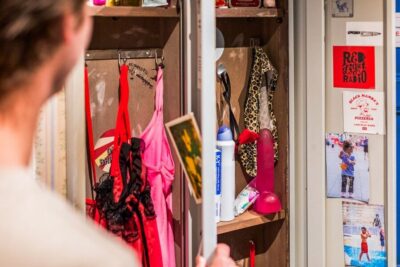 ★ 4.2Red Light Secrets Museum Entry TicketFrom $175,722 reviews
 ★ 4.9Red Light District Tour in German/English/ItalianFrom $285,623 reviews
 ★ 4.6Amsterdam Red Light District & Coffee Shop TourFrom $294,134 reviews
 ★ 4.1Red Light District Pub Crawl with Unlimited ShotsFrom $242,130 reviews
 ★ 4.5Amsterdam Red Light District Pub CrawlFrom $241,497 reviews
 ★ 4.5Red Light District TourFrom $331,135 reviews
 ★ 4.1After Dark Red Light District TourFrom $571,030 reviews
 ★ 5.0Private Amsterdam Red Light District and Coffee Shop TourFrom $41763 reviews
More ways to plan this visit