
REVIEW · RED LIGHT DISTRICT TOURS
MUST DO: Amsterdam’s Red Light District tour with a local
One street at a time, the city tells the truth. This 2-hour, after-dark walk through Amsterdam’s Red Light District gives you the context most plaques skip. You also get a tour of nearby Old Town landmarks, including Amsterdam’s wooden-pole building story and the Waag area.
What I love is the way it mixes atmosphere with straight facts. I especially like the focus on the oldest parts of Amsterdam, where the ground itself explains why the city looks the way it does. I also love that you walk on foot, so you can slow down, notice details, and actually feel the street-level vibe.
One consideration: this is not a fit for everyone. If you have limited mobility, it’s not recommended, and if adult themes make you uncomfortable, this neighborhood will do that to you, even when the guide keeps things historical.
Quick hits before you go
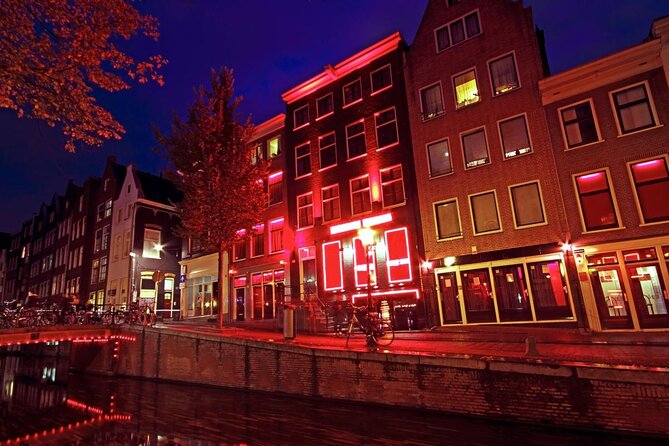
- Two hours on foot after dark, so you see the neighborhood the way locals experience it
- Max 20 people, which usually means more time for questions and clearer pacing
- Old Town building history, including Amsterdam’s wooden foundation and the sandy layer depth
- Standout stops, like Pub The Ape (Int Aepjen) and the Waag square area
- A very specific modern stop, the world’s first condom shop that has been in place since 1987
Other history-led walks through De Wallen
Price and value: what $31.32 buys you in the real world
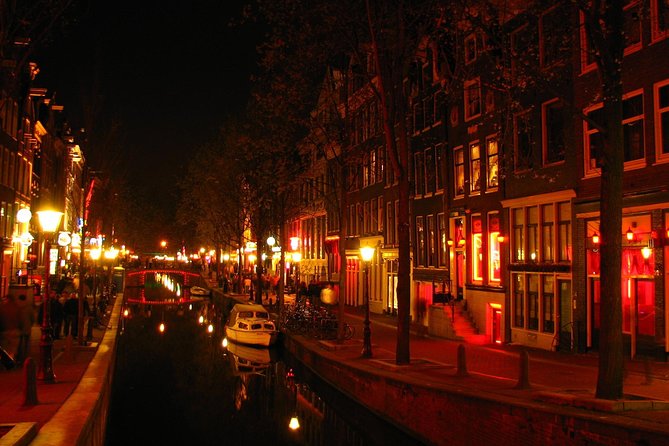
At about $31.32 per person for roughly 2 hours, this is priced like a small local tour you can slot into your evening. The value comes from more than “seeing sights.” You’re getting a guide who can explain why this part of town exists, how it changed over time, and what the present-day situation looks like on the street.
Also, there’s no separate admission ticket cost called out for the listed stops, which keeps the trip straightforward. And because it’s a walking tour, you’re not paying to sit on a bus while the guide works hard. You’re paying to have someone put the pieces together as you move.
Finally, the schedule tends to fill. On average, people book this about 47 days in advance, so if your dates are fixed, don’t wait until the last minute.
Where you meet, and how the 2-hour walk usually feels
You start at Geldersekade 2, 1012 BH Amsterdam. The tour ends back at the meeting point, which makes your planning easy. You can eat before you go, or grab something after, without needing a big transfer across town.
This is a focused 2-hour route on foot. The pace is active, but not rushed, and the idea is that you learn while you walk, not after you’ve stopped. That matters because the Red Light District is a neighborhood of tight corners, short sightlines, and constant change. You’ll get more from it if you come ready to keep moving.
If the weather is cold or wet, plan for slick spots. Amsterdam evenings can turn icy, and you’ll cover narrow streets. Grippy shoes help a lot.
Stop 1: Red Light District streets, history, and what’s changed
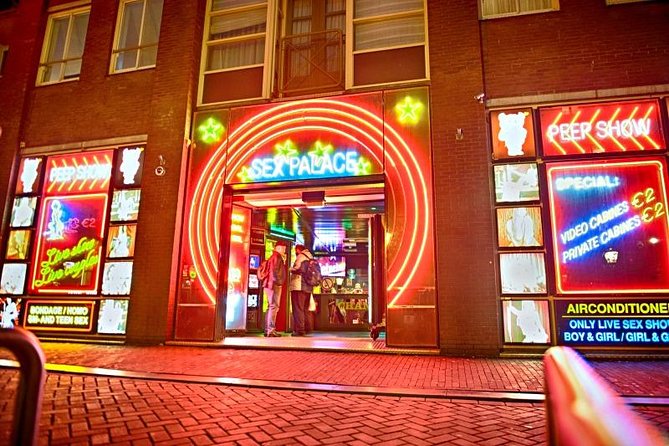
You begin with a walk through the Red Light District’s narrow streets. The best part is that you’re not treated to stereotypes. You get a guided explanation of how the area developed, what the neighborhood looks like now, and how Amsterdam has tried to manage the reality of sex work in the city.
This area is also connected to the Old Town core. You’ll hear why this is considered some of the oldest city fabric, which is a key shift in how you’ll see the whole neighborhood. Instead of thinking only about the present, you start connecting it to centuries of urban life, commerce, and regulation.
Practical takeaway: go in with an open mind, but also with boundaries. A good guide will keep the information historical and contextual. Still, you are in an adult district at night, and you may see things you’d rather not linger on. That’s part of the deal.
- Amsterdam Classic Saloon Boat Cruise with Drinks and Cheese★ 5.0 · 31,825 reviews
- Amsterdam Luxury Canal Cruise + Unlimited Drinks & Bites option★ 5.0 · 30,518 reviews
- Amsterdam: Heineken Experience Ticket★ 4.6 · 30,055 reviews
- Amsterdam: Rijksmuseum Entry Ticket★ 4.7 · 25,535 reviews
Amsterdam built on trees: the wooden poles story under your feet
One of the most interesting parts of the evening is the explanation of Amsterdam’s foundations. The tour frames it with a simple idea: Amsterdam is a city built on wooden poles.
Here’s the core of what you’ll learn:
- Amsterdam sits on a thick layer of fen and clay.
- Wooden poles are driven down and fixed into a sandy layer.
- The sandy layer is about 11 meters deep.
- Houses were built on wooden foundation piles, driven through clay, peat, and water until they reach solid sand.
Why does this matter to your trip? Because once you understand the foundations, a lot of Amsterdam makes more sense. The city’s buildings, streets, and historic structures exist in a landscape that forced builders to solve a unique problem. You’re standing in a place where engineering shaped daily life.
This also adds depth to the Red Light District conversation. It stops being just a nightlife story and becomes an urban story. Same city, same streets, different timelines.
The oldest core of the Old Town: why guides start here
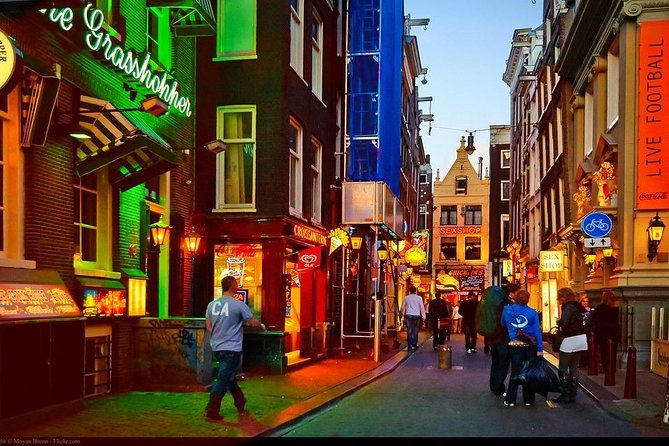
You’ll be shown that the Red Light District area you’re walking through overlaps with the Old Town zone, the oldest part of the city. That’s not a throwaway line. It’s a reason the guide can connect today’s streets to older patterns of housing, commerce, and city planning.
This “oldest core” framing changes your mindset fast. You start noticing layers: where something feels preserved, where it feels modernized, and where history is still visible in the shape of the streets. Even if you’re visiting for the adult neighborhood, this part is what turns it into a genuine city-understanding walk.
Pub The Ape (Int Aepjen): why one wooden building matters
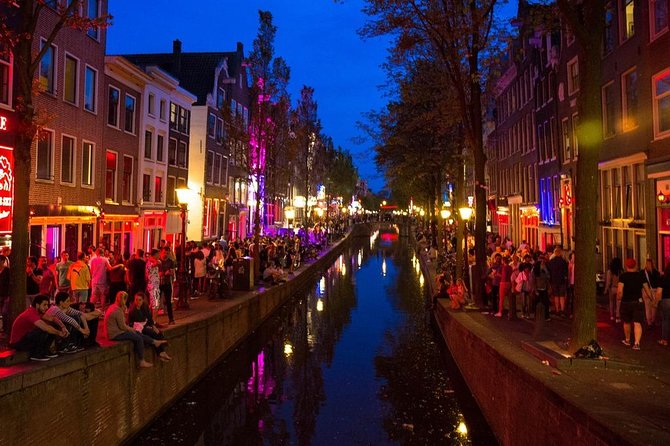
A standout stop is Pub The Ape, also known in Dutch as Int Aepjen. You’ll hear that it was built around 1540 and that it is one of only two remaining wooden buildings in Amsterdam.
The story doesn’t end at the building itself. You’ll also learn why it became rare. After a big fire in 1452, the government shifted policy toward brick facades. That means buildings like this one are more than a curiosity, they’re evidence of a turning point in how Amsterdam built.
What I like about this stop is how it grounds the evening in real material. It’s easy to treat the Red Light District like a themed street. Int Aepjen quietly says, this city has always been making rules, rebuilding, and adapting after disasters.
The Waag: from a city gate to a guild meeting spot
Next you’ll connect the dots to the Waag, a landmark tied to Amsterdam’s defensive past. The Waag used to function as part of the city gates and defensive wall system, built around the 1400s.
You’ll also learn it’s one of the oldest buildings in Amsterdam, described as the second oldest. Later on, it served as a base for guilds and craftsman organizations. Crafts groups sat inside the Waag and also around the square.
This stop gives you a bridge from the Red Light District to the broader logic of historic Amsterdam. You start seeing how trade, regulation, and social life all overlap. It’s not just history for history’s sake. It’s a way to understand why city squares and gate buildings became central gathering points.
Smallest house and VOC storage: how trade shaped housing
Another memorable stop is the smallest house of Amsterdam, built around the 1700s. You’ll be told it was first used as storage for the VOC trading company. Later, people lived in it for a very long time.
This is one of those details that sticks because it’s specific and a little surprising. A tiny building tied to global trade tells you Amsterdam was never just canals and art museums. It was also business, shipping, and the need for practical spaces, even if the spaces were small.
As you walk, this kind of stop changes how you read the neighborhood edges. You notice that the city’s adults-only street has the same city logic underneath it: work, storage, guilds, and housing shaped by economic forces.
The condom shop since 1987: a modern marker with a long message
The evening includes a visit connected to a modern retail landmark: the world’s first condom shop dedicated entirely to condoms. It’s described as being in place since 1987, and you can get customized condom sizes and different special condom options.
Even if you’re not shopping, this stop is useful because it shows the neighborhood’s current function. Amsterdam has always been practical about human needs and city realities, and this is part of that same pattern. A guide can help you interpret it in context, not just as a weird photo opportunity.
It also keeps the tour from becoming one-note. After the historic buildings and foundations, you get a contemporary checkpoint. It’s a reminder that neighborhoods evolve, even when they’re famous for one defining feature.
Guide styles that make or break this kind of night tour
This tour lives or dies by the guide. The best ones use clear storytelling and connect facts to what you’re seeing on the street right now. In the feedback, people call out guides like Ben, Robin, Sander, and Max for making the history feel alive, not like a lecture.
What you should look for in any guide is simple:
- They explain why things happened, not just what exists now.
- They balance adult-topic context with respectful street-level facts.
- They keep their voice clear, since narrow streets can swallow sound.
I also recommend going in ready to listen. If you’re prone to distractions at night, you’ll miss details that are actually the point of the tour.
Who should book this tour, and who should choose differently
Book it if:
- You like city history that you can see with your feet, not just read on a sign.
- You want an after-dark walk that stays grounded in how Amsterdam works as a city.
- You’re curious about how neighborhoods change over time, from foundations to modern retail.
Consider skipping it if:
- You have limited mobility. The tour isn’t recommended for that.
- Adult themes make you uneasy, even when the focus is historical and contextual.
- You want only daytime sightseeing. This one is specifically timed for the evening street experience.
If you’re visiting Amsterdam for the first time, I like pairing a tour like this with a more traditional canal and museum day. That way you get the full picture: the polished postcard city and the lived-in parts of town that also tell you how Amsterdam thinks.
FAQ
How long is the Amsterdam Red Light District walking tour?
It lasts about 2 hours.
Where do I meet, and does the tour end nearby?
You meet at Geldersekade 2, 1012 BH Amsterdam, and the tour ends back at the meeting point.
Is the tour offered in English, and do I get a ticket on my phone?
Yes, it’s offered in English, and you get a mobile ticket.
How much does it cost per person?
The price is $31.32 per person.
Is admission included for the stops?
Admission tickets are listed as free, so you won’t need to pay separate entry fees for the stops mentioned.
Is this tour suitable if I have limited mobility?
It is not recommended for travelers with limited mobility.
Can I get a full refund if I cancel in time?
Yes. You can get free cancellation and a full refund if you cancel at least 24 hours before the experience starts.
Should you book this tour?
Yes, if you want a guided walk that turns a famous neighborhood into an Amsterdam story, you’ll get your money’s worth. The combination of Red Light District street context plus concrete Old Town landmarks, wooden-pole foundations, and a modern marker like the condom shop since 1987 makes it more useful than a standard “walk and see” outing. Just be honest with yourself about comfort level in adult settings and make sure you can handle a night walk on local streets.
More Tours in Amsterdam






More Tour Reviews in Amsterdam



De Wallen Beyond the Spectacle



Newly reviewed around Amsterdam




Red Light District Tours, side by side.
 ★ 4.2Red Light Secrets Museum Entry TicketFrom $175,722 reviews
 ★ 4.9Red Light District Tour in German/English/ItalianFrom $285,623 reviews
 ★ 4.6Amsterdam Red Light District & Coffee Shop TourFrom $294,134 reviews
 ★ 4.1Red Light District Pub Crawl with Unlimited ShotsFrom $242,130 reviews
 ★ 4.5Amsterdam Red Light District Pub CrawlFrom $241,497 reviews
 ★ 4.5Red Light District TourFrom $331,135 reviews
 ★ 4.1After Dark Red Light District TourFrom $571,030 reviews
 ★ 5.0Private Amsterdam Red Light District and Coffee Shop TourFrom $41763 reviews
More ways to plan this visit