
REVIEW · TOURS
Hidden Gems Tour: visit 5 unforgettable places from Amsterdam
Five Dutch surprises are within easy reach.
This small-group day trip to five towns and landmarks in the Dutch countryside is a break from the Amsterdam crowd map. You get red-roofed streets in De Rijp, a planetarium tucked inside a canal-house living room, and big-picture stories about how the Netherlands was shaped by water.
Two things I like a lot are the guide quality and the smart mix of stops. Guides such as Simon, Jan, and Adrian tend to explain Dutch engineering in plain English, including windmills, dikes, and what you are actually seeing out the window. I also love that the day takes you to places that feel calm and lived-in, not staged for tourists, even though you are still close to Amsterdam. One possible drawback is the pace: it is an 8.5-hour outing with travel time, so you need comfy shoes and patience for quick walks.
You can stay fueled, too. Snacks are included, and the ride is done in an air-conditioned vehicle. Just remember lunch is not included, so you will want to plan around the snack breaks.
Key points worth knowing before you go
- Small group, max 7 people, so you can ask questions and actually hear the guide.
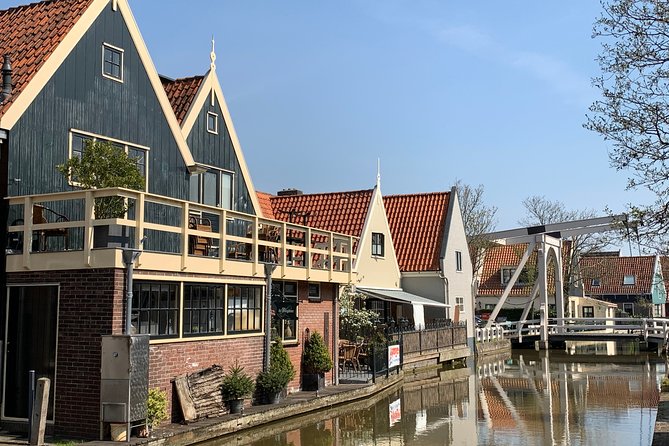
- De Rijp feels like an open-air time capsule, with red rooftops, an old white bridge, and a golden-age townhall.
- Schermerhorn windmill access goes beyond a photo stop, with time to explore it top to bottom.
- Franeker’s planetarium is special: the oldest working planetarium in the world and still active today.
- Wieuwerd mummies are real and unusual, displayed in the church crypt at Wieuwerd.
- Afsluitdijk is Dutch water engineering at full scale, with views from a watchtower over both sides.
Before fixing the day, compare this with a few well-reviewed Amsterdam alternatives:
A small-group route that trades crowds for craft
This tour is built for people who like to understand a place, not just pass by it. You are still starting in Amsterdam, but the day quickly shifts into the kind of countryside that makes Dutch life make sense. Windmills are not just landmarks. Dikes are not just scenery. Both are answers to the same question the Netherlands has been solving for centuries: how do you live with water nearby?
The small group size matters. With up to 7 travelers, you are not packed into a bus where the guide speaks to the back wall. You can listen, look, and follow along when the guide connects what you see today to what people were trying to build hundreds of years ago.
Yes, you will spend time on the road. But if you pick the right kind of day, that ride time becomes part of the experience. It is where you get the story first, then watch it show up in real places.
Meeting at De Ruijterkade, then settling into the countryside drive
The tour starts at Italian Chamber, De Ruijterkade 5, 1013 AA Amsterdam, with a 9:00 am departure. You end back at the same meeting point, so you avoid the stress of figuring out transit after a long day.
You ride in an air-conditioned vehicle, which is a big quality-of-life detail when the weather swings. And because the tour is offered in English and uses a mobile ticket, you are not stuck with last-minute paperwork.
Plan for a full day. Expect a steady flow of short walking moments plus drive time between stops. From past experiences with this kind of format, the sweet spot is knowing you will not linger like you would on a solo day. You will, however, cover five stops that most Amsterdam-only itineraries miss.
Stop 1: De Rijp, a golden-age village you can actually walk through
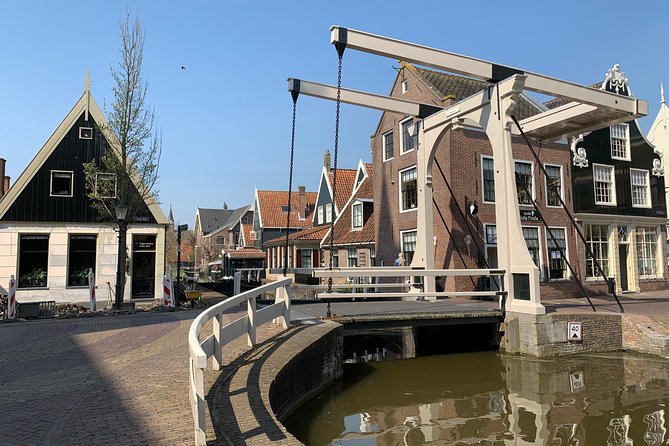
De Rijp is the kind of place that feels familiar in pictures, and even better in person. This village can look like an open-air museum, but it is real and lived-in. You walk past wooden houses with red rooftops, cross an old white bridge, and soak up the quiet that you do not get in central Amsterdam.
The time here is about 1 hour, so treat it like a focused stroll rather than a long exploration. The best move is simple: slow down and look up as you move along the street fronts. Golden-age towns were built with status, trade, and clever design in mind, and De Rijp shows it in the town layout and key buildings.
What I like most about this stop is that it adds a human scale to the later engineering stops. Before you get to windmills and dikes, you see how communities formed and stayed steady, even as the Netherlands worked hard to control water and land.
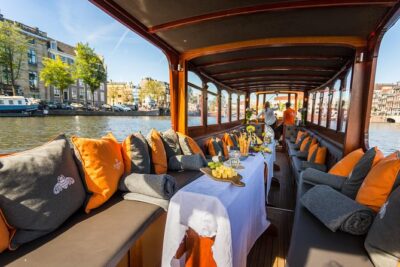
- Amsterdam Classic Saloon Boat Cruise with Drinks and Cheese★ 5.0 · 31,825 reviews
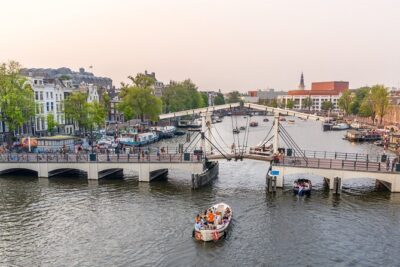
- Amsterdam Luxury Canal Cruise + Unlimited Drinks & Bites option★ 5.0 · 30,518 reviews
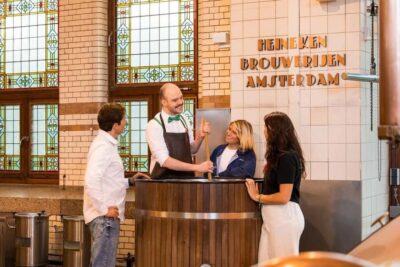
- Amsterdam: Heineken Experience Ticket★ 4.6 · 30,055 reviews
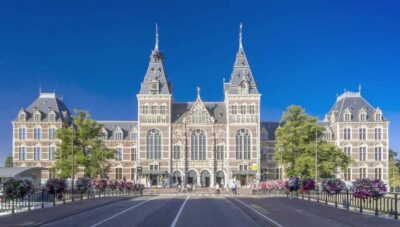
- Amsterdam: Rijksmuseum Entry Ticket★ 4.7 · 25,535 reviews
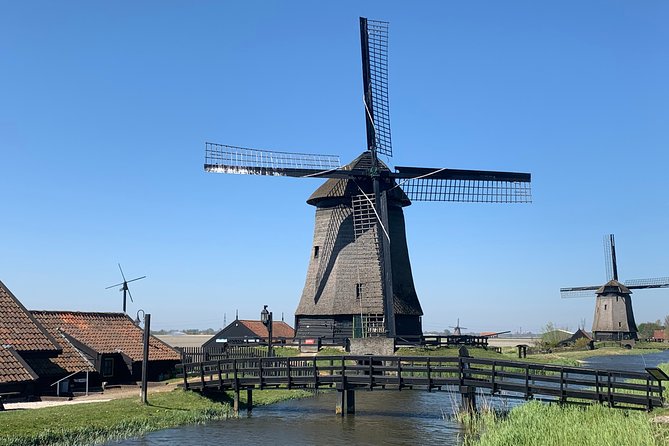
Stop 2: Schermerhorn windmill, built for a drained world
Next you head to Schermerhorn, a place tied to the Dutch golden age and land reclamation. This area was drained by 52 windmills, and you get to visit one of the remaining ones.
The tour gives you about 45 minutes here, and that time is used well. You can explore the windmill from top to bottom, not just peek at it from outside. You also get views over the surrounding countryside, which helps you understand why windmills were not decorative. They were practical machines, in the middle of working land.
The biggest payoff is the engineering perspective. A good guide will point out how the system worked together with the landscape and the water levels around it. In plain terms: the windmills were part of a bigger plan, not a single standalone invention.
If you are someone who loves old machinery, you will enjoy this stop. If you just want quick photos, you can still get plenty, but the true value is when the windmill becomes a story you can see.
Stop 3: Franeker planetarium, the oldest working show in town
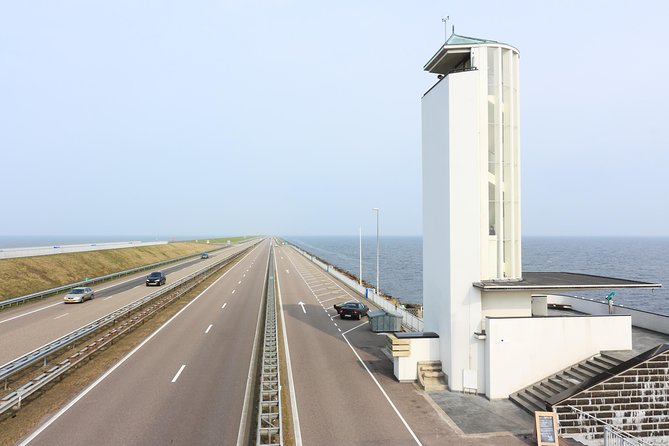
Then the day shifts into something you really do not associate with the Netherlands at first glance: an active, historical planetarium.
You go to the planetarium in Franeker, where the highlight is the oldest working planetarium in the world. The solar system model inside is built between 1774 and 1781, made by a Frisian wool comber, and it is suspended from the ceiling of the living room of a canal house. That setting is part of the wonder. You are not in a modern theater. You are in a historic home space, looking up at a carefully built model that still moves.
You get about 1 hour 30 minutes, and that is enough time to take it in without feeling rushed. The value here is not only the uniqueness. It is the way the planetarium connects craft, science, and daily life in one room.
One small consideration: because it is housed in a living-room setting, you may want to be comfortable standing or sitting for the viewing. If you have mobility limits, this is where you should think carefully before booking, since your time is spent inside a specific space rather than in a wide-open museum hall.
Stop 4: Wieuwerd mummies in the church crypt
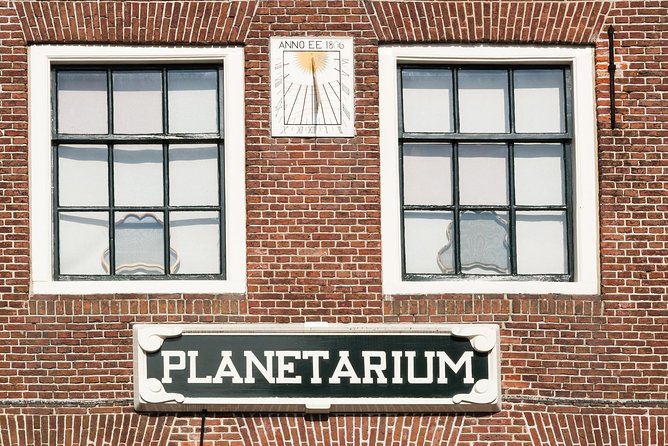
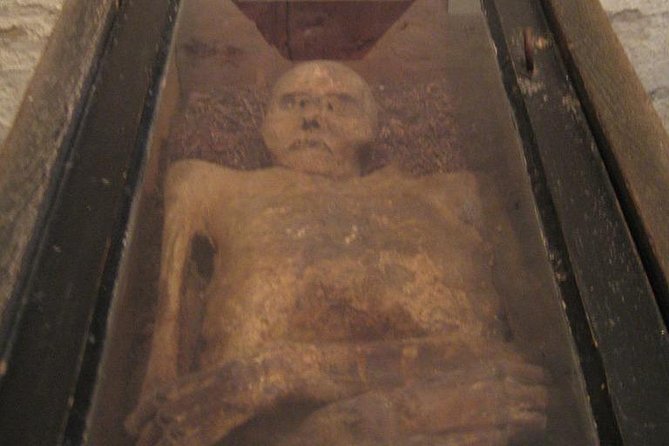
Wieuwerd is where the tour turns quietly spooky, in the best way. In the local church at Wieuwerd, four mummified people were found, and they have been there for more than three centuries.
You spend about 45 minutes here, and the key moment is seeing them lying in the crypt where they were buried. The contrast is striking: a normal church building above, then a crypt display that makes you pause and think about the people and the time period behind it.
This is not a stop for everyone. If you dislike anything medical or body-related, even in a historical context, skip it. But if you like real oddities with a strong sense of place, this stop is unforgettable because it is not a gimmick. It is tied to a specific building and a specific story in a specific village.
I also appreciate that the guide usually frames what you are looking at so you understand why the discovery still matters. It turns curiosity into comprehension.
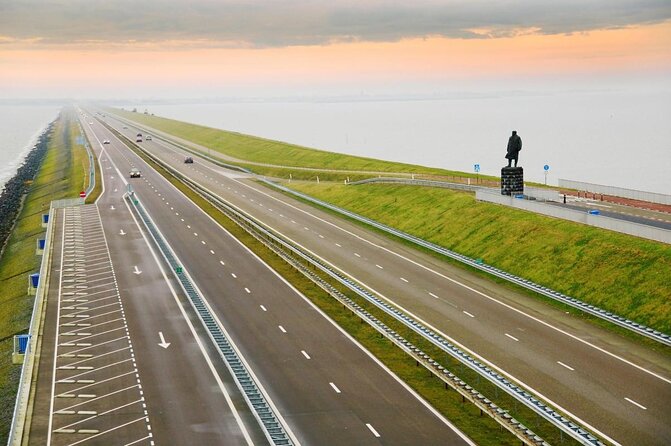
Stop 5: Afsluitdijk watchtower, Wadden Sea on one side
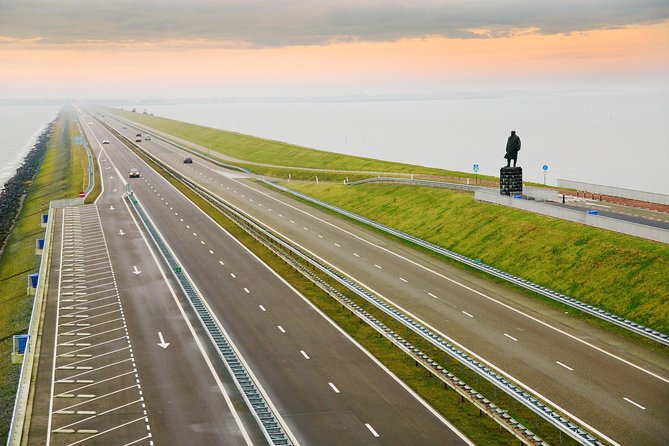
Before heading back to Amsterdam, you stop at Afsluitdijk, one of the Netherlands most impressive examples of water management. This is a 32-kilometer-long dyke that connects Noord Holland and Friesland. Construction started about a hundred years ago, and you see it from a watchtower for views over both sides.
You get about 30 minutes here, so again, think quick and intentional. Stand where the view opens up and take a moment to orient yourself. You are looking at the Wadden Sea on one side and the Ijsselmeer lake on the other. Seeing both together is what makes the story click fast.
This is also a great capstone stop. After windmills and reclaimed-land context, the dyke becomes the big-picture solution. The guide will often tie it back to why the Netherlands keeps building and rebuilding systems to manage water levels.
If the weather cooperates, this is a highly satisfying final stop. If it is gray and windy, you can still appreciate the scale, but you might want to bring a layer.
Price and value: what $155 really buys
At $155 per person, this tour costs more than the simplest Amsterdam canal half-day options. But the value comes from three places.
First, you are getting transport and a guide for the entire day. Second, several admissions are already handled: the windmill in Schermerhorn (included), the planetarium in Franeker (included), and the mummy crypt (included). The other two stops have free entry, so you are not paying separately for each location.
Third, the itinerary is built around concentration. You see five distinct stops in one day, including one of the world’s oldest working planetariums and a dyke that is a cornerstone of Dutch engineering. If you tried to stitch this together on your own, you would spend time figuring out transit, timing, and tickets while risking that you end up missing one of the key experiences.
The snack package is also a nice touch. It is not a full lunch, though, so you should treat it like a buffer, not your meal.
Who should book this tour, and who should skip it
I think this day trip fits best if you want Dutch culture through everyday places and real engineering, not only big-city sights. It is ideal for first-timers who want to understand why windmills and dikes are everywhere. It also works well if you like quirky, specific landmarks, like a planetarium in a canal house and mummies in a crypt.
It is less ideal if you need very long stops, because most stops are around 30 to 90 minutes and the day is paced. It is also not recommended for travelers with limited physical movement, since there is walking involved and the tour format is not designed around slower mobility.
If you hate being in a vehicle for a good chunk of the day, this might feel like too much. But if you enjoy the ride when it comes with explanations and clean logistics, it is a smart way to get out of the Amsterdam bubble.
Should you book this tour?
I would book it if you want a structured day where the guide helps you see the Netherlands as a system, not a postcard. The planetarium, the working windmill visit, and the Afsluitdijk watchtower stop are the big reasons. The rest of the day keeps it human with De Rijp’s quiet streets and Wieuwerd’s crypt discovery.
I would hesitate if your schedule is tight, you dislike historical curiosities, or your mobility needs mean you will struggle with multiple short walks plus interior viewing. Also, since it requires good weather, have a flexible mindset.
If you like practical value, this one has it: admission tickets for major stops are included, you get snacks, and you leave Amsterdam with a story that actually makes sense when you stand in front of the water.
FAQ
What is the duration of the tour?
It runs for about 8 hours 30 minutes. The exact timing of each stop depends on the day, but you should plan for a full day out of Amsterdam.
Where does the tour start and end?
It starts at Italian Chamber, De Ruijterkade 5, 1013 AA Amsterdam. The tour ends back at the same meeting point.
What is included in the price?
Snacks are included, along with air-conditioned vehicle service. Admission fees are included for the windmill in Schermerhorn, the planetarium in Franeker, and the mummy crypt in Wieuwerd.
Are lunch or drinks included?
No. Lunch and beverages are not included, aside from the provided snack package.
How big is the group?
The tour has a maximum of 7 travelers, which keeps it small-group and more personal than typical bus tours.
Is the tour offered in English?
Yes, the tour is offered in English.
Is the tour suitable for limited mobility?
It is not recommended for travelers with limited physical movement. The day includes walking and indoor viewing time at stops.
Do I need to print tickets?
You get a mobile ticket, so you likely do not need to print anything.
What if weather is bad?
The tour requires good weather. If it is canceled due to poor weather, you will be offered a different date or a full refund.
How far in advance can I cancel for a full refund?
You can cancel up to 24 hours in advance for a full refund. If you cancel less than 24 hours before the start time, the amount paid is not refunded.
More Tours in Amsterdam





More Tour Reviews in Amsterdam


Newly reviewed around Amsterdam


Tours, side by side.
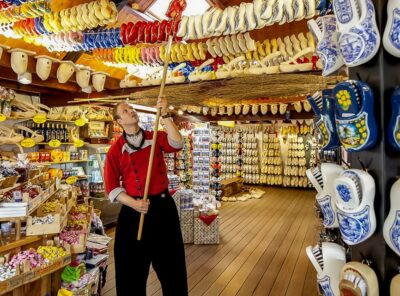 ★ 4.6Zaanse Schans, Edam, Volendam & Marken Bus TourFrom $3215,034 reviews
 ★ 5.0Anne Frank’s Story – Guided Walking Tour through AmsterdamFrom $3911,619 reviews
 ★ 4.8Life of Anne Frank and World War II Walking TourFrom $3710,467 reviews
 ★ 4.6Johan Cruijff ArenA Tour with Optional GuideFrom $328,954 reviews
 ★ 4.9Red Light District Tour in German/English/ItalianFrom $285,623 reviews
 ★ 4.4Guided Zaanse Schans, Windmills & Cheese TourFrom $224,826 reviews
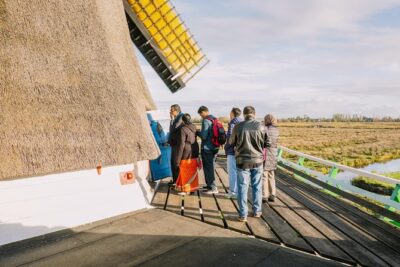 ★ 4.0Windmill Tour from Amsterdam, Including Volendam & MarkenFrom $374,572 reviews
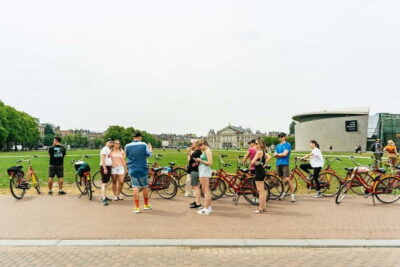 ★ 4.7Guided Bike Tour City Centre in EN/DE/FR/ESFrom $414,187 reviews