
REVIEW · AMSTERDAM FOOD TOURS
Guided Walking Street Food Tour of De Pijp & Beyond
Street food, but make it local. This De Pijp and beyond walk is built for getting your bearings in Amsterdam fast, while a guide explains what people actually eat and why it matters day to day.
I love the small-group size (up to 8) and the way the tour stays practical, not performance food. I also love the built-in variety, with at least seven local street foods plus a few drinks as you move through neighborhood streets.
One thing to consider: with a start time of 11:00 am and multiple tastings, you’ll want to arrive hungry, and plan for a fair amount of walking in and around the market.
Quick Hits: What You Get From This De Pijp Food Walk
- Up to 8 people, so the guide can actually steer the group and keep pace comfortable
- Albert Cuyp Market first, then De Pijp side streets, for an easy neighborhood intro
- At least seven street foods plus drinks, so you eat enough to skip a full meal later
- Family-run stalls and newer entrepreneurs, mixing Dutch favorites with international flavors
- A guide who works the group well, including witty banter and good timing between stops
- English tour, with a mobile ticket for easier check-in
Keep tasting: other compact food routes through Amsterdam
A Small-Group Walk Through Amsterdam’s De Pijp Food Scene
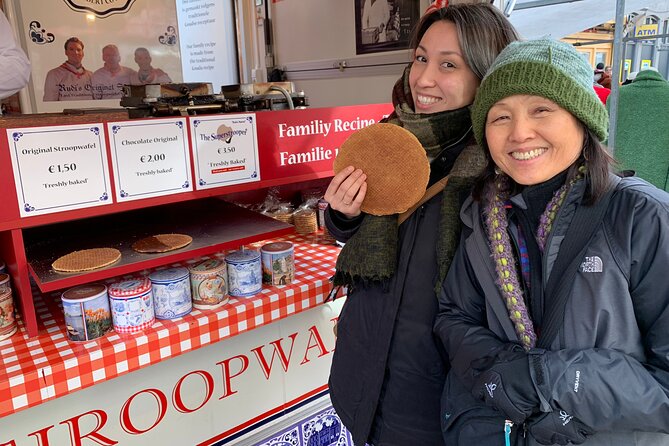
This is the kind of Amsterdam tour that works even if it is your first day in town. You get the social part, the walking part, and the food part, without needing to study a map first. The route starts at Albert Cuyp Market and then shifts into De Pijp, one of the city’s most mix-and-match neighborhoods for everyday eating.
The format matters. With a maximum of 8 travelers, you are not lost in a crowd. You can hear your guide at regular walking speed, and you can ask questions without being rushed. That makes the whole experience feel more like hanging out with locals, even though you are sampling food in a structured way.
I also like the fact that the tour is in English and uses a mobile ticket. It reduces friction, and you can focus on the fun part: eating and learning your way around. If you enjoy practical travel, this fits. You are not chasing a single landmark. You are building a mental picture of where people shop, snack, and sit with friends.
Where It Starts: Albert Cuypstraat 75, 11:00 am
The meeting point is Albert Cuypstraat 75, 1072 CN Amsterdam, and the tour starts at 11:00 am. That timing is smart. By late morning, you get momentum for the day, but you are early enough to avoid the worst midday crush you can run into around popular squares.
You also have a clear expectation for the rhythm. You begin with a market segment, then settle into a longer neighborhood walk. Because it ends in a different location than where you start, it is a good idea to plan something casual for afterward, like a tram ride or an easy wander in the area rather than a tightly timed connection.
And since it is near public transportation, you can slot it into your itinerary without turning it into a logistics puzzle. This matters in Amsterdam, where the fastest route is often a tram plus a short walk.
Albert Cuyp Market: Your Fast Start With Dutch Favorites
The first stop is Albert Cuyp Market. You spend about 45 minutes here, and the focus is on small businesses that Amsterdammers actually seem to rely on, not just admire from afar. This is a mix of older family setups, market vendors, and newer food entrepreneurs. That variety is key, because it shows you how food culture changes without losing its roots.
What I like about starting here is how quickly you build vocabulary for Dutch street food. You are shown classic items and then placed into context. The examples include herring, broodje pom, kroket, and stroopwafels. Even if you already know the names, tasting them in a market setting helps you understand what they are supposed to feel like in real life, not just as souvenirs on a menu.
Possible drawbacks? Markets can be busy, and your snack timeline depends on how you pace yourself. If you are the type who hates queues, keep your expectations flexible. You are still going to sample multiple things in a short window, so it helps to decide early whether you want to go for seafood first or hold out for something sweeter like stroopwafels.
Also, since the tour is built around food tastings, you will want to wear comfortable shoes. In 45 minutes, you can still rack up plenty of steps if you are stopping to look, smell, and taste.
Amsterdam at street level, a few more routes
- Anne Frank’s Story – Guided Walking Tour through Amsterdam★ 5.0 · 11,619 reviews
- Amsterdam: Life of Anne Frank and World War II Walking Tour★ 4.8 · 10,467 reviews
- Absolutely Amsterdam – the Essential Introductory Walking Tour★ 5.0 · 3,629 reviews
- Amsterdam: Anne Frank Guided Small Group Walking Tour★ 4.8 · 2,722 reviews
De Pijp Side Streets: Toko Stops and International Street Snacks
After the market, the tour shifts into De Pijp for about 3 hours. This is where the experience turns from market sampling to neighborhood wandering. De Pijp has small, narrow streets, and that physical layout helps you slow down. You are not just walking by storefronts. You are absorbing how the area works as a daily food district.
Here, the tour leans into something special: the mix of local small stores, often called toko (small grocery stores and eateries), alongside Dutch street food spots and newer international places. You can expect Indonesian or Surinamese flavors, plus Asian food products, depending on the stop. That matters because Amsterdam’s food story is not only about Dutch tradition. It is also about what different communities have brought into the city’s everyday routines.
You will still see classic Dutch favorites referenced during this phase too, like fries, kroket, poffertjes, and stroopwafels. And you might also encounter international items like Japanese sandos. The result feels less like a themed tasting menu and more like a real neighborhood route, where you can understand how people mix comfort foods, snacks, and casual meals.
If you are worried about diet restrictions, the info provided does not spell out vegetarian or allergy accommodations. The safest approach is to contact the provider before booking if you have specific needs. What you can count on from the tour format is that there will be enough variety to cover multiple tastes and cuisines, not just one repeated category.
What You Eat: At Least Seven Street Foods Plus Drinks
The headline promise is simple: you will try at least seven local street foods and a few drinks. That is the part that turns this from a sightseeing walk into a real meal experience.
Street food works best when it is not too heavy, too repetitive, or too slow. Here, the structure is designed to keep you moving. Small plates and handheld items mean you can taste widely without feeling like you are stuck at a table for hours. And because you are sampling across different stops, you get variety in texture and flavor, like something savory, something crispy, something sweet, and then a drink to reset your palate.
I also like that the tour explicitly focuses on avoiding tourist traps. In practical terms, that usually means two things: you are spending your money with small businesses rather than high-volume eateries built for photo ops, and you are learning the local context behind what you eat.
Based on the food examples, you should expect a mix of Dutch staples and international influences. Items such as herring and kroket give you a Dutch backbone, while Indonesian, Surinamese, and Japanese options show you how De Pijp’s identity shows up in everyday snacks.
The Guide Experience: Banter, Group Reading, and Clear Explanations
This is where the reviews do the most work. The tour’s biggest strength is how the guide interacts with the group. People highlighted great banter, fun energy, and a host who can read the mood of the group and adjust on the go.
That kind of guiding makes a difference because street food tours can get awkward if you are stuck in a rigid script. A good guide keeps the pacing lively, points out what is worth noticing at each stop, and adds the small explanations that help you connect the food to the neighborhood rather than treating it like random samples.
You will also get insight into everyday life in Amsterdam, not only food facts. That is a subtle but important shift. You are learning how locals move through markets and side streets, how they choose snacks, and what places function like regular anchors in the community.
If you enjoy asking questions, this tour’s small maximum group size should make that easier. You do not have to shout, and you are not waiting for the guide to catch up with a large pack.
Duration and Pace: 4 to 5 Hours That Feel Like a Real Day Plan
The tour runs about 4 to 5 hours. That is a solid half-day chunk. It is long enough to feel like you did something meaningful, but not so long that it swallows your entire afternoon.
You should plan your schedule around the walking time. Expect breaks around each tasting stop, plus movement between places. Your energy will last longer if you eat steadily rather than waiting for the biggest item and skipping earlier tastings. The tour is designed as a sequence, with the market acting like your launch pad.
Also note that it ends in a different location. That is normal for walking tours, but it means you should not plan a tight, time-dependent pickup right after. Instead, keep a little breathing room for transit or a relaxed stroll.
Price and Value: Is $155.68 Worth It?
The price is listed at $155.68 per person, and that number makes people pause. The question is not just what you pay. It is what you get in return.
Here is what is baked into the experience, based on the tour description:
- A guided walk of about 4 to 5 hours
- A market stop and a neighborhood stop, structured into a route
- Sampling of at least seven street foods plus a few drinks
- An emphasis on local businesses rather than tourist traps
- A maximum group size of 8, which usually means more personal attention
When street food is done right, you end up eating enough to replace a planned lunch and then some. That alone helps justify the cost, because you are not paying extra for a bunch of tiny bites that do not satisfy you. You are also paying for a guide to connect the dots, so the tastings come with context.
Another value point is peace of mind. In a place like Amsterdam, where neighborhoods have their own food identities, walking with guidance can prevent you from guessing wrong or accidentally targeting places aimed at tourists first. If you want the food experience to feel local, this tour is built for that.
If you are on a strict budget, $155.68 can feel steep for street food. But if you like structured tastings, want a neighborhood introduction, and prefer not to spend time hunting for the right stalls yourself, the price may feel fair for the amount of food and the small-group format.
Getting the Most Out of the Tour (Without Overthinking It)
You do not need a lot of prep, but a few choices make the day smoother.
First: show up hungry. The tour is timed for late morning and built around multiple tastings. If you eat a big breakfast right before, you will dull the experience. You might still enjoy it, but you will not get the full benefit of sampling variety.
Second: wear shoes you can walk in comfortably. Between the market and the De Pijp streets, you are moving for hours.
Third: keep your expectations flexible if a stop is busy. This is a real food district, so there can be normal market hustle. A small group helps, but you will still be navigating people and ordering at snack-speed.
Finally: if you want to make this an even better value, connect it to what you like to do afterward. You already learned where to eat and what De Pijp feels like. Use that to guide where you go next, rather than relying on random recommendations.
Who This Tour Fits Best
This is a great fit if you:
- Want a practical neighborhood intro without heavy sightseeing pressure
- Like street food and want a mix of Dutch classics and international flavors
- Prefer small groups and a guide who can keep the pace friendly
- Want to support small businesses instead of only eating at mainstream tourist spots
It is also a good choice if you enjoy light conversation. The tour has a reputation for banter and fun energy, which can turn a food walk into a memorable morning.
If you are someone who hates any walking or has very specific dietary needs, the provided info does not confirm a specialized menu. In that case, it is worth checking in advance with the provider so you can avoid surprises.
Should You Book Hungry Birds Street Food in De Pijp?
If you want to eat well, walk through a real Amsterdam food neighborhood, and get guidance without the crowd chaos, I would book it. The best reasons are clear: small group up to 8, a structured route starting at Albert Cuyp Market, and the promise of at least seven street foods plus drinks.
The only real reason to hesitate is if you cannot handle walking, or if the price is hard to justify for you. For many people, the cost makes more sense when you frame it as a guided half-day food experience that replaces part of a meal plan and helps you avoid guessing where to go.
FAQ
Where does the tour start?
The tour starts at Albert Cuypstraat 75, 1072 CN Amsterdam, Netherlands.
What time does the tour begin?
The start time is 11:00 am.
How long is the walking street food tour?
It runs about 4 to 5 hours.
Is the tour in English?
Yes, it is offered in English.
How many people are in the group?
The tour has a maximum of 8 travelers.
What will I eat and drink?
You will try at least seven local street foods and a few drinks.
Are there admission tickets involved at the stops?
The listed stops show Admission Ticket Free.
Can I bring a service animal?
Yes, service animals are allowed.
What is the cancellation policy?
Free cancellation is available. You can cancel up to 24 hours in advance for a full refund. If you cancel less than 24 hours before the experience’s start time, the amount paid will not be refunded.
Is it easy to reach by public transportation?
Yes, it is near public transportation.
More Tours in Amsterdam






More Tour Reviews in Amsterdam





Keep Eating through Amsterdam



Newly reviewed around Amsterdam



Amsterdam Food Tours, side by side.
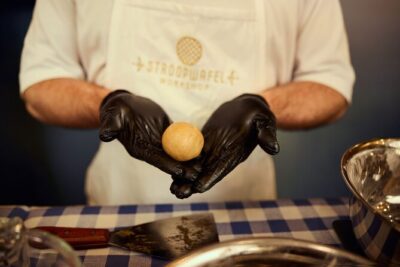 ★ 4.8Traditional Dutch Syrup Waffle Making WorkshopFrom $234,093 reviews
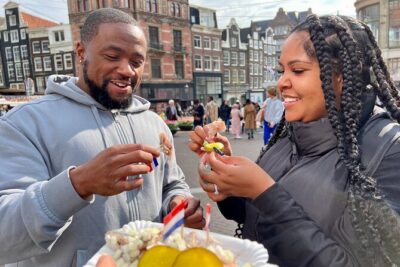 ★ 5.010 Tastes of Amsterdam: Food Tour by UNESCO Canals and JordaanFrom $1023,020 reviews
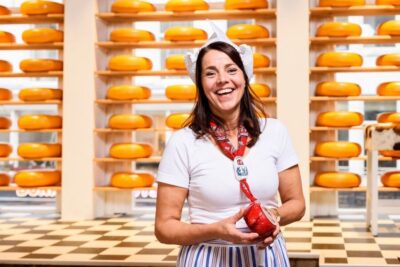 ★ 4.7Premium Henri Willig Cheese Tasting ExperienceFrom $211,106 reviews
★ 5.0Amsterdam Traditional Dutch Syrup Waffle Making WorkshopFrom $27960 reviews
★ 4.7Premium Henri Willig Cheese Tasting ExperienceFrom $211,106 reviews
★ 5.0Amsterdam Traditional Dutch Syrup Waffle Making WorkshopFrom $27960 reviews
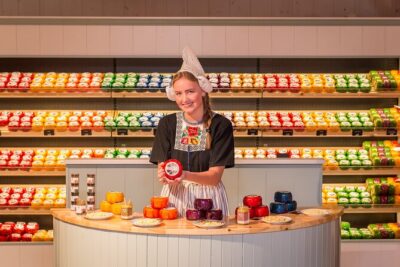 ★ 4.0Zaanse Schans and Cheese Tasting Guided Tour from AmsterdamFrom $45661 reviews
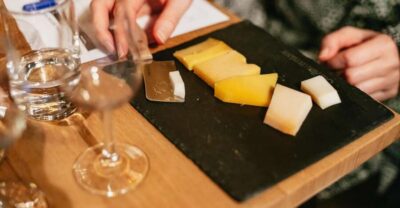 ★ 4.7Dutch Cheese Tasting Experience with WineFrom $23658 reviews
 ★ 5.0Eating Amsterdam: Food Tour & Canals CruiseFrom $163496 reviews
 ★ 5.0Amsterdam’s Market Street Food Tour with Streat BitesFrom $133398 reviews
More ways to plan this visit