
REVIEW · GUIDED
Amsterdam Sightseeing Tour + Hidden Gems + Tastings + PDF guide
Amsterdam from streets to skylines. In about 2.5 hours you get a focused intro to Amsterdam, with small-group attention and included tastings that keep the walk fun, not just educational. You start at Rembrandtplein, fan out through canals and historic corners, and finish at Dam Square with a clear sense of where everything is.
I especially like how the route mixes big-name Amsterdam with quieter stops. You see the iconic Amstel River view at Blauwbrug, then step into places like The Mouse Mansion and a modern art setup in a passage that used to be something very different. One thing to consider: the time at each stop is short, so if you want to linger for long photos or take your time inside every building, you will need follow-up time after the tour.
Key things I’d bet on from this tour
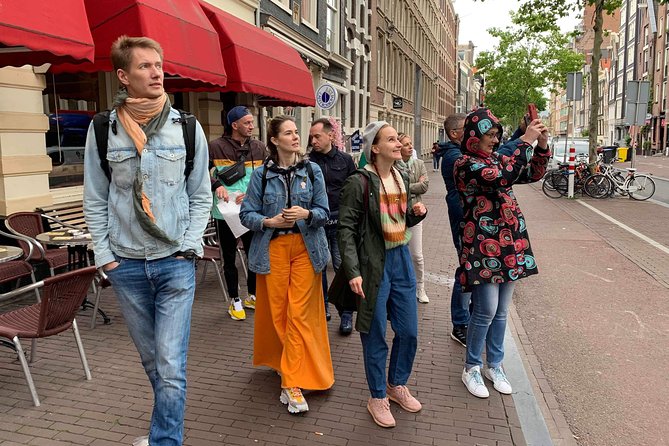
- Photography-ready viewpoints at Blauwbrug, designed for postcard-style canal shots.
- Architecture and design stories tied to Pathe Tuschinski, with clear explanations and photo stops.
- Only-floating-flower-market energy at Bloemenmarkt, plus context around the nearby Munttoren.
- Real local flavor breaks with Dutch cheese and stroopwafels at Damrak (herring is optional).
- The quiet side of Amsterdam at Begijnhof and The Mouse Mansion, away from the main shopping crush.
- A built-in planning tool with a bonus PDF one-day plan you can use immediately after.
Worth comparing with this Amsterdam choice:
Why this Amsterdam sightseeing tour works (and who it fits)
This is the kind of Amsterdam tour that makes sense when you have limited time but still want more than a hit list. The format is simple: walk a compact route, stop often, and let a local guide tie the city’s details together. With a small group, you get room to ask questions, not just hear facts while trying to keep up.
The big value for me is pacing plus payoff. You move through classic landmarks like Dam Square and the Royal Palace exterior, but you also get detours into the slightly odd and the surprisingly meaningful, like a miniature mouse world and a hidden corridor with modern art. Then you get food that is actually connected to Amsterdam identity, not random tourist snacks.
Price is $287.58 per person for roughly 2 hours 30 minutes. That is not cheap for a walking tour, but it can feel fair if you factor in four things: a local guide, time saved figuring out what to see, included tastings (Dutch cheese and stroopwafels), and the bonus PDF plan for your remaining hours. If you like structure and want a guide to point out what most people miss, you are paying for convenience and interpretation, not just movement.
This tour fits best if you are:
- Visiting Amsterdam for the first or second time and want orientation fast
- Interested in architecture and city design, not only canals
- Okay with short stops and want a taste of several areas in one morning or early day slot
- A food lover who likes small tastings, not a full sit-down meal
Value and logistics: $287.58, mobile ticket, and a route that stays efficient
You meet at Rembrandtplein (1017 CV) and end at Dam Square (1012 Amsterdam). Start time is 10:00 am. There is no hotel pickup, so you should plan to get yourself to the meeting point using nearby public transport.
The tour uses a mobile ticket, which is handy because Amsterdam has plenty of ticket checks, and your phone does not require paper. Also, the stops are largely marked as admission ticket free, so you spend your time walking and learning rather than standing in ticket lines. One exception to note is the optional herring at Spui, which is own expense.
The route is also designed to be easy to follow. You are not crossing the city on long transfers. You are walking through a cluster of famous and mid-famous sights, then ending at the historic center core. That matters because Amsterdam days can get eaten alive by transit time and backtracking.
And yes, small-group attention is part of the selling point. If your date ends up with fewer people, it can feel even more personal, which shows up in the way guides handle questions and adjust the pace for the group.
Stop by stop: Rembrandtplein to Blauwbrug (and why the Amstel view matters)
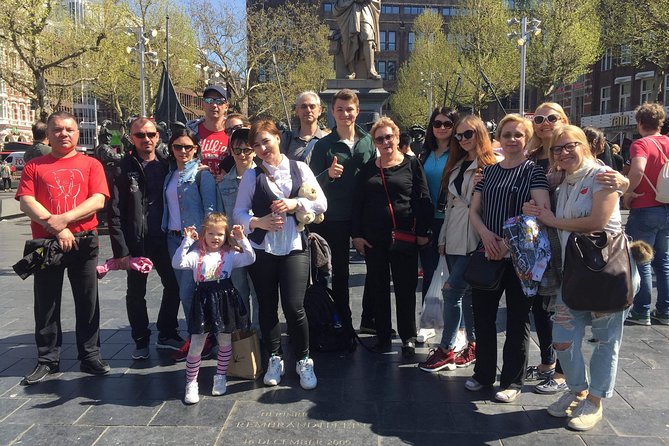
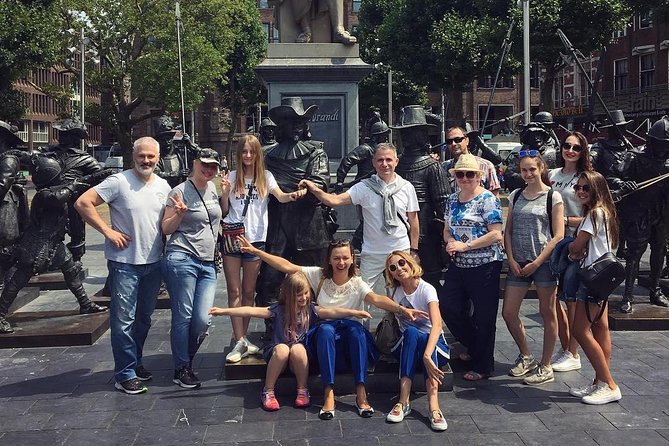
You begin at Rembrandtplein, right by the Rembrandt statue. It is a lively square, and using it as a meeting point helps because it is easy to locate and it immediately gives you the Amsterdam vibe: urban energy, not quiet museum calm.
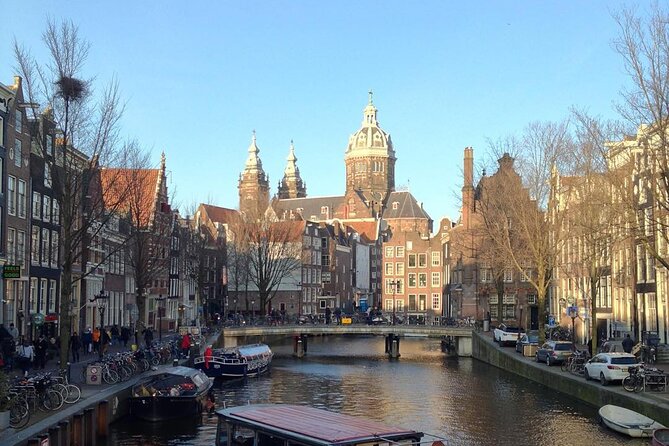
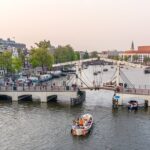
From there you head to Blauwbrug, one of those classic spots that delivers a strong city composition fast. The view over the Amstel River is the kind of photo frame you can only get at the right angle, and this stop is built around that. The guide also connects the dots between Amsterdam and water, talking about why the Amstel is more than scenery. This is one of those details that makes Amsterdam click mentally, because you start to see canals and rivers as part of how the city has worked, not just how it has looked.
Why I like this first half: it gives you an anchor story early. If you understand water, you understand why streets and neighborhoods developed the way they did. It turns your later wandering into something smarter.
A practical drawback: each stop is short, and Blauwbrug photo time is time-boxed. If you want multiple photo angles, you should be ready to move quickly when your moment comes.
- Amsterdam Classic Saloon Boat Cruise with Drinks and Cheese★ 5.0 · 31,825 reviews
- Amsterdam Luxury Canal Cruise + Unlimited Drinks & Bites option★ 5.0 · 30,518 reviews
- Amsterdam: Heineken Experience Ticket★ 4.6 · 30,055 reviews
- Amsterdam: Rijksmuseum Entry Ticket★ 4.7 · 25,535 reviews
Pathe Tuschinski and the Bloemenmarkt float: architecture fans will be happy
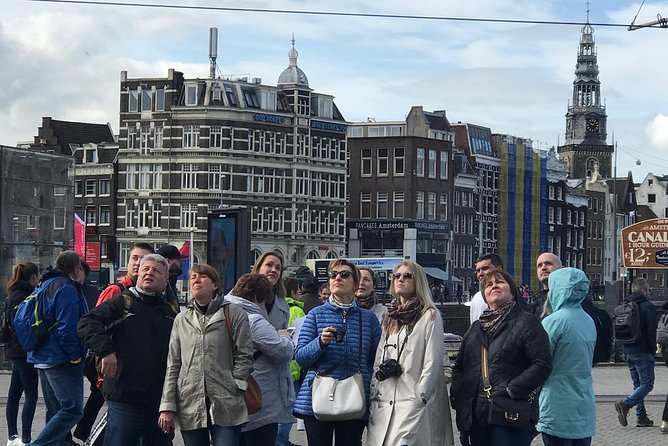
Next up is Pathe Tuschinski. This is not a random cinema stop. The building is an Art Deco mix with Amsterdam School influences, and the guide tells the creator story behind it. The result is that you stop seeing it as just a pretty facade and start noticing the design language: the styling, the lines, and why it still attracts attention from designers and locals.
If you are into buildings that look like they belong on a movie set, you’ll enjoy this moment. It is also a nice break from canal-level views because it shifts your attention upward to how Amsterdam designs its public spaces.
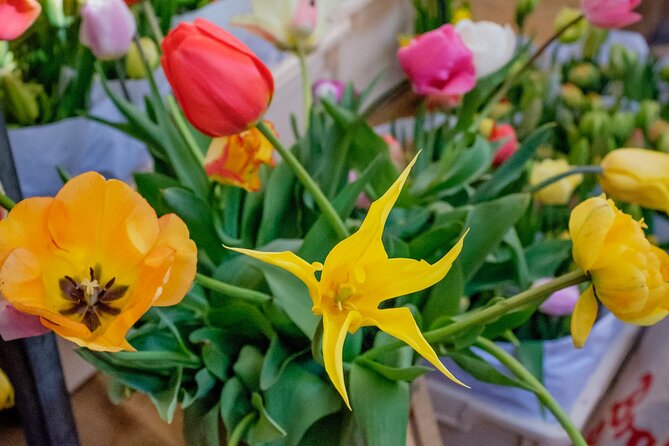
Then you walk to Bloemenmarkt, the famous floating flower market. You are not just seeing flowers. You get a sense of symbolism, plus the practical idea that Amsterdam can turn commerce into something visually iconic. Flowers here are national identity material, not just inventory.
The nearby Munttoren also gets a mention, and that is where the tour earns its “more than postcard” value. You learn about how it played an unexpected role in Dutch financial and social history. That sort of context helps you notice that Amsterdam landmarks are layered. Even when you think you are only looking at something decorative, there’s often a serious function behind it.
One consideration here: in a shopping-heavy area, you may feel the crowd around the market. The tour keeps you moving, so you are not stuck in one place too long, but you will still want to accept that the market gets lively.
The Mouse Mansion and Kalverpassage: the quieter side of Amsterdam
This is where the tour feels like a real local walk instead of a standard sightseeing loop.
The Mouse Mansion is tucked behind one of the busiest shopping streets, and that contrast is part of the charm. You step into a whimsical miniature world, built from tiny handmade rooms with careful details. The guide shares the story of how the imaginative world was created by a Dutch artist and her daughter. It’s the kind of stop that gives you a gentle reset, because you go from big-city bustle to a small-world wonder.
What makes it worthwhile for your time: it is memorable without being loud. It also gives you a sense of Amsterdam’s taste for crafted imagination, not only engineering and commerce.
Then you move to Kalverpassage. Here, the tour points out a modern installation by artist Maarten Baas inside a hidden shopping passage. Right next door, you learn about the building’s little-known history, once a prison, now transformed for modern life. That is a powerful Amsterdam theme: old structures reused, repurposed, and folded into everyday routes.
If you care about how cities evolve, these two stops together work well. One is about imagination and making, the other is about transformation and reuse. Together, they show two sides of Amsterdam thinking.
Possible drawback: these stops are short, and they are also the kind of places where you might want to linger to study details. If you are easily distracted, this section will feel like you are only getting a preview. Still, you’ll leave with a strong impression.
Spui herring stand, Begijnhof, and Damrak tastings: food meets place
At Spui Square, you stop by a traditional herring stand. The guide offers optional traditional Dutch herring, and they share tips on how to eat it like an Amsterdammer. Since this is own expense, you can decide on the spot if you want the full experience.
Why this matters: herring is one of those “if you know, you know” foods. Even if you skip it, the explanation can help you understand why it’s culturally sticky. If you do try it, you get the bonus of doing it right in the context of a guided city walk.
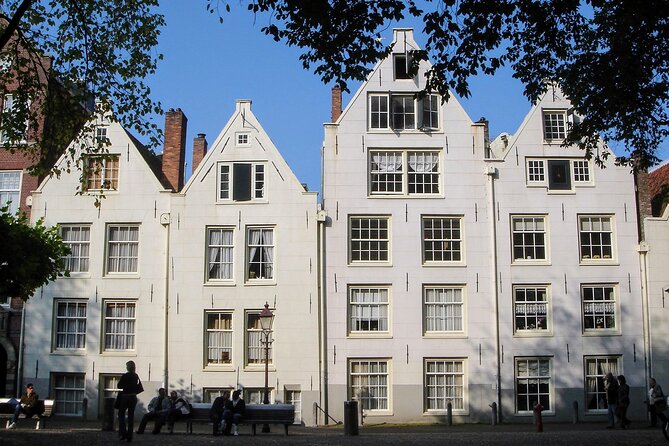
Then the tour goes to Begijnhof. This cozy yard is one of those places that feels like you escaped the street noise, even though you are not far from busy areas. You hear the story of the yard’s original purpose, visit a hidden church, and learn more about the 80 Years’ War.
I like Begijnhof for two reasons. First, it gives you a pause, a calm pocket that helps you absorb Amsterdam’s story without constant motion. Second, it brings history down to a human scale: a small enclosed place tied to a longer conflict era. You feel the contrast between the quiet courtyard and the historical weight in the background.
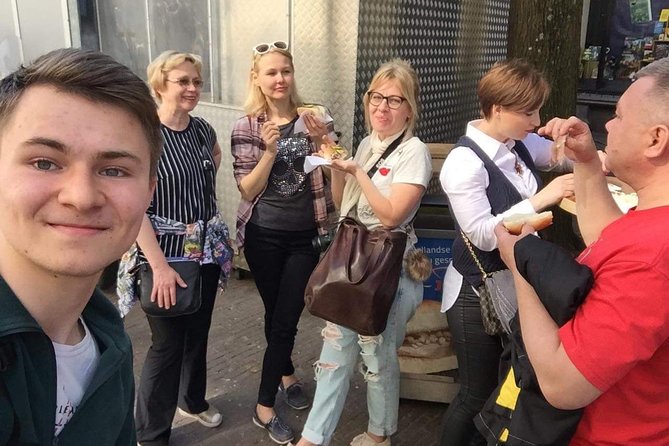
Next comes Damrak, and this is your included food moment. Here you indulge in two beloved Dutch flavors: artisanal cheese and stroopwafels. The guide connects the tastings to Dutch food culture, including cheese-making traditions and how the syrup waffle became a national treat.
If you love food tours but don’t want a full meal commitment, this stop is the sweet spot. It’s short enough to fit into a city walk, but it gives you a story, not just a bite. And because it is included, you can plan your day without budgeting extra for snacks.
One consideration: the herring is optional and not included, while cheese and stroopwafels are included. If you are a strict budget person, keep that in mind.
National Monument, Royal Palace exterior, and Nieuwe Kerk: what you get without a long line
As you head toward Dam Square, you visit the National Monument. The guide frames it as more than a memorial. It’s a symbol of reflection, freedom, and sometimes even quiet protest. That kind of explanation is useful because otherwise you might see it as just another central landmark. With context, you understand why this site matters to locals.
Then you admire the Royal Palace from the outside. You do not go inside on this tour, but you learn how the grand 17th-century building transformed from city hall to royal residence. Getting the exterior context is still valuable because the palace is such a dominant visual feature of Amsterdam’s center. Even from the street, you can start recognizing the scale and the role it plays in the city’s civic identity.
Right next door is the Nieuwe Kerk, a former church now used for exhibitions and royal ceremonies. You hear how religion, monarchy, and art intersect in a cultural space that still actively hosts events. That explanation helps you understand why a building with religious origins can still be relevant in modern cultural life.
You then finish at Dam Square itself, exploring its layered history. Dam Square is the heart of Amsterdam, and ending here makes sense because it is central to both sightseeing and your next steps, whether you continue walking or head to lunch.
Possible drawback for this final stretch: if you are expecting lots of time inside major attractions, this tour is not that. The emphasis is on outside views and explanation, not long ticketed stops. If you want interiors, you can easily pair this tour with a museum or church visit after.
Using the included PDF one-day plan after your tour
One of the nicest extras is the bonus PDF guide called Your One Day Plan in Amsterdam. The tour ends at Dam Square, and that is a perfect moment to switch from “guided orientation” to “your day, your pace.”
Here’s how I’d use it:
- Scan it while the tour stories are fresh in your head.
- Pick one area to return to for longer time, especially a place you felt drawn to during the walk.
- Choose one food stop that matches your tastings, cheese and stroopwafels already gave you a good starting point.
Think of the PDF as your steering wheel. The tour gives you direction, and the plan helps you drive the rest of the day with fewer wrong turns.
Should you book this Amsterdam sightseeing tour?
Book it if you want a smart first look at Amsterdam in about half a day, with local guide storytelling, included Dutch cheese and stroopwafels, and a route that mixes classics with genuinely unusual stops like The Mouse Mansion and Kalverpassage.
Skip it or consider a different format if:
- You prefer long stays at fewer sites instead of quick hits
- You want lots of inside visits and extended ticketed time
- You are chasing a strict “only canals, only bikes” vibe, because you also spend time on architecture, courtyards, markets, and central monuments
My call: this is a strong choice for first-timers who want both orientation and flavor, without spending the entire day in transit or in lines. The price is high, but you are buying time, interpretation, and two included tastings, plus a ready-to-use one-day plan.
FAQ
How long is the Amsterdam sightseeing tour?
The tour is approximately 2 hours 30 minutes.
Where do I meet and where does the tour end?
You start at Rembrandtplein (1017 CV Amsterdam) and end at Dam Square (Dam, 1012 Amsterdam). The tour starts at 10:00 am.
Are the tastings included?
Yes. Dutch cheese and stroopwafels are included in the tour.
Is the Dutch herring included?
No. The herring at the Spui stop is optional and is not included, so it is at your own expense.
Is hotel pickup provided?
No. Hotel pickup and drop-off are not included.
Is admission required for the stops?
The itinerary notes admission ticket free for most stops. Dutch herring at Spui is the optional item noted as not included.
What is the cancellation policy?
You can cancel for a full refund up to 24 hours before the experience start time. Free cancellation is available with that cutoff.
More Guided in Amsterdam



More Tours in Amsterdam



More Tour Reviews in Amsterdam

Newly reviewed around Amsterdam


Guided, side by side.
 ★ 4.475 Minute City Canal Cruise with Audio GuideFrom $1717,501 reviews
 ★ 5.0Anne Frank’s Story – Guided Walking Tour through AmsterdamFrom $3911,619 reviews
 ★ 4.6Johan Cruijff ArenA Tour with Optional GuideFrom $328,954 reviews
 ★ 4.6Royal Palace Entry Ticket and Audio GuideFrom $156,475 reviews
 ★ 4.4Guided Zaanse Schans, Windmills & Cheese TourFrom $224,826 reviews
 ★ 4.7Guided Bike Tour City Centre in EN/DE/FR/ESFrom $414,187 reviews
 ★ 4.5Amsterdam Evening Canal Cruise with Live Guide and Onboard BarFrom $243,619 reviews
 ★ 4.8Anne Frank Guided Small Group Walking TourFrom $282,722 reviews