
REVIEW · RED LIGHT DISTRICT TOURS
Amsterdam: Red Light Tour Exclusive + Peep Show
Amsterdam’s Red Light District has stories.
This 1.5-hour, up to 4-person tour keeps things respectful and focused, walking you right through the heart of the area with a German or English guide. I especially liked the way you hear the political and social side of the district, and how the stop at an iconic 70s peep show adds a real sense of what life has looked like here over time. One thing to plan around: the rules are strict (cameras are not allowed, and Fridays and Saturdays can feel crowded).
In practice, what makes this experience work is the small group size and the guided pacing. Guides like Noemi, Ginevra, and Lili are repeatedly praised for keeping the tone both thoughtful and human, including humor when it fits. If you want big, bus-style sightseeing or lots of free time, this is probably not your format.
Key highlights worth your time
- Small group (up to 4) to keep the walk quiet enough to actually hear your guide
- Critical, political context on how the district is regulated and why it looks the way it does
- A visit to a live peep show that’s described as one of the last of its kind, tied to the district’s older culture
- Stops at real landmarks around Dam Square and the Oude Kerk area, not just window-viewing
- Coffeeshop history and the region’s socio-political story (without a coffeeshop inside visit)
- Privacy during the walk, designed for the newer limits on larger tour groups
Other history-led walks through De Wallen
Entering Amsterdam’s Red Light District, without the chaos
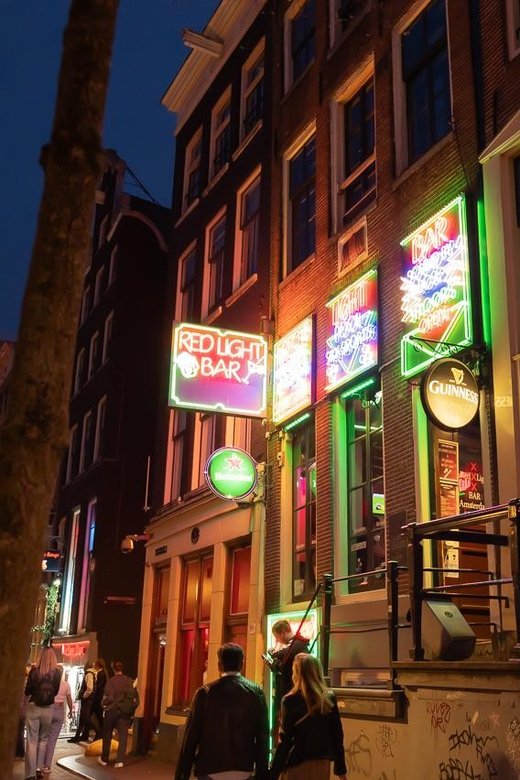
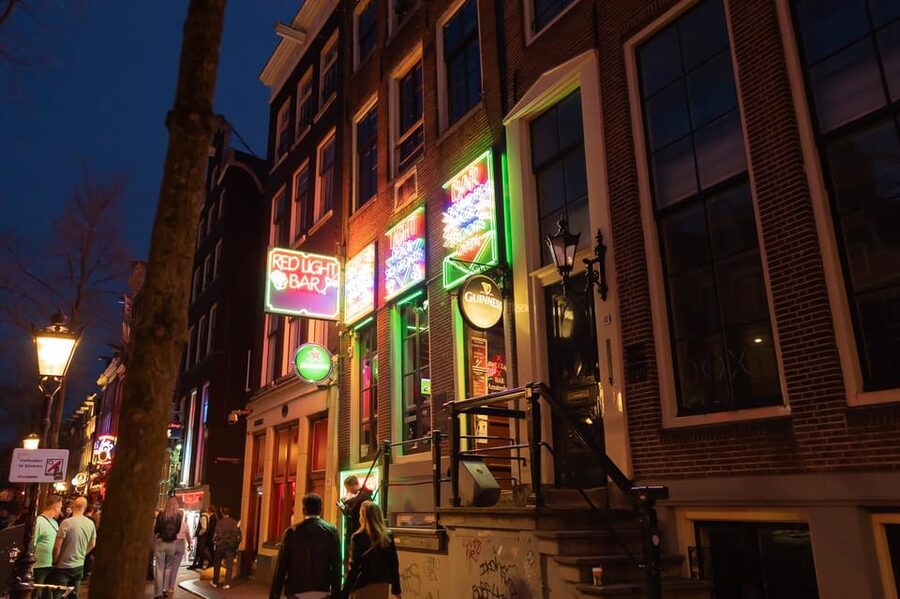
If your idea of the Red Light District is mostly neon windows and quick photos from the street, this tour gives you a different entry point. You start where most people pass through, near the National Monument by Dam Square, and then you move into narrower streets where the district’s everyday rhythm becomes clearer.
I like that this experience leans into explanation rather than shock value. You get the structure of how things work, including the political situation around the area, and what changes have shaped today’s streets. That means you’re not just seeing symbols, you’re understanding the system behind them.
The “exclusive” part is practical, not just marketing. New tourist regulations limit bigger groups from walking directly through parts of the district, so the route is designed for small parties. In plain terms: smaller group often means fewer bottlenecks and better listening.
The 90-minute shape: what you do, and why it matters
This tour lasts about 1.5 hours and covers roughly 1.8 km at a comfortable pace. That’s short enough to avoid turning it into a slog, but long enough to connect multiple stops into a single storyline.
The timing is also helpful because you’re walking the area while it’s still readable. Too many “quick Red Light District walks” skip the background and jump straight to the most obvious sights. Here, the order matters: landmarks first, then the district-specific details, then the peep-show finish.
You’ll get a guided stop at multiple points. Some are quick context stops, some include short guided segments, and a couple are listed as photo stops. One rule you’ll want to respect right away: cameras are listed as not allowed. So those “photo stop” moments are best treated as times to look, take in details visually, and ask questions, not to shoot photos.
Choosing German or English, and how to get it right
This tour is either German or English, not bilingual. That matters more than people think, because you’re walking and learning at the same time. If you pick the wrong language option, you’ll lose the nuance and the pacing your guide is working with.
If English is your comfort zone, choose that and settle in. If you’re aiming for German, be ready for a more direct style of storytelling. Either way, the experience is designed for you to understand the social and political angles, not just point out buildings.
Small groups also make language choice feel bigger. With up to four people, you’re more likely to hear your guide’s tone and follow their explanations without straining.
Worth comparing with this Amsterdam choice:
- Coqtales Show: The Hottest Male Show in Amsterdam, Magic Mike★ 5.0 · 216 reviews
- Amsterdam: ‘Boom Chicago’ English Comedy Show★ 4.5 · 213 reviews
- English Comedy Show Amsterdam: Boom Chicago★ 4.5 · 112 reviews
- Amsterdam: VEGAS Dinner Show with 3-Course Sharing Menu★ 4.4 · 99 reviews
Dam Square and the National Monument start point
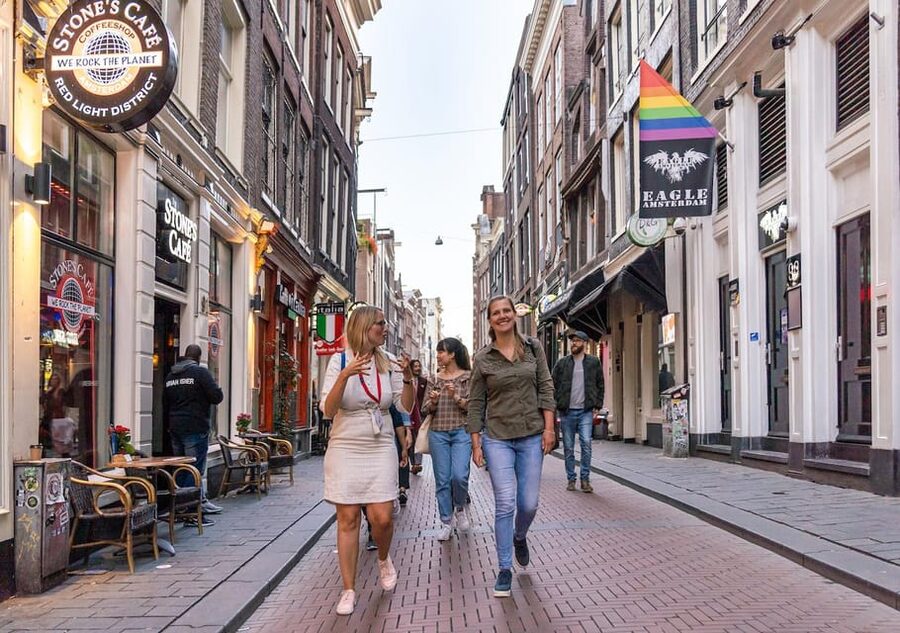
You begin at the steps of the National Monument, the white obelisk at Dam Square. It’s a simple meeting point and easy to find, and it gives you a clean “reset” before you step into the district’s more complicated layers.
Dam Square itself is where the tour gives its first grounding. You’ll have a short guided moment at Dam Square before moving on, which helps you connect this area to the broader city story rather than treating it like a separate world.
I like the way this start feels. You’re not thrown into the windows immediately. You’re primed to notice politics, regulation, and history as the walk progresses.
Condomerie and Oude Kerk, the district with real roots
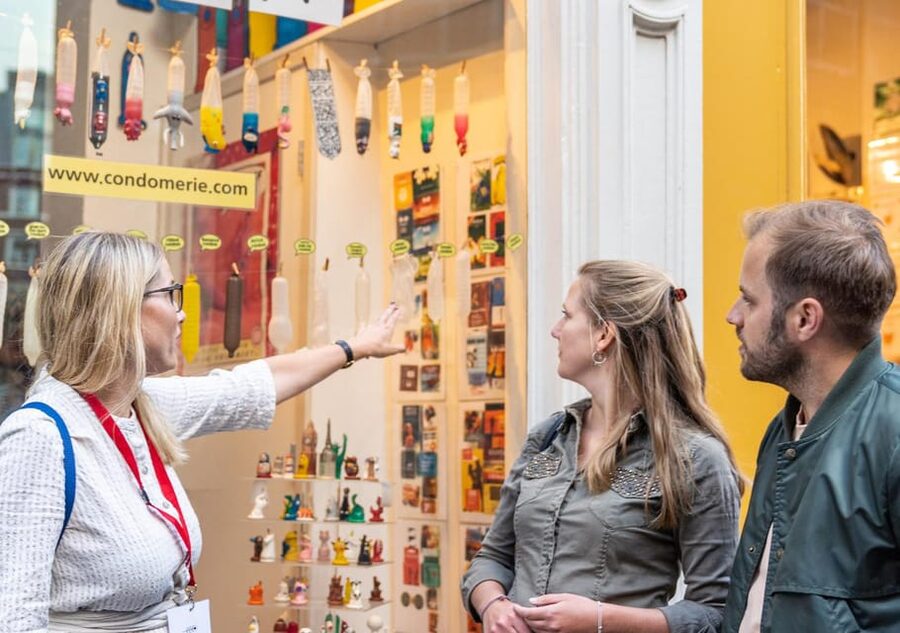
Early on, the route includes stops around the Condomerie and the Oude Kerk area. These aren’t just “we passed a thing” stops. You’re set up to understand that the district isn’t random. It’s layered into the city’s older fabric.
At each stop, you get short guided segments that add context to what you’re about to see later. That’s valuable because people often arrive with only one frame of reference, legal or moral, and the guide’s job here is to show you how multiple threads are tangled together.
The Oude Kerk stop is especially useful as a reality check. It reminds you you’re in a city with centuries of architecture and culture, not a theme park built only for tonight’s nightlife. That perspective helps you keep your mind balanced as the tour turns more specific.
Warmoesstraat and the tight streets you’ll remember
Warmoesstraat is where you get a photo stop plus guided explanation. Even with cameras not allowed, this is still a “look closely” moment, because the street layout is part of the story. Narrow alleys shape visibility, privacy, and crowding, which affects how the district functions day to day.
One of the highlights is described as a walk through some of the tightest alley spaces, and your guide explains why a particular spot became the hottest place in the district. That detail is useful because it shows how space and human behavior interact.
I also like that the tour emphasizes privacy as you walk through the area. That doesn’t mean hidden or secretive, it means the group size and route help you avoid constant staring and on-the-fly jostling.
Dancing Houses and the Bronzed plaque moment
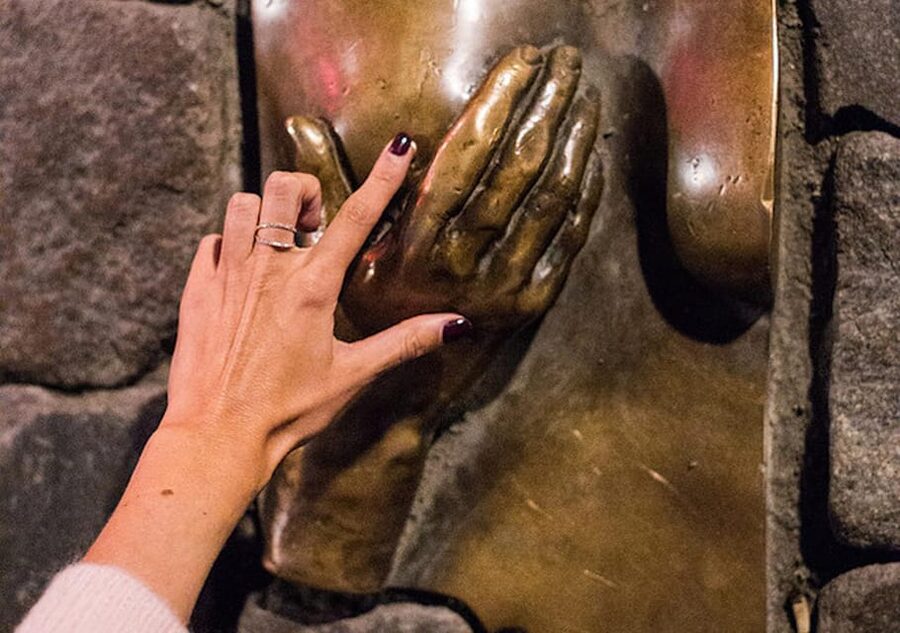
Later, you reach the Dancing Houses area and a stop described as a bronze plaque (Borstplaat in brons). These are more than aesthetic breaks. They give you a sense of Amsterdam’s way of mixing playful architecture with everyday life.
The stop at Dancing Houses includes a guided segment and a photo stop. Again, with cameras not allowed, treat it as time to absorb design cues and ask why the guide points this out in this particular tour.
This part of the walk also helps you switch mental gears. After heavier topics, the city’s physical details can reset you without dropping the thread. You’re learning while still being in the real streets, with real buildings around you.
The Bulldog stop and the coffeeshop storyline
Next up is a guided visit to The Bulldog, listed as The Bulldog The First Coffeeshop. The tour includes context about coffeeshops and their socio-political history, which is key to understanding Amsterdam’s reputation.
You’re also told that the tour does not include an inside visit of a coffeeshop. That’s actually good for clarity. It means you won’t get sidetracked into buying, browsing, or lingering, and your guide can keep the conversation focused on the policy side.
If you’ve wondered why Amsterdam seems to handle certain things differently than other European cities, this segment is where you start to get answers. You’re not just hearing the legal line. You’re hearing how politics and social attitudes shaped the district’s day-to-day visibility.
Sex Palace and the live 70s peep show experience
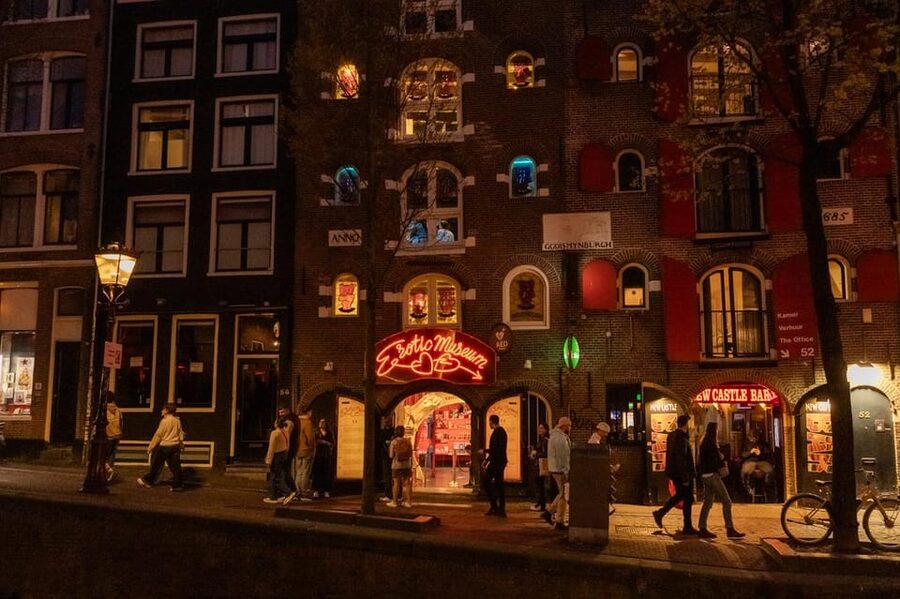
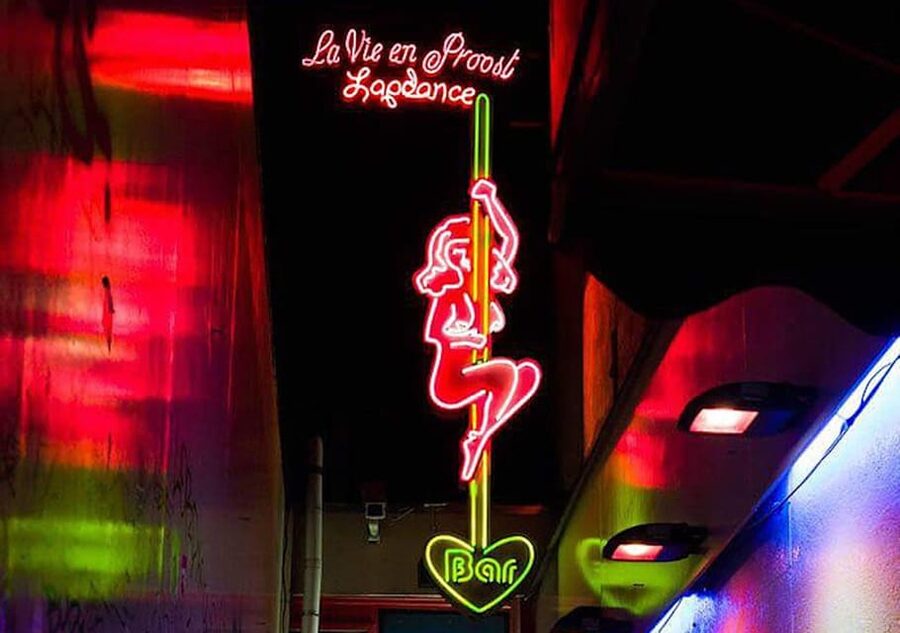
The tour finishes with a visit to Sex Palace for a live peep show experience. This is described as an iconic 70s peep-show, and it’s presented as one of the last live ones in the world.
The actual peep-show experience is described as short, about two minutes, and it does not involve physical interaction with another person. That’s important context because it frames what you’re paying for: you’re observing, not participating in contact.
A practical detail: the peep-show has a 2 euro entry fee not included in the tour price. The event itself is likely optional for some people, depending on how you handle sensitive topics, and I’d treat it as a choose-your-comfort moment if you’re unsure.
Also keep the rules in mind here. Cameras are not allowed, alcohol and drugs are not allowed, and the whole tour is built around respect for the people in the area.
Respect rules and the tone of the tour
This is not a casual walk with offhand jokes. Several rules shape the experience, and they matter because they protect both your learning and the people you pass.
You’re told cameras are not allowed. You’re also told no intoxication, no alcohol, no drugs, and no littering. Unaccompanied minors are not allowed, and children under 16 are not suitable for the tour format.
Age rules are specific:
- Ages 16 to 18 must be accompanied by a parent or guardian.
- Under 16 can only participate in a private tour, and that private tour can be adjusted depending on age.
If you’re bringing teens, this matters for planning. If you’re not, still be aware: the tour is designed for adults and older teens who can handle frank, real-world topics.
Guides are repeatedly praised for handling delicate subjects tastefully and respectfully. In my view, that’s the main reason to pick a guided version, not just wander on your own.
Weather, crowds, and how to pick your day
The tour runs in any weather. That means an umbrella is not optional on rainy days, and comfortable shoes matter because you’re walking city streets.
Crowds are also part of reality here. On Fridays and Saturdays, a lot of tourists visit the Red Light District. If you want a quieter pace and fewer interruptions, you’ll be happier picking a different day.
One nice touch is that the tour distance and duration are manageable, so even if weather slows you down a bit, the experience doesn’t turn into an all-day commitment.
Price and value: is 61 USD a fair trade?
At about $61 per person for 1.5 hours, the price is not cheap compared to standard city walking tours. But you’re paying for three things that are hard to replicate on your own.
First, you’re paying for small-group access, up to four people, which is designed to work with the new regulations that restrict bigger groups from walking directly through parts of the district.
Second, you’re paying for a guided focus on politics and history, including how the system works and how sex workers make a living. That context is the difference between collecting impressions and understanding what you’re seeing.
Third, you’re paying for a live peep-show visit experience, with the separate entry fee noted clearly. If you do choose to go in, it gives you a short firsthand slice of the district’s older culture.
One drawback to be aware of: at least one experience report mentioned not being offered the peep show at the end, which can make the whole thing feel awkward. If that worries you, ask your guide early on or confirm how the peep-show option will be handled for your group.
Who this tour suits best
This tour fits best if you want Amsterdam with context. You like your sightseeing with a point of view, and you’re open to a critical view on sex work rather than a purely sensational framing.
It’s also a good pick if:
- You prefer small groups for better listening and more interaction.
- You want to understand the district through policy and social history.
- You’re curious about the peep-show concept and want a first-hand look, within a clearly described, short format.
It’s less ideal if:
- You want to take lots of photos in the district.
- You dislike frank discussion of sex work and regulation.
- You’re looking for an inside visit to coffeeshops, because this tour is not set up for that.
Wheelchair accessibility is listed, so it can be a viable option for mobility needs, but you’ll still be walking on city streets as part of the 1.8 km route.
Should you book the Amsterdam Red Light Tour Exclusive with Peep Show?
I’d book it if you care about understanding the district, not just seeing it. The combination of small-group walking, politics and history context, and a live peep-show stop makes this feel like a guided experience rather than a sightseeing detour.
Before you go, double-check two things: your comfort with the topic, and your willingness to follow the no-cameras rule. If you can do both, you’ll get a clearer, more respectful look at a controversial corner of Amsterdam, with an ending that’s short, specific, and unlike most tourist stops.
If you’re on the fence about the peep show, you still get substantial value from the walking part. The peep-show element is a separate entry and a distinct choice, so make the decision based on your own comfort level.
—
FAQ
What is the duration of the tour?
The tour lasts about 1.5 hours.
Where does the tour start?
You meet on the steps of the National Monument at Dam Square. Your guide will be recognizable by a red name tag.
Is the tour in English or German?
The tour is offered in either English or German. It is not bilingual, so you’ll want to pick the language option carefully.
How big is the group?
The tour runs in very small groups of up to 4 people.
Is the peep show entry fee included?
No. The peep-show has a 2 euro entry fee that is not included in the tour price.
Can I take photos during the tour?
No. Cameras are listed as not allowed.
Is there a coffeeshop visit inside?
The tour does not include an inside visit of a coffeeshop.
Is it suitable for children?
Children under 16 are not suitable. Ages 16 to 18 must be accompanied by a parent or guardian. Participants younger than 16 can only participate in a private tour.
Does the tour run in bad weather?
Yes. The tour takes place in any weather, so bring an umbrella if rain is expected.
More Tours in Amsterdam





More Tour Reviews in Amsterdam



De Wallen Beyond the Spectacle



Newly reviewed around Amsterdam



Red Light District Tours, side by side.
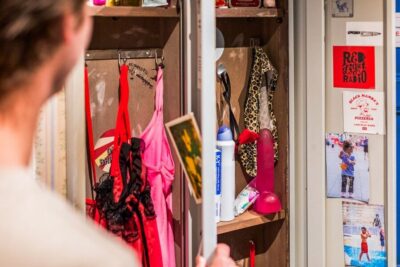 ★ 4.2Red Light Secrets Museum Entry TicketFrom $175,722 reviews
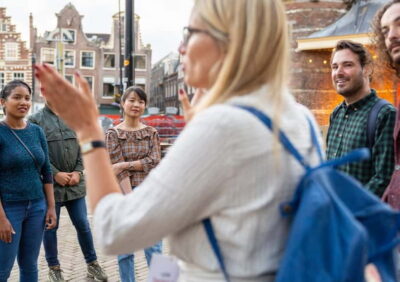 ★ 4.9Red Light District Tour in German/English/ItalianFrom $285,623 reviews
 ★ 4.6Amsterdam Red Light District & Coffee Shop TourFrom $294,134 reviews
 ★ 4.1Red Light District Pub Crawl with Unlimited ShotsFrom $242,130 reviews
 ★ 4.5Amsterdam Red Light District Pub CrawlFrom $241,497 reviews
 ★ 4.5Red Light District TourFrom $331,135 reviews
 ★ 4.1After Dark Red Light District TourFrom $571,030 reviews
 ★ 5.0Private Amsterdam Red Light District and Coffee Shop TourFrom $41763 reviews
More ways to plan this visit