
REVIEW · RED LIGHT DISTRICT TOURS
Amsterdam Red Light District and City Center Walking Tour
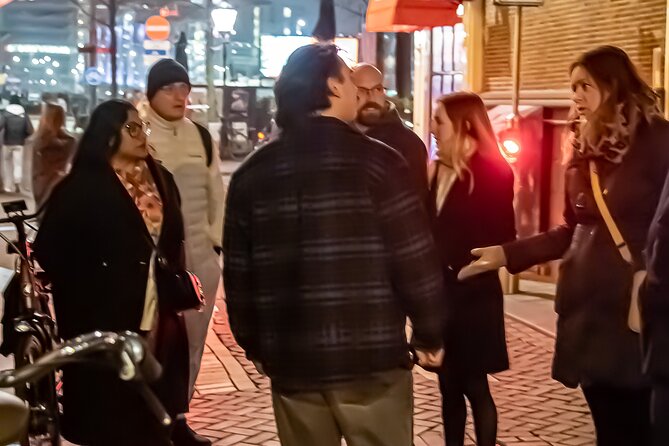
Amsterdam tells its story after dark. This guided Amsterdam Red Light District and City Center walking tour puts De Wallen in context, with a real guide leading you through the narrow lanes and the culture around coffeeshops and sex work. I like that you also stop for major Old Town sights, so you leave with more than just street impressions.
I especially like how the guide keeps it practical, covering the kinds of local rules that affect what you see in the windows and how coffeeshops fit into the area. With guides named in this program like Robin, Gio, and Aaron, the tone is friendly, the pace stays organized, and questions get real answers.
One thing to consider: this is an adult neighborhood and a sensitive topic, so it may feel awkward if you want a light, family-style history walk. Also, it’s not recommended for limited mobility, since you’ll be walking around in the street-level old town fabric of Amsterdam.
Key things to know before you go
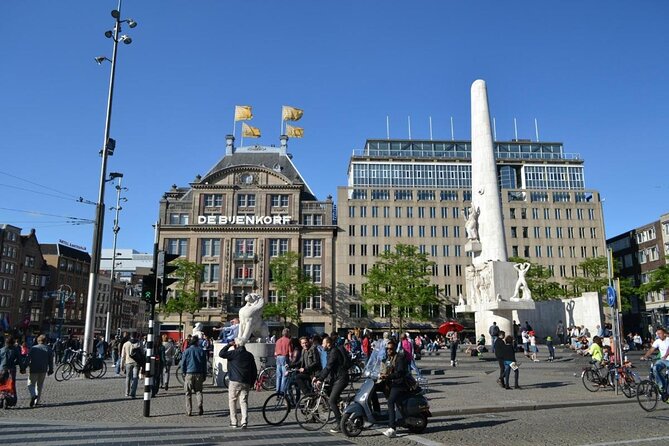
- De Wallen at night with on-the-ground context so you understand what you’re seeing, not just the stereotypes
- Small group size (max 16) that helps your guide keep track and give time for questions
- Old Town landmarks mixed in, including the Waag and the Pub The Ape building
- Amsterdam’s “city on wooden poles” story, tied to how the city was built on deep layers of clay and peat
- A stop connected to modern adult commerce, including a condom shop that has operated since 1987
Other history-led walks through De Wallen
Entering De Wallen: why this walk makes sense at night
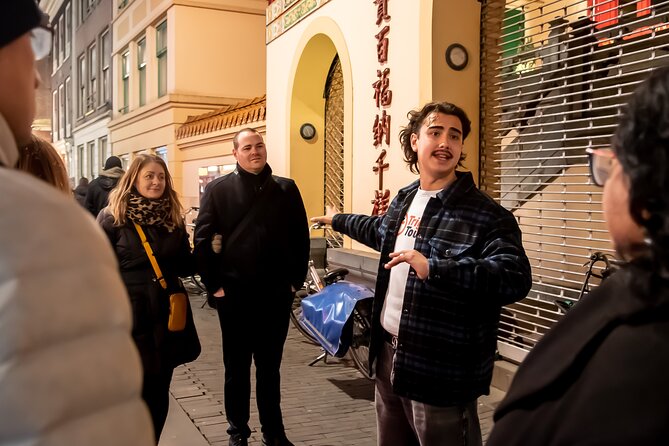
De Wallen looks like a headline at first glance. At night, it becomes something else: a living neighborhood with rules, routines, and a very specific streetscape. A guided format matters here, because you get the context that turns the area from confusing to readable.
I like that the tour doesn’t treat the Red Light District like a theme park. You’ll be oriented to the narrow streets, the broader Coffeeshop culture you’ll hear about in Amsterdam, and the sex work industry that shaped the district’s reputation. The guide’s job is to help you interpret what’s going on around you.
You should also expect the tone to stay respectful and informative. You are not there to “stare and gawk” your way through awkward scenes. If you keep a curious, calm mindset, the experience becomes more about understanding Amsterdam than judging it.
Price, time, group size, and where the tour starts
This tour costs $31.24 per person and runs about 2 hours. That’s a good length for a first-time walk in central Amsterdam, because you’ll get key stops without feeling like your entire evening disappears into the city.
You can choose from multiple start times, and the tour is offered in English. It’s capped at 16 travelers, which is a big deal in a place where narrow streets can turn into slow-moving bottlenecks.
Your tour begins at Geldersekade 2, 1012 BH Amsterdam and ends back at the meeting point. You’ll use a mobile ticket, and you’ll receive confirmation at booking.
Stop 1 in De Wallen: windows, coffeeshops, and local rules
The heart of the walk is De Wallen itself. You’ll spend time walking the narrow streets where Amsterdam’s most famous windows are found, and you’ll hear how the district became what it is today.
What makes this stop worth doing with a guide is the attention to how rules actually shape daily life there. One review highlighted learning the laws and how they affect the windows and the coffeeshop environment, and that kind of explanation is exactly what helps a first-time visitor.
You should also go in prepared for a mix of sights and viewpoints. Even if you’re not interested in the adult side of things, De Wallen is part of Amsterdam’s urban story, and it connects directly to how neighborhoods deal with legality, visibility, and commerce.
A small practical tip: keep your phone put away until your guide tells you where you should focus. This is a place where the vibe can shift quickly, and a respectful approach keeps the tour smoother for everyone.
Amsterdam at street level, a few more routes
- Anne Frank’s Story – Guided Walking Tour through Amsterdam★ 5.0 · 11,619 reviews
- Amsterdam: Life of Anne Frank and World War II Walking Tour★ 4.8 · 10,467 reviews
- Absolutely Amsterdam – the Essential Introductory Walking Tour★ 5.0 · 3,629 reviews
- Amsterdam: Anne Frank Guided Small Group Walking Tour★ 4.8 · 2,722 reviews
The Dam and Amsterdam’s wooden-pole foundation: a history lesson you can see
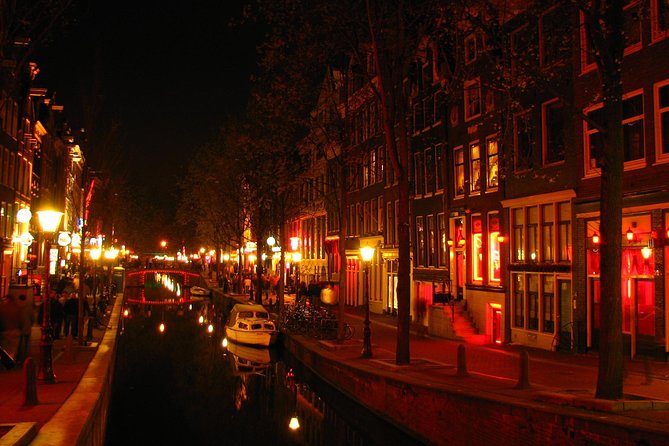
The tour doesn’t only stay on street corners. You’ll also get a solid Amsterdam-building primer tied to the idea of the city built on trees.
Amsterdam’s ground is described as a thick layer of fen and clay, sitting above softer materials. Houses were historically built on wooden foundation piles driven down into the clay, peat, and water until they reach a solid sand layer, about 11 meters deep.
Why this matters on a walking tour is simple: it changes how you think about the city you’re standing in. Amsterdam isn’t just canals and charming facades, it’s also engineering under pressure, because the city had to make unstable ground livable. When you hear this explanation while moving through the oldest parts, the history starts to feel physical instead of abstract.
Old Town age power: why this area feels especially layered
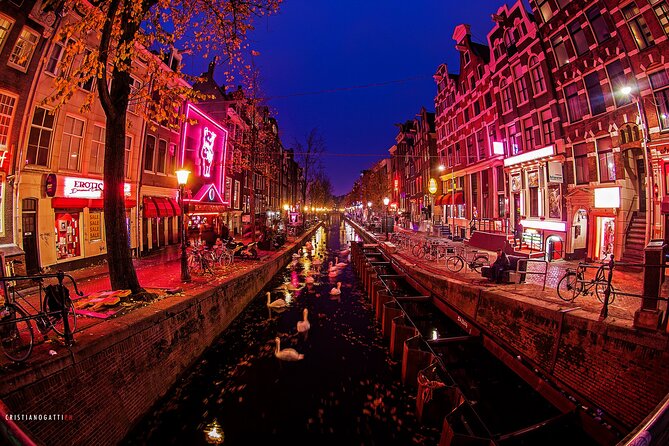
You’ll hear that you’re in one of the oldest parts of the city. That matters in Amsterdam, because so many streets feel like they were shaped long ago and then kept functioning through centuries of change.
Being in an older Old Town pocket also explains why the architecture varies. You’ll find buildings and landmarks that don’t match modern expectations, because Amsterdam has been rebuilding and repurposing for a very long time.
This is also where the tour’s pacing helps. The guide can connect the district’s adult reputation to the older civic and commercial life that preceded it, so you understand why the Red Light District sits inside a much broader historical neighborhood.
Pub The Ape: the wooden building link you won’t forget
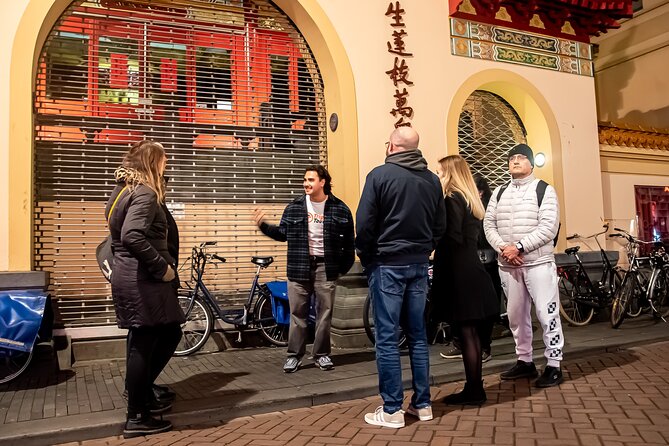
One of the most memorable stops is Pub The Ape, also known as ’t Aepjen in Dutch. The building is described as built around 1540, and it’s one of only two remaining wooden buildings left in Amsterdam.
That detail is a big deal in a city that otherwise pushed toward brick after a major fire in 1452. Hearing why the government shifted to brick facades gives the wooden building more meaning than just old age. It becomes a surviving clue to how Amsterdam recovered and enforced new building rules after disaster.
Even if you’re not planning to stop inside for a drink, this is worth pausing for. Look at the structure as something rare, because that is the point. In Amsterdam, “remaining” is often more important than “famous.”
The Waag: a former city gate turned guild building
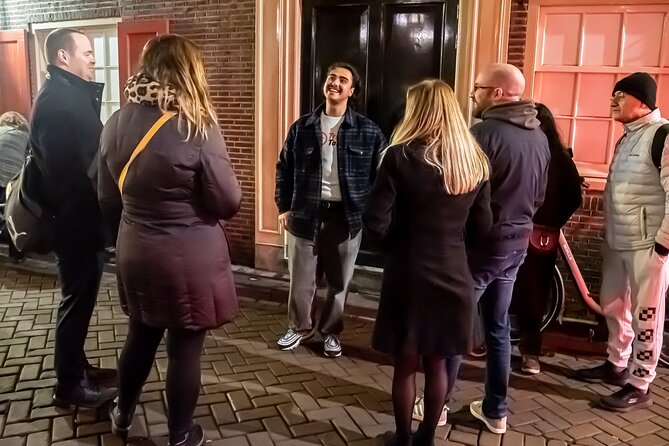
Next up is the Waag, which used to be one of Amsterdam’s city gates. It was built around the 1400s and is described as the second oldest building in Amsterdam.
This building ties directly to Amsterdam’s defensive past, since it was part of a wall and helped control entry to the city. Later, it shifted into something more civic and economic, housing guilds and craftspeople organizations around the square.
What you’ll like about this stop is that it gives you a second lens on the neighborhood. De Wallen can feel like its own world, but the Waag reminds you that the same area was once about gates, commerce, and guild power.
If you’re a “look up” traveler, do it here. Landmarks like the Waag reward a little extra attention to details, because the building carries layers of use, not just a single story.
The smallest house of Amsterdam: VOC storage to long-term living
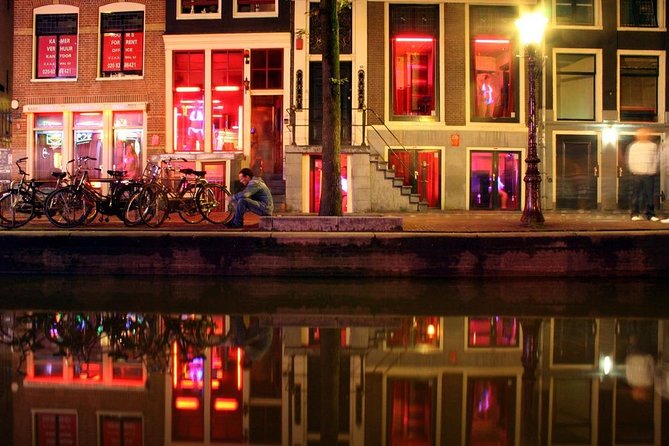
The tour includes a stop at the smallest house of Amsterdam, built around the 1700s. It was first used as storage for the VOC trading company, then people lived there for a very long time.
This is one of those stops that changes your understanding of daily life in earlier centuries. Storage connected to global trade, and then the same tight space became housing. You get a sense of how Amsterdam’s commercial engine affected ordinary living.
The practical takeaway is that Amsterdam’s history is not only museums and grand buildings. It’s also tiny spaces and reuse over time.
If you like architecture and urban quirks, this one is a good payoff. It’s short, it’s memorable, and it makes the city feel human rather than just historical.
A condom shop since 1987: how modern adult commerce fits the city
Yes, this tour gets specific, including a stop at a condom shop that’s described as the world’s first special shop for condoms, located there since 1987. The guide points out that you can get customized condom sizes and specialty types.
This might sound like a throwaway detail, but it fits the theme. Amsterdam has long treated sex and adult products as part of a real local market, subject to rules and visibility. By including a modern example, the tour bridges the gap between older history stops and contemporary life.
For many first-timers, this kind of stop helps you stop thinking in extremes. Instead of only seeing De Wallen as scandal or curiosity, you see it as an urban system with commerce, boundaries, and practical services.
Keep an open mind, and treat it as a cultural and economic signpost rather than a spectacle.
How the guide experience shapes the whole tour
The quality of a walking tour often comes down to how well the guide manages the group. In this program, the group limit helps, but the guide still has to do the real work: keeping people together, timing stops, and making sure everyone can ask questions.
Reviews highlighted guides who stayed friendly and knowledgeable, and who kept good track of the group. One review specifically praised Aaron for clear attention to each person, maintaining eye contact, and giving space for questions.
Another review praised Gio for making the experience one you remember. That’s the kind of outcome you want in a place like De Wallen, where the topic can either feel clunky or feel grounded depending on the guide.
In short, choose this tour because you want guidance. Wandering De Wallen on your own can be interesting, but you’d miss the way the stops connect, and you’d miss the explanations about what the district’s rules mean.
Getting ready: what to wear and how to behave in De Wallen
You’re walking in central Amsterdam for about two hours, and it’s done at night. Wear comfortable shoes, and think ahead about cold or wind, because open streets near canals can feel chillier than you expect.
Because this neighborhood is adult-focused, keep your behavior and body language respectful. If you’re curious, be calm. If you’re unsure about what you’re seeing, ask your guide, that’s what they’re there for.
Also consider your personal comfort level. The tour covers sex work and the surrounding culture, so it’s not the right choice if you’re looking for a purely family-safe evening.
For accessibility, it’s not recommended for travelers with limited mobility. Narrow streets and uneven surfaces can make this kind of walk tough.
Should you book this Red Light District and City Center walking tour?
Book it if you want a first-timer, guided look at De Wallen with context that explains the area’s windows and the coffeeshop culture around it. The strongest value is the combination of adult-district storytelling plus Old Town landmarks like the Waag, Pub The Ape, and the smallest house, plus the engineering story of Amsterdam’s wooden-pole foundations.
Skip it if you need a topic-light tour, or if you’re easily uncomfortable with adult subject matter. Also skip or reconsider if mobility is an issue, since the tour is not recommended for limited mobility.
If you’re visiting for only a short time and want your bearings fast, this is one of the better ways to do it. You’ll leave with a clearer sense of what Amsterdam built, what Amsterdam allowed, and how the city’s oldest streets keep working into today.
FAQ
How long is the Amsterdam Red Light District and City Center walking tour?
The tour lasts about 2 hours.
Where does the tour start, and where does it end?
It starts at Geldersekade 2, 1012 BH Amsterdam, Netherlands, and it ends back at the meeting point.
What is the price per person?
The price is $31.24 per person.
What languages is the tour offered in?
The tour is offered in English.
Is there a group size limit?
Yes, the tour has a maximum of 16 travelers.
Is it free to cancel if plans change?
Yes, you can cancel for a full refund up to 24 hours in advance.
More Tours in Amsterdam






More Tour Reviews in Amsterdam






De Wallen Beyond the Spectacle





Newly reviewed around Amsterdam





Red Light District Tours, side by side.
 ★ 4.2Red Light Secrets Museum Entry TicketFrom $175,722 reviews
 ★ 4.9Red Light District Tour in German/English/ItalianFrom $285,623 reviews
 ★ 4.6Amsterdam Red Light District & Coffee Shop TourFrom $294,134 reviews
 ★ 4.1Red Light District Pub Crawl with Unlimited ShotsFrom $242,130 reviews
 ★ 4.5Amsterdam Red Light District Pub CrawlFrom $241,497 reviews
 ★ 4.5Red Light District TourFrom $331,135 reviews
 ★ 4.1After Dark Red Light District TourFrom $571,030 reviews
 ★ 5.0Private Amsterdam Red Light District and Coffee Shop TourFrom $41763 reviews
More ways to plan this visit