
REVIEW · CYCLING TOURS
Amsterdam in World War Two Cycle Tour
Pedal through Amsterdam’s WWII streets. This small-group ride uses WWII-era photos to map Nazi offices, raids, and resistance stories onto today’s streets, including Amsterdam South areas cars can’t reach. The tradeoff is simple: you need to feel comfortable cycling and staying alert as you move from stop to stop.
I love the way Rudy (and Peter, on some dates) makes the details click, with local context and a relaxed pace that still covers serious ground. My other favorite part is the max of six riders, which means you can actually ask questions without shouting over the group.
The tour runs about 2 hours 30 minutes to 3 hours 10 minutes, starting at Tesselschadestraat 1 at 11:00 am, then ending back at the meeting point.
Key points before you ride
- Car-free access in Amsterdam South, where the streets feel calmer than the center
- WWII photos paired with present-day views, so the past snaps into focus
- Max six travelers, which keeps it safe, organized, and interactive
- Real stop-by-stop stories, from arrests and registration to Dutch resistance action
- A practical coffee and restroom break at Roelof Hartplein
Worth comparing with this Amsterdam choice:
Start at Tesselschadestraat, then roll toward Daniël Willinkplein
You meet at Tesselschadestraat 1, in Amsterdam, and the ride kicks off at 11:00 am. From there, you cycle into the route area that the guide talks about like it’s a living map, not a history lecture.
The best part of biking here is that you move through neighborhoods at human speed. You do not just look at buildings, you pass them, turn corners, and get the sense of distances that walking tours often miss. It also helps that the route favors quieter streets outside the thickest tourist core.
Daniël Willinkplein and the June 20, 1943 roundup at Victorieplein
The tour’s first major anchor is Victorieplein, which was known at the time as Daniël Willinkplein. On June 20, 1943, a major raid struck Amsterdam. At the foot of a skyscraper there, large groups of Jewish citizens were arrested during what the Nazis framed as a Judenaktion.
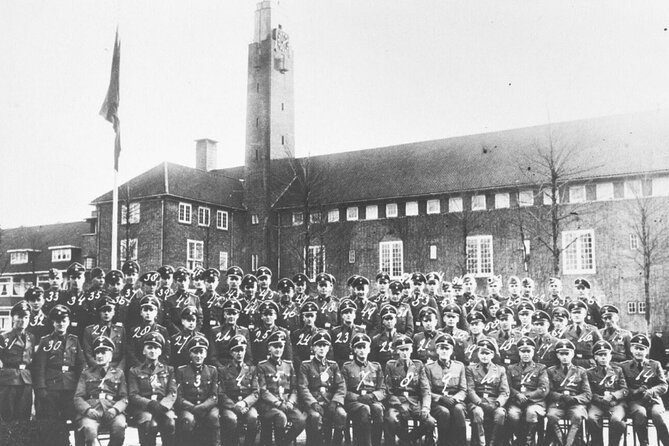
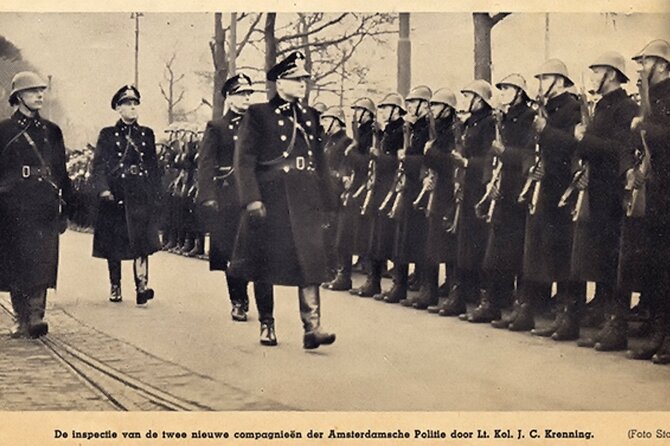
This is where the guide’s photos do real work. You see the modern street scene, then you get the wartime view, and suddenly the location stops feeling abstract. You also learn how it was not just German forces involved: the arrests were assisted by Dutch police units, PBA (Police Battalion Amsterdam), plus volunteers linked to the Dutch National Socialist Movement (NSB). That mix is important, because it shows how occupation systems could draw on local structures.
The detained people were transported to places including Olympiaplein for registration, then sent onward to Westerbork in the east of the Netherlands. As you cycle away from the starting area, you can start to understand how the city’s infrastructure shaped deportation logistics.
Merwedeplein and the Frank family, plus how a diary moved through a real bookstore
Next you stop at Merwedeplein 37-II, the home of the Frank family. In summer 1942, Otto Frank moved his family and some acquaintances to Het Achterhuis, the Secret Annex on the Prinsengracht, where his company was located.
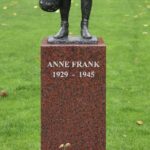
A statue commemorates Anne Frank on Merwedeplein. Standing there with the guide’s explanation is a good reminder that this was not only a story of hiding. It was also a story of daily movement through streets, addresses, and everyday life continuing even while the world around it collapsed.
Right around the corner is the Waalstraat bookstore, Jimmink, which is still active. The guide points out how the first edition of Het Achterhuis, Contact publishers, was sold there in 1947, and that Otto Frank bought the diary for his daughter from this bookshop. That detail matters, because it connects the war to postwar memory, and it makes the locations feel less like museum props.
- Amsterdam Classic Saloon Boat Cruise with Drinks and Cheese★ 5.0 · 31,825 reviews
- Amsterdam Luxury Canal Cruise + Unlimited Drinks & Bites option★ 5.0 · 30,518 reviews
- Amsterdam: Heineken Experience Ticket★ 4.6 · 30,055 reviews
- Amsterdam: Rijksmuseum Entry Ticket★ 4.7 · 25,535 reviews
A note on how to read this neighborhood
On this ride, I like that you do not just hear names and dates. The guide helps you look for what is still there, what changed, and what survived in altered form. You end up with a street-by-street understanding rather than a single dramatic moment.
Tilex Bar at Waalstraat 48, and the survival story of Lex van Weren
At Waalstraat 48, opposite Merwedeplein, the tour pauses at what is now Café Blek. The building used to be the Tilex Bar, tied to Tilly and Lex van Weren.
Here the story turns personal and specific. Lex van Weren survived Auschwitz because he had to play his trumpet at executions. It is a grim fact, but the guide frames it in a way that helps you understand how survival could depend on forced roles and impossible choices.
What I like about this stop is how it balances the heavy material with real human details. You are not only tracking oppression. You are also learning about people who lived ordinary lives until the occupation and its systems pushed them into brutal situations.
Cornelis Troostplein 23 and Museumplein’s wartime stronghold
You then reach Cornelis Troostplein 23. This place once held PBA barracks. Before WWII, it was called the peace parish, with a Catholic complex that included two convents and a school.
Spring 1942 is a key moment here. The chief of the Sicherheitsdienst (SD) or Gestapo, Rauter, inspected the PBA and met Heinrich Himmler at Museumplein. That connection shows how these locations fit into broader occupation power networks, not just local enforcement.
From there, Museumplein becomes a study in how public space can be repurposed for control. During the war, the Germans transformed the square into a stronghold. When you face the concert hall, the guide points out that the houses on your left were occupied by German offices.
The tour also connects specific buildings to specific Nazi operations. For example, the United States consulate building once housed the Zentralstelle für Jüdische Auswanderung, the Central Jewish Emigration office. Next door, you find the Ortskommandantur and the Feldgendarmerie buildings, while other nearby structures housed Nazi party offices and other German services.
In front of these buildings was the IJsclubterrein, the Amsterdam skating club. Here the Germans built bunkers and anti-aircraft (Flak) batteries. The route includes the NSB HQ Amsterdam next to the concert hall. After WWII, all those bunkers were blown up, which you can read as both a physical change to the city and a symbolic end to that occupation footprint.
Roelof Hartplein coffee and resistance photo evidence
Before you hit the more intense corners and retaliation stories, you get a practical pause at Roelof Hartplein. The guide takes you to Café Wildschut for coffee and a restroom break. It’s short, about 10 minutes, and any admission ticket is free.
Then you roll to Roelof Hartstraat, where there was a photo shop next to the library building. During the war, the Dutch resistance used the store to develop unique photos, including images of the first roundup of Jews in Amsterdam by the SD/Gestapo and German (order) police. Charles Breijer is named here as one of the people connected to that photographic record.
This is a strong example of the guide’s style. You are not only hearing about violence and bureaucracy. You are also seeing how resistance could preserve evidence and document what was happening in real time, using normal storefront tools like photography.
The route also includes a small monument remembering Jews taken from this neighborhood. It’s the kind of moment that makes you slow down, even if your legs are still warming up.
Beethovenstraat and Apollolaan, then Euterpestraat’s executions and reprisal
At the corner of Beethovenstraat and Apollolaan, the tour highlights a specific episode tied to retaliation. At the end of October 1944, around the front of no. 6, Herbert Oelschlägel, an SS officer and Sicherheitsdienst or Gestapo agent, was executed by a Dutch resistance member.
In response, the Sicherheitsdienst or Gestapo burned down two houses and executed 29 resistance fighters. The guide also reminds you that the street was called Euterpestraat at the time, and that Gerrit van der Veen led an important Dutch resistance group. Those names connect the street to a larger resistance network, rather than leaving the story as one isolated incident.
If you want to truly understand the occupation, these stop types matter. They show that resistance had consequences, and occupation forces reacted with brutal consistency. It is hard material, but the guide keeps it organized, with enough context to follow the chain of events.
Rubensstraat and Memlingstraat: SD HQ, stolen property, and a RAF strike aimed at files
This is one of the most intense parts of the ride. At the corner of Memlingstraat and Rubensstraat, you learn about two major Nazi oppression organizations that operated here.
One was the SD-HQ Amsterdam, described as an SD Aussenstelle under Willy Lages. The other was the Hausraterfassungsstelle, a unit tied to stealing the possessions of deported Jews. It was part of the Zentralstelle für Jüdische Auswanderung system. The guide also names Henneicke as the leader of the Hausraterfassungsstelle, linking the story to Dutch collaboration.
Then the tour steps into the role of air power and coded resistance. In November 1944, the resistance requested the Royal Air Force via a secret radio message to attack the headquarters of the SD/Gestapo and the Hausraterfassungsstelle. The guide emphasizes that destroying SD/Gestapo files was the main aim.
That job is linked to Group Captain Denys Gillam DSO, DFC, AFC, leader of 149 (Typhoon) wing. It’s a lot of names and acronyms, but the guide ties them to the geography you are standing on, so it does not feel like memorizing.
Finally, the tour mentions a safehouse on the corner of Rubensstraat and Gerrit van der Veenstraat, with a prompt to look for the Stolperstein address. The guide also notes that in June 1944, the address of that safehouse was betrayed to the SD/Gestapo by a female informant called V-Frau.
This sequence is why biking works so well. You are not only learning about events, you are moving through the kind of neighborhood where these groups could operate close to everyday life, until resistance made the risks visible.
Olympiaplein registration, with Westerbork connections you can still map today
At Olympiaplein and Parnassusweg, the tour focuses on registration after arrests. Here, Jewish people arrested during the June 1943 raid at the sports complex were registered by the SD/Gestapo, with help from Jewish camp police sent from Westerbork concentration camp.
The guide points you to the nearby monument connected to Parnassusweg, which helps you see this site as more than an administrative stop. It was part of a system that processed people before further deportations.
What I like here is the way the guide does not rush past the bureaucratic step. Registration sounds cold, but standing on the square while hearing how it fit into forced transport gives the word system a body.
Valeriusplein and the Amsterdam Lyceum: Luftwaffe HQ on a school site
Next you reach Valeriusplein and the Amsterdam Lyceum. The school building served as the headquarters of the Luftwaffe at the end of the occupation.
Even if you know the basics of WWII, it can feel strange to learn that a school building became an operations center. That contrast is exactly the point of this type of tour. You learn how occupation changed routines and repurposed institutions.
From there, the tour shifts to symbolic resistance and the final days after the surrender.
Queen Emma, flowers in 1940, and the last-day violence after May 7, 1945
The tour pauses at the statue of Queen Emma on Emmalaan and Prins Hendriklaan. In summer 1940, people placed flowers at the statue in defiance of German occupiers.
This stop is gentle compared to the earlier retaliation details, but it stays meaningful. It gives you a different angle on resistance, the small act that says no even when the cost could be high.
The guide also connects Charles Breijer to a photo taken in 1944, showing a guard at the headquarters of the Kriegsmarine. That loops back to the earlier photo-shop stop, showing how one resistance photographer could connect multiple parts of the city’s wartime story.
Finally, as the Germans surrendered on May 7, 1945, dangerous situations arose between frustrated German troops and resistance fighters. The tour ends at the monument to victims of one of the shootings on that last day.
Ending through Vondelpark to Leidseplein, then back to your start
After the last historical stop, the guide walks you through Vondelpark to Leidseplein, where the tour began in the broader route plan. Then you return to the meeting point to finish back where you started at Tesselschadestraat 1.
This is a good close. By then, you have cycled through the key “pages” of the story, and the park route helps reset your senses without losing context. You also get a final look at the city’s layout after all the wartime overlays the guide just mapped on top of it.
Price and value: what $66.09 buys you in Amsterdam
At $66.09 per person, this is not the cheapest way to do Amsterdam history. But it is also not trying to be a ticketed museum day. You are paying for a short, focused ride that combines transportation, interpretation, and a small-group setup.
The value shows up in three places:
- A maximum of six travelers, which makes it feel like a guided walk, not a cattle line.
- WWII photos tied to the exact locations you visit, plus before-and-after views that make the changes obvious.
- A guide who links local streets to the facts, including the kind of street-level context that only comes from living nearby for years.
If you love history but dislike reading plaques all day, this offers a practical alternative. You also cover more ground than you would on foot, so you see South Amsterdam neighborhoods that feel quieter than the classic center routes.
Who should book this WWII bike tour, and who should skip it?
Book this if you want WWII Amsterdam in an outdoor, street-level way. It suits you best if you care about understanding the real geography behind raids, deportations, resistance actions, and collaboration, and if you like the idea of seeing WWII-era photos next to today’s street corners.
Skip it if you have limited cycling comfort. The tour is designed for pedaling through the city, with short stops, coffee timing, and continuous movement. Also, if you only want indoor museum-style storytelling, you might find an outdoor route less your style.
Final call: should you book Slagveldreizen.nl?
If you want to see Amsterdam as a city that was used, repurposed, and fought over, this tour is a strong match. The small group size, the guide’s street-by-street storytelling, and the WWII photos at present-day locations turn history into something you can actually picture.
I’d book it if you are staying long enough to do one real history outing and you’re comfortable biking in town. If you are on the fence, prioritize the feel of the experience over the topic. This is not a distant lecture. It is a guided ride where the city itself becomes the textbook.
FAQ
Where is the meeting point for the tour?
You meet at Tesselschadestraat 1, 1054 ET Amsterdam, Netherlands.
What time does the tour start?
The start time is 11:00 am.
How long does the bike tour last?
Plan for about 2 hours 30 minutes to 3 hours 10 minutes.
How many people are on the tour?
The group has a maximum of six travelers.
What language is the tour offered in?
The tour is offered in English.
Is the ticket mobile?
Yes, the tour includes a mobile ticket.
Do I need to bring a bike?
Bring a bike, since this is a cycling tour and riders are expected to pedal during the experience.
Is there a coffee or restroom stop during the tour?
Yes. There is a short stop at Roelof Hartplein at Café Wildschut for coffee and a restroom visit (about 10 minutes).
What kinds of WWII locations will I see?
You’ll visit places connected to WWII events in Amsterdam, including areas tied to Jewish arrests and registration, the Frank family story, Nazi offices, resistance activities, and sites tied to the final days after May 7, 1945.
What is the cancellation window?
You can cancel for a full refund if you cancel at least 24 hours before the experience’s start time. If you cancel less than 24 hours before, the amount paid is not refunded.
More Cycling Tours in Amsterdam

More Tours in Amsterdam





More Tour Reviews in Amsterdam

Newly reviewed around Amsterdam

Cycling Tours, side by side.
 ★ 4.7Guided Bike Tour City Centre in EN/DE/FR/ESFrom $414,187 reviews
 ★ 5.0Countryside Bike Tour from Amsterdam: Cheese, Clogs & a WindmillFrom $591,485 reviews
 ★ 4.8Hidden Gems & Highlights Guided Bike TourFrom $441,404 reviews
 ★ 4.9Off the Beaten Path Bike Tour in FrenchFrom $411,193 reviews
 ★ 5.0Amsterdam Highlights Bike or E-Bike TourFrom $451,171 reviews
 ★ 4.5Windmill, Cheese, and Countryside E-Bike TourFrom $431,166 reviews
 ★ 4.7Relaxed City Highlights Guided Bike TourFrom $341,069 reviews
 ★ 4.5Guided City Bike Tour in FrenchFrom $41806 reviews
More ways to plan this visit