
REVIEW · TOURS
Amsterdam in World War II Tour
WWII has a street map in Amsterdam. This small-group walking tour follows the city’s German occupation story through key places tied to Jewish life, Dutch resistance, and wartime decisions you can still see today. You get to move at a slow, human pace while a retired historian keeps the timeline clear and grounded.
What I like most is the guide team. In the groups this tour attracts, people rave about historians who show period photos and use maps and notebooks to help you picture what happened. The tour also stays practical, with the route laid out so you do not waste time hunting down buildings on your own.
One possible catch: you stop outside Anne Frank House and do not enter the museum. So if you came specifically for museum galleries, you will want to plan that separately.
Key Highlights You Should Know Before You Go
- Small group (max 8) means you can actually hear the story, ask questions, and keep up without rushing
- Retired historians bring a clear, chronological approach and use visuals like old photos and maps
- Anne Frank House stop is exterior only, with context about the German attack and Jewish refugees
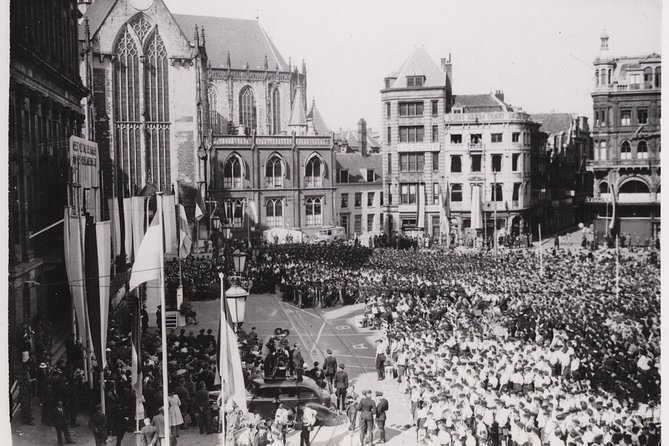
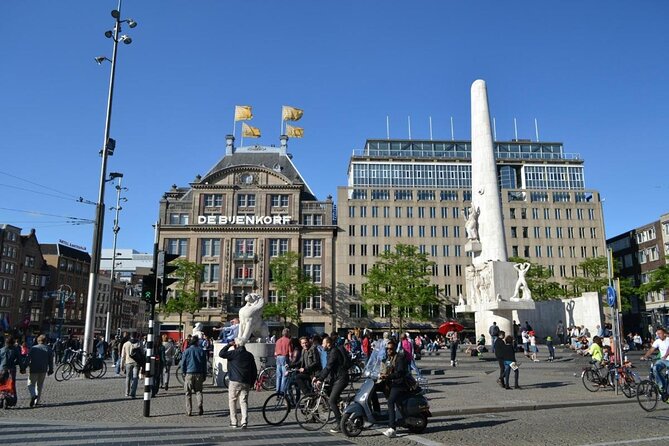
- Dam Square is treated as a living historical stage, including events right after German surrender
- Walking route + navigation help so you do not get lost while learning the city
- Ends at the National Holocaust Names Monument, a powerful final stop near major Jewish landmarks
Before fixing the day, compare this with a few well-reviewed Amsterdam alternatives:

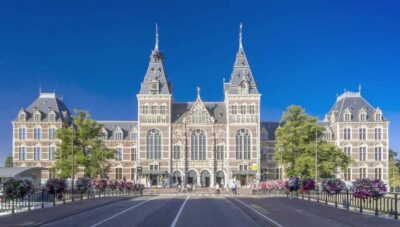
A 3-hour walk through Amsterdam’s WWII streets
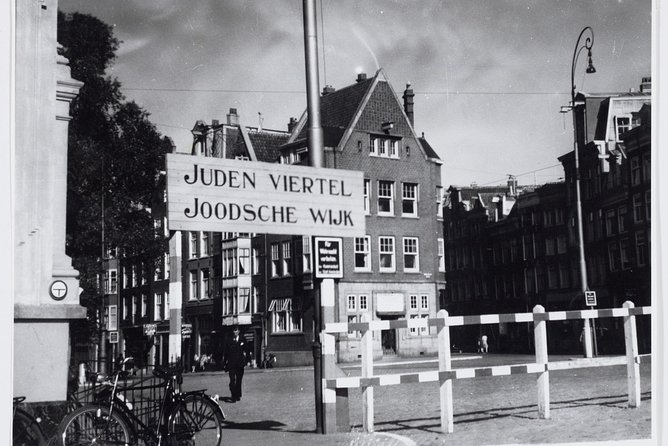
This is not a museum marathon. It is a city walk designed to make Amsterdam feel like a set of linked clues, where street names, courtyards, and landmark buildings point to what the Nazis changed from 1940 to 1945.
You will spend about 3 to 3.5 hours walking slowly. That timing matters in Amsterdam, because even short distances can feel longer when you are stopping often. Here, you are not just passing sights. You are getting the story behind them, then moving on while the history still feels fresh.
This tour is also aimed at history lovers, but you do not need to know much first. The guides focus on making the big picture understandable, then adding specific Amsterdam details so it does not stay abstract.
Price and value: what $46.44 gets you
At $46.44 per person, you are paying for a live, guided walking experience from retired historians, not for attraction entry. The guide does the heavy lifting: explaining the occupation, connecting Jewish heritage to specific locations, and pointing out the wartime meanings hiding in plain sight.
Two things help the value feel real:
- Small group size. With a limit of 8 people, you are less likely to get stuck behind taller people or get a watered-down talk.
- Most stops are free to see. Even though you do not enter Anne Frank House, the rest of the route does not require buying tickets at each stop.
If you budget for a walking guide plus the cost of museum time you might add later, this tour can be a smart first history anchor for your Amsterdam trip. Then you can decide which sights you want to enter on your own.
Meeting point on Prinsengracht, and how the route works
You start at Prinsengracht 263, 1016 GV Amsterdam, with a 9:30 am start time. You end at the National Holocaust Names Monument (near the Portuguese Synagogue and not far from the city hall area).
Why this matters: you are not forced into backtracking. The walk gradually moves through wartime Amsterdam themes and then lands at a solemn closing point. That flow helps you leave with a stronger sense of place, not just a list of stops.
Also, the tour is built for getting your bearings. One highlight promise is that you walk alongside the guide so you do not get lost. In a city like Amsterdam, that is a real quality-of-life upgrade, especially when you are focused on history rather than street-hunting.
- Amsterdam Classic Saloon Boat Cruise with Drinks and Cheese★ 5.0 · 31,825 reviews
- Amsterdam Luxury Canal Cruise + Unlimited Drinks & Bites option★ 5.0 · 30,518 reviews
- Amsterdam: Heineken Experience Ticket★ 4.6 · 30,055 reviews
- Amsterdam: Rijksmuseum Entry Ticket★ 4.7 · 25,535 reviews
Stop-by-stop: what you see and what it means
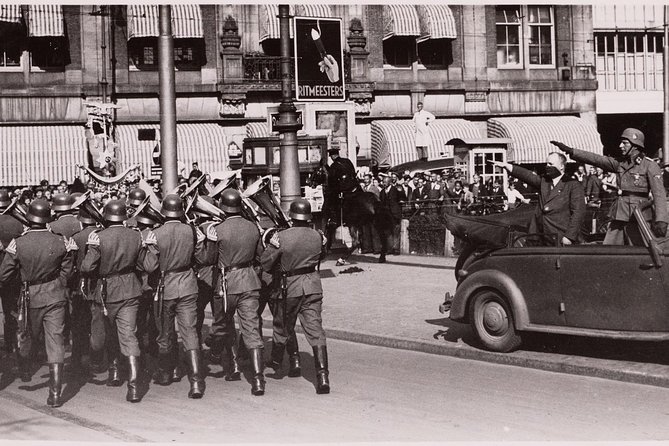
The tour is structured as a sequence of meaningful checkpoints, with a longer opening segment and shorter, focused stops that add detail.
Stop 1: Amsterdam occupation landmarks (about 2 hours 30 minutes)
This is the backbone of the tour. You spend the most time here, anchored around important sites and monuments connected to the Nazi occupation of Amsterdam from 1940 to 1945.
This long first stretch is useful because it sets the framework you need for everything that follows. If you skip this part or arrive mentally tired, later stops can feel like separate facts. With the extended opening, the story stays connected.
You should expect a slower pace and frequent explanations. This is the part where the guide’s ability to explain timelines and cause-and-effect really shows.
Stop 2: Outside Anne Frank House (about 10 minutes, no museum entry)
You begin outside Anne Frank House, and the guide tells the story about the German attack and the Jewish refugees. Importantly, you do not visit the museum.
For many people, that is exactly the right choice. Anne Frank House is emotionally heavy and also crowded when you enter. Doing an exterior context first can help you understand why the surrounding area matters, before you ever decide whether you want museum time later.
The drawback is simple: if you wanted to go inside the museum itself during this tour, you will need a separate ticket plan.
Stop 3: Statue of Multatuli (about 10 minutes)
This short stop is about how Amsterdam changed after WWII. You see a marker of the city’s later identity, not just the occupation period.
I like stops like this because they prevent the story from turning into a single, unchanging chapter. Amsterdam rebuilt and reshaped itself, and the city’s physical evolution is part of the historical lesson.
Stop 4: Magna Plaza, former wartime post office (about 5 minutes)
At Magna Plaza, you are looking at a place that was the post office in WWII. The guide connects it to wartime violence, including the fact that Dutch postmen were executed by the Germans.
Even if you are not a postal-history person, this is a powerful stop. Wartime control often shows up in systems that seem boring until you realize how essential they are, like mail and communications.
Stop 5: Nieuwe Kerk and Mozes en Aäronstraat (about 5 minutes)
At Nieuwe Kerk, you hear a WWII story tied to the street between the Royal Palace and the New Church, the Mozes en Aäronstraat.
Short stops can still hit hard when they connect you to everyday routes people used. Streets like this are how history sticks to daily life, not just grand buildings.
Stop 6: Dam Square, surrender day, volunteers, and remembrance (about 25 minutes)
Dam Square is treated like the heart of wartime Amsterdam, and you will spend a longer 25 minutes here.
You hear about multiple layers:
- the shooting incident on May 7, 1945, two days after the German surrender
- how Dutch volunteers were recruited here for the “crusade against Bolshevism”
- the May 4 remembrance day connection and the story around the WWII monument
This stop is often where the tour feels most emotionally concentrated, because Dam Square is central, public, and symbolic. You see why large squares become stages for recruitment, violence, and public memory.
Stop 7: Sofitel Legend The Grand Amsterdam, former wartime city hall (about 5 minutes)
Your final landmark stop is at the Sofitel Legend The Grand Amsterdam. The guide explains that this building was the city hall in WWII, and that German troops were welcomed by Dutch civil servants on May 15, 1940.
That detail matters. It shows how occupation is not just something happening at the front lines. It also shows up in official decisions and public ceremonies. History gets complicated fast, and the guide helps you hold those contradictions without glossing them over.
Why the tour avoids the museum, and when you should add it

Because you only go outside Anne Frank House, this tour works best as a context builder. Think of it like a guided map of what you are about to see and what it meant for people at the time.
After this walk, you will be in a better position to choose what to do next:
- If you want the full Anne Frank House experience, you can add the museum visit separately.
- If you prefer to keep things lighter and avoid extra indoor time, you can treat the exterior storytelling as your focus.
One practical tip: wear a layer. This tour is weather-dependent, and it is a walk. Even with a slow pace, wind and cold can steal your attention if you are not prepared.
The ending: National Holocaust Names Monument
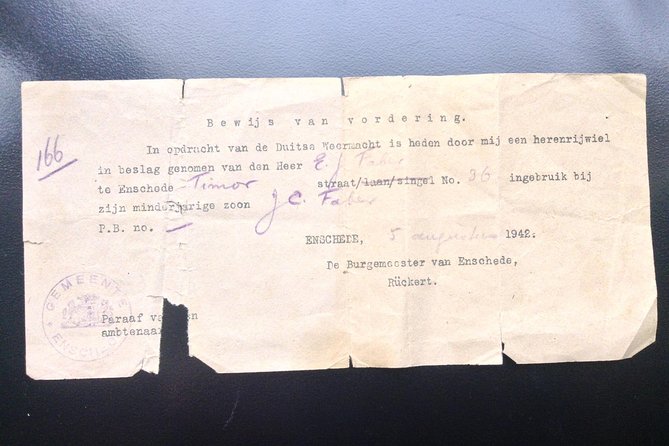
You finish at the National Holocaust Names Monument. It is close to the Portuguese Synagogue, and you are not far from the city hall area.
Ending here is not just convenient. It is a way of shifting the tone from specific locations to a broader act of remembrance. By the time you arrive, you have walked through occupation history, Jewish heritage context, wartime systems like postal routes, and public spaces like Dam Square. The monument gives the story a place to land.
Who this tour suits best
You will likely love this tour if:
- you want Amsterdam-specific WWII history, not a general Europe overview
- you care about Jewish heritage stories connected to real locations
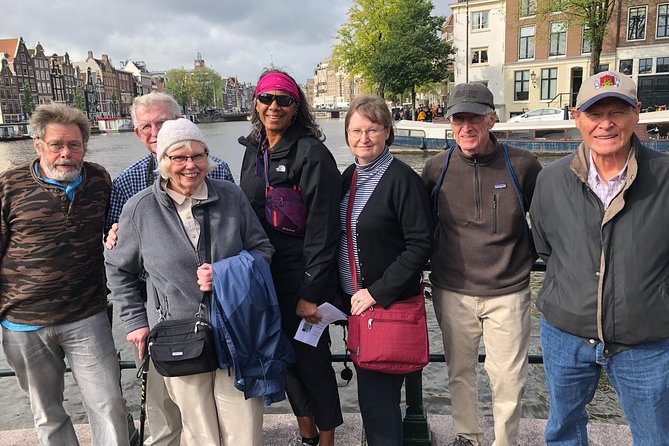
- you prefer small-group walking tours with frequent questions
- you like guides who use period photos and maps to make the past visual
It might be less ideal if:
- you want an itinerary that includes ticketed museum time inside major sites
- you dislike walking, even at a slow pace, for a few hours
What to bring so the walk feels easy
I keep advice simple for this kind of tour:
- Wear comfortable shoes. You will be walking for roughly 3 to 3.5 hours.
- Bring a warm layer even in mild weather, because you are outdoors for story pauses.
- If you like taking notes, bring a small notebook. A lot of guides use visuals, and having a place to write dates and names helps you remember later.
- If you think you might want Anne Frank House museum time, plan that separately so you are not trying to squeeze everything into one visit.
And if the day is windy or rainy, be aware that the experience needs good weather. When weather turns, it may be rescheduled or adjusted.
Should you book Amsterdam in World War II?
Yes, if you want a high-quality, small-group introduction to WWII Amsterdam that connects the city’s streets to real Jewish heritage and occupation history. The price feels fair for the guided, historian-led format, and the route does a good job balancing public landmarks with quieter, story-focused stops like the former wartime post office.
I would especially book it if you like thinking in timelines and place names. You will leave with a clearer map of what happened and where, and the walk ends on a thoughtful note at the National Holocaust Names Monument.
If you are only interested in Anne Frank House as a museum visit, then this may not satisfy that goal by itself. In that case, treat this as the context walk, then add museum time separately.
FAQ
How long is the Amsterdam in World War II tour?
The tour lasts about 3 hours to 3 hours 30 minutes.
What is the group size?
The experience is limited to a maximum of 8 travelers.
Where does the tour start and when?
It starts at Prinsengracht 263, 1016 GV Amsterdam at 9:30 am.
Where does the tour end?
The tour ends at the National Holocaust Names Monument (1018 DP Amsterdam).
Is the tour guided?
Yes, it includes a guided tour.
Do you visit the Anne Frank House museum?
No. The tour starts outside Anne Frank House and tells the story, but the museum is not visited.
What is included in the price?
The guided tour is included.
Is coffee or tea included?
No, coffee and/or tea are not included.
Is free cancellation available?
Yes. You can cancel for free up to 24 hours in advance for a full refund.
Is the tour affected by weather?
Yes. It requires good weather, and if it is canceled due to poor weather you will be offered a different date or a full refund.
Are service animals allowed?
Yes, service animals are allowed.
More Tours in Amsterdam






More Tour Reviews in Amsterdam




Newly reviewed around Amsterdam
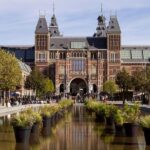



Tours, side by side.
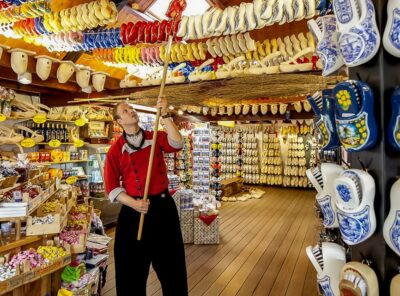 ★ 4.6Zaanse Schans, Edam, Volendam & Marken Bus TourFrom $3215,034 reviews
 ★ 5.0Anne Frank’s Story – Guided Walking Tour through AmsterdamFrom $3911,619 reviews
 ★ 4.8Life of Anne Frank and World War II Walking TourFrom $3710,467 reviews
 ★ 4.6Johan Cruijff ArenA Tour with Optional GuideFrom $328,954 reviews
 ★ 4.9Red Light District Tour in German/English/ItalianFrom $285,623 reviews
 ★ 4.4Guided Zaanse Schans, Windmills & Cheese TourFrom $224,826 reviews
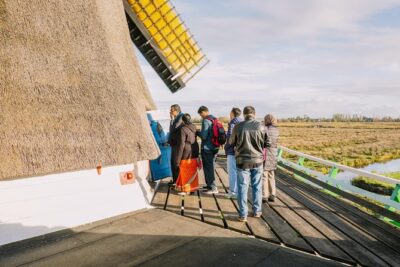 ★ 4.0Windmill Tour from Amsterdam, Including Volendam & MarkenFrom $374,572 reviews
 ★ 4.7Guided Bike Tour City Centre in EN/DE/FR/ESFrom $414,187 reviews