
REVIEW · MUSEUMS
Amsterdam: Houseboat Museum Entry Ticket
A houseboat museum, right where people lived. I love stepping onto Hendrika Maria and spotting the ship’s practical sailing details, and I also like how the visit walks you through day to day family life, but space is tight and the stairs are steep.
Expect an on board museum that feels small in the best way, in a real vessel that was a 1914 cargo ship and later became a houseboat in 1967. The interior keeps an older, lived in look from the 1970s, including lots of orange, yellow, and brown tones. Steep stairs mean you’ll want steady footing and comfortable shoes.
If you want a museum that is hands on and quick, this fits well. It’s one of those Amsterdam experiences where the scale is modest, yet the details are vivid, right down to a working sailing mast and a leeboard that explain how this boat used to travel.
Key highlights you’ll feel on the visit
- Step onto the Hendrika Maria (1914 cargo ship) and see how it became a houseboat in 1967
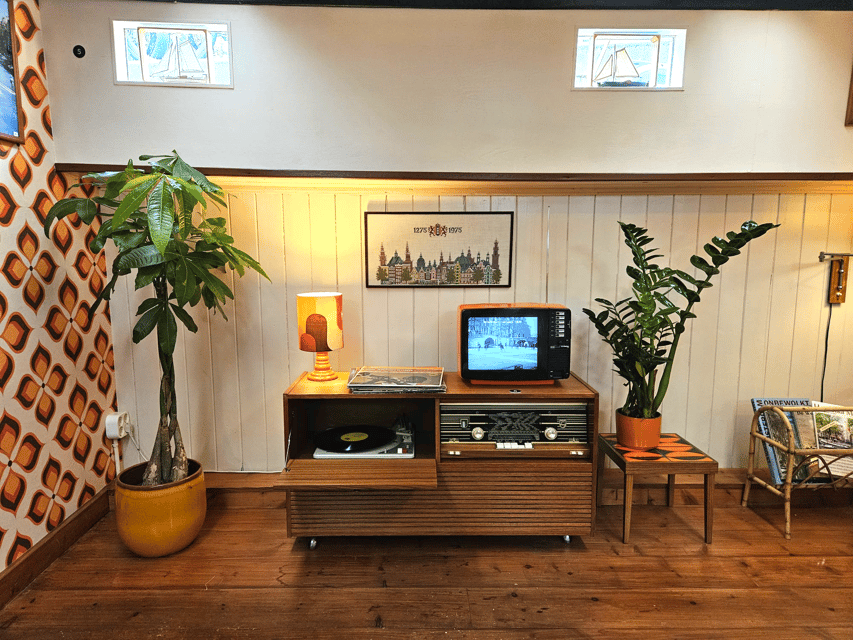
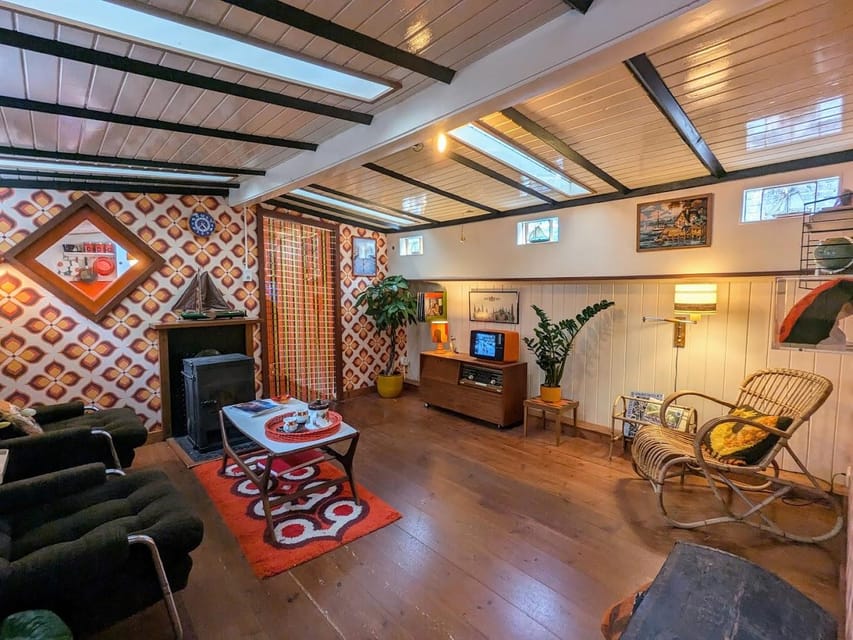
- Walk through an interior kept in a 1970s style, with original look and colors
- Understand how a family of four lived on board, first during freight barge days and later as regular residents
- See the sailing mast and leeboard, practical ship hardware tied to transport routes to Scandinavia
- Enjoy an interactive experience with knowledge shared by the on site host or greeter
Worth comparing with this Amsterdam choice:




First step onboard: what the ticket really covers
This ticket is simple and direct: you’re paying for entrance to the Houseboat Museum on a real houseboat. You won’t be buying a complicated day plan with multiple stops or moving parts. Instead, you’ll spend your time where the story happened, inside the boat itself.
That matters because the experience is intimate. The boat is a genuine vessel turned into a home, so you’re not touring a staged model. You’re walking through a real footprint, with the kinds of compromises people accept when they live in narrow space.
Also note what’s not included. You’ll need to handle food and drinks on your own, and there’s no hotel pickup or drop off. So treat it as a focused visit you can plug into a day in Amsterdam.
Hendrika Maria: from freight barge to houseboat home
The star of the show is the Hendrika Maria, a cargo ship built in 1914. Long before it felt like a cozy home, it functioned as a freight barge. When it was converted into a residential houseboat in 1967, the boat became something else, a lived in floating place rather than a working transport.
What I appreciate about this setup is that the museum doesn’t just show you the houseboat version. It explains the ship version too, so you can picture the shift in daily life. One moment you’re thinking in terms of freight work and travel, then the next you’re thinking about how family life adapts when you trade cargo duty for home routines.
A second detail that helps the story click: the museum focuses on a family of four and how they used the boat. That makes the history personal rather than abstract. You can see why the layout would matter, because living, cooking, sleeping, and moving around all happen inside the same limited envelope.
The 1970s interior: why the colors feel like a time machine
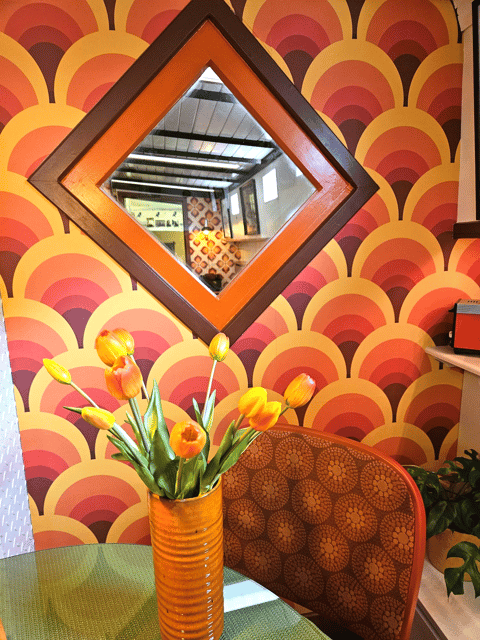
The museum interior is described as still original from when the boat started functioning as a regular house in the 1970s. Translation: you’re not touring a neutral, modernized display. You’re seeing an older style, including lots of orange, yellow, and brown.
That may sound like a small detail, but it changes how you experience the boat. It turns the museum into a time capsule. You get a stronger sense of what daily life likely looked like, because the furnishings and interior vibe are part of the story, not just an aesthetic choice.
One more thing you should plan for: the museum is in a real houseboat, so you’ll feel the boat’s geometry. Space can be limited, and you’re moving through a vessel where every corner probably served a practical purpose. If you like museums where you can picture real routines, this interior choice supports that.
Worth comparing with this Amsterdam choice:
- Amsterdam: Red Light Secrets Museum Entry Ticket★ 4.2 · 5,722 reviews
- Amsterdam’s Weirdest Museum: Believe It or Not!★ 4.5 · 4,086 reviews
- Amsterdam: Van Gogh Museum Ticket and City Canal Cruise★ 4.6 · 3,899 reviews
- Amsterdam: Van Gogh Museum Ticket & Canal Cruise★ 4.5 · 3,304 reviews
Family life aboard a former freight ship
The museum is built around how people lived on board, including the earlier period when the boat worked as a freight barge. The highlight here is that you’re not only learning about the boat’s function. You’re learning about the people who made it a home.
A key idea is the contrast between two lifestyles:
- Freight barge life, where the boat’s design supported work and travel
- Houseboat living, where comfort and daily routines took priority after the 1967 conversion
When you focus on the family side, you start noticing practical things. How movement works in tight corridors. How work and storage might influence room choices. How a boat layout shapes what feels easy and what feels cramped.
This is also where the museum being interactive helps. Instead of passively reading, you’re pushed to make connections between the objects, the layout, and the life lived here. If you prefer clear explanations tied to real spaces, you’ll probably enjoy the structure of the visit.
Sailing mast and leeboard: the practical details that explain the past
One of the most interesting parts is what you can physically point to. The boat retains an original sailing mast and a leeboard. These aren’t decorative extras. They’re practical ship pieces tied to how the vessel used to sail and travel.
The boat’s sailing history includes routes to Scandinavian countries for transportation. That detail adds context: you can understand why certain parts of the ship were built and kept. When you see the mast and leeboard, you’re not just looking at old equipment. You’re seeing the tools that supported a working life at sea or on inland waterways.
Even if you’re not a sailing person, this section helps you understand the boat’s identity. It’s a cargo ship first. The houseboat story is second, and it only makes sense because the ship had a real working purpose before it became a home.
How long it takes, and why that affects your expectations
The visit is listed as duration 1 day, but that doesn’t mean it fills an entire day like a big museum campus. The scale here is more like a focused walkthrough. The boat is compact, around 80 m2 based on the tour flow.
In practice, you should plan for a shorter visit window, especially if you’re following an audio guide route and taking time to look closely. This is exactly the kind of museum where your mindset matters. If you enjoy short, detail heavy stops, it’s a win. If you expect a long, multi hour museum day, you might feel like you finished too fast.
Also consider the physical rhythm. Because it’s a houseboat, the route includes movement through steep sections. Take your time, and don’t treat it like a quick photo stop. The value is in the interior details and the story connections.
Price and value: does $12 make sense for what you get?
At $12 per person, this ticket is priced for a light commitment. That can be a good thing. You’re not gambling a big chunk of your day or budget. You’re buying access to a unique setting that you can only experience by stepping onto this specific kind of floating home.
Here’s how I’d judge value:
- Strong value if you like hands on, real place history with practical details you can see and touch in your head as you walk
- Lower value if you want a long museum experience with lots of rooms, exhibits, and time filler
The best approach is to match your expectations to the format. This isn’t a sprawling museum. It’s a real houseboat museum, one that trades breadth for authenticity. If you’re the type of traveler who enjoys short visits that are vivid and specific, $12 is likely a fair deal.
Practical tips for a smooth visit on a real houseboat
Space and movement are the two big things to plan around.
First, the museum is in a real houseboat, so space may be limited. You’ll likely feel the narrowness in places, especially when people are moving in the same sections.
Second, there are steep stairs. The listing flags that it may not be suitable for everyone. I’d treat that as a real caution. If you have any mobility concerns, bring your best judgment, slow down, and skip rushing from one section to the next.
Third, the museum allows photography, but no flash inside. If you’re filming or taking photos, plan for natural light and keep the pace calm so you’re not crowding others in tight quarters.
Finally, wear shoes that work on boat stair steps. Wet weather happens. Even if the weather is dry, stairs plus narrow space equals the kind of situation where comfortable footing pays off.
Language support: how the host helps you get more from the visit
The host or greeter offers multiple languages, including English, French, Traditional Chinese, German, Spanish, Portuguese, Italian, and Dutch. That’s helpful because a museum inside a boat can move fast, and small explanations can make the whole experience click.
If you’re visiting with friends or family who want to follow comfortably, this language coverage is a practical bonus. It also means you’re more likely to understand the why behind the objects, like how the ship’s working parts relate to the houseboat version.
Who should book this Amsterdam houseboat museum ticket
This is a good match if you:
- Love Amsterdam’s canal culture and want a story based on how people actually lived
- Enjoy small museums where details matter, especially shipping and everyday domestic life
- Want something compact you can fit into a day without overplanning
It may be less ideal if you:
- Need step free access or find steep stairs difficult
- Want a long museum session with lots of open space
- Are hoping for food included, since you’ll need to plan your own snacks and drinks
Also keep in mind that the museum is described as the only Houseboat Museum in Amsterdam. That exclusivity adds value. You’re not just picking any houseboat visit, you’re choosing the one focused on this specific type of history and setting.
Should you book it?
If your travel style is about real places, practical details, and a story that makes sense because you can physically picture the space, I’d book this without hesitation. The combination of a 1914 cargo ship, a conversion to a houseboat in 1967, and the preserved 1970s interior gives you a clear theme you can follow in your head from start to finish.
But be honest about your priorities. If you dislike small, tight interiors or you want a big, hours long museum experience, this might feel too short or cramped. For the right traveler, though, it’s one of those Amsterdam stops that stays with you, not because it’s huge, but because it’s specific and real.
FAQ
How much is the Amsterdam Houseboat Museum entry ticket?
The price is listed as $12 per person.
How long is the visit?
The activity duration is listed as 1 day. Starting times depend on availability.
What boat is the museum on?
The museum is on the Hendrika Maria, a 1914 cargo ship that was converted into a residential houseboat in 1967.
Is the museum space limited and are there stairs?
Yes. The museum is located in a real houseboat, so space may be limited, and the boat has steep stairs that may not be suitable for everyone.
Are photos allowed inside?
Photography is allowed, but flash photography is not permitted inside the museum.
Is food or drinks included?
No. Food and drinks are not included.
What languages are offered for the host or greeter?
The host or greeter is listed as available in English, French, Traditional Chinese, German, Spanish, Portuguese, Italian, and Dutch.
Is there free cancellation and a reserve now pay later option?
Free cancellation is available up to 24 hours in advance for a full refund. You can also reserve now and pay later, so you pay nothing today.
More Museums in Amsterdam






More Tickets in Amsterdam





More Tour Reviews in Amsterdam




Newly reviewed around Amsterdam





Museums, side by side.
 ★ 4.7Van Gogh Museum TicketFrom $3252,054 reviews
 ★ 4.4Moco Museum Amsterdam Entrance Tickets with Banksy & MoreFrom $1810,088 reviews
 ★ 4.4The Upside Down Museum Entrance TicketFrom $249,506 reviews
 ★ 4.2Red Light Secrets Museum Entry TicketFrom $175,722 reviews
 ★ 4.5Amsterdam’s Weirdest Museum: Believe It or Not!From $264,086 reviews
 ★ 4.6Van Gogh Museum Ticket and City Canal CruiseFrom $473,899 reviews
 ★ 4.7Rembrandt House Museum Entrance TicketFrom $233,385 reviews
 ★ 4.5Van Gogh Museum Ticket & Canal CruiseFrom $473,304 reviews
More ways to plan this visit