
REVIEW · RED LIGHT DISTRICT TOURS
Amsterdam: Guided Red Light District and City Walking Tour
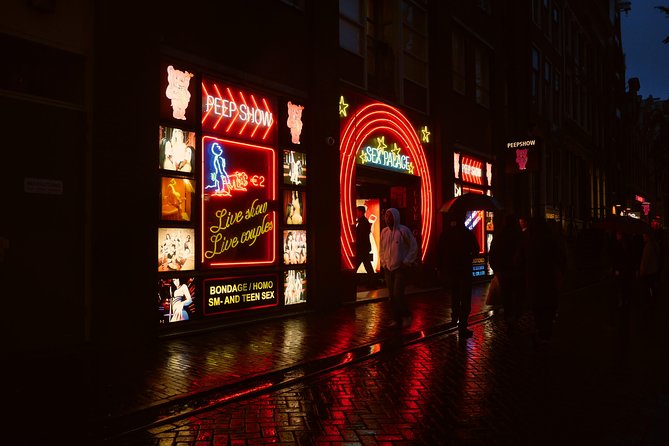
Red Light District walking tours can feel edgy. This one is interesting because it keeps the focus on Amsterdam culture and the area’s history, and I like how the route mixes well-known sights with details you’d miss on your own. The main drawback to consider is that the topic and streets can feel uncomfortable if you are easily put off by adult-themed subject matter, and it is not recommended for limited mobility.
One big reason it works is the pacing. You get a guide, a local guide, and a small group size (maximum 15), so you can ask questions as you go instead of shouting through a crowd. Start times vary, and you meet at Geldersekade 2 in central Amsterdam, then walk and come back to the same point.
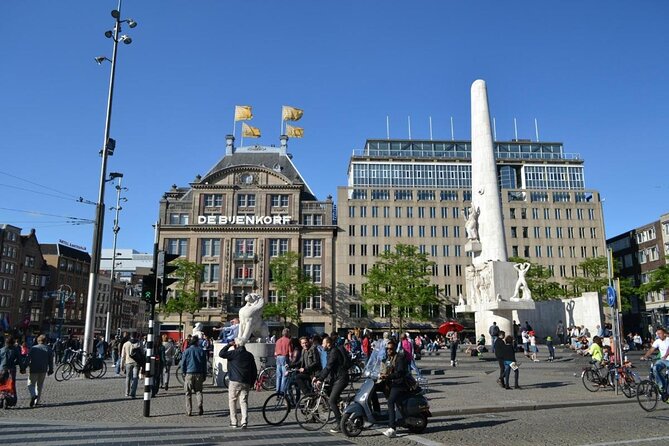
The best part is the stop list. You’ll move from the Dam area and the city’s famous wooden-pile building story, to the old wooden Pub The Ape, then onward to the Waag (a former city gate and guild space), the smallest house tied to VOC storage, and finally the Condomerie for a very modern wink in Old Town.
Key Things to Know Before You Go
- Small group feel (max 15), which makes questions and conversation realistic on a walking tour
- Adult-theme content handled with history, not just street viewing
- Dam to wooden-pile foundations, using local building facts to explain the city you are walking through
- Stop variety from the Waag and guild history to Pub The Ape and the smallest house
- Condomerie as a quirky modern stop, offering a glimpse of how Old Town keeps evolving
Other history-led walks through De Wallen
A Red Light District Walk That’s More About Context Than Voyeurism
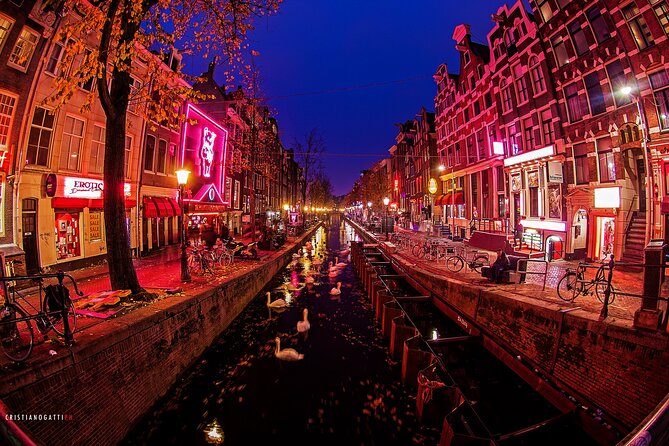
This tour is built around context. You’ll walk the narrow streets, but the point is to understand how Amsterdam got to where it is now, and what the area looks like in everyday reality. Instead of treating the district as a single attraction, the guide frames it as part of the city’s older urban core, shaped by trade, laws, and changing social norms.
I also appreciate that it stays practical. You’re not asked to treat anything like a theme park. The conversation is about the district’s history and current situation, plus the surrounding Old Town stories, which is much more satisfying than simply spotting lights in windows.
That said, you still need to be mentally ready for adult-themed content. If you’d rather keep your Amsterdam sightseeing clean and straightforward, this one may not match your comfort level.
Meeting at Geldersekade 2, and How the 2 Hours Actually Work
You start at Geldersekade 2, 1012 BH Amsterdam, and the tour ends back at the same meeting point. The whole experience takes about 2 hours, and it runs with a small group of up to 15 people.
Because it is near public transportation, you can usually fit it into a day without a long detour. And since it uses a mobile ticket, you typically avoid the last-minute scramble that can happen with paper vouchers in busy city centers.
Timing is also your friend here. In the evening, the city’s light changes fast, and the bridges can look especially dramatic once it’s later in the day. If you want that atmosphere, consider an evening start time that still gives you enough daylight for the walking parts.
The Dam Stop: Amsterdam’s Wooden-Pile City Story
The tour hits a core Amsterdam idea early: the city is literally built on wood. You’ll hear why so many buildings rely on wooden foundation piles driven deep into the ground, because the soil layer includes thick fen and clay. The useful detail here is depth, because it explains why Amsterdam had to build differently than cities with easier ground.
The local explanation is clear and concrete: wooden poles are fixed down to a sandy layer roughly 11 meters deep. That sets you up to better “read” the city as you walk. When you understand the building logic, the place stops feeling like random canal scenery and starts feeling like an engineered solution to real ground conditions.
This also connects nicely to the Red Light District and Old Town idea. In older parts of Amsterdam, you’re not only seeing architecture, you’re seeing centuries of adapting to a tough site.
Amsterdam at street level, a few more routes
- Anne Frank’s Story – Guided Walking Tour through Amsterdam★ 5.0 · 11,619 reviews
- Amsterdam: Life of Anne Frank and World War II Walking Tour★ 4.8 · 10,467 reviews
- Absolutely Amsterdam – the Essential Introductory Walking Tour★ 5.0 · 3,629 reviews
- Amsterdam: Anne Frank Guided Small Group Walking Tour★ 4.8 · 2,722 reviews
Old Town Ground Zero: Why This Part of Amsterdam Feels So Historical
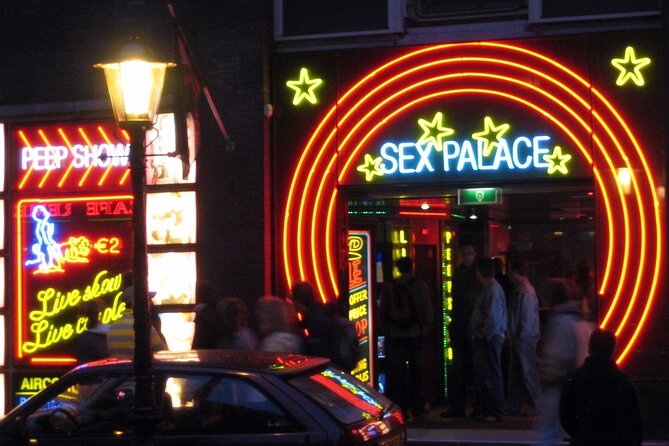
You’ll also get the simple big-picture context that the area you walk through is part of Amsterdam’s Old Town and tied to the district’s oldest footprint. That matters because it explains why there’s a lot more behind the street layout than the adult storefronts.
Think of it like this: you are not only walking a nightlife zone. You are walking older streets where many layers of the city overlap. When the guide explains that age and continuity, the route makes more sense, even if you came just expecting a quick look at the lights.
Pub The Ape (Int Aepjen): One of the Last Old Wooden Buildings
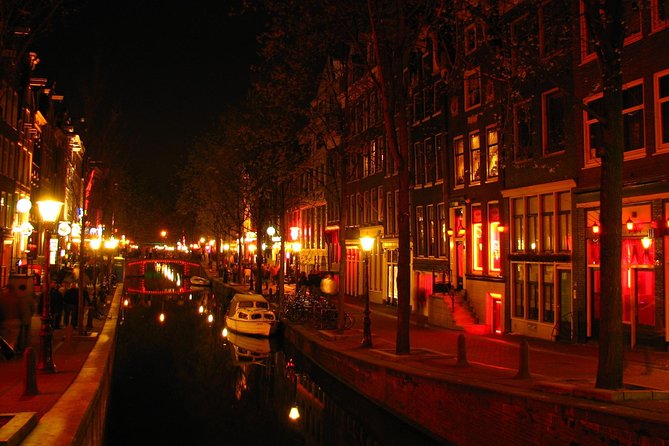
One stop I’d put on your “don’t rush this” list is Pub The Ape, also known as Int Aepjen. The key details are what make it feel real, not just another photo stop.
You’ll hear it dates back to around 1540, and that it is one of only two remaining wooden buildings in Amsterdam. The story also includes the big fire in 1452, when the government pushed for brick facades after the disaster. So the pub stands as a surviving piece of a stricter building era that followed the fire, which makes the building feel like a time capsule.
If you like architecture and the small survival stories behind city landmarks, this is a great pause during the walk.
Waag: From City Gate to Guild Headquarters
Next up is the Waag. You’ll hear it used to be one of Amsterdam’s city gates, part of the defensive wall system. Built around the 1400s, it’s described as the second oldest building of Amsterdam, and that age really shows in the feel of the area when you’re standing there.
What I find especially useful is the way the guide connects the building to daily economic life. Later on, it became a hub for guilds and craftspeople, with organizations occupying spaces inside the Waag and around the nearby square. So you’re not only seeing an old stone facade. You’re understanding how regulated trade and business shaped the city.
This is also a smart bridge into the district conversation later. The Red Light District didn’t grow in a vacuum. It evolved alongside commerce and the movement of people through the city.
The Smallest House: VOC Storage to Long-Term Living
Then comes a stop that sounds like a trivia challenge but turns into a real story about Amsterdam’s trading era: the smallest house of Amsterdam. Built around the 1700s, it started as storage connected to the VOC trading company, and later people lived there for a long time.
The practical value here is how it gives you a sense of scale. Amsterdam’s old town was never only grand canals and wealthy facades. Trade money, ship-linked business, and cramped realities existed side by side. Standing by the smallest house helps you picture how different people’s lives were crowded into the same urban space.
If you like seeing the city as a mix of functions, not just landmarks, this stop helps.
Condomerie: A Modern Counterpoint in Old Town
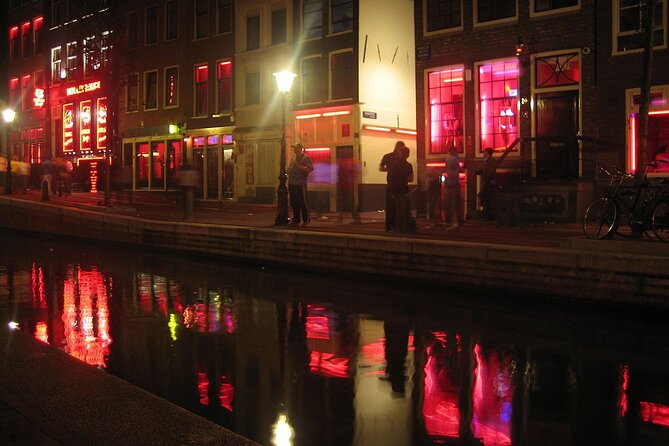
The Condomerie is the tour’s cheeky modern moment, but it’s not random. It acts like a cultural marker: this is still a living area with businesses adapting to today’s world.
You’ll hear it has been in place since 1987 and is described as the world’s first specialized condom shop. There’s also mention of custom sizing and special condom options, which underlines the idea that the district and its surroundings keep evolving rather than staying frozen in the past.
Even if you are uncomfortable with adult topics, this stop can feel surprisingly useful because it shows how the district business ecosystem functions in a commercial, modern way.
Red Light District Today: History, Laws, and How the Area Works Now
The main sweep of the tour is the walking itself, tied together by the guide’s explanation of the history and current situation of the Red Light District. You’ll learn how and why the profession started in Amsterdam, and you’ll connect the story to merchants and sailors arriving by port.
You’ll also hear about laws and culture, not just sex work as an isolated topic. The point is to understand the rules of the area, what’s changed, and why it sits inside Amsterdam’s larger social and legal framework.
One detail I appreciated is how the guide frames the way the windows and the street experience relate to actual trade. You get a realistic sense of how the area draws foot traffic, and how that traffic changes the vibe in a way that can be different from what visitors expect.
For me, that balance is the whole reason the tour is worth doing. You come away understanding a system, not just taking in a snapshot.
Guides Who Tell It Like a Story, Not Like a Lecture
The experience lives or dies with the guide, and the strongest praise centers on guides who mix history with personality. Names that pop up in feedback include Ari, Ben, Pedro, Angel, Max, David, Aaron, and Capt Dan, with comments that highlight humor, clear explanations, and strong answering of questions.
If you want a reason this tour feels engaging, it’s that the guide style tends to make you listen instead of tune out. You’ll still be hearing adult-topic context, but the delivery keeps it human. In a small group, that matters even more.
One caution: adult themes can make some people extra sensitive to tone. If you end up with a guide who feels dismissive or rude, that will ruin the mood. I’d recommend using the first few minutes to read the energy, and if you feel uncomfortable, speak up early with your concerns.
Price and Value: What $35.44 Buys You in Real Terms
At $35.44 per person for about 2 hours, this is priced like a solid city walking tour, not like a museum ticket extravaganza. The value comes from what’s included: a licensed guide plus a local guide. That combination matters because the tour is not just facts, it is interpretation of what you are seeing in the streets.
The tour is also built around multiple stops that would be difficult to connect on your own without a guide explaining the “why” behind the buildings. Places like the Waag and the smallest house are easy to pass by. A good guide turns them into a coherent picture of Amsterdam’s economic and architectural past.
Food and drinks are not included, so plan to grab something before or after. I also suggest bringing a light layer, especially if you’re going in cooler months or if rain is in the forecast. Walking tours are brief but constant.
Who This Walk Fits Best, and Who Should Skip It
This tour is a good fit if you want Amsterdam in context. I’d point it toward you if you like history tied to real streets, and you want your Red Light District experience to feel more thoughtful than sensational.
It is also a decent option for first-timers because it gives you a framework fast, so you stop feeling lost. And with a maximum of 15, it’s easier to keep up with the story.
If you have limited mobility, it is not recommended. If adult topics make you uncomfortable, you might still enjoy the historical parts, but I’d be honest with yourself about what you can handle.
Finally, if you want “quiet sightseeing,” this may not be your best match. It is a lively, talk-focused walk through a sensitive area.
Should You Book It?
If you want a 2-hour guided walk that connects the Red Light District to Old Town history and the city’s building story, I think it’s worth booking. You are paying for a guide who helps you understand what you’re seeing, and the small group format makes that feel personal instead of rushed.
Book it if you like the idea of stopping at places like Pub The Ape, the Waag, the smallest house, and the Condomerie, then stitching them together with history, laws, and the area’s current situation.
Skip it if the adult-themed content is likely to bother you, or if mobility is an issue for you. In those cases, Amsterdam has plenty of other excellent walks that stay centered on canals, architecture, and museums.
FAQ
FAQ
How long is the Amsterdam guided Red Light District and city walking tour?
It lasts about 2 hours.
How much does the tour cost?
The price is $35.44 per person.
Where do we meet for the tour?
You meet at Geldersekade 2, 1012 BH Amsterdam, Netherlands.
Is food and drinks included?
No. Food and drinks are not included.
What language is the tour offered in?
It is offered in English.
How many people are in the group?
The tour has a maximum of 15 travelers.
What is the refund policy if I cancel?
Cancellation is free up to 24 hours before the experience start time. If you cancel less than 24 hours before, the amount you paid will not be refunded.
More Tours in Amsterdam






More Tour Reviews in Amsterdam





De Wallen Beyond the Spectacle




Newly reviewed around Amsterdam





Red Light District Tours, side by side.
 ★ 4.2Red Light Secrets Museum Entry TicketFrom $175,722 reviews
 ★ 4.9Red Light District Tour in German/English/ItalianFrom $285,623 reviews
 ★ 4.6Amsterdam Red Light District & Coffee Shop TourFrom $294,134 reviews
 ★ 4.1Red Light District Pub Crawl with Unlimited ShotsFrom $242,130 reviews
 ★ 4.5Amsterdam Red Light District Pub CrawlFrom $241,497 reviews
 ★ 4.5Red Light District TourFrom $331,135 reviews
 ★ 4.1After Dark Red Light District TourFrom $571,030 reviews
 ★ 5.0Private Amsterdam Red Light District and Coffee Shop TourFrom $41763 reviews
More ways to plan this visit