
REVIEW · TOURS
Amsterdam Architecture Tour
Canal rings tell stories you can walk through. This private Amsterdam architecture tour lets you skip the big-group shuffle and ask questions freely while you read the city’s buildings along the water. I especially like the chance to compare canal-house styles up close, and the highlight Huis Bartolotti visit, where you can see details in person. One thing to plan for, it is still a walking tour, so you will want a moderate fitness level and comfy shoes.
You also get flexibility. You can pick from a section of start times, you use a mobile ticket, and the meeting point is near public transport. Guides such as Edgar, Tijs, and Thijs have been praised for making the streets feel like a lesson you actually want to keep going with clear explanations and room for follow-up questions.
Key things you will notice on this Amsterdam walk
- Small private group (up to 8), so you can ask questions without shouting over other people
- Canal ring structure explained, so the skyline and skyline logic start to make sense
- Huis Bartolotti entry included, with a focused inside visit (15 minutes)
- Late-17th-century architecture tied to real constraints, including inventive solutions for religious minorities
- Westerkerk and House with the Heads connections, including a UNESCO-listed library stop
- Storytelling that links buildings to how Amsterdam grew, from trade expansion to fortifications
Before fixing the day, compare this with a few well-reviewed Amsterdam alternatives:

Reading the canal ring like a map, not a postcard
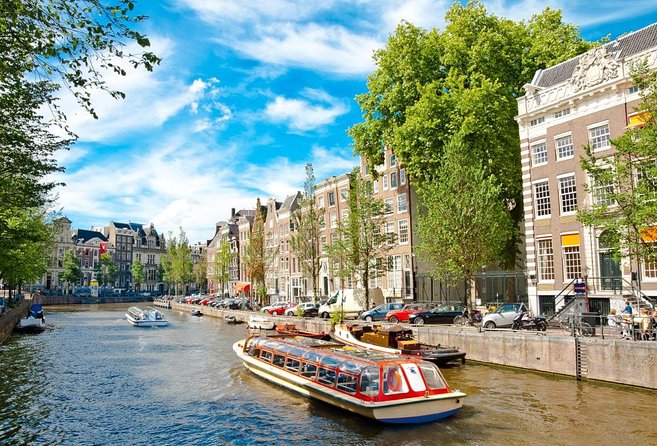
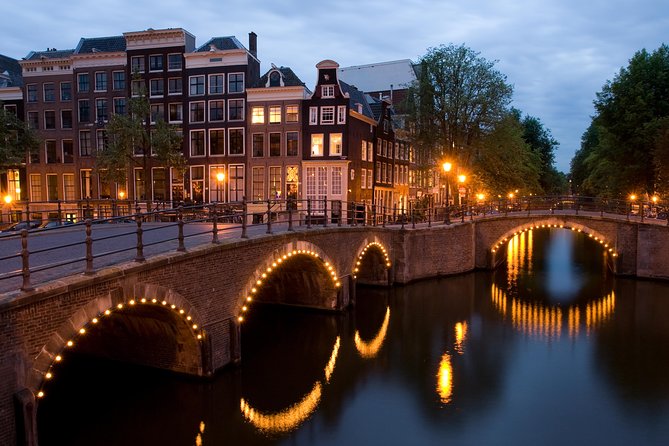
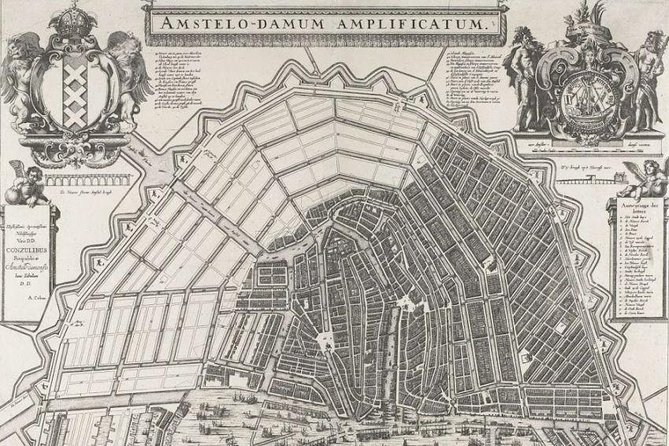
Amsterdam’s canal ring can look like pretty symmetry at first. This tour helps you notice the structure behind it, and that changes how you see everything afterward. Instead of just spotting gables and bridges, you start to understand why the water, the walls, and the building shapes matter.
You will walk along the water and learn about the types of architecture you see there. That mix is the point, Amsterdam did not develop in one neat wave. It grew fast, then kept refining what it built, and your guide helps you spot the differences in style and purpose as you move.
A bonus is that the guide often ties architecture to city growth. On walks with guides like Tijs, the explanations can include why the skyline looks the way it does today, how canal fortifications were necessary to keep the city functioning, and how remnants of older city walls still show up if you know where to look. You will feel like you have a new layer of city-reading skills.
Why the private format matters more than the sights
This is a private tour, so only your group joins in. That sounds like a small detail until you are standing on a busy canal street and you do not want to rush through questions. You can ask what something means, how a feature worked, or why a certain style shows up here.
It also affects pacing. If something grabs your attention, you can spend more time on it without worrying about holding up a massive group line. In the feedback you can see this clearly, people point out how guides such as Edgar and Tijs were courteous, answered questions, and kept the walk feeling personal rather than scripted.
If you are the kind of traveler who likes to learn as you go, this format is a big value. It helps you get more from the same buildings, because you are not only looking, you are understanding in real time.
The canal-house moment at Huis Bartolotti, gardens and interior details
One of the most practical ways to get beyond photos is to go inside a canal house. Huis Bartolotti is built for exactly that. You get an inside visit (about 15 minutes) with the admission ticket included, so you are not scrambling to buy or coordinate entry on your own.
What makes this stop stand out is what your guide connects it to. The point is not just that the house is beautiful. You learn the secret idea behind the canal ring: its gardens. That means you leave with a more complete picture of what canal houses were like, and how outdoor space, privacy, and daily life could be woven into a dense city footprint.
You also get interior design details up close. It is the kind of stop that resets your expectations for the architecture. Before you go inside, you might think you already know what a canal house is. After, you see how much planning and style went into how people lived.
Practical note: since the inside time is time-boxed, you will get the best experience if you come ready with curiosity. If you are asking questions, you will also get quick, clear answers instead of feeling like you are missing the moment.
- Amsterdam Classic Saloon Boat Cruise with Drinks and Cheese★ 5.0 · 31,825 reviews
- Amsterdam Luxury Canal Cruise + Unlimited Drinks & Bites option★ 5.0 · 30,518 reviews
- Amsterdam: Heineken Experience Ticket★ 4.6 · 30,055 reviews
- Amsterdam: Rijksmuseum Entry Ticket★ 4.7 · 25,535 reviews
Late-17th-century design shaped by limits for religious minorities
Amsterdam’s architecture is not only about wealthy taste. Some of it is about solving problems. One of the stops focuses on a late-17th-century example of inventive design that responded to physical restrictions faced by religious minorities.
This is one of those details that makes a city feel real. Buildings are not just scenery, they are part of a negotiation between rules, space, and community needs. When your guide explains the constraints, the architecture stops being decorative and starts behaving like evidence.
If you care about how cities worked socially, this section will pull its weight. You will likely come away thinking differently about facades and placement, because you will understand that some design choices were about what could be built and where, not just how it looked.
Westerkerk and the early-17th-century thread you will keep seeing
You also spend time with early-17th-century architecture themes. The walk connects those themes to the Westerkerk, so you are not just hearing random building facts. You are learning how style, time period, and purpose show up across the canal district.
One detail that shows up in the best-guided versions of this experience is the kind of “read the skyline” explanation that makes landmarks feel connected. For example, guides like Tijs have been described as sharing why the skyline is as you see it now, including stories such as a swan on top of a Protestant domed church. That type of clue helps you notice religious and cultural identity in the city’s architectural profile.
This is also a good section for photo stops, but not the usual kind. Instead of shooting the most obvious corner, you will be more likely to frame buildings based on what you just learned, like how forms shift from one structure to another and how rooftop details act like signatures.
House with the Heads, UNESCO-listed library, and the people behind the style
Another highlight is the House with the Heads, an extravagant early 17th-century canal house in Dutch Renaissance style. You will also learn that it once had influential dwellers, and today it is home to a special UNESCO-listed library.
That UNESCO-linked angle is a big reason this stop works for many travelers. It adds a modern thread to an old neighborhood. You do not only get the art and architecture, you get a sense of how these spaces still matter and still serve a cultural function.
The “heads” element is the visual hook, but the story is what makes it stick. When a guide links the style to the social standing of its occupants and then points you to the library, you start to see the house as part of Amsterdam’s ongoing connection between wealth, learning, and public identity.
Where the skyline and trade stories fit in
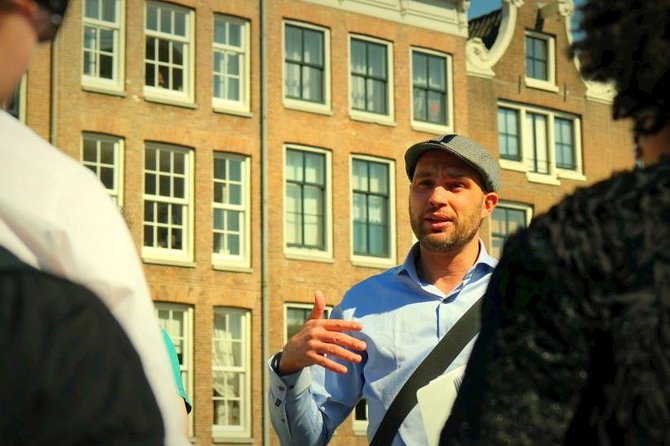
Architecture tours can sometimes stay stuck on dates and names. This one tends to connect design choices to Amsterdam’s growth engine: trade and the city’s rapid expansion from medieval times onward.
You might hear how canal fortifications were necessary to maintain the city. You might also learn about the remnants of old city walls, where they still show up if you look for them. Those explanations turn the walk into something more than aesthetics.
The most memorable stories often sound a little surprising, like the Multatuli statue on the oldest bridge in Amsterdam, with a prison below it. You may also hear about origins of fair trade coffee. Those topics feel a bit outside strict architecture, but they fit the bigger picture: Amsterdam’s buildings were built by a society that traded, argued, financed, and re-built itself constantly.
If you like tours that connect the dots, you will probably appreciate these detours, because they give meaning to why structures ended up where they did.
Getting the most from a 2.5-hour private tour
Duration is about 2 hours 30 minutes. That is long enough for real explanations, but short enough to stay energetic if you keep moving at the same pace as your guide. Because the route includes walking and a moderate fitness level is recommended, you will want to pace yourself, not sprint from stop to stop.
Your meeting point is Design Amsterdam on Brouwersgracht 64 (1013 GX). The tour ends back at that same spot. Since it is near public transportation, you can usually slot it into a broader canal district plan without needing a complex commute.
Start times are offered in a selection, so you can pick what fits your day. I like that flexibility because Amsterdam plans can shift fast, especially if you are balancing museums, food stops, and boat time.
A small but useful feature: you use a mobile ticket. That is one less thing to manage on a day when you will likely be moving between stops and crossing canals on foot.
Price and value, $384.63 per group up to 8
The price is $384.63 per group, up to 8 people. That can feel high at first glance, until you break it down. At the maximum group size, the cost is about $48 per person, which is more like what you would pay for a well-run guided experience in a major European city.
The real value is not only the guide. It is the fact that you are paying for time with a person who can explain what you are looking at and answer your follow-up questions. With a private group, the cost per person drops quickly if you travel with family or friends.
If you are traveling solo or as a duo, the price is still reasonable, but you will get your best value if you go with the mindset of active Q and focused learning. This is the kind of tour where you can ask more than you would on a larger group walk, and that can justify the cost.
Who this tour suits best
This experience is a great fit if you:
- Want a private guide rather than a crowded group sprint
- Like architecture that comes with context, not just names and dates
- Enjoy walking and want a moderate level of effort for a meaningful payoff
- Are traveling with up to 8 people and want to keep costs controlled
If you are a casual visitor who only wants to snap a few photos, you might find this style of tour a bit more structured than you expect. But if you like learning while walking, the balance of canal ring logic and landmark stops should click.
Should you book it?
Book it if you want to understand Amsterdam’s canal ring for real. The combination of a private format, a guided explanation of why the skyline and canal structures work, and the in-person visit at Huis Bartolotti makes this more than a surface stroll.
Skip it only if you hate walking or you strongly prefer museum-only experiences where time is fully inside. Otherwise, this is the kind of tour that helps you see Amsterdam with clearer eyes for days afterward.
FAQ
How long is the Amsterdam Architecture Tour?
The tour lasts about 2 hours 30 minutes.
Is this a private tour?
Yes. It is a private tour, and only your group participates.
What is the group size limit?
The tour is priced per group for up to 8 people.
What language is the tour offered in?
The tour is offered in English.
Where do we meet?
Meet at Design Amsterdam, Brouwersgracht 64, 1013 GX Amsterdam, Netherlands.
Is there a ticket included for Huis Bartolotti?
Yes. Admission Ticket Included for the Huis Bartolotti visit.
Is the tour near public transportation?
Yes. The meeting point is near public transportation.
What fitness level do I need?
A moderate physical fitness level is recommended since this is a walking tour.
Is free cancellation available?
Yes. Free cancellation is offered up to 24 hours in advance for a full refund.
More Tours in Amsterdam






More Tour Reviews in Amsterdam




Newly reviewed around Amsterdam




Tours, side by side.
 ★ 4.6Zaanse Schans, Edam, Volendam & Marken Bus TourFrom $3215,034 reviews
 ★ 5.0Anne Frank’s Story – Guided Walking Tour through AmsterdamFrom $3911,619 reviews
 ★ 4.8Life of Anne Frank and World War II Walking TourFrom $3710,467 reviews
 ★ 4.6Johan Cruijff ArenA Tour with Optional GuideFrom $328,954 reviews
 ★ 4.9Red Light District Tour in German/English/ItalianFrom $285,623 reviews
 ★ 4.4Guided Zaanse Schans, Windmills & Cheese TourFrom $224,826 reviews
 ★ 4.0Windmill Tour from Amsterdam, Including Volendam & MarkenFrom $374,572 reviews
 ★ 4.7Guided Bike Tour City Centre in EN/DE/FR/ESFrom $414,187 reviews