REVIEW · AMSTERDAM
Your Own Amsterdam: The Art Underground
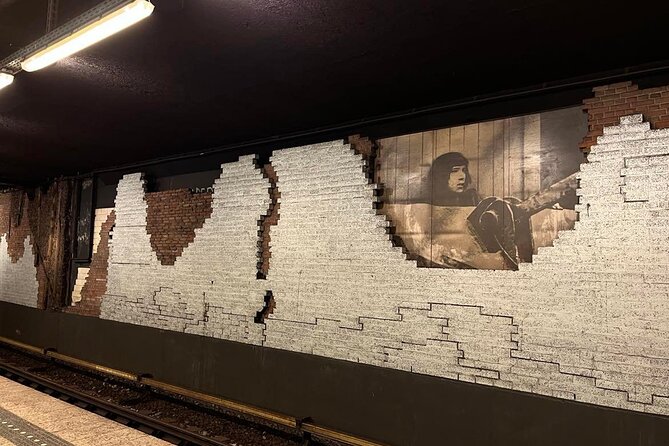
Art hides under Amsterdam’s trains. This 2-hour private art walk threads public works through stations and streets, turning transit into a story in English with a guide who keeps it moving. I love how it connects what you see on platforms to big themes like climate, tulip-era boom and bust, and Dutch colonial trade.
I also like the mix of archaeology with modern city planning, including excavations said to be more than 2,000 years old and the Amsterdam School style at Noorderpark. The main drawback is practical: you’ll be using metro, and while some stops are free, you may still need to cover metro tickets and any admissions tied to specific sites.
Key things you’ll notice on The Art Underground
- Centraal Station artworks that frame Amsterdam’s history through the things that shaped daily life
- Rokin archaeological finds where very old layers of the city are part of the tour story
- Vijzelgracht music installations that bring 20th-century Dutch music into the station space
- Nieuwemarkt and metro politics explaining why locals pushed back when the first metro lines came
- Noorderpark and Amsterdam School architecture tied to how modern buildings and society evolved
Before fixing the day, compare this with a few well-reviewed Amsterdam alternatives:
Why Amsterdam’s art world lives in stations, not just museums
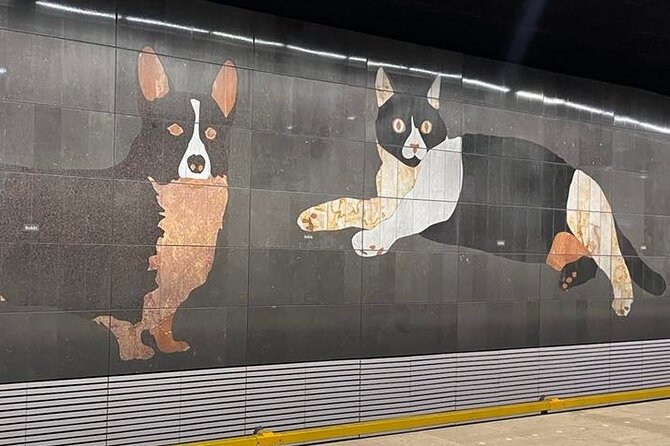
Amsterdam loves public art, but most people only catch it in a hurry, near canals, or in museum tickets they pre-book. This experience flips that idea. You spend your time where locals actually move, metro platforms included, and you start seeing how city design shapes how people feel and talk about their surroundings.
You also get a clear payoff for a short visit. In about two hours, you piece together a “how Amsterdam became Amsterdam” timeline without needing to sit through long exhibits. The format is simple: look closely, listen, and connect dots between themes like trade and colonialism on one stop, and music and architecture on the next.
Price, tickets, and timing: what you really budget
The tour price is $236.59 per person for a private group, around 2 hours. You get a guide, and you’ll receive a mobile ticket, plus the experience is offered in English. The private setup matters because it often makes the pace feel more relaxed, and it gives you room to ask questions instead of competing with a loud crowd.
Now the “read the fine print” part that affects your actual cost. Underground metro tickets are not included, and they’re listed at 9 euros per person. Also, some stops are free and some mention admission tickets not included, so you should expect you may pay something depending on which parts are tied to entry.
If you’re trying to compare value, here’s the honest way to think about it. You’re paying for time plus interpretation. You’re not paying museum admission for a single building, and you’re not buying a one-theme walking tour either. You’re getting a guided route through multiple city spaces, where art is the lens and history is the content.
Centraal Station to Rokin: reading Amsterdam through art and ancient layers
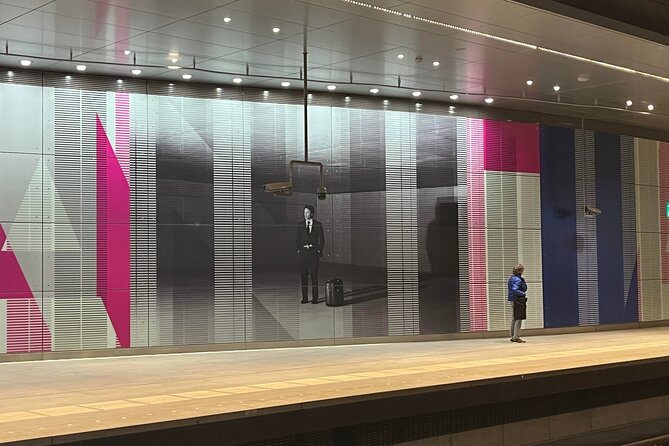
You start at Stationsplein 13a, and the first stop is Centraal Station, one of Amsterdam’s main gateways where more than ten million people pass by each year. That volume matters because it turns the station into a kind of public stage. Instead of treating it like a transit box, the tour uses the station’s artworks to talk about what shaped Amsterdam, from local climate and tulip mania to the Dutch East-India story and colonialism.
This is one of the most satisfying parts if you like cultural context. You’ll look at the art and then you’ll learn how it connects to the bigger, often uncomfortable chapters of Dutch history. It’s also a good reminder that “pretty” public pieces can carry serious meaning.
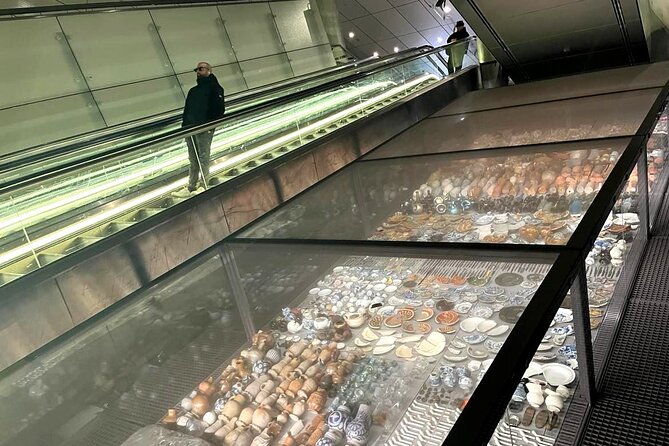
Then you move to Rokin Station and focus on archaeology. The tour highlights archaeological excavations found in this area, including finds that are more than 2,000 years old. That kind of age changes your frame instantly. Amsterdam stops feeling like a place that began with canals and houses, and starts feeling like a city built on layers.
The practical consideration here is timing and crowd levels. Centraal Station can feel hectic, and you’ll be standing in public spaces. If you prefer quiet viewpoints and minimal foot traffic, you might feel the bustle. Still, the payoff is that you get a strong “past meets present” feeling fast.
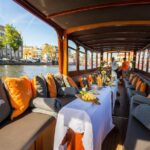
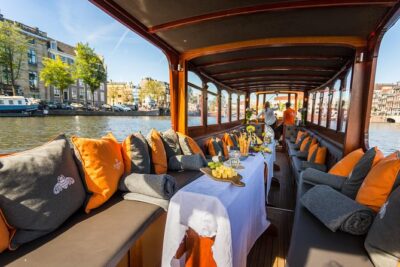
- Amsterdam Classic Saloon Boat Cruise with Drinks and Cheese★ 5.0 · 31,825 reviews
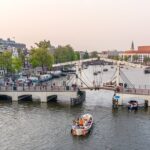
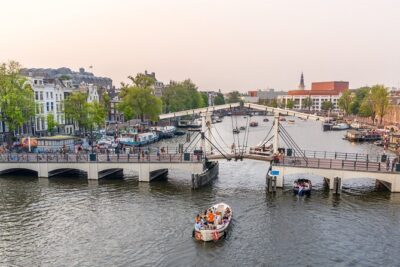
- Amsterdam Luxury Canal Cruise + Unlimited Drinks & Bites option★ 5.0 · 30,518 reviews
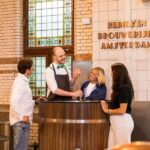
- Amsterdam: Heineken Experience Ticket★ 4.6 · 30,055 reviews
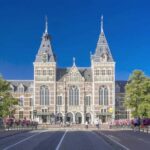
- Amsterdam: Rijksmuseum Entry Ticket★ 4.7 · 25,535 reviews
Vijzelgracht and Nieuwemarkt: Dutch music and metro decisions that still echo
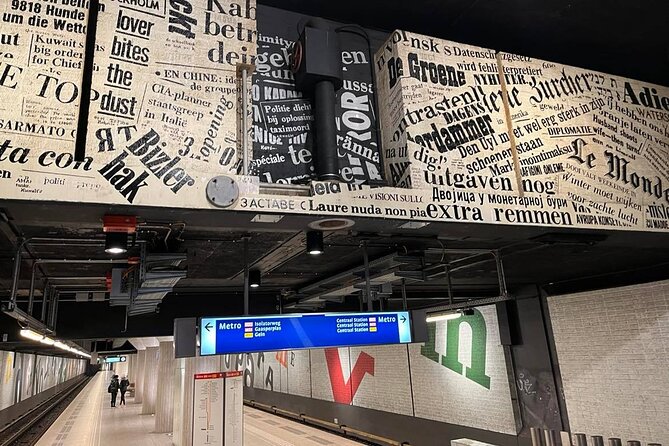
Next you head to Vijzelgracht Station, where the focus turns to popular Dutch music from the 20th century. That might sound like a small detail, but it’s actually a clever move. Stations are built for movement, so when art shows up as music references, it makes the space feel more human. You’re not just looking at tiles, you’re connecting place to the sounds people associate with their own era.
It also helps that the tour keeps the art tied to local identity. Music is social, not abstract, and it’s a strong way to talk about how culture lives in public space.
After that, you go to Nieuwemarkt Station, where the story changes from culture to civic decision-making. This stop explains why the construction of the first metro lines in the 1980s caused strong resistance from locals, and how it still affects life in the city today. That’s a great topic because it reminds you that infrastructure is political, not neutral.
One thing you’ll likely appreciate here is balance. You get the “why people resisted” angle, not just the end result of a finished metro network. It’s the kind of context that makes later city planning news and debates easier to understand once you’ve lived it through this tour.
Noorderpark and Amsterdam-Noord: Amsterdam School architecture plus nature in public art
At Noorderpark, the tour leans into one of Amsterdam’s best-known architecture styles: the Amsterdam School. You’ll learn what makes this style significant and how it influenced modern architecture and society. This isn’t just about naming buildings. You’re meant to see how a visual design movement can reflect values, community life, and how people imagine the city should function.
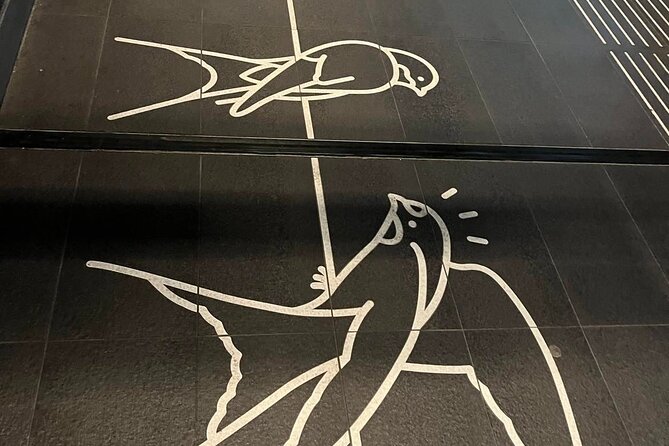
You also get a strong shift in scenery next, moving toward Amsterdam-Noord. The focus here is the local ecosystem, including flora and fauna, and how those elements show up through public art. That’s a smart ending, because it moves you away from purely historical interpretation and into the present, where the city has to share space with nature.
This part is also a good reminder that “Amsterdam art” isn’t only paintings and sculpture. It’s also how a neighborhood tells stories about environment and identity. If you like the idea of art as a mirror, this stop hits the mark.
A small logistics note: the tour ends in Amsterdam-Noord. That means you’re finishing away from the most central canal-side tourist loop, which is often a plus. It helps you see a different side of Amsterdam instead of repeating the same streets at the end of the day.
The guide factor: Maria’s patient explanations and smart connections
The experience’s biggest strength is the guide-led format. In one standout review, the guide Maria is singled out for being knowledgeable and patient, and for taking the group around several metro stations while explaining the history of the system. That matters because metro art can feel random if you don’t know the rules of the game.
Maria also explains something you might not expect: how the selection of art for public spaces can be democratic. That kind of explanation changes how you look at station art, from decoration to a process shaped by public decisions. And she doesn’t stop at the art itself. The same review mentions that Maria pointed out specific nearby points of interest, including the de Pijp market, which gives you practical ideas for what to do next after the tour ends.
If you want to get the most out of the time, come with one or two angles you care about, like colonial history, architecture, or how public policy shapes everyday life. Ask about how the art choices connect to those topics, not just what the pieces depict.
How this tour feels on the ground (and who it suits best)
This is built for people who like short, structured experiences where you get context without needing a museum day. It’s also ideal if you enjoy discovering Amsterdam through everyday spaces, not just the famous postcard areas. Because it’s private, you’re less likely to feel rushed or lost, and the guide can tailor pace to your group.
You’ll likely enjoy it most if:
- You care about art that explains something, not only art that looks good
- You want a guided route through metro stations without having to research every stop yourself
- You like seeing how architecture, music, and policy connect to city life
It might be less ideal if:
- You hate crowds in big stations like Centraal
- You only want museum halls and long indoor exhibits
- You dislike transit-based walking tours, since you will use metro and cover a route ending in Amsterdam-Noord
Practical tips before you book
- Bring comfortable shoes. You’ll be walking between stations and pausing outdoors in transit areas.
- Plan for the extra cost of metro tickets, 9 euros per person, since they are not included.
- Expect a mix of free and paid-admission stops. The tour notes admission ticket differences across the stops, so build in a little flexibility.
- If you like photo stops, you’ll have opportunities in station areas, but you should still expect the environment to be busy.
Also, because it’s a private tour, it’s worth asking yourself who you’re going with. Two people who share interests in art and city history often get great value, because you can keep asking questions and stay on-topic.
Should you book The Art Underground?
I’d book it if you want a compact Amsterdam experience that treats the city like a living museum. The price is not cheap, but the structure makes sense: you’re paying for a guide to connect art, archaeology, architecture, music, and metro history into one coherent walk. If you’re already planning to ride metro anyway, the route also feels efficient.
I’d think twice if you’re on a strict budget after metro costs, or if you hate busy stations. In that case, you might prefer a museum-focused day where you pay once and then stay inside.
Bottom line: if you like your travel with context, and you’re curious how public spaces tell stories, this one fits. You’ll leave with a sharper eye for Amsterdam’s station art and a better sense of why the city’s choices shaped what you see today.
FAQ
How long is The Art Underground?
It runs for about 2 hours.
Is this tour private?
Yes. It is a private tour/activity, so only your group participates.
What language is the tour offered in?
The tour is offered in English.
What is the meeting point and where does it end?
It starts at Stationsplein 13a, 1012 AB Amsterdam, Netherlands and ends in Amsterdam-Noord, Amsterdam.
What’s included in the price?
A guide is included, and you receive a mobile ticket.
Are metro tickets included?
No. Underground metro tickets are not included and are listed at 9 euros per person.
Are there admission tickets for the stops?
Admission ticket requirements vary by stop. Some stops are marked as admission ticket not included, while others are marked as free.
What is the cancellation policy?
You can cancel for a full refund up to 24 hours in advance.
When will I get confirmation after booking?
Confirmation is received at the time of booking.