
REVIEW · AMSTERDAM
Operation 45: An Adventure in Diamonds
Amsterdam turns into a real-life mystery map.
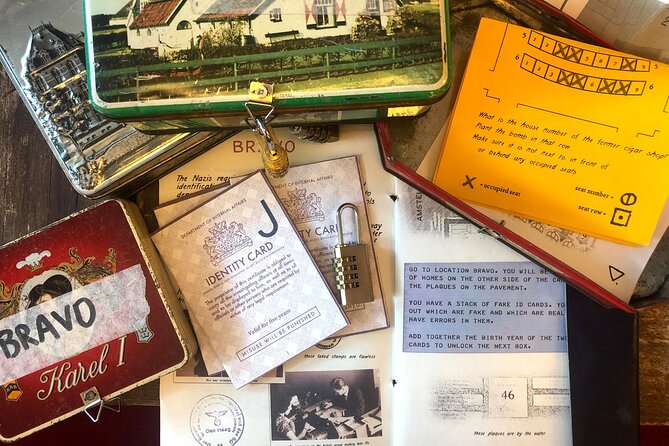
Operation 45: An Adventure in Diamonds is an interactive game that sends you walking through Amsterdam while you follow a true story from 1940 invasion panic to the 1945 liberation moment. You’ll tackle puzzles, spot historical details on the buildings and monuments around you, and work the clues like your own small investigation.
What I like most is how the game feel stays hands-on. Instead of passively listening, you’re actively solving, so the city’s sights click into place in your brain. I also like the flexibility, the idea that you can create your own schedule and play when it best fits your group.
One thing to plan around: this requires good weather. If conditions are poor, the experience can be canceled and you’ll be offered a different date or a full refund.
Key points before you go
- WWII diamond mission story: Follow what happened to Amsterdam’s priceless industrial diamond cache during and after the Nazi invasion and liberation.
- Teams for groups of 6+: Competing teams are an option, and you can also keep everyone together.
- Puzzle-led sightseeing: You walk around discovering buildings, monuments, and historical details while solving tasks tied to the mystery.
- Your schedule, your pace: It’s designed so you can play at the time that works best for your group.
- Help if you get stuck: If you lose your way, staff are reachable by phone to help you figure out where you are and what to do next.
Before fixing the day, compare this with a few well-reviewed Amsterdam alternatives:




A diamond mission that ties 1940 to liberation day
Amsterdam has plenty of WWII stories, but Operation 45 connects two moments that often get separated in your mind. On May 10, 1940, the Netherlands is invaded by the Nazis, and within hours a secret mission is set in motion to keep a cache of industrial diamonds from falling into Nazi hands. Then, fast-forward to May 5, 1945, when Amsterdam celebrates liberation. Your mission becomes the final link in that chain: what happened to those diamonds?
I like how the storyline gives your walk a purpose. When you know you’re hunting for clues, the city stops feeling like random sightseeing and starts feeling like evidence. You’re not just moving through Amsterdam, you’re collecting context as you go.
And it’s not a lecture. The format is built for interaction, which matters because WWII history can feel heavy when you hear it in one long chunk. Here, the story unfolds while you’re solving puzzles and noticing details you might otherwise overlook.
How the game flows, teams, and your own timing
This is an interactive tour/game through Amsterdam, run by Mystery City Games. It lasts about 2 hours and starts and ends back at Mystery City Games at Zwanenburgwal 178, 1011 JH Amsterdam. The setup is straightforward: you start there, and the experience leads you through the streets, then brings you back.
For groups, the structure is flexible. If you have six people or more, you can split into competing teams to race toward the solution. If you want a shared experience with everyone together, that’s allowed too. That single choice can change the whole vibe: competition can add energy, while staying together can make the story feel more like a group chat turned into a mystery.
Timing-wise, the highlight is that you create your own schedule and play when it suits you. That means you’re not locked into the most common guided-tour clock. In practice, this can be a lifesaver if you’re building a day around other plans like museums, canal time, or dinner reservations.
One more practical detail: you’ll get a mobile ticket. That’s useful in Amsterdam, where the fastest plan is often the one that keeps you from hunting for printed confirmations.
The walk-and-solve format, what you’ll actually do
During the game, you’re doing three things at once: walking, observing, and solving puzzles. The experience takes you around discovering interesting buildings, monuments, and historical details. The puzzles connect to what you see, so your brain stays engaged with the street-level stuff, not just the big monuments you already know.
Here’s what that means for your on-the-ground experience:
You’ll keep moving. This is not a sit-and-watch format, and the city’s outdoor setting is part of the design.
You’ll slow down at the moments that matter. The game encourages you to look for specific clues in the physical environment.
You’ll learn story pieces along the way. The mission teaches you true stories connected to the diamonds and the resistance trail.
The best part of this format is how it changes your relationship to Amsterdam. Instead of asking what a building is, you’re asking why it matters in the mystery. That shift is small, but it’s powerful. It’s also how you end up remembering things later, because you don’t just absorb facts, you use them.
- Amsterdam Classic Saloon Boat Cruise with Drinks and Cheese★ 5.0 · 31,825 reviews
- Amsterdam Luxury Canal Cruise + Unlimited Drinks & Bites option★ 5.0 · 30,518 reviews
- Amsterdam: Heineken Experience Ticket★ 4.6 · 30,055 reviews
- Amsterdam: Rijksmuseum Entry Ticket★ 4.7 · 25,535 reviews
What if your group hates puzzles?
The info you’re given suggests there are puzzles throughout, and you solve them with friends while exploring. If your group strongly dislikes games or riddles, you might feel friction. That said, the experience is designed so most people can participate, and it’s short at about 2 hours, so you’re not stuck for half a day if the game style isn’t for you.
What if you get lost or stuck?
One of the most helpful details is the support setup. If you’re not sure where you are, staff are ready by phone to help you figure it out and get back on track. That support reduces the stress you can get with self-guided style experiences.
Stops and moments: turning street details into clues
You won’t be following a classic guided itinerary with announced museum-room speeches. The game makes a sequence out of what you see, and it does that by pairing outdoor locations with puzzle steps.
Since the experience description doesn’t list named stops, the most honest way to plan is to expect the following rhythm during your walk:
1) Start at Mystery City Games on Zwanenburgwal
From there, you leave the starting point and begin finding the early clues. This stage is about getting the flow down, how your group communicates, and how quickly you can move between looking and solving.
2) First clue phase, where you learn the rules by doing
Early on, you’ll likely be figuring out how to interpret what you’re seeing. That’s a good time to spread roles, like one person spotting details and another working the puzzle. It’s also when teamwork matters most.
3) Middle stretch, where buildings and monuments become evidence
As the game continues, the stops shift from general Amsterdam views into historically specific details. This is where the WWII diamond storyline really pulls weight. You’re walking through the city and discovering details that connect to the resistance trail you’re meant to follow.
4) Final mission phase, assembling what you learned
By the end, the puzzles should guide you toward the conclusion of the mystery, the explanation of what happened to the diamonds. This is the moment where your earlier observations pay off.
If you want a practical tip, it’s this: keep a quick team habit. Every time you solve a puzzle or find a clue, pause long enough to confirm the group agrees. In these kinds of games, confusion usually comes from one person reading the clue differently and everyone else moving on too quickly.
Why this WWII story is worth your time
The subject here is not casual. On one side, you have the fear and urgency of May 10, 1940, when the Netherlands is invaded and a secret mission tries to protect a priceless cache of industrial diamonds. On the other, you have May 5, 1945, when Amsterdam celebrates liberation and your final mission becomes what happened to those diamonds after the resistance trail.
I like that the story is framed as a mystery you can work through, because it makes the past feel like something with cause and effect. You’re not just learning dates. You’re following decisions, risks, and outcomes.
Also, puzzles are more than fun. They create momentum. Instead of reading a long summary about the mission, you’re mentally “doing” the story, which can lead to better recall. And because you’re looking at real buildings and monuments as you play, you’re connecting the abstract part of history to the physical city.
Who should book Operation 45
This is a strong choice if you want something more active than standard sightseeing. It’s also a great fit for groups that like teamwork, light competition, and a clear objective.
It’s especially good for:
- Friend groups who want a shared activity that feels like a game, not a lecture
- Families who enjoy problem-solving and moving through a city with a purpose
- Small groups who want a flexible schedule rather than a fixed guided-tour time
It may be less ideal if:
- You hate puzzle formats and want purely narrative history
- Your day is extremely tight and the 2-hour window could be stressful, since you’ll want enough time to finish comfortably
- You’re traveling during an uncertain weather period, since good weather is required
Price and value for $29.96 per person
At $29.96 per person for about 2 hours, this sits in the category of “paid activity,” not “free wandering.” So the value question is simple: do you want to spend money for structure, engagement, and convenience?
In this case, the structure is the product. You’re paying for an interactive experience that blends Amsterdam sightseeing with a real true-story theme and puzzle challenges. You’re also not paying for just a map and a story, you’re paying for the game design and the phone support option if you get stuck.
It also makes sense that the booking pattern is active, since it’s often booked about 5 days in advance. If you’re traveling in peak season or on a busy weekend, don’t treat it like a last-minute gamble.
Finally, there’s a small capacity limit: the experience has a maximum of 50 travelers. That matters because it usually means you can expect the activity to feel more organized and less chaotic than mega-group attractions.
Practical Amsterdam tips before you start
A game like this rewards the small habits.
Wear shoes that work on outdoor streets for a couple of hours. You’re walking, and you’ll likely pause often.
Plan for weather. Since it requires good weather, check forecasts and have a backup layer if the day feels changeable.
Assign roles early for your group. One person can focus on clue spotting, another on puzzle solving, and someone else can keep the group moving.
Bring your patience for puzzle moments. If you’re racing the clock or you’re hungry, it can be harder to enjoy the clues.
And remember that the staff help line exists. That doesn’t replace careful planning, but it can save your day if you stall.
Should you book Operation 45: An Adventure in Diamonds?
Yes, if you want WWII history with an active twist. This is a 2-hour interactive game that turns Amsterdam into a puzzle board, tied to a compelling true story about diamonds, a secret mission, and the resistance trail after invasion and liberation.
I’d especially recommend it when:
- You’re already doing classic Amsterdam sights and want a different angle
- You’re traveling with a group that enjoys teamwork
- You want flexible timing rather than rigid tour hours
- You’d prefer to learn through solving, not just listening
Skip it if:
- Weather is likely to be bad, because good weather is required
- Your group strongly prefers straightforward guided walking with no puzzles
If those trade-offs sound fine, Operation 45 is the kind of activity that leaves you with more than photos. You leave with a story you actually worked out.
FAQ
Where does Operation 45: An Adventure in Diamonds start?
The experience starts at Mystery City Games, Zwanenburgwal 178, 1011 JH Amsterdam, Netherlands.
How long is the tour?
It runs for about 2 hours.
How much does it cost?
The price is $29.96 per person.
Can groups compete against each other?
If your group has 6 or more people, it can be split into competing teams. You can also choose to stay together.
Is there a mobile ticket?
Yes, the experience uses a mobile ticket.
How many people can take part at once?
The activity has a maximum of 50 travelers.
Is good weather required?
Yes. The experience requires good weather. If it is canceled due to poor weather, you will be offered a different date or a full refund.
What is the cancellation window?
You can cancel for a full refund up to 24 hours in advance of the experience start time.
Are service animals allowed?
Yes, service animals are allowed.
Is the meeting point near public transportation?
Yes, it is near public transportation.