
REVIEW · AMSTERDAM CANAL CRUISES
Dutch Pancake City Centre Canal Cruise
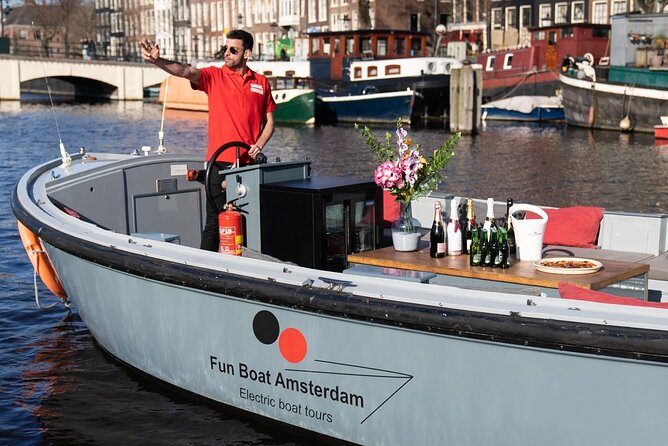
Pancakes on the canal, right in Amsterdam. This Dutch Pancake City Centre Canal Cruise is an easy way to take in the old-town sights by boat, with on-board narration that ties landmarks to city stories. And yes, you get Dutch pancakes as part of the experience.
I like that the route is built around the classic canal highlights you keep hearing about, so you can get your bearings fast without racking up miles on foot. You also travel with a small crowd, which keeps the questions and conversation going.
One consideration: it is about 1 hour, so it is perfect for seeing a lot at once, but not for doing long museum stops on your own.
Key Points That Matter
- Dutch pancakes included on board so the cruise becomes more than just photos
- Compact canal loop focused on the UNESCO-worthy old town sections
- Narration tied to what you pass makes stops like Anne Frank House easier to place
- Family-friendly pace with plenty of chances to ask questions
- Small group size (max 22) keeps it relaxed and interactive
- Mobile ticket means you can move straight to the boat
Other seats on the water, from open boats to covered salon cruises
Where You’ll Board on Leidsekade, and Why the Location Helps
You start at Leidsekade 101, near the water in central Amsterdam. That area is handy because you are close to public transportation, so you can build the day around the cruise instead of reorganizing it.
The cruise runs starting at 10:30am, and it circles back to the same meeting point. That matters more than it sounds, because you can line up lunch, a museum, or a stroll in the Jordaan without needing a complicated return plan.
The experience is listed at about 1 hour, so think of it as a focused “canal intro” that still feels special. It is not a half-day boat marathon.
Price and Value: $34.25 for Sightseeing Plus Pancakes
At $34.25 per person, the math only works if you are getting more than a basic canal ride. Here you are paying for three things at once:
- a canal cruise through top central sights
- narration that explains what you are seeing
- a Dutch pancake tasting, turning the tour into a food moment, not just sightseeing
If you were planning to do a canal cruise anyway, adding pancakes shifts this from a nice-to-have into a “why not” treat. It is also family-friendly value, because kids usually do better when the tour has a clear payoff during the trip.
Compared to buying snacks separately, this package style tends to feel fair. And with a maximum of 22 travelers, you are not paying premium price for a huge crowd.
What You Experience on the Boat, Including the On-Board Narration
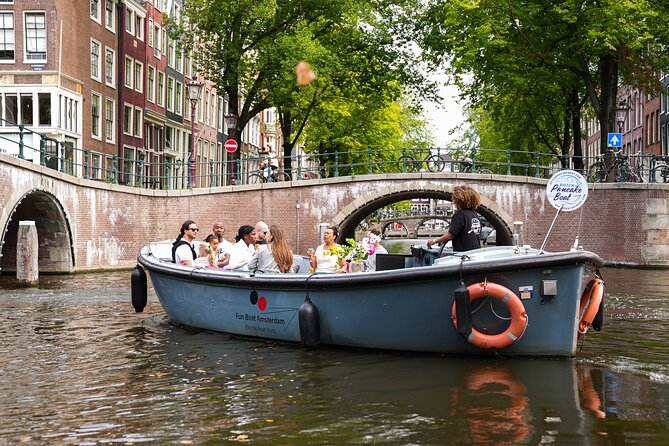
The cruise is built around a running story. As you glide past each landmark, the narration gives context so the names and locations mean something. You are not just looking out at buildings and bridges. You are learning why the city grew the way it did, and why certain canals and neighborhoods became known for particular things.
You also get a close-up view that walking cannot always deliver. From the water, Amsterdam’s canal geometry makes more sense. Bridges, canal bends, and waterfront facades connect in one moving line, which is great for first-timers and for anyone who wants to avoid getting footsore.
And since this is a food-included tour, the timing of the pancake moment helps break up the sightseeing. It turns the hour into something kids can clock, not just endure.
Worth comparing with this Amsterdam choice:
- Amsterdam: Evening Cruise with Optional Wine and Snacks★ 4.4 · 19,696 reviews
- Amsterdam All-Inclusive 90-Minutes Heated Cruise by Captain Jack★ 5.0 · 16,101 reviews
- Amsterdam: Open Boat Cruise option Unlimited Drinks & Bite★ 4.6 · 15,046 reviews
- Amsterdam: City Centre Canal Cruise★ 4.2 · 12,827 reviews
Stop-by-Stop Along the Amstel and Jordaan (What You’ll See and Why It Fits)
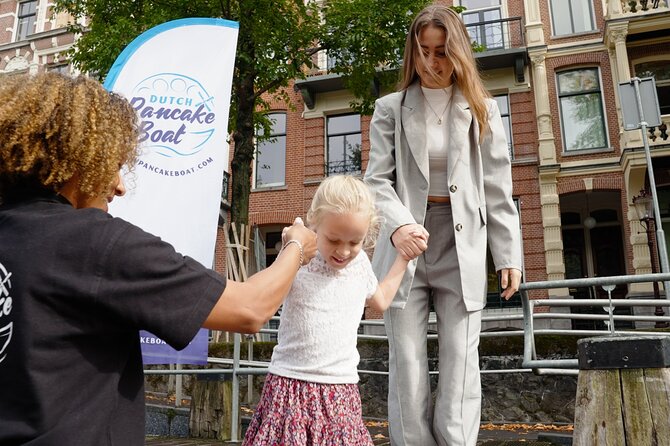
The route mixes major headline sights with the kind of canal trivia that makes Amsterdam feel personal. Here is how each named stop fits together, in the order you will encounter them.
Anne Frank House, and the reality of the hiding place
You pass the Anne Frank House, specifically the home where Anne Frank and her Jewish family were hiding during the Second World War. From the canal, it is a powerful way to see the neighborhood framing around this famous place. You get the landmark without the stress of trying to fit it into a museum queue day.
A note on Amsterdam’s most expensive canal sections
You are told that this is the most expensive canal in Amsterdam. That kind of detail can sound random until you start noticing the canal sides, the width, and the prime waterfront feel. It is one of those “now I get it” narration moments.
Marijuana legality, as Amsterdam talks about itself
The narration also notes that the Netherlands is one of the few places where marijuana use is legal. This is not just trivia. It helps explain why Amsterdam’s laws and culture can feel unusually direct compared to other European cities.
Houseboats from inside, not just outside
One stop focuses on how a houseboat looks from the inside. From water level, you already sense how living works here. Hearing what an interior can be like adds a layer to the architecture, especially if you mostly imagine canals as scenery rather than homes.
The Amstel River and how Amsterdam gets its name
You learn that the Amstel River flows all the way from the Amstel to Damsquare, and that this is where Amsterdam got its name. This connection is useful because it grounds the city’s geography in a single idea: the river shaped the place long before the landmarks did.
The iconic wooden bridge over the Amstel
You also pass the most iconic wooden bridge in Amsterdam over the Amstel River. Bridges are more than crossings here. They are design markers and social chokepoints, so a commentary moment about a bridge you can visually recognize is a great way to make the city stick in your memory.
Hermitage Museum connection to Amsterdam Museum
You hear that in the Hermitage Museum, there is an exhibition of the Amsterdam Museum. Even if you do not jump into a museum that day, this helps you understand Amsterdam’s layer-cake of institutions and how the city interprets its own story.
The first stone bridge in Amsterdam
Another narrated stop points out the first bridge made of stones in Amsterdam. It is the kind of comparison that makes older cities feel more real. Instead of imagining progress happening, you see how specific construction choices changed what the city could do.
A bridge built in 1986 for opera and ballet
You are told about a structure built in 1986, especially for opera concerts and ballet shows. That connects the canals to performance culture, not just commerce and housing. It also gives you a reason to look up and around, not just straight ahead.
Herengracht canal bend and the price tag effect
The narration mentions the bend on the Herengracht, where the most expensive properties sit. If you are noticing how canal bends can feel tighter and more prominent, this kind of detail helps you interpret what you see.
Jordaan as a working-class crafts neighborhood
Then you turn attention to the Jordaan, described as a typical working-class neighborhood where many craftsmen lived. This matters because the Jordaan is now famous for charm and shopping, but the story began in labor and daily life. You start to see gentrification as a shift in use, not a magic transformation.
The 9 Little Streets next to Jordaan
You pass the 9 Little Streets, a shopping area right next to the Jordaan. It helps to know what you are walking toward after the boat ride, because you will recognize it when you’re ready to break into stores and side streets.
Westerkerk, a Protestant district church
You are told about the Westerkerk as a district church of the Protestant Municipality of Amsterdam. Hearing the religious and civic role gives the church silhouette a job, not just a view.
Westertoren at 85 meters
The Westertoren is highlighted as the 85-meter-high tower on top of the Westerkerk. Tower height is an easy visual hook, and it is also a clue for orienting yourself later when you wander on foot.
Lauriergracht linking canals inside Jordaan
You learn that the Lauriergracht is a small canal in the Jordaan connecting the Prinsengracht with the Singelgracht. Canal connections matter because they show how neighborhoods braided together, even when the city looks like a grid of water.
Prinsengracht as UNESCO World Heritage
The narration notes the Prinsengracht as one of the UNESCO World Heritage-listed canals. UNESCO coverage often feels abstract until you connect it to what people see every day. This is where the cruise format helps, since you travel the UNESCO areas without checking a map for an hour.
Amsterdam’s bike city fact that you can actually notice
Another stop reminds you Amsterdam is a real bike city, with more bikes than inhabitants. This is exactly the kind of statement that becomes believable when you come up to street level afterward. It also explains why canal-view streets can feel so different from car-centric cities.
End of the Jordaan on the outer canal
Finally, you reach the outer canal and the end of the Jordaan. That gives the loop a clear finish point, and it helps you understand where the Jordaan sits relative to the broader canal network.
The Dutch Pancakes: What Makes the Food Moment Work

This tour is built around a simple idea: if you are going to ride past iconic Amsterdam, you should also get one of the country’s most loved treats along the way.
The pancakes are served as a sweet feast, dusted with sugar. This gives you a comfort-food moment that is easy to share, and it keeps the mood playful. For kids, it gives the tour a tangible goal, which can turn a boat ride from a “try to be patient” situation into a “can we get the pancakes yet” situation.
You might also catch pancake preparation during the cruise. Even if you are not a big “watch cooking” person, it adds a bit of theater. It also helps families feel like they are doing something rather than just sitting.
One practical tip: eat slowly enough to enjoy the narration. It is easy to wolf down a sugar-dusted pancake and then miss a key sight explanation. If you are with kids, that is especially important.
Who This Cruise Is Best For, and Who Might Want Something Else
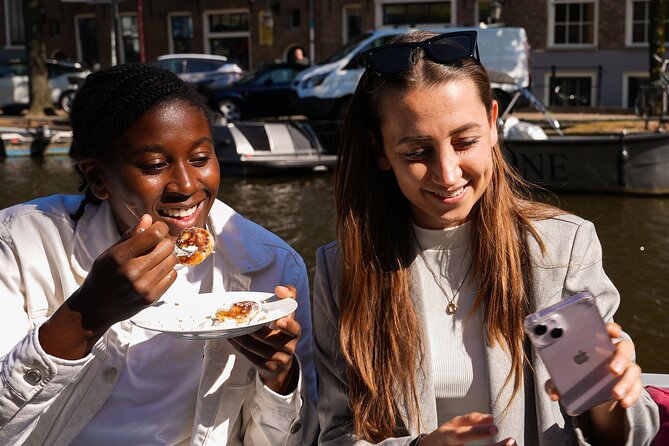
This is ideal for:
- Families with kids who enjoy short attention bursts, questions, and a clear food payoff
- First-timers who want an efficient way to understand central Amsterdam
- Food lovers who like food tied directly to a cultural setting, not just a random snack stop
- Anyone who wants to see landmarks like Anne Frank House and Jordaan without doing a long walking day
It may be less ideal if you:
- Want a long, flexible sightseeing day
- Plan to hop off to explore major sights in depth during the same time window
Because it is around an hour, it is not designed to replace museums or guided walking tours. It is more like a guided “overview plus pancake” experience that sets you up for the rest of your day.
Practical Tips for a Smooth Hour on the Water
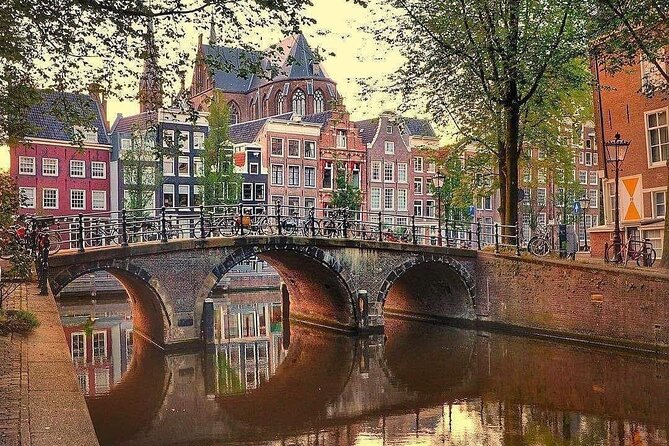
You do not need special skills, and the tour says most travelers can participate. Still, a few small choices make a big difference.
- Dress for being on the water. Even in decent weather, boats can feel cooler than the streets.
- Bring a light layer if you tend to get chilly.
- Plan your day around the return to Leidsekade. The tour ends back at the meeting point, so you can keep momentum.
- If you are traveling with children, give them a simple mission like spotting a bridge or counting ducks and other boats, if you see them. The cruise format makes that kind of game easy.
Also, this runs with a maximum of 22 travelers. That means it is usually calm, but it is still a group activity. Showing up on time helps everyone, including you.
Should You Book Dutch Pancake City Centre Canal Cruise?
I think you should book if you want a smart value mix: central Amsterdam canal sights, short and friendly narration, and a real Dutch-food payoff during the ride.
Book it if:
- You want a compact way to see big names like the Anne Frank House area and the UNESCO canal system
- You have kids who do best with a clear event during the trip
- You like your sightseeing with a bit of humor and food tied in
Skip it if:
- You need more time for on-land exploring
- You are not interested in pancakes at all, because the food is part of the point
If you are on the fence, treat it like this: you are paying to turn “a canal ride” into a one-hour mini program that gives context and a sweet finish. For $34.25, that is a pretty practical way to start an Amsterdam day.
FAQ
How long is the Dutch Pancake City Centre Canal Cruise?
The cruise lasts about 1 hour.
What is the price per person?
The price is $34.25 per person.
Where does the tour start?
The meeting point is Leidsekade 101, 1017 PP Amsterdam, Netherlands.
What time does the tour start?
The start time is 10:30am.
Is the ticket mobile-friendly?
Yes, the tour offers a mobile ticket.
Is there on-board narration?
Yes, there is on-board narration about the city and the sights you pass.
What is the maximum group size?
The tour has a maximum of 22 travelers.
Is the tour suitable for most people?
The tour notes that most travelers can participate.
Can I cancel for free?
Yes. You can cancel for free up to 24 hours in advance for a full refund.
More Cruises & Boat Tours in Amsterdam

More Tour Reviews in Amsterdam
Canal Cruises, Three More Ways
Newly reviewed around Amsterdam


Amsterdam Canal Cruises, side by side.
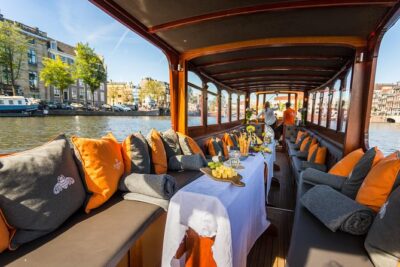 ★ 5.0Amsterdam Classic Saloon Boat Cruise with Drinks and CheeseFrom $2131,825 reviews
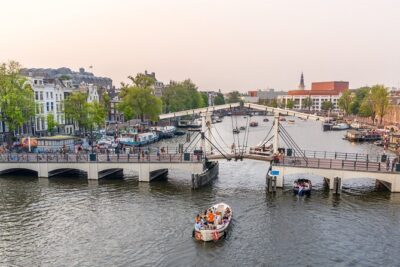 ★ 5.0Amsterdam Luxury Canal Cruise + Unlimited Drinks & Bites optionFrom $1830,518 reviews
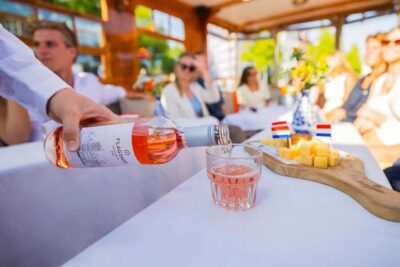 ★ 4.6Classic Boat Cruise with Optional Cheese & WineFrom $1822,925 reviews
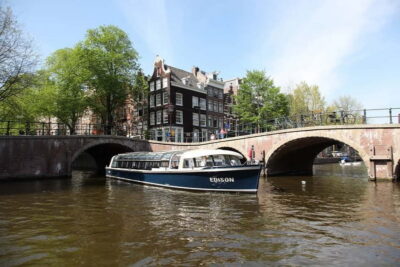 ★ 4.475 Minute City Canal Cruise with Audio GuideFrom $1717,501 reviews
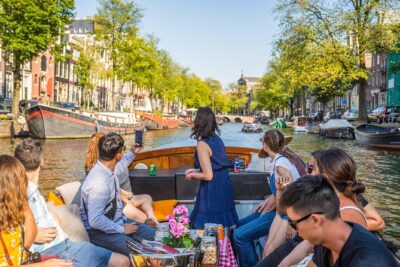 ★ 5.0Amsterdam All-Inclusive 90-Minutes Heated Cruise by Captain JackFrom $2716,101 reviews
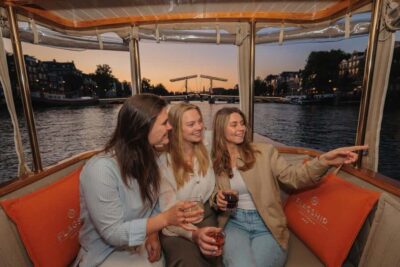 ★ 4.6Open Boat Cruise option Unlimited Drinks & BiteFrom $2215,046 reviews
 ★ 4.2City Centre Canal CruiseFrom $1812,827 reviews
 ★ 4.7Smoke and Lounge City Boat CruiseFrom $278,572 reviews
More ways to plan this visit