
REVIEW · AMSTERDAM
Amsterdam Treasure Hunt: The Mystery of a Secret Sender
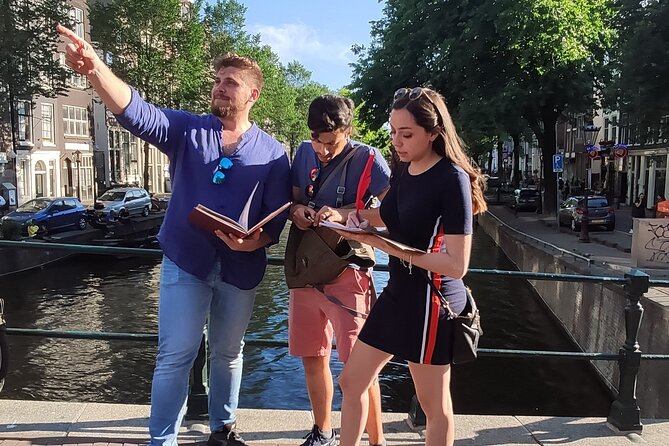
A secret society runs this Amsterdam stroll. This interactive hunt blends a walking route with puzzle clues and real stories tied to the places you pass. The goal is simple on paper, harder in practice: figure out who the Order of the Rosy Cross is calling A Secret Sender.
I like that it is built to be self-paced, so you can take your time with the clues without feeling rushed. I also like that the whole experience stays tight, about 2 hours for roughly a 3km walk through the center. The only real drawback is that you do need to be comfortable walking between multiple stops while thinking, since it is not a sit-down tour.
Key takeaways before you go
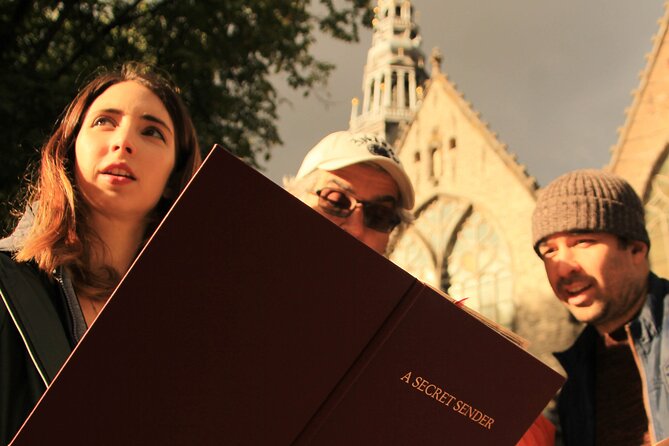
- A mystery story you solve while walking instead of just listening to facts
- Self-paced gameplay with fixed check-in points across central Amsterdam
- About 3km total walking (easy to fit into a day)
- Designed for teens and adults with puzzles that feel just challenging enough
- Mobile ticket and private group format so you are not stuck with strangers
- Landmark stops that keep the game moving across different neighborhoods
Before fixing the day, compare this with a few well-reviewed Amsterdam alternatives:


Why this Secret Sender hunt is more fun than a typical walking tour
Amsterdam has plenty of guided walks, but this one trades the microphone for a mission. You are essentially exploring the Golden Age city center while trying to prove your worth to a secretive group. Instead of the usual question, what should I look at?, you get a concrete reason to look closer.
I like the way the experience turns history and architecture into something you can work with. The clues push you to notice patterns, details, and relationships between buildings, streets, and monuments, all while you move along a short route.
It also helps that the game does not try to stretch itself too long. Two hours is short enough to keep energy high, even if your group has mixed ages or attention spans.
One more thing I appreciate: it is offered as a private tour/activity for your group. That matters because puzzle games go smoother when you can talk freely and decide as a team how to tackle each step.
Price and time value: $30.25 for a tight 2-hour city mission
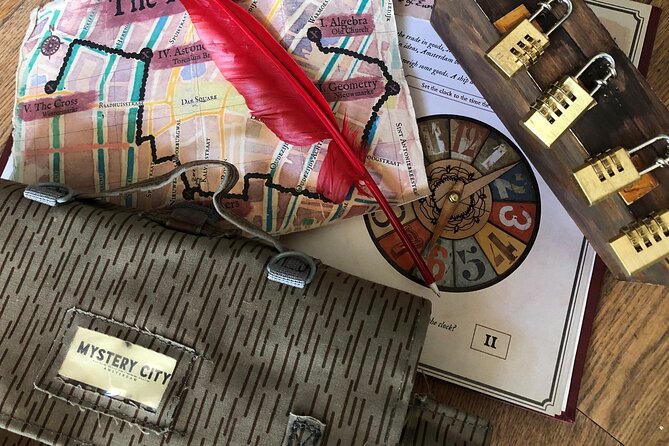
At $30.25 per person, you are paying for a packaged experience with structure. You are not paying for a long, drawn-out guided lecture. You are paying for a set route, a story-driven challenge, and a playable format you can run at your own speed.
The timing is the real value play here. About 2 hours is enough time to get a meaningful sweep of central Amsterdam without burning your whole afternoon. The route is about 3km, which is a manageable distance for most people, as long as you plan for normal walking pace plus time spent solving clues.
Also, the fact that it is self-paced helps with real-world travel friction. If your group takes longer at a stop, you do not need to sprint to “keep up with the guide.” You can slow down and still finish.
Self-paced gameplay: how you’ll actually spend those two hours
This experience is designed to feel like a scavenger hunt that happens to be set on foot. You receive a route with multiple checkpoints and you work through puzzles while you discover interesting buildings and monuments along the way.
You start at Zwanenburgwal 178, 1011 JH Amsterdam and you end back at the same meeting point. That back-to-base design is handy. You are not left guessing how to get back, and your group can regroup if someone needs a breather or a bathroom stop.
Because it is self-guided, the key is pacing your team. If you all rush forward, you can miss clues that are meant to be found by looking around carefully. If you slow down too much, you might feel pressured near the end. Think of it like a friendly balance between exploration and problem-solving.
A mobile ticket also keeps things simple. You are not stuck trying to print anything, and you can show it on your phone at the start.
- Amsterdam Classic Saloon Boat Cruise with Drinks and Cheese★ 5.0 · 31,825 reviews
- Amsterdam Luxury Canal Cruise + Unlimited Drinks & Bites option★ 5.0 · 30,518 reviews
- Amsterdam: Heineken Experience Ticket★ 4.6 · 30,055 reviews
- Amsterdam: Rijksmuseum Entry Ticket★ 4.7 · 25,535 reviews
The route through Amsterdam’s center, stop by stop
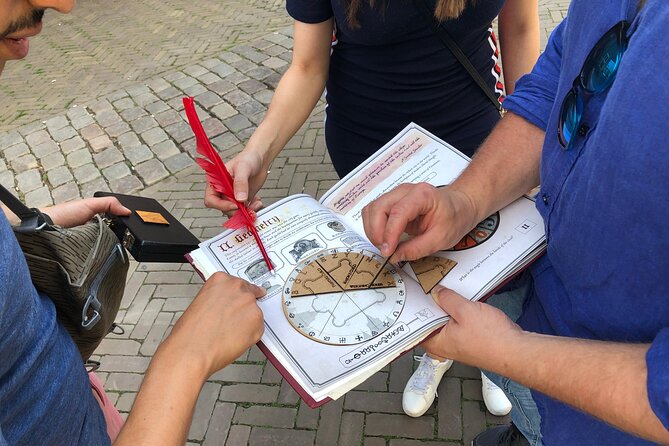
The game route is about 3km and uses a set of five major stops. Each one is tied to a puzzle checkpoint and a chance to read the city around you.
Here is how to think about each stop, and what to watch for as you go:
Stop 1: Oude Kerk checkpoint
You begin at the Oude Kerk area and get your first puzzle kick-off. This start matters because it sets the tone for how the clues want you to think.
What to do: treat the first stop like a warm-up. Spend a moment orienting your eyes, then commit to solving the clue rather than hopping immediately to the next location.
Possible drawback: your team might feel a bit “rusty” at the beginning if you are not used to clue hunts. That is normal. Give yourself extra patience for stop one so the rest of the route feels smoother.
Stop 2: Nieuwmarkt puzzle area
Nieuwmarkt is a natural mid-route checkpoint. By now you should be in a rhythm: walk, look around, solve, then move.
Why this works: a second stop early on prevents the game from feeling like one long crawl. It breaks the time into smaller wins, which keeps energy up.
What to expect: more puzzle pressure. If your group is stumped, talk it out. These hunts often reward teamwork, not solo genius.
Stop 3: Westerkerk history and architecture clues
Westerkerk is where the hunt starts to feel more purposeful. The surroundings give you more visual material to compare and interpret when you are working through the mystery.
How to play smarter: slow down for a quick scan before you start guessing. If you jump straight to answers, you can miss the detail that makes the clue click.
For mixed groups: this is often a good spot to split roles, one person reading the clue instructions while others look around.
Stop 4: Torensluis transition point
Torensluis marks another shift in scenery and problem-solving tempo. This is where you might notice you are starting to connect the puzzle pieces into a single story.
What to do: keep your team focused on the goal, not just the next step. If you are already forming theories, test them against what the clue is asking for.
Possible drawback: if your group is tired, this can feel like the point where patience runs out. If that happens, take a short regroup moment, then restart as a team.
Stop 5: Amsterdam Museum finale stop
You finish at the Amsterdam Museum area, where the last clues should bring you closer to the identity you are chasing. Ending at a museum-adjacent point is practical, because it tends to be a clear final reference point for your group.
What to expect: a satisfying wrap-up that feels like a payoff rather than just another stop.
Tip: keep your team calm and organized here. If you are close to the answer, do not let a messy conversation erase your progress.
What you’ll learn, without turning it into a lecture
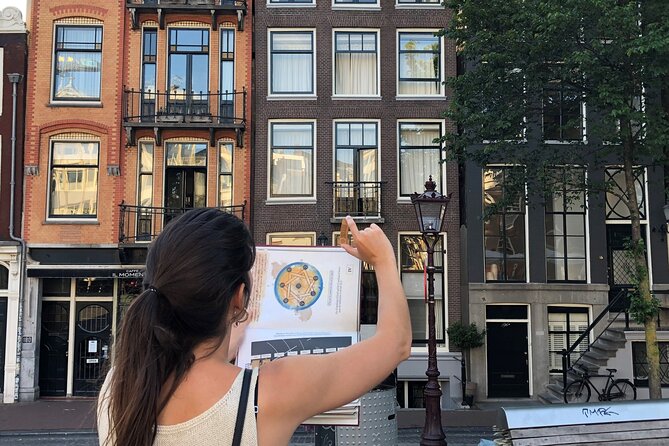
The story frames your exploration through Golden Age Amsterdam and pushes you to connect architecture and city history to the puzzles. That is a smart approach, because you are not memorizing dates. You are learning by observation.
The Order of the Rosy Cross storyline gives the game a narrative spine. Instead of asking you to read a booklet, it asks you to interpret clues tied to real locations.
And because the game includes true stories from the city’s history, the learning is not purely fictional entertainment. The best part is how the hunt nudges you to remember what you looked at, not just what someone told you.
Staff support, and why it matters at the start and finish
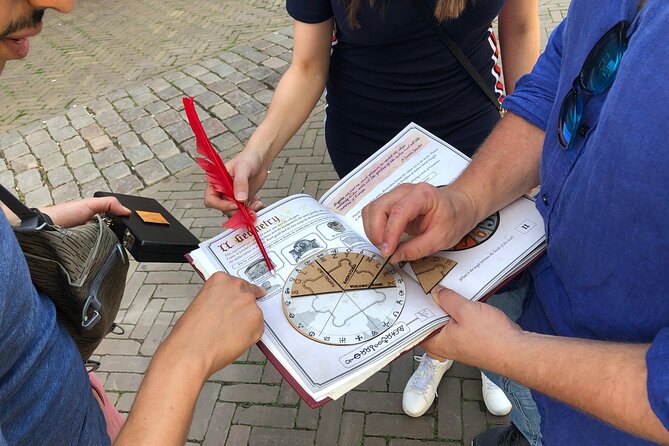
Even though the experience is self-paced, you still get a human touch at the start and the finish point. Feedback highlights that the team at the meeting locations is friendly and fun to chat with.
One name that comes up is Ben, praised as a host. That kind of welcome matters more than people think. It helps you understand the flow quickly, so you spend less time figuring out how the game works and more time enjoying the mission.
If you like tours where the logistics disappear quickly, this one fits that style.
Who should book this: teens, couples, and first-time Amsterdam visitors
This is one of those activities that can work across ages as long as your group is ready to participate. The standout use case is clearly teens, plus adults who enjoy a challenge.
If you are traveling with a 13 to 16 age range, this format tends to hit the sweet spot. It keeps movement going, gives teens something to do besides “standing around,” and still leaves room for adults to enjoy the city.
It also makes sense as one of your earlier Amsterdam activities. In a first couple of days, a route like this helps you get bearings while you learn what areas you want to revisit. The puzzle structure makes the city feel less random.
And if you have limited time, it fits nicely. Even when your schedule is tight, you can still get a real Amsterdam walk without booking something too long.
Getting the timing right: start time, walking pace, and group size
You can choose a start time that suits your party. That flexibility helps if you are juggling naps for kids, work schedules, or just trying to beat afternoon crowds.
Plan for walking time plus puzzle time. Even though the route is about 3km, the play time is about 2 hours, which means you should treat it as active sightseeing, not a quick stroll.
Group size matters. A smaller group tends to solve clues faster simply because more people can look and talk. In a larger group, you might find coordination takes longer, and the walking feels more noticeable.
If your group includes someone who prefers a slower pace, build in extra patience. The self-paced format is a strength, but it only helps if everyone agrees on a team rhythm.
Languages and how to handle them smoothly
The experience is available in English, Dutch, French, German, Spanish, and Italian. If you are traveling with a mixed-language group, choose the language that most people can comfortably use for clue-solving.
In a puzzle hunt, language clarity is more important than people expect. The clue wording drives decisions, so pick what your group can understand without constant translation.
Practical tips so you finish the mystery feeling good
A few small habits can make a big difference:
- Start early if you can. You will get more enjoyment if you are not rushing in the last hour.
- Use teamwork. Assign one person to read clues, and another or two to scan the surroundings.
- Stop, look, then guess. If you guess immediately, you often have to backtrack.
- Bring comfortable shoes. You are walking about 3km over roughly two hours.
- Keep your team organized at the end. The finale needs focus so you do not lose momentum.
If you want an Amsterdam afternoon that feels like an adventure instead of a checklist, this one is built for that mood.
Should you book the Amsterdam Treasure Hunt, The Mystery of a Secret Sender?
Book it if you want a fun, structured way to explore central Amsterdam, and you like the idea of learning through puzzles rather than listening to a lecture. It is a strong choice for families with teens, couples looking for something different, and first-timers who want to get their bearings while cracking a story.
Skip it if your group hates walking, hates games, or only wants high-speed sightseeing with no teamwork. Since it is a self-paced hunt with multiple stops, you do need a basic willingness to slow down and solve.
If you are choosing among Amsterdam activities, this one stands out for sheer engagement and the way it turns architecture spotting into a mission. For $30.25, you get a tight 2-hour experience with a real sense of progress toward the mystery.
FAQ
How long is the Amsterdam Treasure Hunt?
It takes about 2 hours to play.
How far do we walk during the game?
The route is about 3km through Amsterdam’s city center.
Is the tour self-guided or led by a guide?
It is self-paced, so you explore at your own pace while you solve the puzzles.
Where do we meet, and where does it end?
You start at Zwanenburgwal 178, 1011 JH Amsterdam. The activity ends back at the same meeting point.
What stops are included on the route?
The checkpoints include Oude Kerk, Nieuwmarkt, Westerkerk, Torensluis, and Amsterdam Museum.
Do I need a printed ticket?
You use a mobile ticket.
What languages are available?
The experience is offered in English, Dutch, French, German, Spanish, and Italian.
Is this private for our group?
Yes. Only your group participates.
Can I cancel and get a refund?
Yes, free cancellation is available. You can cancel up to 24 hours in advance for a full refund, and cut-off times use local time.
Is it suitable for people who use service animals?
Service animals are allowed.