
REVIEW · AMSTERDAM CANAL CRUISES
Amsterdam Museum of the Canals Admission Ticket with Audiotour
Canals made Amsterdam, and this museum explains how. I really liked the audio-led walkthrough and the hands-on, interactive feel inside a 17th-century canal house. It’s an easy way to understand the UNESCO-listed Canal Ring without getting lost in museum mazes.
My only caution is time and depth. The experience is about 1 hour, so a few parts of the city’s story may feel like quick hits rather than a super detailed course.
Quick hits (what you will actually notice)
- UNESCO Canal Ring context explained in plain language, focused on how the city grew and held together
- Audiotour pace that moves you room to room, keeping the history from dragging
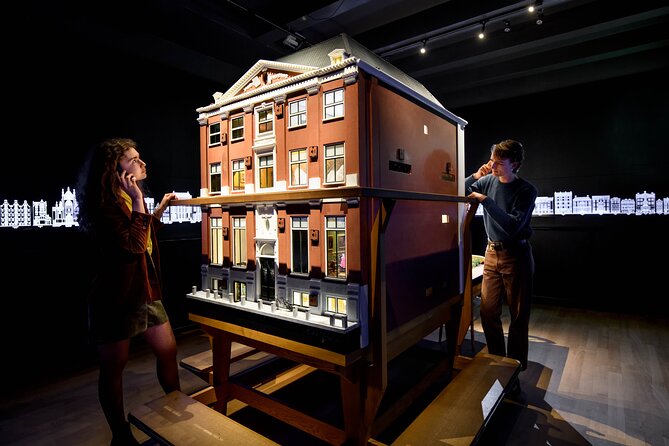
- Interactive models and projections, including a clever projection inside a doll-house style display
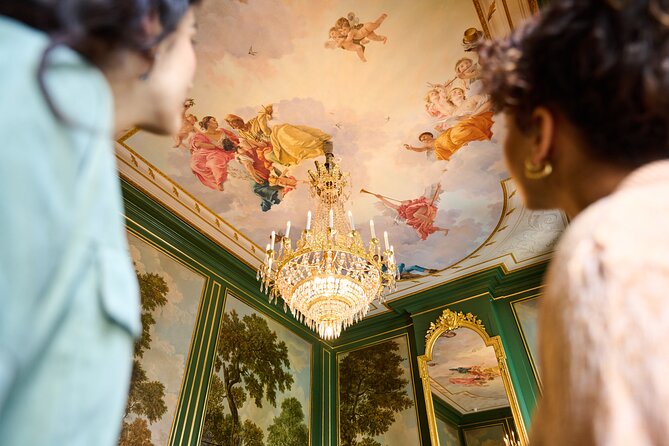
- A 17th-century canal house setting, with classical period rooms that make the story feel real
- Small group feel (maximum 12 travelers) that keeps things manageable
Other seats on the water, from open boats to covered salon cruises
Canal Ring Insight From Inside a 17th-Century House

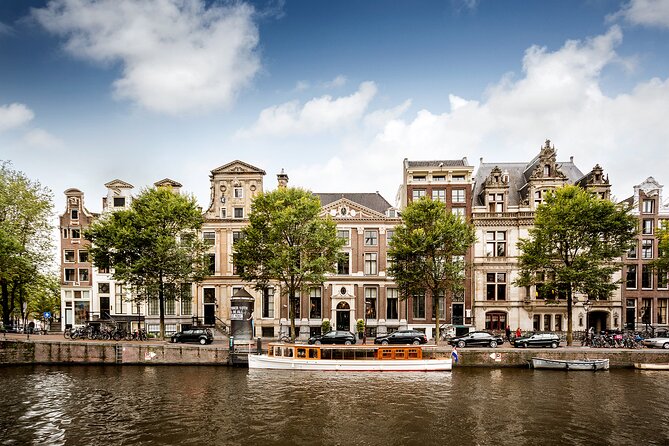
Amsterdam is famous for canals, but it’s easy to treat them like scenery only. This Museum of the Canals, also known as the Grachtenmuseum Amsterdam, gives you the backstory behind the UNESCO World Heritage–listed Canal Ring, and it does it in a way that feels practical, not academic.
You’re not looking at canals from a postcard viewpoint. You’re learning how the city was built, maintained, and shaped, starting in a 17th-century canal house on the water. That matters because it turns a big, city-wide topic into something you can physically imagine, from rooms built in a past era to displays that show canal construction methods.
Two big reasons this works well for most visitors:
- You get a guided audio experience that keeps you moving through the museum.
- The museum uses multimedia and interactive displays to make the technical parts feel understandable.
Getting Started at Herengracht 386, and What 1 Hour Really Means
Your starting point is Herengracht 386, 1016 CJ Amsterdam, Netherlands, and the activity finishes back at the same meeting place. Plan to arrive with a little breathing room, because you want time to get your bearings before you start listening.
The experience runs about 1 hour on average. That’s a sweet spot if you want real context but still want time for canal-side strolling, museums with longer timelines, or a late lunch in the neighborhood. It’s also a good option when you’ve already seen enough exterior canal views and you want the interior explanation.
Group size is capped at 12 travelers, which helps the overall vibe stay calm. In practice, this usually means you are not stuck in a huge crowd while you track signage, audio prompts, and the room-to-room flow.
Practical tip: check opening times before you go. The data you have shows Monday 12:00 PM to 5:00 PM, and the museum’s operation runs between 05/16/2024 and 12/08/2026, but day-by-day hours can vary.
Inside the Grachtenmuseum: Rooms, Multimedia, and That Doll-House Projection
The museum experience is designed like a story in chapters. You start with Amsterdam’s history and the canal system, then you move through rooms that reflect the city’s past. The 17th-century canal house setting is part of the lesson, since you can feel how the space itself belongs to the same era the displays talk about.
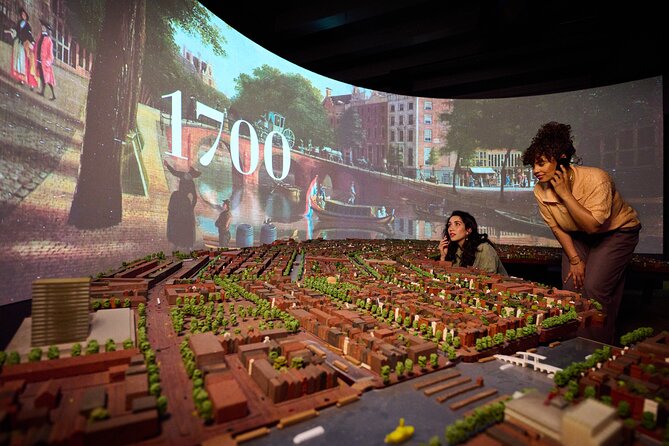
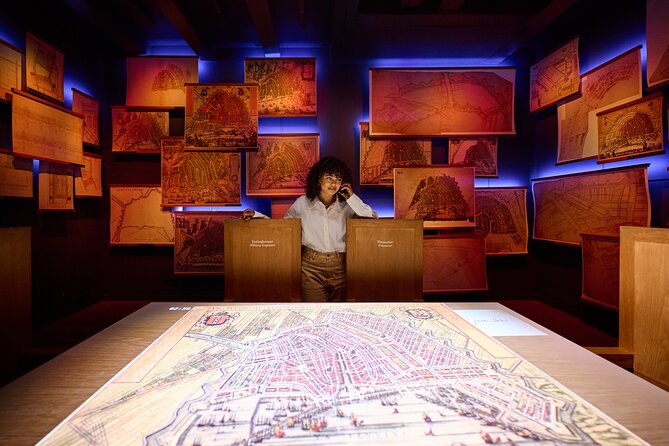
What I liked most here is how the museum handles complicated ideas. Instead of only showing maps, it pairs audio narration with visual tools. Expect things like models that explain construction methods and a permanent multimedia tour that helps connect the timeline to what you are seeing.
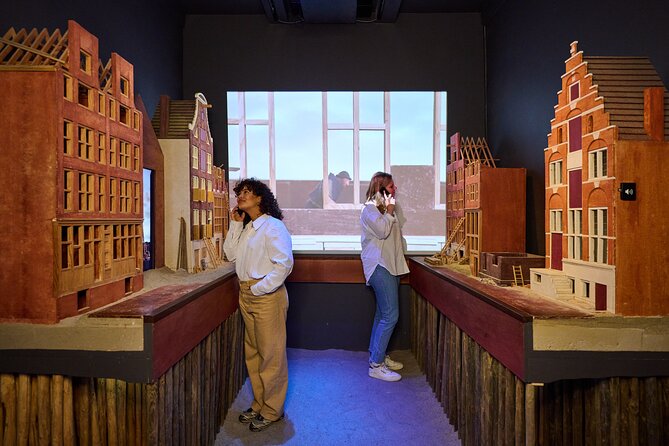
One display that stands out is a projection experience inside a doll-house style setup. If you’ve ever walked into a museum and thought, Okay, that’s neat, but how does it explain anything, this is the opposite. The projection is used as an actual teaching tool, helping you understand how people lived, organized space, or related everyday life to the city’s canal design.
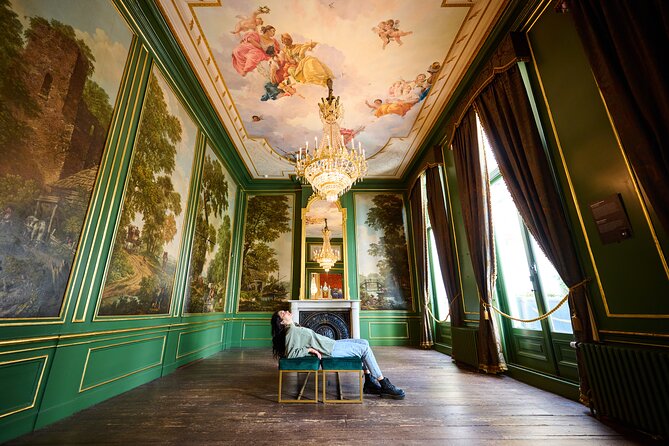
The museum also has classical period rooms, so you get a bit of atmosphere as you progress. That means the audiotour does not feel like you are only listening through your earbuds. You’re also absorbing the physical “stage” of the city’s past.
Another gallery door worth opening in Amsterdam
- Amsterdam: Madame Tussauds Ticket★ 4.4 · 9,415 reviews
- Amsterdam: NEMO Science Museum Ticket★ 4.4 · 2,979 reviews
- Moco Museum Amsterdam Admission Ticket with Banksy and more★ 4.0 · 1,745 reviews
- Ticket to The Ultimate 5D Flight Experience at THIS IS HOLLAND★ 4.5 · 1,413 reviews
A smart way to move through each room
When an audio museum feels like a blur, it’s usually because visitors treat it like background noise. Here’s what works better:
- Pause when you reach a new visual display and let the audio catch up to what you are looking at.
- Give extra attention to the construction-related moments, since those are the parts that make canals stop being abstract.
You’ll get more out of your hour if you treat it like a focused session, not a casual wander.
Audiotour in English: How to Listen Without Missing the Point
You’ll use an audio guide while you explore. The ticket is offered in English, and the tour is set up so the audio content can be selected by language. That flexibility matters because canal history has lots of terms that are easier to understand when you can hear them clearly.
Also, the ticket is mobile, so you’ll likely scan or show it on your phone at entry. I like this approach in Amsterdam, where paper tickets can feel like extra weight and you may already be using your phone for transit and maps.
A good listening strategy is to treat the audio like your “museum guide brain.” If you try to read every label and also listen, you may lose the thread. Instead, let the audio tell you what to look at next, then use the visuals to confirm it.
If you want maximum value from the audio:
- Use headphones at a comfortable volume, but keep enough awareness to understand room-level cues.
- When you hear a prompt to focus on a particular model or display, do it immediately. Those moments are built to make the city’s engineering and planning click.
The museum’s strength is that it doesn’t only tell you that canals mattered. It shows you how ideas turned into structures you can still see.
Garden Time and Changing Exhibitions: What Adds Value Beyond the Audiotour
Even though the audiotour itself is the core, the museum’s layout gives you a few extra ways to round out the visit. The museum has a beautiful garden, and it also runs changing exhibitions.
This is useful if you like to break up a museum hour with a quiet reset. A garden stop can help your brain absorb what you just learned, especially when your canal knowledge is still forming. It’s also a nice option if you’re traveling with someone who needs a slower moment during a museum visit.
The changing exhibition angle is a small plus because it means you are not guaranteed to see the exact same thing every time you visit (or compare it to someone else’s photos online). You don’t need to plan your whole trip around it, but it can make your stop feel more personal.
Just keep your expectations realistic. With an hour-long experience, the garden and exhibition time may be “what you can fit,” not a second full program. If you want a longer museum day, pair it with nearby canal walks or another nearby attraction rather than trying to stretch this visit beyond what it’s designed to be.
Value for $22.29: Is This Ticket Worth It?
At $22.29 per person, this is not the cheapest museum stop in Amsterdam. But it can feel like good value because you’re paying for a guided, structured experience inside a memorable location, plus multimedia and interactive elements.
Here’s how I think about value for this kind of ticket:
- You’re getting roughly 1 hour of guided storytelling, not just entry.
- The museum covers the big-picture reason canals shaped Amsterdam, then supports it with visual tools like models and projections.
- You’re visiting a setting that already connects history to place, a 17th-century canal house that helps the story land.
If you are history-curious but don’t want a long multi-hour deep museum commitment, this price makes sense. If you want a lecture-level, highly detailed treatment of every decade and every canal policy, the hour format may feel a little fast.
That’s the main trade-off echoed by the style of experience: quick bursts of history with smart emphasis, not an all-day course. Still, if you’ve been walking Amsterdam’s Canal Ring for a day or two and you’re ready to understand the how and why, this is a strong match.
Who this suits best:
- First-timers who want canal context fast
- Couples and small groups who like structured experiences
- Families, since the museum is built to be approachable and includes interactive elements
- Anyone who enjoys audio tours but wants the visuals to do real work
When You Might Want Another Option Instead
This is a great choice for many people, but you should consider a different approach if:
- You want a longer visit than about 1 hour
- You prefer museum tours that go very deep into one narrow subject
- You are hoping for a fully hands-on workshop style experience, because this is more of a guided museum storytelling flow
Also, make sure you respect opening times. If you show up on the wrong day or at the wrong hour, you lose that one chance that makes this ticket worthwhile.
Should You Book the Amsterdam Museum of the Canals Audiotour?
Book it if you want a clear, efficient way to understand how Amsterdam’s canal system created the city you see today. The museum’s combination of a 17th-century canal house, audio-led room flow, and interactive models and projections makes the UNESCO Canal Ring feel understandable instead of distant.
Skip it only if you already know the canal history deeply and you mainly want a long museum hangout. In that case, you might get more satisfaction from a broader, longer attraction.
If you’re on the fence, here’s the simplest decision rule I use: if you have about an hour and you want canal context without over-planning, this is a strong booking. It’s also the kind of stop that pairs well with an Amsterdam day built around walking and canal views.
FAQ
How long is the Amsterdam Museum of the Canals audiotour?
The experience lasts about 1 hour.
Where does the audiotour start and end?
It starts at Herengracht 386, 1016 CJ Amsterdam, Netherlands and ends back at the same meeting point.
What language is the audiotour offered in?
The ticket is offered in English.
Is the ticket mobile?
Yes, it is a mobile ticket.
How many people are in the group?
The maximum group size is 12 travelers.
Are service animals allowed?
Yes, service animals are allowed.
What is the cancellation policy?
Free cancellation is available. You can cancel up to 24 hours in advance for a full refund. If you cancel less than 24 hours before the start time, the amount paid is not refunded.
More Tour Reviews in Amsterdam






Another Amsterdam Museum Afternoon






Canal Cruises, Three More Ways


Newly reviewed around Amsterdam





Amsterdam Canal Cruises, side by side.
 ★ 5.0Amsterdam Classic Saloon Boat Cruise with Drinks and CheeseFrom $2131,825 reviews
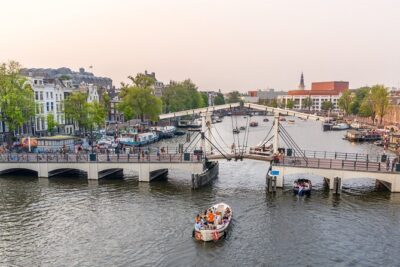 ★ 5.0Amsterdam Luxury Canal Cruise + Unlimited Drinks & Bites optionFrom $1830,518 reviews
 ★ 4.6Classic Boat Cruise with Optional Cheese & WineFrom $1822,925 reviews
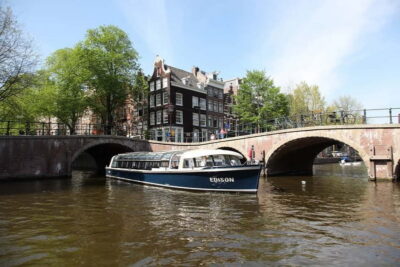 ★ 4.475 Minute City Canal Cruise with Audio GuideFrom $1717,501 reviews
 ★ 5.0Amsterdam All-Inclusive 90-Minutes Heated Cruise by Captain JackFrom $2716,101 reviews
 ★ 4.6Open Boat Cruise option Unlimited Drinks & BiteFrom $2215,046 reviews
 ★ 4.2City Centre Canal CruiseFrom $1812,827 reviews
 ★ 4.7Smoke and Lounge City Boat CruiseFrom $278,572 reviews
More ways to plan this visit