
REVIEW · CITY TOURS
e-Scavenger hunt Hoorn: Explore the city at your own pace
Hoorn can be surprisingly fun when your phone tells you where to look. This self-guided GPS city game turns a walk into a clue hunt with questions, search tasks, and plenty of stops you might otherwise rush past. I love that you control the pace, starting, pausing, or stopping whenever you want. I also love the value, because the price covers a team of up to 6 people.
One thing to plan for, though: this experience depends on your own smartphone and data. If your connection is weak or GPS wobbles, a clue can take longer than you hoped.
Key highlights in plain terms
- Free city game app with mobile ticket: log in on your phone after booking instructions arrive
- Flexible timing: start, pause, and resume anytime during the open window
- GPS-driven route across Hoorn’s main landmarks: museums, churches, waterfront, and towers
- Team-friendly format: built for a group of up to 6, which also works well for larger groups in multiple teams
- Clear gameplay that rewards walking: answer location-based questions and handle short search assignments
- A mix of culture and variety: steam-era tech, maritime links, and old brick architecture
Before fixing the day, compare this with a few well-reviewed Hoorn alternatives:
Hoorn at your pace, with GPS doing the steering
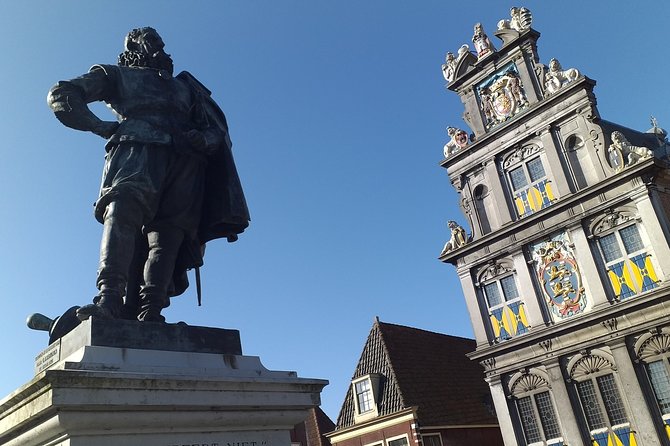
This is not a fixed guided tour where you march in a pack and hope you can hear the facts between footsteps. The whole point is that you explore Hoorn at your own pace. You use the free city game app on your smartphone, and GPS guides you to each location.
You’ll answer questions tied to what you’re seeing nearby, plus you’ll handle short search assignments. The game format matters because it keeps the walk from turning into a checklist of monuments. Instead, you’re actively looking at street corners, building details, and city squares.
What I like most is the control. You can pause when you want a coffee, step into a church when it feels worth it, or slow down when a clue has you staring at the right façade for a minute too long. That kind of freedom is rare in tours that last around 3 hours.
Price and value: $36.93 for up to 6 people
The price is $36.93 per group (up to 6), which is a big part of why this works. If you’re traveling solo, it can feel a bit like paying for extra seats you are not using. But if you’re a couple, a family, or a small group of friends, the cost spreads out quickly.
Also, you’re not just paying for walking time. You’re paying for a ready-made city route, a mobile game, and a set of location-based questions that turn familiar streets into something new.
One practical catch: smartphone and data are not included. Bring a phone you’re comfortable using for apps, maps, and typing answers. If you rely on Wi-Fi only, plan ahead so the game doesn’t lose its connection mid-route.
Start at Roode Steen, then circle the city’s best-known landmarks
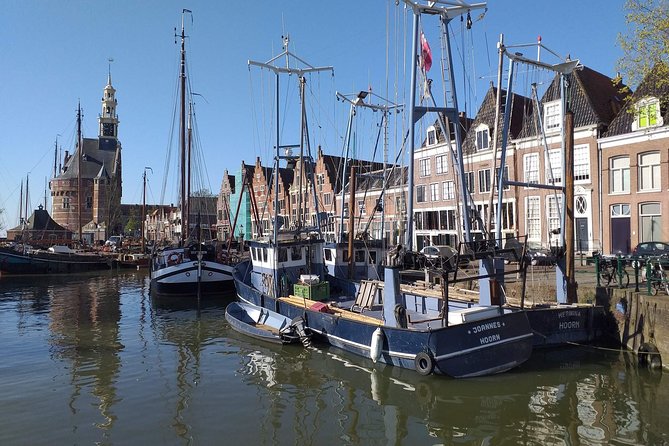
Your starting point is Roode Steen, 1621 CV Hoorn, and the activity ends back there. That loop is handy because you’re not stuck crossing town late in the walk. Roode Steen is a natural hub, so it also makes sense for meeting up and for heading out afterward.
The route is spread across about 15 locations and takes roughly 3 hours. That time estimate depends on how quickly you solve the clues, but the format is forgiving. If you go slow, you can stretch it. If you feel speedy, you can finish on the quicker side.
The game uses GPS to find the squares, streets, and monuments, and the clue system nudges you toward stops that explain Hoorn’s identity. Expect a route that mixes museums, churches, heritage towers, and waterfront views.
Museum van de Twintigste Eeuw: a 20th-century opener
Stop 1 is Museum van de Twintigste Eeuw. A museum start is a smart move for a scavenger hunt because it sets expectations: you’re going to learn as you go, not just collect points.
Even if you don’t plan to do a long museum visit, this stop gives the game a foundation. You’ll likely get questions that connect Hoorn to broader European or Dutch shifts from the 1900s. The benefit for you is variety. Hoorn is easy to view as a compact historic city, but this opening leans into more recent layers.
A small consideration: if you’re doing this walk with limited time for indoor stops, you might want to glance quickly and focus on the game tasks first, then return later if a museum really grabs you.
Museum Stoomtram Hoorn-Medemblik: steam and local transit energy
Stop 2 is Museum Stoomtram Hoorn-Medemblik. This is the kind of stop that breaks up the architecture rhythm with something more mechanical and hands-on in theme.
For a game, steam or transit history is great because there are lots of visual details to notice. You can also treat it as a reset point. If the route starts feeling too “samey” (church, tower, square, repeat), a steam-tram museum vibe gives your eyes and brain a different type of clue source.
If you’re traveling with kids or anyone who likes practical stories, this is one of the most approachable stops on the list. Even if the game questions are short, the subject is vivid.
Westfries Museum and Halve Maen: Hoorn’s story, not just photos
Stop 3 is Westfries Museum, and stop 4 is Halve Maen. Together, these two stops feel like a pair of chapters. The Westfries Museum theme leans toward regional identity, while Halve Maen points you toward Hoorn’s maritime connections.
This is where you can start to see the game’s real value. You’re not only walking past famous buildings. You’re learning what shaped the city’s culture: regional character, and the sea-based life that connects Hoorn to trade, navigation, and Dutch history.
A practical tip: when clues reference people, objects, or events, take 20 seconds to look around the spot before you start typing. The game is easier when you’re actually matching the question to what’s in front of you.
Hoofdtoren (1532-1534) and Koepelkerk: old brick, strong shapes
Stop 5 is Hoofdtoren Hoorn uit 1532-1534. Stop 6 is Koepelkerk. These two are classic Hoorn contrasts: one anchors you in a fortified, tower-like presence, and the other brings you toward religious architecture and the distinctive dome feel.
If you like street-level details, this is a rewarding part of the walk. Towers give you strong sightlines, while a church dome changes how light hits the building and how your eye tracks upward.
For game-solving, architecture is useful because it holds the kinds of stable facts scavenger hunts love. You can’t always find a trivia answer instantly, but shapes, dates, and names are often easier to match to signage or nearby context.
Julianapark and Museumhuis Bonck: breathing room between missions

Stop 7 is Julianapark, and stop 8 is Museumhuis Bonck. Parks are not just pretty breaks. In a clue hunt, they also give you a chance to gather your thoughts, review your progress, and slow down without feeling like you are losing time.
Then Museumhuis Bonck brings you back into the human-scale world of collections and domestic storytelling. “House museum” themes can be very approachable because they make history feel less abstract. Even if you only use the stop for the game tasks, it’s a good palate cleanser before more churches and listed monuments.
Oosterkerk and Oosterpoort (1578): church doors and protected monuments
Stop 9 is Oosterkerk, and stop 10 is Rijksmonument Oosterpoort Hoorn uit 1578. When you hit these, the route leans into long-standing city markers. Churches and protected monuments are the kind of places where Hoorn’s identity is physically preserved.
For you, that means the clues here are likely to reward careful observation. Look at inscriptions, dates, and the way buildings sit along the street line. Even if you are not a “read every plaque” type, the game nudges you to slow down and take in specifics.
One caution I’d give: if your GPS points you a few meters off, don’t panic. Check the immediate area visually. Some locations can be tricky if your phone locks onto the wrong building entrance.
Kaasmarkt Hoorn: a clue stop that hints at local tradition
Stop 11 is Kaasmarkt Hoorn. Cheese-market stops add a very practical flavor to the route. Instead of only focusing on institutions like museums and churches, you’re stepping into the everyday commercial rhythm of the city.
That matters because Hoorn was not only built by big events. It also grew through markets, food culture, and regular trade patterns. A clue here helps you connect the dots between a historic city center and how people actually lived and worked.
If you’re doing the hunt on a day when the city feels lively, this part can feel extra fun. The atmosphere of a market square is perfect for short question-and-search tasks.
Varend Erfgoed Hoorn, NS Station Hoorn, and Noorderkerk: water to rail to worship
Stop 12 is Varend Erfgoed Hoorn, stop 13 is NS Station Hoorn, stop 14 is Noorderkerk. This trio is a momentum shift in themes.
- Varend Erfgoed Hoorn pulls you back to water and maritime heritage
- NS Station Hoorn shifts you toward movement and modern travel links
- Noorderkerk returns you to spiritual and architectural markers
For a game, the variety works. Your brain doesn’t feel like it’s stuck in one genre of sightseeing. You get maritime visuals, then the energy of a transportation hub, then the calmer, structured feel of a church.
A practical approach: when you reach the station area, slow down. Train-station streets can be busy, and your phone might try to grab multiple GPS targets. Use the app, but also use your eyes to confirm you’re at the correct spot before you burn through time.
Maria of Kruittoren: a tower finale that feels like you earned it
Stop 15 is Maria of Kruittoren. End stops often do two jobs: they’re a final clue, and they’re a reward. A tower makes a strong finale because it gives you a last “look up” moment.
This is also a good place to make sure you’ve got your answers saved and your game state is working. If the app needs you to submit responses, do it right here before you start wandering around with the finish line already behind you.
And remember, the tour ends back at Roode Steen. So once you finish, you can make the last stretch easy: grab a snack, reflect on what you learned, and head out without planning a second route home.
How the app clue hunt works, and what to do if a mission feels off
The basic loop is simple: you log in to the app, follow GPS guidance to each stop, then answer questions and complete short search assignments. The app approach is one reason people seem to like this experience so much. It’s clear, and you aren’t waiting for someone to arrive or explain again.
Still, scavenger hunts live or die on finding the right location. A couple of “clue accuracy” issues can happen, like a location marker that feels slightly off, or a question that takes more hunting than you expect. That’s not rare for GPS-based city games.
Here’s how you can protect your time:
- Keep your phone charged and brightness up for reading clues.
- Don’t rush each stop. Take a minute to confirm you’re at the right building.
- If something feels broken, use the support route in the experience materials. The provided help guidance indicates there is support available daily.
Also, if you’re hearing impaired, the experience is described as user-friendly. That’s a real plus for you because it signals the app experience is designed to work without relying on constant spoken narration.
Who should do this in Hoorn, and who might prefer something else
This is family-friendly and designed for groups, especially teams up to 6 people. If you like doing things with friends and you enjoy light competition, the structure naturally supports splitting into roles: one person reads the clue, one handles the GPS, and one verifies what you see nearby.
It’s also a smart choice if you want to see the city without committing to a guided schedule. Hoorn is walkable, and a self-guided game makes that walk feel purposeful.
Where it might not be ideal is if you hate smartphone use. If you want sightseeing that’s fully offline and low-tech, you might find this frustrating. The game needs your phone, and smartphone and data are not included.
Should you book the e-Scavenger hunt Hoorn?
Book it if you want an affordable, flexible way to learn while you walk. The biggest reasons to go are the team value (up to 6 people for one group price), the GPS-driven route that takes you through a mix of museums, churches, towers, and waterfront links, and the freedom to stop and start without feeling behind.
Skip it, or at least plan carefully, if you know your phone battery is unreliable or you expect to have limited data. Also be aware that a clue can sometimes feel a bit hard to locate, so build in a little patience.
If you’re traveling to Hoorn for a short stay, this is one of the easiest ways to turn a casual walk into a structured mini-adventure. And after you finish, you’ll have a much clearer map of what makes Hoorn itself, not just what looks good in photos.
FAQ
How long does the e-Scavenger hunt in Hoorn take?
It takes about 3 hours.
Where does the hunt start and end?
It starts at Roode Steen, 1621 CV Hoorn, Netherlands, and ends back at the same meeting point.
What’s the price for the hunt?
It costs $36.93 per group, up to 6 people.
Can I do the hunt anytime?
Yes. You can do it anytime you choose, and the opening hours are listed as 12:00 AM to 11:59 PM every day.
What do I need to participate?
You need a smartphone with data, since smartphone and data are not included.
Is there a mobile ticket?
Yes, the tour includes a mobile ticket.
Is this a guided tour?
No. It is self-guided through an online app, and you can start, stop, or pause when you want.
How many people can join one group?
The experience is set up for a team of max 6 people.
Is it suitable for people with hearing impairments?
It’s described as user-friendly for hearing impaired travelers.
Are service animals allowed?
Yes, service animals are allowed.
What if I need to cancel?
Free cancellation is available. You can cancel up to 24 hours in advance for a full refund.
More Tour Reviews in Hoorn
Newly reviewed around Hoorn
City Tours, side by side.
 ★ 4.475 Minute City Canal Cruise with Audio GuideFrom $1717,501 reviews
 ★ 4.2City Centre Canal CruiseFrom $1812,827 reviews
 ★ 4.7Smoke and Lounge City Boat CruiseFrom $278,572 reviews
 ★ 4.5City Canal Cruise and Heineken Experience TicketFrom $475,367 reviews
 ★ 4.7Guided Bike Tour City Centre in EN/DE/FR/ESFrom $414,187 reviews
 ★ 4.6Van Gogh Museum Ticket and City Canal CruiseFrom $473,899 reviews
 ★ 4.4City Canal Cruise and Heineken ExperienceFrom $443,133 reviews
 ★ 4.2City Centre Canal Cruise & Free Flower CocktailFrom $192,310 reviews
More ways to plan this visit