

REVIEW · HAARLEM DAY TRIPS
Cultural and Historical Audio guided walking tour Tour of Haarlem
Haarlem feels close with no screen glare. This GPS audio walking tour guides you around historic corners like the hofjes, Grote Markt, and the Frans Hals Museum, at your own pace. You download the app ahead of time, turn on GPS, put on your headphones, and the narration begins when you get near each stop.
I really like the self-paced format. You can pause for a closer look at major sights like the Corrie ten Boom House, without being stuck in a group rhythm. I also like that the route is packed with big visual landmarks, so the audio gives context right where you need it, from canal stories over Bakenessergracht to the artwork-focused finish at the Frans Hals Museum.
One thing to consider is that it is audio-only, so you are the navigator. If you expected a live guide who can clarify what you are looking at, or if the GPS timing feels finicky for you, you may wish the guidance was more hands-on.
Key highlights you will actually feel on the walk
- GPS start when you are near each point, so you do not have to follow a timer
- Audio-only format keeps your eyes free for gates, brickwork, and canal angles
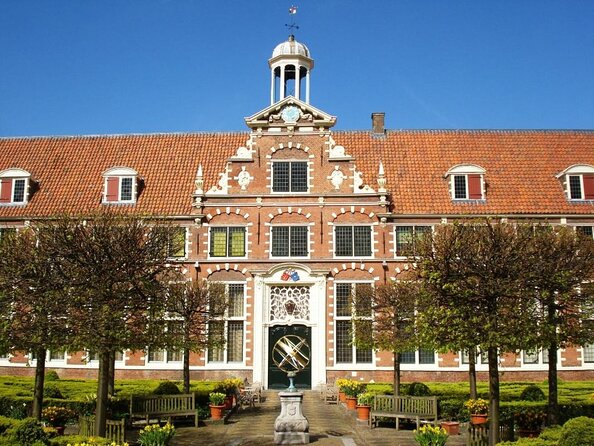
- Hofjes in Haarlem, especially Hofje van Oorschot, show how quiet charity sat inside a busy city
- WWII storytelling at the Corrie ten Boom House, with narration you can pause on for a true stop
- A tight historic loop, from Grote Markt and old civic buildings to canals and the Frans Hals finish
More easy escapes to Haarlem from Haarlem
How the GPS audio walk works in Haarlem
You start at Kruisweg 70BR, in Haarlem’s Centrum area. The walk is designed around GPS points, with audio that starts once you are close to each location. That means you can step out of the flow to take a photo, then let the narration catch you again when you return to the stop area.
The tour is audio-only, so you will want working headphones. Bring your own headset, because it is not provided. Also, this is not a chatty live tour where someone can redirect you on the spot, so keep your phone ready to run the app and GPS.
The best practical part of the route is the finish on Grote Houtstraat, the long shopping street through Haarlem Centrum. When you end near that main artery, it is easy to connect back to transit or simply keep wandering without feeling stuck at the edge of town.
Hofje van Oorschot: Haarlem’s quiet courtyards, seen through a gate
Haarlem’s hofjes are one of those local terms that instantly changes how you read the city. They are closed courtyards where housing was set up for older people or those in need, often supported by wealthy families through bequests. The result is a pocket of calm tucked into the middle of everyday streets.
Stop 1 is the Hofje van Oorschot. Here is the key twist, you can only admire it from behind a closed gate, with no admittance for outsiders. Even so, it is a strong first stop because the narrator sets up the meaning of what you are seeing, not just the architecture.
If you love small-city details, this is a good place to slow down. Look for the way the courtyard feels protected from the outside, even though you are not going inside. It is an important lesson in how the city once organized care and community space.
Corrie ten Boom House: a WWII story you can pause for
One of the most compelling elements is the Corrie ten Boom House. This stop is described as more than a museum because it tells the story of a family whose faith led them to join underground efforts in the Netherlands during WWII.
The audio tour gives the story, but the big practical point is that you are encouraged to pause the audio and make it a must-do visit. Admission is not included, so if you plan to go inside, expect a separate ticket cost.
This is also the type of stop where you may want headphones on longer than usual. The subject matter is emotional, and a self-paced audio guide lets you control how long you linger before moving on.
Haarlem at street level, a few more routes
- The rise of Haarlem: Culture, History, Art and Architecture Walking Tour★ 5.0 · 59 reviews
- Haarlem: City Highlights Walking Tour★ 4.5 · 32 reviews
- Haarlem Old Town Private Walking Tour★ 5.0 · 24 reviews
- 2 Hours Walking Tour Throughout History & Highlights of Haarlem★ 4.5 · 18 reviews
Grote Markt and the surrounding icons: where Haarlem gathers
From the start of the town core, the route pivots to the Grote Markt, Haarlem’s central market square. This is where you get a concentration of major buildings, including the town hall and the old Vleeshal, plus statues scattered around the square.
The audio is designed to give you lots of information on the iconic points of interest. In practice, this is your chance to orient your brain. If you can identify the town hall and the historic market structure, you will understand what the city’s center has meant over time.
A small consideration: because you are following audio prompts rather than a person pointing things out, you might sometimes wonder exactly which façade the narration is referring to. If that happens, pause, scan the square, and match the building shapes to what the guide describes in your current audio section.
Bakenessergracht canal walk: stories with water right beside you
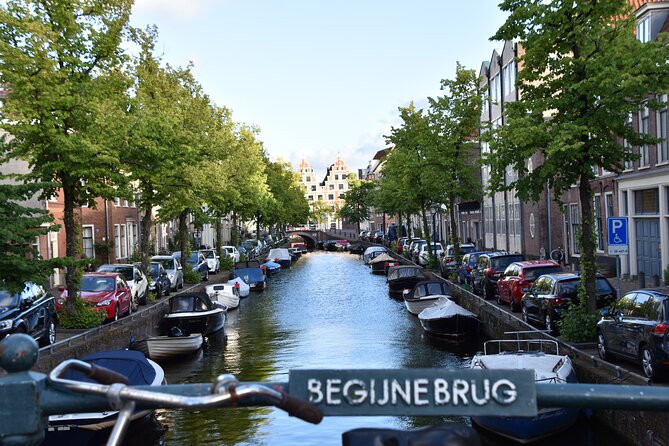
Stop 4 sends you along the canal at Bakenessergracht. Canals in Haarlem are not just scenery, they are part of how neighborhoods grew and how daily life moved. The audio route gives stories about the neighborhood from the past as you stroll.
The good news is that this stop is free from an admissions standpoint. So you can keep the experience flowing without thinking about buying tickets mid-walk. This is ideal for travelers who want history that fits a normal walking pace, not history that requires a museum time slot.
If you like taking photos, this is also a natural place to do it without derailing the whole schedule. The canal is an easy visual reference, so you can stop, shoot, and get back to the narration when ready.
Spaarne and Gravestenenbrug: a photo stop with early-days context

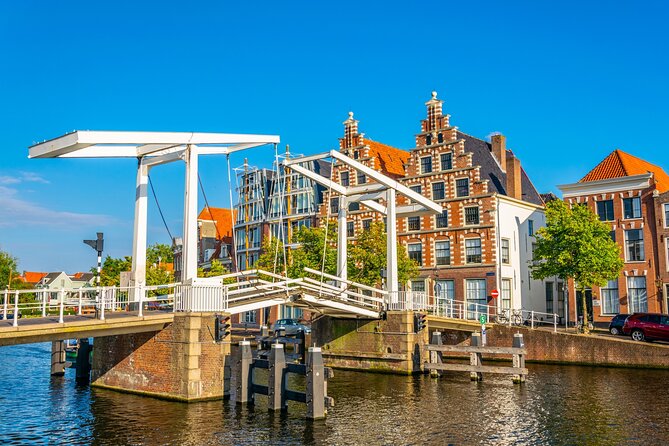
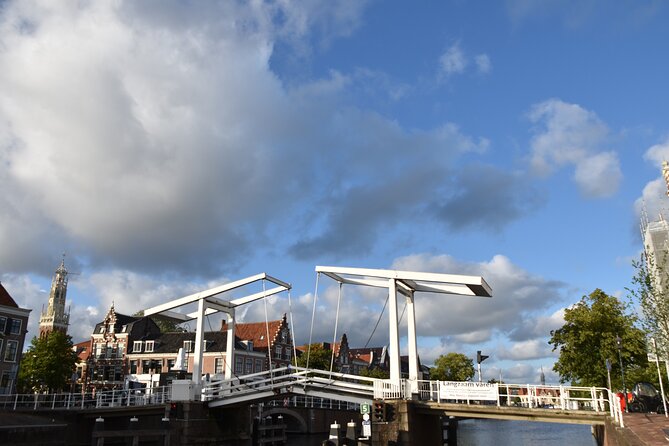
The route then reaches Spaarne and the Gravestenenbrug bridge. You can pause here for pictures while listening to what happened in Haarlem’s early days.
This is a straightforward stop, but it is valuable because it connects your eyes to a story tied to a specific crossing point. Bridges are often where the city’s layout becomes obvious, and Haarlem’s canal network makes that especially clear.
As with the other outdoor spots, admission is marked as not included, but you are not paying to stand on the street and look. The main cost decisions, if any, come when you choose to step into places like museums and historic interiors later in the walk.
Teylers Museum: 1778 science and art, plus a choice to go in
Stop 6 is Teylers Museum, described as a Museum of wonders founded in 1778. The narration positions it as a centre for contemporary art and science, along with other subjects, so the audio does not treat it like a single-topic building.
Admission is not included. That means you can experience the exterior and the audio context without spending more, or you can convert this into a full museum visit if you want. If you do go inside, plan extra time, since a museum stop can turn a 1 hour 45 minutes walk into something longer.
If you enjoy places where art and scientific thinking meet, you will probably like the way this stop frames the museum before you decide whether to enter.
The Waag, designed by Lieven de Key: weighing house to café
Next up is the Waag, a former Weigh house in Haarlem that today serves as a café for tourists. This is one of those buildings where the function shows in the architecture, and the narration also notes the designer, Lieven de Key.
Admission is not included, which likely means you are not paying specifically for the stop, but you may choose to order food or drinks if you want. Even if you skip that, the Waag is a good photo subject because it reads as a historic civic structure rather than a generic street building.
This is also a helpful reset point in the walk. After canals and squares, having a recognizable stop that you can look at while seated or near a café doorway can make the pacing feel easier.
Vleeshal and City Hall: meat hall history meets civic power
On the Grote Markt area, you also reach the Vleeshal. It dates from 1603, and the name is tied to meat, with Vlees meaning meat. The audio framing makes this feel less like trivia and more like how the city traded and fed itself.
Not far away is Haarlem’s City Hall. The audio highlights that it is the seat of the city’s government and that it was built in the 14th century, replacing the Count’s castle.
Both of these stops are excellent for readers who like to connect daily life with power structures. A market hall speaks to commerce and what people needed, while the city hall speaks to rulemaking and administration. When you hear both in one walk, you get a clearer sense of how the city organized itself.
If you are more into architecture than into specific names, you can still benefit. The narration gives you a way to look, so you are not just photographing buildings, you are matching what you see to the role the structures played.
Jopen brewery stop: beer culture with a real local link
Then comes Jopen, Haarlem’s beer brewery. The audio connects it to the work of Stichting Haarlems Biergenootschap, founded in 1992, and explains how Jopen beer developed from that effort.
Admission is not included. In this case, it is less about paying to enter a museum and more about whether you want a drink or bite at the end of the walk’s longer stretches. If you like beer culture and local branding, this stop can feel like a natural reward, not a gimmick.
This is also a good contrast to the more solemn parts of the route. After WWII storytelling and historic civic buildings, a brewery stop reminds you Haarlem keeps living, not just remembering.
Vijfhoek neighborhood lanes: small streets, big atmosphere
Stop 11 is Vijfhoek, described as a neighborhood in Oude Stad, Haarlem-Centre. The audio nudges you into small historic streets and keeps the focus on stories tied to the area.
Admission is listed as free at this point. That is practical value, because it means you are not juggling ticket decisions while you transition from major landmarks into more residential-feeling lanes.
If your favorite travel moments are the side streets where the city feels local, this segment is your reward. You can slow your pace, look at the facades, and let the narration color what you see without committing to a formal indoor visit.
Frans Hals Museum finish: Golden Age art centered on Haarlem
The walk’s final stop is the Frans Hals Museum, also described as the Museum of the Golden Age. The audio frames the collection as based on rich holdings built up from the 16th century onwards, including work by Frans Hals, whose name anchors the museum.
Admission is not included. That means you can end with the museum as a visual and audio finish, or you can choose to add time inside if you want to go deeper.
If you want a satisfying ending that matches the first half of the walk, this is a smart choice. Early on, you learned how Haarlem functioned through markets, governance, and social support. Ending with Golden Age art gives a cultural payoff, turning buildings and stories into a sense of identity.
Price and value: $15.05 for 1 hour 45 minutes of GPS guidance
At $15.05 per person for about 1 hour 45 minutes, this tour is priced like a budget-friendly way to get context without paying for multiple separate group tours. The strongest value is that you are covering a broad slice of Haarlem Centrum, including major squares, canals, historic building exteriors, and several museum-adjacent stops.
It is also easy to treat as flexible time. Because the format is self-paced, you can speed up on outdoor segments or slow down for the Corrie ten Boom House and any museum you want to enter.
The tradeoff is that you do not get a live guide. Some people expect step-by-step clarification, and with an audio app you handle more of the navigation yourself. If you are okay with that, the cost feels reasonable for what you get.
One more cost note, the tour asks you to bring your own headset, and it lists admission for many stops as not included. So your total day cost depends on which interiors you actually choose to visit.
Common snags to plan around before you hit Start
First, the narration starts when you are close to the stop. That is usually helpful, but if you are not right at the marked spot, you may feel like the guide is delayed. I suggest you give each stop a short window, then move a few steps within the area if the audio does not kick in.
Second, because this is audio-only, it can be harder to confirm exactly which building the narration is referring to, especially in busy areas like Grote Markt. Keep an eye on the key landmark descriptions, and do not be afraid to pause and reorient yourself.
Third, the format assumes you can manage the app controls, including rewinding if needed. If you prefer a live human to fix confusion instantly, this tour might feel less satisfying. On the plus side, many of the stops are outdoor and easy to revisit at your own pace if you missed something the first time.
Finally, this is not positioned as a weather-proof guided group with on-the-fly assistance. If conditions get rough, you may want to plan shorter outdoor segments or decide which indoor stop is most worth the effort.
Who this audio walk is best for
This is a great fit for you if you like walking at your own speed and you want context without staring at a phone map. It is also ideal if you enjoy architecture and want the city explained in place, stop by stop, rather than in a bus or museum slideshow.
It is less ideal if you want a guided conversation, someone to handle crowd chaos, or a detailed explanation of every building with constant visual direction. If you struggle with GPS-based navigation in general, you may find the experience more frustrating than helpful.
Should you book the Haarlem audio walking tour?
Book it if you want cheap, flexible structure for a Haarlem stroll that hits hofjes, market-square landmarks, canal moments, and a museum-centered finale. The audio approach also shines when you want the freedom to pause, especially at the Corrie ten Boom House.
Skip it or reconsider if you expect a live guide who constantly clarifies what you are seeing, or if you know you get annoyed when audio controls and GPS timing do not match your pace. With an audio app, the experience quality depends on how comfortable you are managing it while walking.
If you are the type who loves picking up the story behind a gate, a weigh house, or a Golden Age painter, this route is a strong match for your style.
FAQ
How long is the Haarlem walking tour?
It is listed as about 1 hour 45 minutes.
Where does the tour start and where does it end?
It starts at Kruisweg 70BR, 2011 LG Haarlem, Netherlands, and ends at Grote Houtstraat 1312, 2011 SJ Haarlem, Netherlands.
Do I need to bring a headset?
Yes. You need to bring your own headset.
Are tickets for museums and attractions included?
Admission is listed as not included for many stops, including the Corrie ten Boom House, Teylers Museum, the Waag, the Vleeshal, City Hall, Jopen, and the Frans Hals Museum. Hofje van Oorschot and some other points are marked free to view.
Does the audio start automatically?
The guide starts when you are close to the start point and then moves stop by stop using GPS.
Is this a private tour?
Yes. It is a private tour or activity, and only your group participates.
Is it accessible for most travelers?
The info says most travelers can participate. Service animals are allowed, and it is near public transportation.
More Tours in Haarlem




More Tour Reviews in Haarlem



Another Easy Day in Haarlem
Newly reviewed around Haarlem
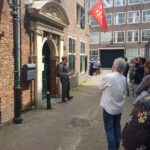



Haarlem Day Trips, side by side.
 ★ 4.3Haarlem: Sightseeing Canal Cruise through the City CenterFrom $19762 reviews
 ★ 4.5Haarlem: Sightseeing Boat Tour with Snacks and DrinksFrom $34398 reviews
 ★ 4.7Haarlem: Guided Highlights Canal Cruise on Open BoatFrom $20363 reviews
 ★ 4.5Haarlem: 50 minutes Boat CruiseFrom $22272 reviews
 ★ 5.0Haarlem Open-Boat Canal Cruise with Live Guide (Electric Boat)From $22233 reviews
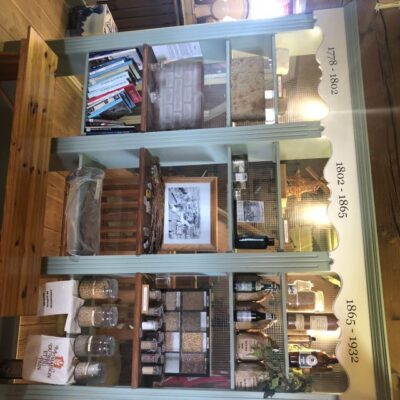 ★ 4.7Haarlem: Windmill ‘De Adriaan’ Guided TourFrom $9197 reviews
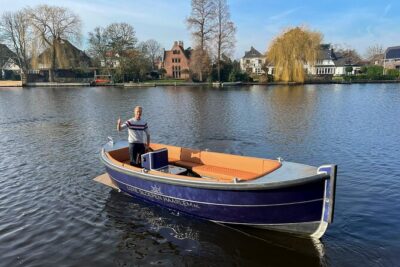 ★ 5.0Private Electric Boat Rental in Haarlem (No License Required)From $145186 reviews
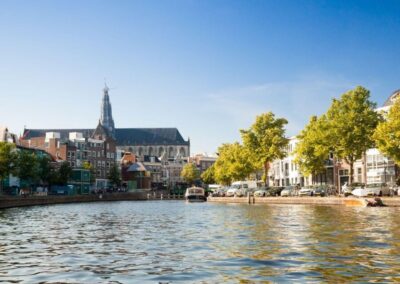 ★ 4.1Haarlem: Dutch Windmill & Spaarne River Sightseeing CruiseFrom $20152 reviews
More ways to plan this visit